
Co-Ownership With an Estranged Adult Child: Reverse Mortgage Complications
Navigating reverse mortgage when your home is co-owned with an estranged or hostile adult child. Legal protections and solutions for shared property complications.
Your adult child is on the title of your home—either through inheritance planning years ago, a business arrangement that went wrong, or a co-purchase arrangement you now regret. You're estranged, relationships are hostile, and now you need a reverse mortgage to access your equity for aging in place or debt relief. But your co-owner (your adult child) has power to block, complicate, or sabotage the reverse mortgage. This is a legal and financial nightmare most aging homeowners don't anticipate until they're in crisis.
The Hidden Risk: Co-Ownership in Fractured Families
When a home is co-owned (with registered title shared between two or more people), all owners have equal rights to the property unless there's a formal co-ownership agreement specifying otherwise. This means:
- Your adult child can refuse to agree to a reverse mortgage (blocking your access to your own equity)
- Your adult child can demand the property be sold (forcing a sale even if you want to age in place)
- Your adult child can block refinancing or modifications (limiting your financial options)
- Your adult child can sue for partition (forcing the sale of your home to divide equity)
- Creditors of your adult child can put a lien on the entire property (your security is threatened by their debts)
This is a power imbalance that most aging parents don't realize until they need access to their own home equity.
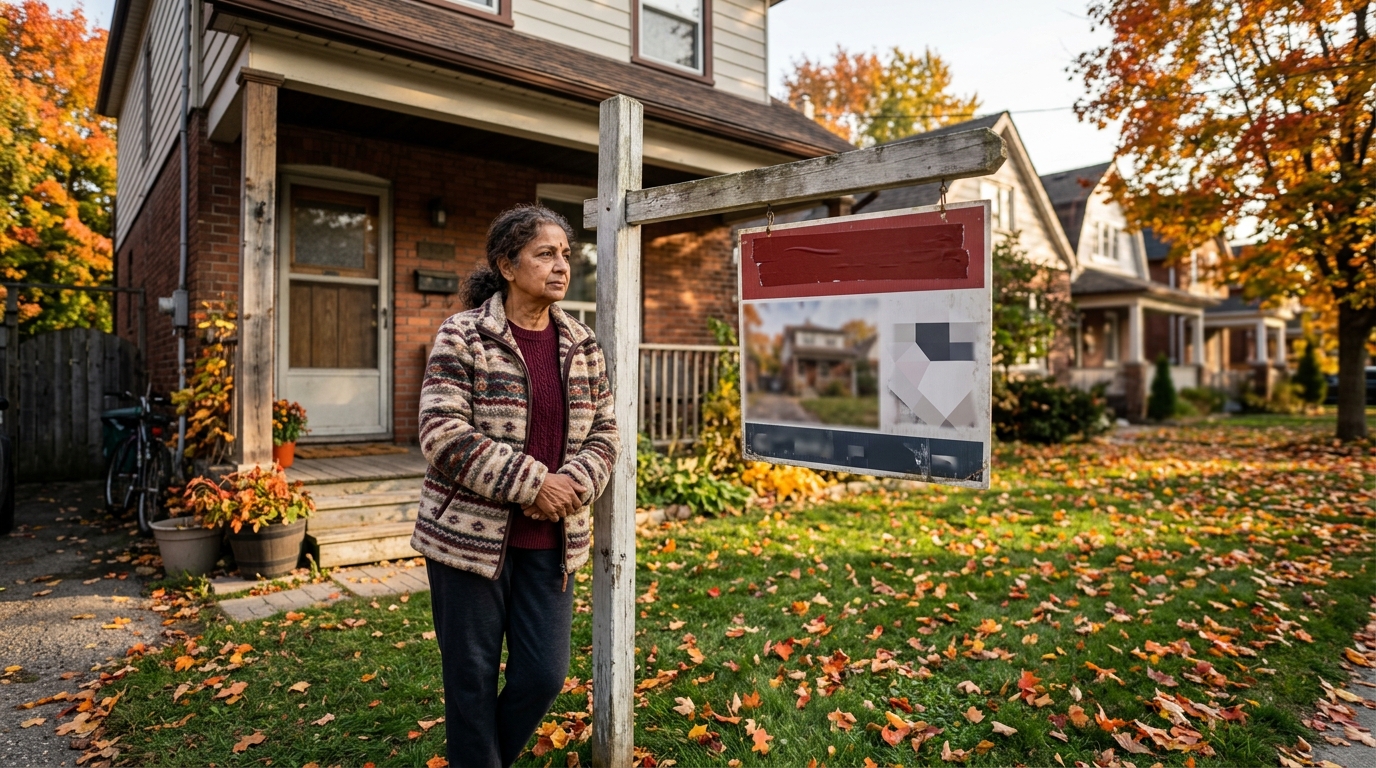
How Co-Ownership Blocks Reverse Mortgage Access
A reverse mortgage requires all registered owners to consent and be involved in the transaction. If your adult child is co-owner and refuses to cooperate, you cannot get a reverse mortgage. Period.
| Scenario | Outcome |
|---|---|
| Adult child agrees; signs documentation | Reverse mortgage proceeds normally |
| Adult child refuses; ignores requests | Reverse mortgage is blocked; you cannot access equity |
| Adult child agrees, then changes mind mid-closing | Reverse mortgage collapses; you've wasted time and legal fees |
| Adult child demands sale of property as condition of reverse mortgage consent | You're forced to choose: sell home or forgo reverse mortgage |
| Adult child uses reverse mortgage request as leverage ("I'll consent if you give me $50K") | You're extorted into unfair financial deals |
Any one of these scenarios can trap you.
Common Co-Ownership Situations (And How They Get Complicated)
Situation 1: "Family Planning" Co-Ownership Years ago, you added your adult child to the property title for estate planning (to avoid probate, make inheritance easier). You didn't anticipate estrangement. Now they're a legal owner, and your relationship is hostile.
Situation 2: Business Co-Investment You bought a property with your adult child as an investment/family business. The arrangement fell apart; you want out. They refuse to sell or refinance.
Situation 3: Mortgage Co-Signature Years ago, you couldn't qualify for a mortgage alone, so your adult child co-signed. They're on the mortgage and the title. Even though you've carried the payments, they have legal ownership rights.
Situation 4: Inheritance During Marriage Your adult child inherited the home (from a grandparent or your spouse) during their marriage. Now they're divorcing, and your home is caught in their marital property dispute.
Situation 5: Rescue Refinance Your adult child faced financial crisis; you refinanced to help them. They're on the mortgage/title. The relationship later deteriorated; they now refuse to cooperate on any property decisions.
All of these create the same problem: You can't access your equity or manage your own property without their consent.
Legal Solutions: Getting Out of Co-Ownership
If co-ownership is blocking your reverse mortgage (or aging in place plans), you have options—but they're costly and time-consuming:
Option 1: Buy Out Your Co-Owner's Share
Cost: $50,000–$300,000+ (depending on their ownership percentage and home value)
Process: Your lawyer negotiates a buyout. Your co-owner receives a lump-sum payment in exchange for releasing their ownership. Title is transferred solely to you.
Pros: Clean solution; you regain full control; you can then get a reverse mortgage
Cons: Expensive; requires access to capital; requires co-owner cooperation (they might refuse)
Realistic for you? Only if you have savings or can access capital from a traditional mortgage or HELOC (which requires their cooperation too).
Option 2: Sell the Property; Divide Proceeds
Cost: Real estate commission (5–6%), legal fees ($1,500–$3,000), closing costs
Process: List the home; sell it; divide proceeds between co-owners based on ownership percentages
Pros: Clean break; eliminates co-ownership complication; you can access your equity
Cons: Forces you out of your home; disrupts aging in place; you lose community; real estate market risk
Realistic for you? If you're willing to move; if home sells quickly; if proceeds are sufficient to buy accessible housing elsewhere
Option 3: Seek Partition (Forced Sale)
Cost: $3,000–$15,000 in legal fees; real estate commission; court fees
Process: Sue for partition; court orders property sold; proceeds divided based on ownership percentages
Pros: Legally forces resolution; doesn't require co-owner cooperation; clean outcome
Cons: Expensive legal battle; lengthy court process (12–24 months); family relationship destroyed; you lose the home; emotionally traumatic
Realistic for you? As a last resort when all other options have failed
Option 4: Negotiate With Co-Owner
Cost: $0–$500 (possibly mediation costs)
Process: Have an honest conversation (with mediator if necessary). Explain you need reverse mortgage access. Offer compromise (e.g., reverse mortgage is only for aging-in-place modifications; proceeds don't include a gift to you; co-owner's inheritance is protected).
Pros: No legal cost; possible to preserve relationship; might work if co-owner is reasonable
Cons: Requires co-owner willingness; difficult if estrangement is deep; might not succeed
Realistic for you? If relationship isn't completely hostile; if co-owner has minimal emotional investment in the property

Case Study: Co-Ownership Blocking Reverse Mortgage
Helen, 75, trapped by co-ownership:
The backstory:
- Helen owns a home worth $580,000 (Toronto)
- 25 years ago, Helen added her daughter (Sophie, now 50) to the title for estate planning
- Helen and Sophie had a close relationship then; Helen thought it would ease things for Sophie after Helen's death
- 10 years ago, Helen and Sophie's relationship deteriorated over healthcare decisions for Helen's aging mother
- They're now estranged; haven't spoken in 3 years
- Helen is aging; needs home modifications (accessible bathroom, grab bars, safety systems)
- Helen needs ~$35,000 for modifications
- Helen has no savings (modest pension/CPP); can't self-fund modifications
Helen's reverse mortgage plan:
- Reverse mortgage available: $232,000 (40% of $580K)
- Helen would draw $35,000 for modifications; keep rest available for future care
The problem:
- Helen's lawyer explains: All registered owners (Helen and Sophie) must consent to reverse mortgage
- Helen's lawyer contacts Sophie; explains the reverse mortgage
- Sophie refuses: "That's Mom's debt, not mine. I'm not signing anything. If she needs money, she should sell the house."
- Helen is blocked; cannot access her own equity
Helen's options (none ideal):
| Option | Outcome |
|---|---|
| Try to buy out Sophie | Helen has no capital; can't borrow without Sophie's consent; impossible |
| Sell the home | Upheavals aging in place goals; requires relocation; Helen is 75 and doesn't want to move |
| Force partition (court) | $10,000+ legal costs; 18-month process; home sold; Helen loses her home anyway |
| Age in place without modifications | Helen's safety declines; risk of falls, accidents; eventual forced move to care facility |
| Accept status quo; hope Sophie changes mind | Helen waits; hoping Sophie softens; time passes; Helen ages; needs escalate |
Helen is trapped. The co-ownership that was meant to help her now prevents her from accessing her own equity and aging safely.
Prevention: How NOT to Get Into This Mess
If you're not yet in co-ownership, avoid it. If you're considering adding your adult child to the title, don't. Better alternatives:
| Method | Benefit | Drawback |
|---|---|---|
| Will/Beneficiary Designation | Child inherits after death; no co-ownership complications | Inheritance is probated (slower; more public) |
| Formal Co-Ownership Agreement | If you must co-own, document terms (their role, rights, buyout terms) | Costs $500–$1,000 legally; doesn't prevent all disputes |
| Revocable Living Trust | Home held in trust; passes to heirs without probate; no co-ownership messiness | Costs $1,500–$3,000 to establish; requires ongoing administration |
| Power of Attorney | Grants authority without ownership; child can act on your behalf | Requires trust; doesn't give them ownership benefits |
Lesson: Avoid co-ownership at all costs. If the goal is to avoid probate, a will or trust is far superior.
Preventing Future Co-Ownership Problems
If you're currently in a co-ownership arrangement, consider:
-
Document everything (even informally)
- What percentage do each owner hold?
- What's the original intent? (Inheritance? Business? Rescue?)
- Are there verbal agreements about buyouts or termination?
-
Have a formal co-ownership agreement drafted ($500–$1,000)
- Specifies each owner's rights and obligations
- Includes buyout provisions (what happens if one wants out?)
- Addresses property management and decisions
- Reduces ambiguity; provides legal framework
-
Consider seeking buyout or partition before you urgently need equity access
- Don't wait until you're in crisis
- Act while you have time and options
- Negotiate from a position of relative strength
-
Explore mediation if relationship is strained but not completely hostile
- Professional mediator helps negotiate buyout or partition
- Costs $3,000–$8,000 but is much cheaper than court litigation
- May preserve some relationship foundation
Key Takeaways
- Co-ownership with an adult child gives them legal power to block your reverse mortgage and property decisions
- This is especially dangerous if your relationship is estranged or hostile
- All registered owners must consent to a reverse mortgage; one holdout blocks your access to equity
- Buyouts are expensive ($50K–$300K+); partition litigation is time-consuming and traumatic
- Prevention is far better than remediation; avoid co-ownership at all costs
- If already in co-ownership, document terms and explore resolution before you need emergency equity access
Frequently Asked Questions
Can a lawyer force my adult child to agree to a reverse mortgage if we're co-owners?
No. Co-ownership gives both owners equal rights (unless a formal agreement states otherwise). You cannot override your co-owner's refusal. Your only remedies are: negotiate a buyout, force a property sale via partition, or accept that you cannot access equity.
If my adult child is on the title but I've paid the entire mortgage, do I have more rights?
Legally, no. Title ownership, not payment history, determines rights. If both names are on the title, both owners have equal rights regardless of who paid the mortgage. This is why co-ownership is dangerous—payment history doesn't matter.
Can I remove my adult child from the title without their consent?
No. Title removal requires consent or court order (partition). You cannot unilaterally remove a co-owner.
What if I own 80% and my child owns 20%—do I have more control?
Percentage ownership affects inheritance; it doesn't affect the right to block a reverse mortgage or property decisions. Even a 20% owner can refuse to consent, blocking a reverse mortgage.
If my adult child co-signed the original mortgage but isn't on title, can they block a reverse mortgage?
No. Title is what matters for a reverse mortgage. If only you're on title, you can get a reverse mortgage even if your child co-signed the original mortgage decades ago. However, if your child is also a registered owner on the title, they have blocking power.
What if my adult child is a co-owner but living abroad/unreachable?
The reverse mortgage process requires consent from all registered owners. If your child is unreachable, you cannot obtain consent, and the reverse mortgage cannot close. Your lawyer will attempt to locate them; if unsuccessful, reverse mortgage cannot proceed.
Co-ownership with an estranged or uncooperative adult child is one of the most dangerous situations for aging homeowners. If you're in this position, consult immediately with a lawyer about your options: buyout, partition, or negotiated resolution. The longer you wait, the more constrained your options become as you age and potentially need equity access urgently.
Ready to Learn More?
Find out exactly how much you could unlock from your home — free and no obligation.
Related Articles
Building a Reverse Mortgage Safety Net Without Burdening Your Adult Children
Use a reverse mortgage proactively to create financial independence in retirement, ensuring your adult children never have to bail you out or provide care.
Read →Proactive Family Financial Mediation: Stop Inheritance Conflict Before It Starts
Fund professional family mediation with a reverse mortgage to prevent inheritance disputes and protect relationships before conflict escalates.
Read →When Aging Parent Refuses Financial Transparency: Reverse Mortgage Planning
Managing reverse mortgage planning when your aging parent won't disclose finances or assets. Transparency gaps and protective strategies for adult children.
Read →