
When Adult Child's Job Relocates: Reverse Mortgage Strategy for Co-Owned Multigenerational Homes in Ontario
Your adult child got a job transfer but you co-own the home together. Navigate relocation without selling using a reverse mortgage buyout strategy.
Your adult child got a lucrative job offer in Vancouver. You co-own the family home together. You're 72 and want to stay in the property. Your adult child needs to leave. Now what? This is a surprisingly common scenario in Ontario: multigenerational homes where aging parents and adult children are joint owners. When one party needs to relocate for employment, education, or relationship reasons, the co-ownership structure creates complications. A reverse mortgage can solve this by enabling you to buy out your co-owner's equity stake, allowing them to move forward while you age in place.
The Co-Ownership Complication
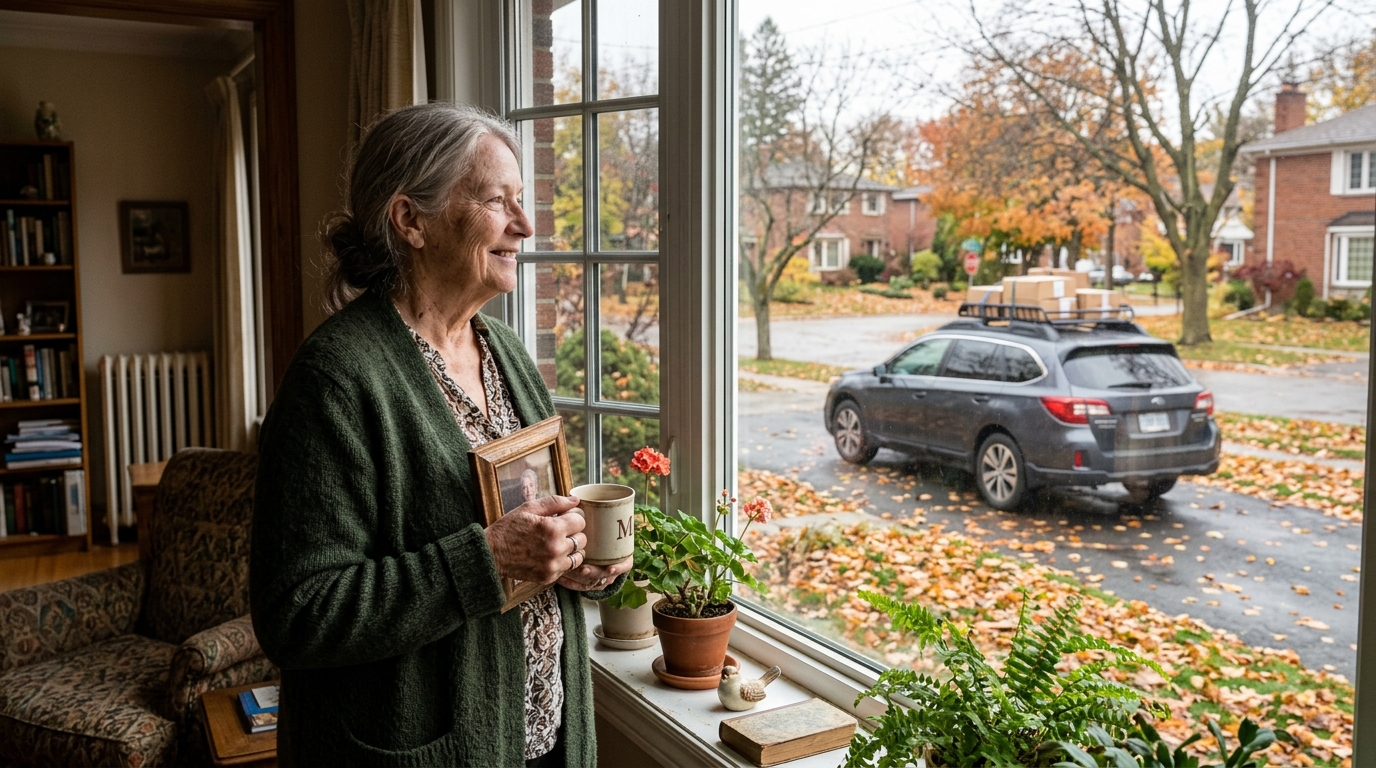
Joint ownership of a family home creates legal and financial complexity when life circumstances diverge. Common co-ownership scenarios:
- Aging parent + adult child — Child moved back home during pandemic; stayed to help with aging parent; relationship stabilized; now owns home equity
- Aging parent + adult child + grandchild — Multi-generational household for cost efficiency; adult child's relationship ends; they want to relocate with custody arrangements
- Two aging parents + adult child — One parent passes; property transferred to surviving parent + adult child; now surviving parent and child want different futures
- Aging parent + multiple adult children — Property deeded equally; one wants out; others want to stay
In each scenario, the co-owner seeking to leave needs cash—their equity stake converted to liquid funds for relocation, deposit on new housing, or fresh start.
According to Statistics Canada, 28% of multigenerational households in Ontario involve co-ownership arrangements where adult children hold equity stakes in their parents' homes.
Traditional solutions don't work well:
- Selling the whole property — Displaces the aging parent
- Refinancing with a bank mortgage — Requires adequate income; many retirees can't qualify
- Adult child refinancing alone — Creates a liability problem; aging parent is still on title but not paying
- HELOC — Requires strong credit and income; many retirees can't access one
A reverse mortgage is the clean solution: The aging parent (or parents) access equity to buy out the co-owner's stake. The adult child receives their equity value. The aging parent remains in the home with clear title.
Co-Ownership Buyout Costs and Strategy
| Scenario | Home Value | Co-Owners' Stakes | Buyout Amount Needed | Reverse Mortgage Required |
|---|---|---|---|---|
| Parent + adult child (equal ownership) | $400,000 | Parent 50%, Child 50% | $200,000 (child's half) | $200,000 reverse mortgage |
| Parent + 2 adult children | $350,000 | Parent 50%, Each child 25% | $87,500 (one child's stake) | $87,500 reverse mortgage |
| Parent + adult child (unequal ownership) | $500,000 | Parent 70%, Child 30% | $150,000 (child's stake) | $150,000 reverse mortgage |
| Parent + adult child + grandchild | $450,000 | Parent 60%, Child 25%, Grandchild 15% | $112,500 (child's stake) | $112,500 reverse mortgage |
Key variables:
- Home value — Assessed or appraised value determines equity amounts
- Ownership percentages — Critical; must be documented on property deed
- Outstanding mortgages — Any existing debt reduces available equity
- Reverse mortgage rules — Lenders require minimum age (55+) and typically 15–20% home equity remaining after buyout
Process: Reverse Mortgage Buyout in Ontario
Step 1: Determine Co-Ownership Percentages
- Review property deed with lawyer ($200–$400)
- Confirm each party's documented equity stake
- If unclear, may require property valuation and formal appraisal ($300–$500)
Step 2: Get Independent Property Appraisal
- Reverse mortgage lenders require appraisal ($400–$600)
- Establishes current home value
- Determines total equity available
Step 3: Calculate Co-Owner Buyout Amount
- Example: $400,000 home, 50/50 ownership = $200,000 needed to buy out adult child
- Confirm this is acceptable to both parties in writing
Step 4: Apply for Reverse Mortgage
- Aging parent applies with reverse mortgage lender (CHIP, HomeEquity Bank, Equitable Bank, Bloom Financial)
- Lender issues appraisal; documents equity available
- Standard reverse mortgage approval process (4–8 weeks)
Step 5: Legal Documentation at Closing
- Lawyer handles deed transfer removing co-owner
- Co-owner receives buyout funds from reverse mortgage proceeds
- Aging parent remains as sole owner with reverse mortgage debt
- Co-owner is no longer on title or on mortgage obligation
Step 6: Co-Owner Relocates Freely
- Adult child can now move, buy new property, start fresh
- No ongoing financial entanglement with family home
- Clear separation of interests
Real Scenario: The Chen Family Relocation
David Chen, 73, and his adult son Marcus, 38, co-owned a Toronto home valued at $550,000 (purchased with equal 50/50 ownership when Marcus moved back in 2018). In 2024, Marcus received a job offer in Calgary—better pay, new opportunity, new relationship in a different province.
Problem: Marcus needed to exit the property ownership and access his $275,000 equity stake. David wanted to stay and age in place. Selling wasn't acceptable to either party.
Solution: David applied for a reverse mortgage:
- CHIP reverse mortgage approved: $300,000 (sufficient to buy out Marcus's $275,000 stake + closing costs)
- David's lawyer handled deed transfer (removing Marcus, adding reverse mortgage)
- Marcus received $275,000 cash for down payment on Calgary home
- David remained in Toronto home, now clear title, no monthly RM payments
- Reverse mortgage debt would eventually be repaid from estate proceeds
Outcome: Both David and Marcus got their priorities. No family conflict. No forced sale. Clean legal separation of interests. David can age in place for 15+ years; Marcus can build his new life in Calgary.
Comparison: Buyout Options for Co-Owned Homes
| Option | Cost to Parent | Process | Timeline | Family Impact |
|---|---|---|---|---|
| Sell entire property | N/A (proceeds split) | List, show, sell | 4–8 weeks | High conflict; displaces parent |
| Co-owner refinances alone | None to parent | Adult child gets mortgage in own name | 3–4 weeks | Creates liability issue; parent still on title |
| Parent buys from own income | Unaffordable for most retirees | Impossible without liquidity | N/A | Not realistic |
| HELOC buyout | HELOC interest (7%+) + monthly payments | Parent gets HELOC, pays co-owner | 4–6 weeks | Monthly payment burden on fixed income |
| Reverse mortgage buyout | RM interest (~5.5%); NO monthly payments | Clean equity access + deed transfer | 4–8 weeks | Clear resolution; parent ages in place |
For Ontario seniors, reverse mortgage buyout is optimal because it solves the problem without monthly payment obligations.
Tax and Legal Considerations
Spousal Versus Adult Child Buyouts
- Spousal buyout — Triggered by separation/divorce; often involves family law considerations and spousal support calculations
- Adult child buyout — Simpler; no matrimonial implications; straightforward equity transfer
Capital Gains Tax
- Principal residence exemption — Family homes typically exempt from capital gains tax on sale; buyout structure may not trigger tax event
- Legal confirmation needed — Always consult a tax lawyer before executing buyout; rules vary based on ownership history
Documentation Requirements
- Deed amendment — Property deed must be updated to remove co-owner and add reverse mortgage lien
- Affidavit of value — May be required for buyout valuation
- Lawyer coordination — Reverse mortgage lender's lawyer + family lawyer ensure proper documentation
Key Takeaways
- Multigenerational co-ownership creates complications when adult children need to relocate for employment or life changes
- Reverse mortgage buyout allows aging parent to purchase co-owner's equity stake without monthly payments
- Process typically takes 4–8 weeks and costs $1,200–$2,000 in legal and appraisal fees
- Co-owner receives cash for their equity stake; can relocate, buy new property, or start fresh
- Aging parent remains in home as sole owner; reverse mortgage debt secured by property
- Lenders like CHIP, Equitable Bank, and HomeEquity Bank support buyout transactions as legitimate reverse mortgage use
- Tax and legal implications vary; always consult professionals before executing
Frequently Asked Questions
Can I buy out my co-owner's stake if our relationship is difficult?
Yes. A reverse mortgage buyout is purely financial and legal—emotions don't affect the process. Once the deed is amended and co-owner receives their funds, you have no further relationship obligation.
What if my co-owner doesn't want to sell their stake?
A reverse mortgage buyout only works if both parties agree. If your co-owner refuses to leave, you cannot force a sale (unless you pursue court action, which is expensive and adversarial). However, most co-owners facing relocation pressures are motivated to exit cleanly.
How is the buyout amount determined?
Property is appraised; each owner's equity percentage is calculated from the deed. Example: $400,000 home, 50/50 split = $200,000 owed to co-owner. You can negotiate a higher or lower amount by mutual consent.
Does the co-owner have to pay taxes on the buyout funds?
Generally, no. They're receiving their equity from a property they co-own, not income. However, tax rules vary; the co-owner should consult their accountant to confirm.
What if I can't afford the full reverse mortgage buyout?
You can negotiate a partial buyout or delayed payment. Example: Pay the co-owner 60% immediately via reverse mortgage; agree to pay remaining 40% over time. Both parties' lawyer must document this arrangement.
Can the reverse mortgage be transferred to the co-owner who leaves?
No. The reverse mortgage stays with the aging parent in the home. The leaving co-owner receives their equity cash and is finished with the property. They build their own mortgage in their new location.
Facing a co-ownership relocation? Contact Rick Sekhon at Rick Sekhon Reverse Mortgages to discuss how a reverse mortgage buyout can help both you and your co-owner achieve your goals without family conflict or forced home sales.
Ready to Learn More?
Find out exactly how much you could unlock from your home — free and no obligation.
Related Articles
Your Mortgage Won't Renew at Retirement: How a Reverse Mortgage Becomes Your Backup Lender in Ontario
At retirement, your traditional mortgage reaches renewal but lenders won't approve you without employment income. A reverse mortgage is your backup plan.
Read →Smart Home Infrastructure for Ontario Seniors: Reverse Mortgage Funding for Whole-Home WiFi, Voice Control, and Remote Monitoring
Future-proof your home with smart home technology. A reverse mortgage can fund the infrastructure that keeps you safe and independent as you age in place.
Read →When Your Beloved Pet Needs End-of-Life Care: Reverse Mortgage for Emergency Veterinary Costs in Ontario
Your senior pet faces a terminal diagnosis requiring expensive comfort care and vet specialists. A reverse mortgage can fund their final chapter without financial panic.
Read →