
Reverse Mortgage for Accessible Neighborhood Downsize Within Ontario
Move to a more accessible neighborhood without leaving your community. Fund relocation while preserving roots, friendships, and local support networks.
What if aging in your current neighborhood becomes impossible—steep driveways, isolated location, no walkable services—but moving far away means losing the community roots you've built over 30+ years? Many Ontario seniors face this dilemma. A reverse mortgage can fund relocation to a more accessible neighborhood within the same community, preserving friendships, familiar services, and local support networks.
The Neighborhood Accessibility Crisis
Ontario seniors increasingly find themselves in homes that were perfect at 45 but become hazardous at 75. Meanwhile, many neighborhoods lack the accessibility infrastructure aging parents need:
- No walkable medical offices or pharmacies
- Steep driveways or dangerous street parking
- Lack of community transportation or services
- Isolated locations requiring car dependency
- Unsafe winter conditions (uncleared sidewalks, slippery driveways)
Rather than move hours away to a senior community, many aging parents want to downsize to a more accessible home in their established neighborhood. Reverse mortgage bridges the financial and logistical gap.
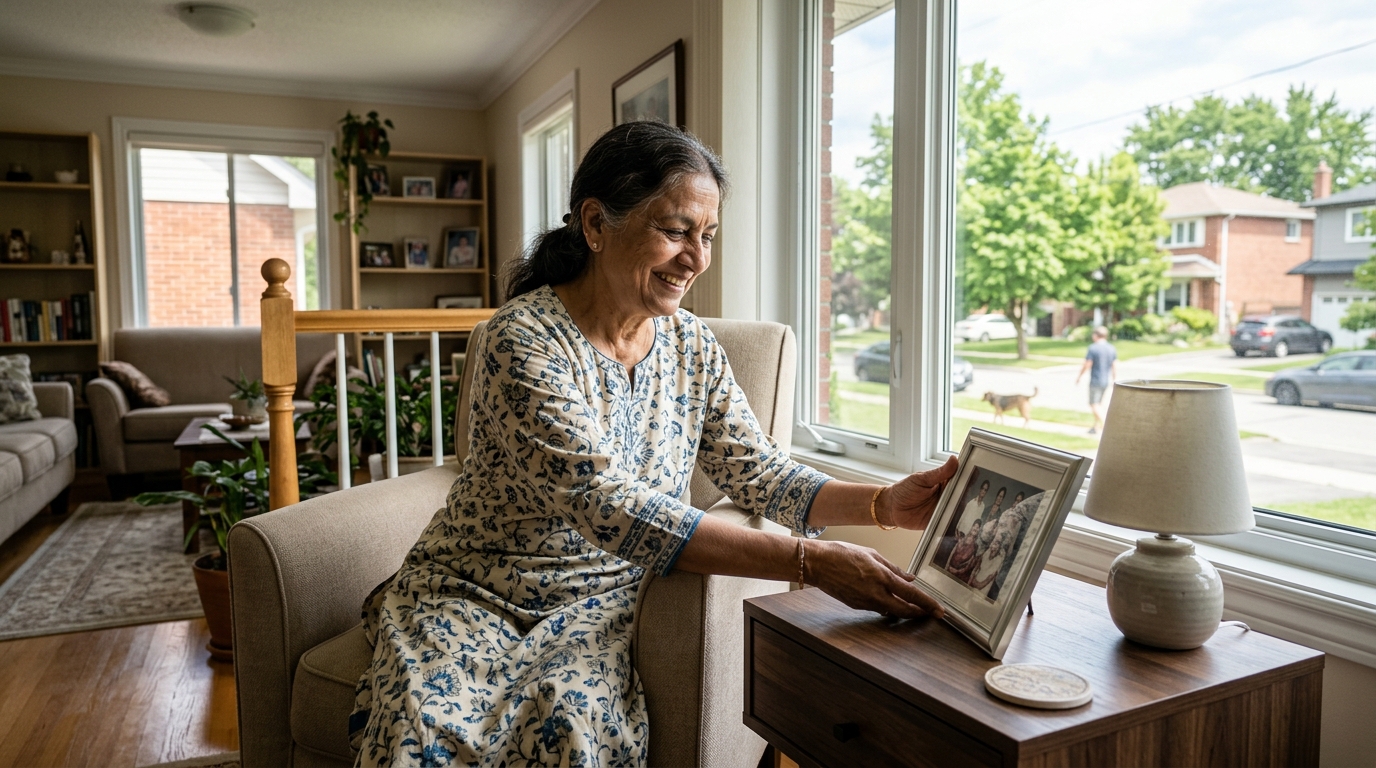
Why Relocation Within Neighborhood Is Critical
Definition: Neighborhood-sensitive relocation means moving within the same geographic community (ideally within 1–3 miles) to maintain established social networks, local healthcare providers, familiar services, and community integration.
Research by the Canadian Urban Institute shows that seniors who relocate within their established community maintain 70%+ of pre-move social connections and community engagement, compared to 20–30% for those moving to different cities or distant senior communities.
The social impact is measurable:
- Maintained friendship networks: Church members, neighbors, longtime friends in the area
- Established healthcare access: Trusted GP remains your doctor; familiar pharmacist; known specialists
- Reduced moving trauma: You still see familiar faces, drive familiar streets, navigate familiar systems
- Family accessibility: Adult children and grandchildren remain nearby; home visits remain practical
- Cost efficiency: You downsize but stay rooted; no need to relocate to expensive urban centers or distant communities
Reverse Mortgage Relocation Strategy
Phase 1: Assess Neighborhood Accessibility Needs
Before moving, audit your current neighborhood for aging-friendly features:
- Medical proximity: Distance to GP, cardiologist, pharmacist, hospital
- Walkability: Safe sidewalks, level terrain, accessible public spaces
- Transportation: Public transit, specialty healthcare shuttles, volunteer driver programs
- Services: Grocery delivery, home maintenance, snow removal services
- Community: Senior centers, social groups, places of worship, volunteer opportunities
Phase 2: Identify Target Neighborhoods
Within your community, identify neighborhoods offering better accessibility:
- Walkable urban/town center locations (medical offices, pharmacies, services within 0.5 miles)
- Transit-accessible neighborhoods (bus routes, accessible transit options)
- Properties with accessibility features: Bungalows or single-level homes, minimal or graded driveways, level entry
- Neighborhoods with aging-friendly infrastructure: Maintained sidewalks, community programs, peer populations
Phase 3: Financial Structuring With Reverse Mortgage
Scenario 1: Downsize and Net Proceeds
- Current home: $500,000
- New accessible home target: $350,000
- Expected down payment: $175,000
- Moving and renovation costs: $25,000
- Reverse mortgage advance (from current home before sale): $50,000
Scenario 2: Upgrade for Accessibility
- Current home: $400,000 (inaccessible neighborhood)
- Preferred home: $520,000 (accessible neighborhood, walkable location)
- Down payment needed: $260,000
- Moving and accessibility upgrades: $30,000
- Reverse mortgage advance (bridge): $100,000
| Scenario | Current Home Value | Target Home Price | Down Payment Available | RM Advance Needed | Total Accessibility Investment |
|---|---|---|---|---|---|
| Downsize in place | $500,000 | $350,000 | $175,000 | $25,000–$50,000 | $50,000–$75,000 |
| Upsize for walkability | $400,000 | $520,000 | $260,000 | $75,000–$100,000 | $100,000–$130,000 |
| Lateral move (same price range) | $450,000 | $440,000 | $220,000 | $25,000–$40,000 | $40,000–$65,000 |
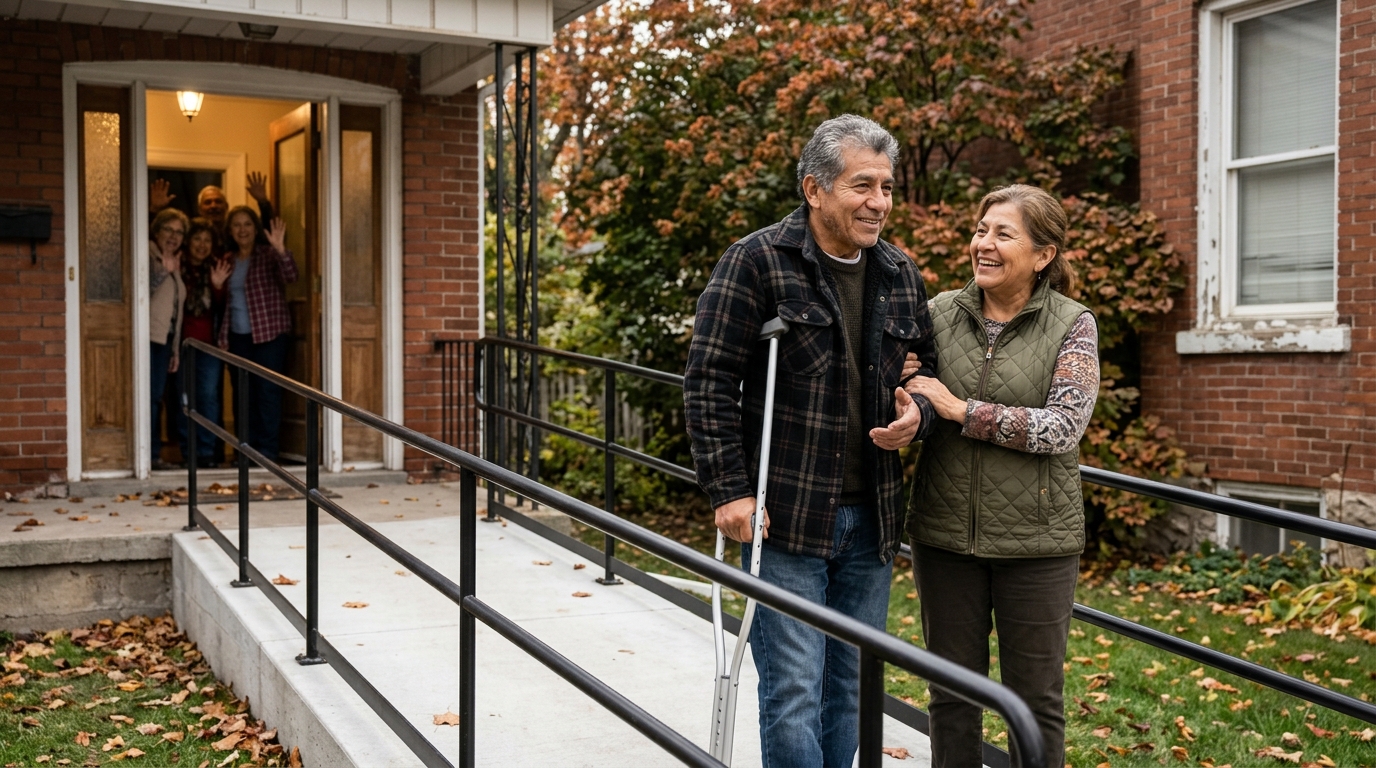
Real Scenario: Relocation Within Community
Ellen, 74, has lived in her Mississauga bungalow for 35 years. Her neighborhood is increasingly inaccessible:
- Medical offices are 2.5 miles away (requires car)
- No public transit within walking distance
- Steep driveway is dangerous in winter
- Nearest grocery store is 2 miles away
- Community friends are aging and moving to distant senior residences
Ellen's challenge: Downsize to increase walkability while staying in Mississauga near her church, longtime doctor, and friend network.
Reverse mortgage strategy:
- Access $40,000 from current $500,000 home via reverse mortgage (pay minimal interest-only while listing current home)
- Identify target: accessible bungalow in walkable Mississauga location ($380,000)
- Use $40,000 RM advance for:
- Real estate commissions/legal fees ($15,000)
- Moving costs ($8,000)
- Home inspection, appraisals, accessibility audit ($5,000)
- Home accessibility upgrades at new location ($12,000)
- Sell current home ($500,000 sale proceeds)
- Apply $500,000 to pay off reverse mortgage and fund new purchase
Outcome: Ellen downsizes from $500,000 to $380,000, gains accessibility, and stays within her established community. The $120,000 net proceeds fund ongoing healthcare costs, medication, and aging-in-place accessibility at her new location.
Tax and Financial Implications
Principal Residence Exemption: Your family home is tax-exempt when sold. Downsizing within neighborhood doesn't affect this benefit.
Mortgage Qualification: A reverse mortgage at your current home makes the subsequent traditional mortgage qualification smoother. Lenders see you have resolved your equity access strategy.
Land Transfer Tax: Ontario land transfer tax applies to new home purchase (~2–4% of purchase price). Budget for this in relocation costs.
Speculation Tax: Ontario doesn't have a provincial speculation tax (unlike BC), so buying and selling within 2 years carries no additional tax burden.
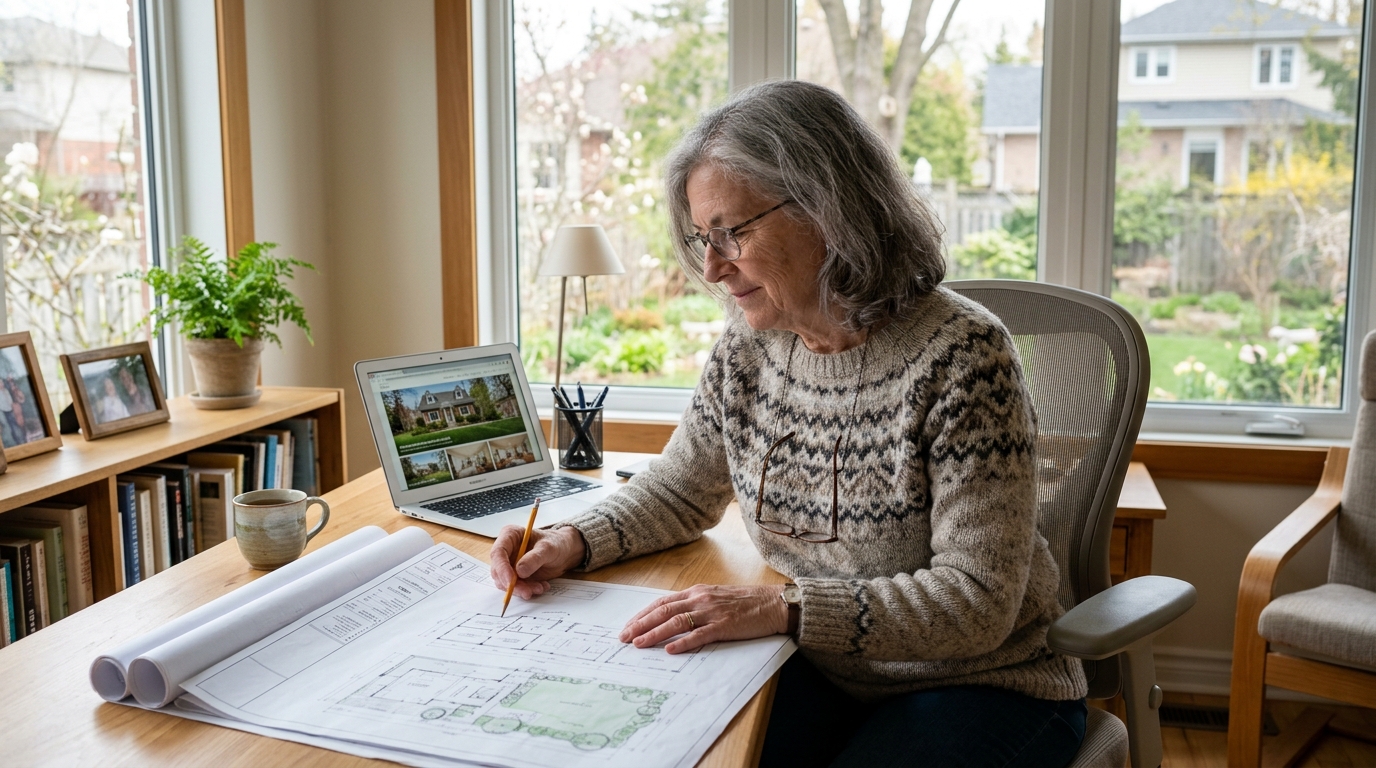
Working With Real Estate Professionals Specializing in Seniors
A real estate agent familiar with aging-in-place markets can:
- Identify accessible neighborhoods within your community
- Assess target properties for accessibility features (one-level living, graded driveway, accessible entry)
- Estimate realistic relocation timeline (typically 3–6 months)
- Coordinate with reverse mortgage specialist (Rick Sekhon Reverse Mortgages) for bridge financing
- Manage contingencies (staging current home, preparing new location, overlapping closes)
Key Takeaways
- Neighborhood-sensitive relocation maintains 70%+ of seniors' pre-move social connections, compared to 20–30% for distant moves
- Reverse mortgage bridge financing eliminates the cash flow gap between current home sale and new purchase closing
- Moving within established community preserves medical access, friendship networks, and family proximity that distant relocations destroy
- Downsize-within-community strategy often nets $100,000–$200,000 in freed-up home equity for ongoing healthcare and accessibility needs
- Tax-efficient home sales (principal residence exemption) and strategic reverse mortgage timing preserve maximum proceeds for new purchase
- Real estate professionals specializing in aging-in-place markets can identify accessible neighborhoods and properties with features that standard realtors miss
Frequently Asked Questions
Can I use a reverse mortgage to purchase a new home within my community, or only to fund current home expenses?
You can use reverse mortgage funds strategically for bridge costs while you sell your current home and purchase a new one. Typical timeline: (1) Access reverse mortgage on current home ($25,000–$75,000), (2) Use funds for moving/inspection/legal costs, (3) Sell current home, (4) Use sale proceeds to pay off reverse mortgage + close on new purchase. Work with Rick Sekhon Reverse Mortgages and a real estate attorney to coordinate timing carefully.
What neighborhoods within Ontario communities are most accessible for aging seniors?
Generally, town center/downtown neighborhoods offer best accessibility: walkable to medical offices, pharmacies, grocery stores; strong public transit; aging-friendly infrastructure (maintained sidewalks, accessible services). Avoid suburban isolated neighborhoods, rural properties, or areas without medical proximity. Consider: walkability scores (google.com/maps), proximity to medical services (map your current doctors), public transit routes, and community programs for seniors.
If I downsize within my neighborhood, will I be forced into a smaller home that doesn't meet my family's needs when grandchildren visit?
Possibly, but creative options exist: (1) Choose a property with guest suite or secondary bedroom for family visits, (2) Relocate to a townhouse near community centers where grandchildren enjoy activities, (3) Combine downsizing with aging-in-place accessibility (single-level living, accessible bathrooms) so family visits remain comfortable. Many aging parents discover they prefer walkable town-center homes (fewer bedrooms but more community access) to isolated suburban houses (large but lonely).
What if I downsize within my neighborhood but my health declines and I need to move to long-term care? Do I lose the equity I invested in relocation?
No. Relocation to accessible neighborhood doesn't affect your estate. When you eventually move to long-term care, your home is sold. Proceeds pay any remaining mortgage or reverse mortgage debt, and remaining equity goes to your estate. Downsizing earlier (while mobile) often means you move to a more appropriate-sized home, reducing future relocation trauma if long-term care becomes necessary.
Are there community grants or programs that help Ontario seniors relocate to more accessible neighborhoods?
Limited options exist. Some municipalities offer aging-in-place grants; some nonprofits assist seniors with relocation costs. Check your municipality's seniors services office and organizations like Seniors in the City Ontario. However, most relocation funding comes from home equity (reverse mortgage) or family support. Provincial government programs are minimal compared to need.
How does relocating within my community affect my adult children's inheritance and estate planning?
Careful planning is essential. Moving to a less expensive property reduces the estate available to inherit. Have direct conversation with adult children about goals (staying in community, maintaining independence, preserving maximum estate). Some families view downsize-within-community as strategic: free-up home equity for aging parent's healthcare while still maintaining a family asset. Others see it differently. Clear communication prevents future estate disputes or resentment.
Ready to relocate within your established community while maintaining friendships, healthcare access, and independence? Reverse mortgage relocation strategies make neighborhood-sensitive downsizing financially feasible and emotionally stabilizing. Contact Rick Sekhon Reverse Mortgages to structure your accessible neighborhood relocation.
Ready to Learn More?
Find out exactly how much you could unlock from your home — free and no obligation.
Related Articles
Reverse Mortgage for Aging Parent's Hobby Farm Expansion: Growing Your Agricultural Operation
Expand your hobby farm or small agricultural operation with a reverse mortgage—livestock infrastructure, land improvements, and equipment funding in Ontario.
Read →Reverse Mortgage for Aging Parent's Home Library and Study Renovation: Creating Your Intellectual Retreat
Fund your aging parent's home library and study renovation with a reverse mortgage—intellectual pursuits, legacy projects, and meaningful retirement spaces in Ontario.
Read →Reverse Mortgage for Aging Parent's Home Music Studio and Recording Space: Creative Retirement Legacy
Fund your aging parent's home music studio or recording space with a reverse mortgage—pursuing musical dreams and creating legacy projects in Ontario.
Read →