
Winter Heating Costs for Ontario Seniors: Managing Seasonal Energy Expenses
Rising winter heating bills draining retirement savings? Use a reverse mortgage to stabilize seasonal costs. Ontario seniors guide for predictable winter budgeting.
Does your heating bill spike to $800–$1,200 every January, forcing you to raid savings or reduce other spending? Ontario's winters are unforgiving, and energy costs have become one of the largest unbudgeted expenses for seniors on fixed retirement income. A reverse mortgage can stabilize your winter heating costs by providing upfront capital specifically designated for energy expenses — eliminating the annual budget shock and protecting your retirement savings from seasonal depletion.
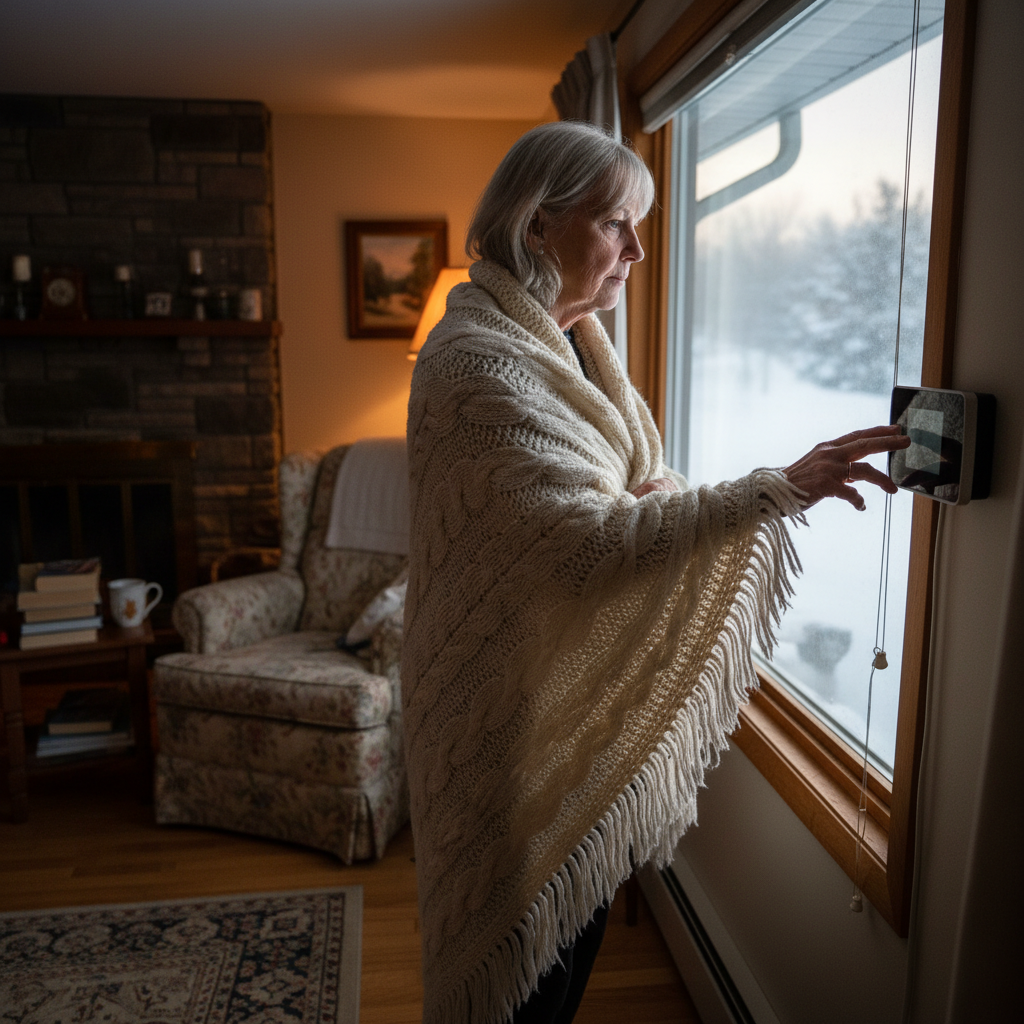
The Winter Heating Crisis for Ontario Retirees
Ontario winters are long, cold, and expensive. The average Ontario household spends $3,200–$4,000 annually on home heating — but seniors often pay 30–40% more due to aging homes, inefficient systems, and the inability to moderate temperatures (health risks of being too cold).
According to Statistics Canada's 2025 Household Energy Cost Report:
- 23% of Ontario retirees live in homes with heating systems over 20 years old
- Homes built before 1990 require 40–60% more heating energy than modern homes
- Propane-heated homes (common in rural Ontario) face volatile seasonal pricing with 15–25% annual variation
For a retired couple on CPP and OAS, winter heating costs are often the third-largest annual expense after property taxes and home maintenance. Yet unlike taxes and repairs, heating costs are largely unbudgeted — appearing as a quarterly shocker rather than a planned expense.
The math is brutal: If you're spending $4,000 annually on heating, that's $333 per month. But heating costs aren't evenly distributed. December through March demand $800–$1,200 per month — while summer months cost $200 or less. This creates a $3,000–$4,000 seasonal cash flow crisis every winter.
Why Reverse Mortgages Solve the Winter Heating Problem
A reverse mortgage provides immediate lump-sum capital that can be strategically allocated to winter heating and energy efficiency. Rather than watching savings deplete every January, you receive funds in one dispersal and can structure heating payments predictably.
Three strategic approaches:
Approach 1: Energy Efficiency Upgrades (Permanent Cost Reduction)
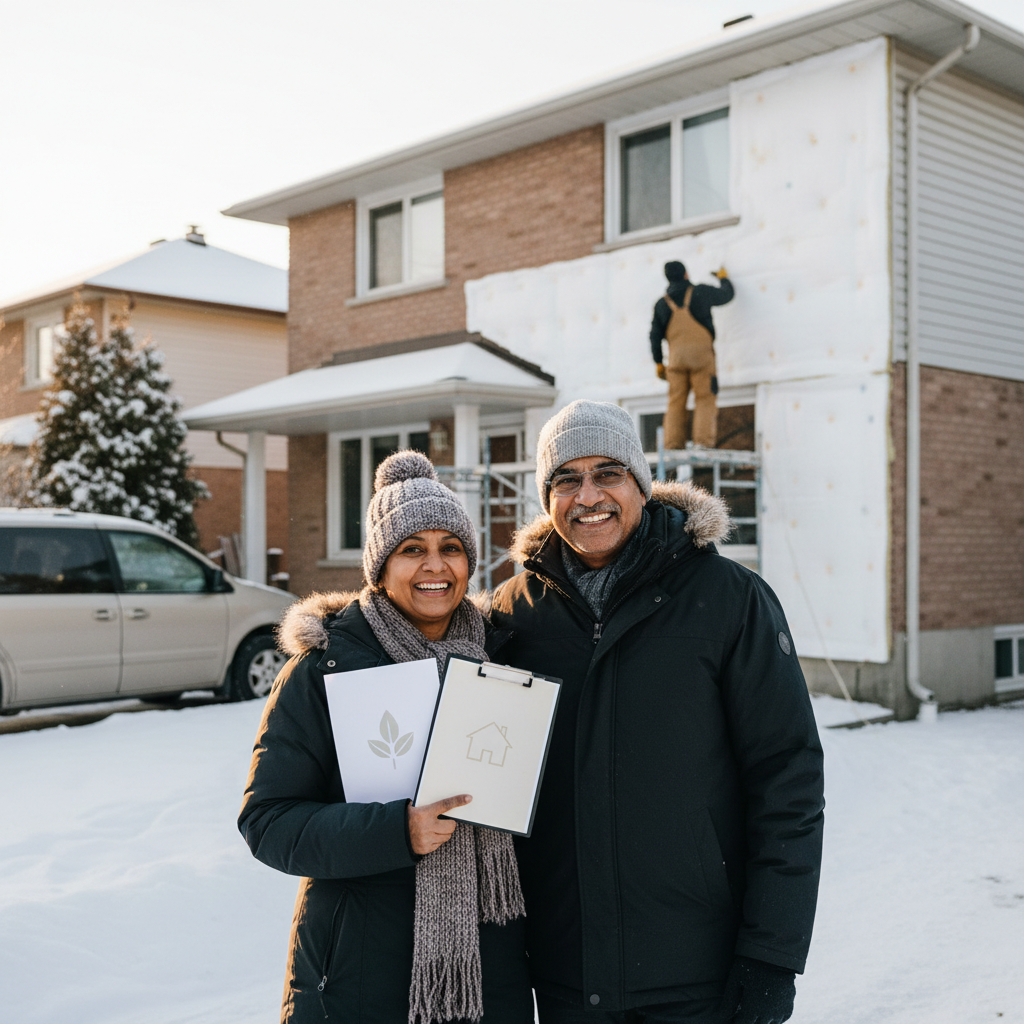
Use reverse mortgage funds to upgrade your heating system, insulation, windows, and weatherization. This reduces heating costs by 30–50% permanently.
| Upgrade | Cost | Annual Savings | Payback Period |
|---|---|---|---|
| Furnace replacement (high-efficiency) | $8,000–$12,000 | $600–$900/year | 10–15 years |
| Insulation upgrade (attic + basement) | $5,000–$9,000 | $400–$700/year | 8–15 years |
| Window replacement (weatherproof) | $10,000–$16,000 | $500–$800/year | 15–20 years |
| Heat pump system (air + ground source) | $15,000–$25,000 | $1,000–$1,500/year | 12–18 years |
| Weatherization package (all above) | $30,000–$45,000 | $2,000–$3,000/year | 12–18 years |
Example: Sarah, 67, in a 1,600 sq ft. home built in 1985, spends $4,200/year on heating. Her furnace is 22 years old and inefficient. She secures a $12,000 reverse mortgage draw, replaces her furnace with a high-efficiency model, and reduces heating costs to $3,300/year — saving $900 annually. The $12,000 cost pays for itself in 13 years, but Sarah now has $900 extra annually in her fixed-income budget. That's $75/month of freedom.
Approach 2: Seasonal Reserve Fund (Budgeting Predictability)
Set aside a reverse mortgage draw specifically as a "heating reserve" — funds available December through March without impacting other retirement income.
Instead of budgeting $4,000 annually, you allocate a $6,000 reverse mortgage draw at closing, deposit it into a separate account, and use it exclusively for heating bills. This achieves two things:
- Heating bills are prepaid — no monthly surprise bills or budget stress
- Remaining CPP/OAS remains available for groceries, medications, and other essentials
| Month | Heating Bill | Monthly CPP/OAS Allocation | Reserve Account |
|---|---|---|---|
| January | $1,000 | Food, meds, other | Draw from reserve |
| February | $950 | Food, meds, other | Draw from reserve |
| March | $850 | Food, meds, other | Draw from reserve |
| June | $150 | Food, meds, other | Draw from reserve |
| December | $800 | Food, meds, other | Draw from reserve |
Approach 3: HELOC Replacement (Eliminate Variable Rate Risk)
If you currently have a HELOC for seasonal cash flow, a reverse mortgage may offer better terms — no monthly payments, lower rates for seniors 70+, and fixed interest cost predictability.
A HELOC charges interest-only payments ($2,000+ annually for a $30,000 balance at 7% rates). With a reverse mortgage, you pay no monthly payments; interest compounds on your timeline, not the lender's.
The Reverse Mortgage + Government Grants Combination
Ontario offers multiple heating assistance grants for seniors, but these are often underutilized. Combining reverse mortgage funds with government programs maximizes your winter stability.
Federal Low-Income Home Energy Assistance (Canada Mortgage and Housing Corporation)
- Eligibility: Household income under $35,000
- Benefit: Up to $3,500 for furnace replacement or energy upgrades
- Process: Apply through your provincial government; takes 8–12 weeks
Ontario Renovation Tax Credit (Ontario Ministry of Finance)
- Eligibility: Renovations for homes you own (any income level)
- Benefit: 15% tax credit on insulation, HVAC, window upgrades
- Process: Claim on your tax return; credit applied to next year's tax payable
Senior Home Energy Support Program (Social Services)
- Eligibility: Ontario seniors 65+, household income under $45,000
- Benefit: Up to $1,500 for heating system repairs or emergency heating
- Process: Contact your local community support agency
Strategic combination: Use a $15,000 reverse mortgage draw to fund a heat pump installation ($15,000 cost). Apply for the CMHC grant ($3,500), which is sent directly to the contractor. The federal credit reduces your cost to $11,500 out of pocket. Then claim the Ontario Renovation Tax Credit (15% x $11,500 = $1,725 tax credit next year). Your actual cost: $15,000 out of pocket, but $5,225 in combined grant + tax benefits — bringing the real cost to $9,775.
Propane vs. Natural Gas: Reverse Mortgage Strategy for Rural Ontario
Rural Ontario homeowners without natural gas access often rely on propane heating — one of Ontario's most volatile energy costs. Propane prices swing 25–40% annually based on global crude prices, creating unpredictable budget chaos.
| Scenario | Cost | Annual Volatility |
|---|---|---|
| Natural gas (Toronto urban) | $2,400–$3,200/year | ±8% |
| Propane (rural Ontario, 900 gal/year) | $3,200–$4,800/year | ±25% |
| Oil heat (older rural homes) | $3,600–$5,200/year | ±30% |
Propane heating creates a unique reverse mortgage opportunity: Use your draw to pre-purchase propane during summer (off-season pricing), locking in 15–25% savings before winter supply crunches drive prices up.
Example: Michael, 71, near Muskoka, uses 900 gallons of propane annually. Winter (Nov–March) pricing averages $4.20/gallon ($3,780 cost), but summer (May–August) pricing averages $3.40/gallon ($3,060 cost). He secures a $4,000 reverse mortgage draw in June, pre-purchases 1,200 gallons at summer rates ($4,080 cost), and covers his entire winter heating for less than he'd pay for 900 gallons at winter rates. Savings: $720 by strategic timing.
For rural Ontario propane users, a reverse mortgage + summer pre-purchasing strategy can reduce heating costs by 15–20% annually — more than any furnace upgrade.
Common Winter Heating Questions for Ontario Seniors
"My heating costs are $4,000/year. How much reverse mortgage should I access?"
Don't think in annual heating costs — think in remaining lifespan reduction potential. A $12,000 furnace replacement reducing costs by $800/year breaks even in 15 years. If you're 67, that's roughly age 82 — reasonable planning horizon. Access the $12,000, upgrade the furnace, and enjoy $800/year savings for decades.
If you're 82+ and heating replacement won't break even in your expected lifespan, use Approach 2 (seasonal reserve) instead: access $6,000 annually for 4 years, and dedicate it exclusively to heating bills.
"Will a reverse mortgage affect my Guaranteed Income Supplement (GIS)?"
No. Reverse mortgage proceeds are loan advances, not income. According to the Canadian government, GIS income calculations exclude reverse mortgage proceeds. You can access $50,000 via reverse mortgage without losing a single dollar of GIS. This is a huge advantage for lower-income retirees.
"What if I sell my home in five years? How does the reverse mortgage work?"
When you sell, the reverse mortgage is paid from proceeds. If you've accessed $20,000, received $8,000 in interest accrual, and your home sells for $650,000, you receive $622,000 after paying the $28,000 mortgage balance. No balloon payment, no surprise — it works exactly like a standard mortgage.
Reverse Mortgage vs. Other Winter Heating Financing Options
| Option | Best For | Drawback |
|---|---|---|
| Reverse Mortgage | Permanent upgrades + budget stability | 4–5 week approval |
| HELOC | Quick seasonal access | Interest-only payments; rising rates risky |
| Utility Assistance Programs | Low-income households | Complex application; limited funding |
| Senior Tax Credits | Higher-income retirees | Tax benefit (not cash); arrives next year |
| Contractor Financing | Emergency repairs only | High interest rates (12–18%) |
For winter heating, a reverse mortgage is optimal because you access funds once, lock in your interest rate, and have no monthly payments to disturb your fixed retirement income.
The Compounding Benefit: Peace of Mind
Beyond the mathematics, a reverse mortgage eliminates the emotional and financial stress of winter surprise bills. For many Ontario seniors, January's heating bill creates anxiety, forces choices between heating and other essentials, and disrupts retirement peace.
Accessing a $15,000–$25,000 reverse mortgage draw specifically for heating and energy upgrades provides years of budget stability — knowing your heating costs are either permanently reduced (via upgrades) or pre-funded (via reserves). This psychological benefit alone is worth exploring with a licensed reverse mortgage specialist.
Speak with Rick Sekhon, a licensed reverse mortgage specialist in Ontario, to model heating cost scenarios and determine how much a draw would stabilize your winter budgeting.
Quick Reference
| Approach | Best Use | Typical Draw | Annual Result |
|---|---|---|---|
| Energy upgrade | 30–50% heating cost reduction | $8,000–$25,000 | Saves $600–$1,500/year |
| Seasonal reserve | Budget predictability without upgrades | $6,000–$8,000 | Heating bills pre-funded |
| Propane pre-purchase | Rural Ontario; volatile propane pricing | $4,000–$6,000 | Saves 15–20% via summer pricing |
| Government grant coordination | Maximize grant availability | $12,000–$18,000 | Reduces upgrade cost 25–35% |
Frequently Asked Questions
Can a reverse mortgage be used specifically for heating costs?
Yes. There's no restriction on how you use reverse mortgage proceeds. You can designate funds for heating bills, HVAC upgrades, insulation, or any other purpose. Many seniors create a separate account and use it exclusively for winter heating.
What if I improve my home's energy efficiency — will my home's appraisal increase?
Typically, yes. Energy-efficient homes appraise 3–5% higher than identical homes with older HVAC systems. This can modestly increase your available reverse mortgage amount. Discuss pre-upgrade vs. post-upgrade appraisal strategies with your lender.
Does CHIP, Equitable Bank, or Home Trust allow funds for heating costs?
Yes. All three major lenders — CHIP, Equitable Bank, and Bloom Financial — allow reverse mortgage proceeds for any homeowner purpose, including heating upgrades and seasonal reserves. Confirm with your lender, but restriction is unlikely.
What's the minimum age for accessing a reverse mortgage for heating costs?
You must be 55 years old. All registered homeowners on the title must be 55+. Heating-specific needs don't require different age eligibility — standard reverse mortgage rules apply.
If winter heating isn't my only expense concern, can I use a reverse mortgage for multiple purposes?
Yes. A reverse mortgage line of credit allows you to draw funds for heating, property taxes, home repairs, medication, or any need. You're not limited to one purpose. This flexibility is one reason many Ontario seniors access larger amounts than immediate heating costs require.
Don't Let Winter Drain Your Retirement Savings
Ontario's heating season — December through March — shouldn't mean depleting your hard-earned savings. A strategic reverse mortgage can provide permanent cost reduction (through energy upgrades), budget certainty (through seasonal reserves), or both.
The winter planning window is autumn. Apply in September–October, receive approval by November, and have funds available before December heating season begins. Waiting until January forces a reactive scramble — and winter is no time for financial stress.
Ready to Learn More?
Find out exactly how much you could unlock from your home — free and no obligation.
Related Articles
Reverse Mortgage as Your Financial Safety Net: Building Peace of Mind in Retirement
How a reverse mortgage provides security and peace of mind in retirement. Less about borrowing, more about psychological safety for Ontario seniors.
Read →Using a Reverse Mortgage as an Emergency Fund in Retirement
Discover how a reverse mortgage can serve as an emergency fund in retirement for Ontario seniors. Compare options, costs, and setup strategies.
Read →Reverse Mortgage for Aging in Place With Fibromyalgia: Home Modifications for Invisible Illness
Fund home modifications for aging with fibromyalgia. Reverse mortgage enables accessible design for pain management, energy conservation, and quality of life.
Read →