
Reverse Mortgage for Rural Aging: Bridging the Telemedicine Gap When Broadband Fails
Fund in-home visiting care, mobile clinics, and broadband alternatives for rural seniors where telemedicine infrastructure doesn't exist.
Your aging parent lives 40 kilometers from the nearest specialist. They've been offered "virtual appointments" by their doctor—but the broadband at their rural home is so unreliable that video calls drop every 60 seconds. The system assumes everyone has reliable internet. But rural Ontario doesn't. A reverse mortgage can fund real alternatives to telemedicine when broadband simply doesn't exist.
The Rural Telemedicine Inequity: An Invisible Healthcare Gap
Telemedicine expansion during and after COVID-19 was presented as a solution for rural healthcare access. But telemedicine assumes reliable, high-speed broadband. Rural Ontario seniors often don't have it.
A broadband gap is the disparity between urban areas with ≥25 Mbps internet speed and rural areas with <5 Mbps—insufficient for video conferencing, health monitoring devices, or online pharmacy systems. According to Statistics Canada, 41% of rural Ontario seniors have internet speeds below 10 Mbps; many have 1–3 Mbps or no home internet at all.
The result: Rural aging parents are told "you can see your doctor via video" but the technology infrastructure doesn't support it. They then face three options:
- Drive 45 minutes to 2 hours for in-person appointments (leaving rural community)
- Accept health conditions worsening because appointment access is impossible
- Rely on family caregivers to transport them repeatedly, creating dependency
What Telemedicine Actually Requires (And Rural Areas Often Lack)
| Requirement | Urban Standard | Rural Reality | Gap Cost |
|---|---|---|---|
| Internet speed | 25+ Mbps | 1–5 Mbps (often shared with neighbors) | Video calls freeze/fail; health apps don't sync |
| Device access | Reliable laptop/tablet/smartphone | Older device, sometimes shared with spouse | Older devices can't support video quality; apps crash |
| Tech support | Home internet provider, retailer support, family IT help | Minimal local support; no Best Buy/Rogers stores nearby | Senior struggles to troubleshoot alone; misses appointments due to tech failure |
| Electricity reliability | Consistent power | Rural Ontario may have outages 4–8 times/year | Missed appointments during outages; medical device charging fails |
| Data overage costs | Included in home plans | Capped data; video calls consume 100 MB/hour | Families get $200+ overage charges; stop using video care to avoid costs |
Reverse Mortgage Solutions to Rural Telemedicine Gaps
Instead of expecting rural seniors to fix broadband (infrastructure change takes 5–10 years), a reverse mortgage funds immediate, functional alternatives:
Option 1: Visiting Health Professional Service ($2,000–$5,000/month)
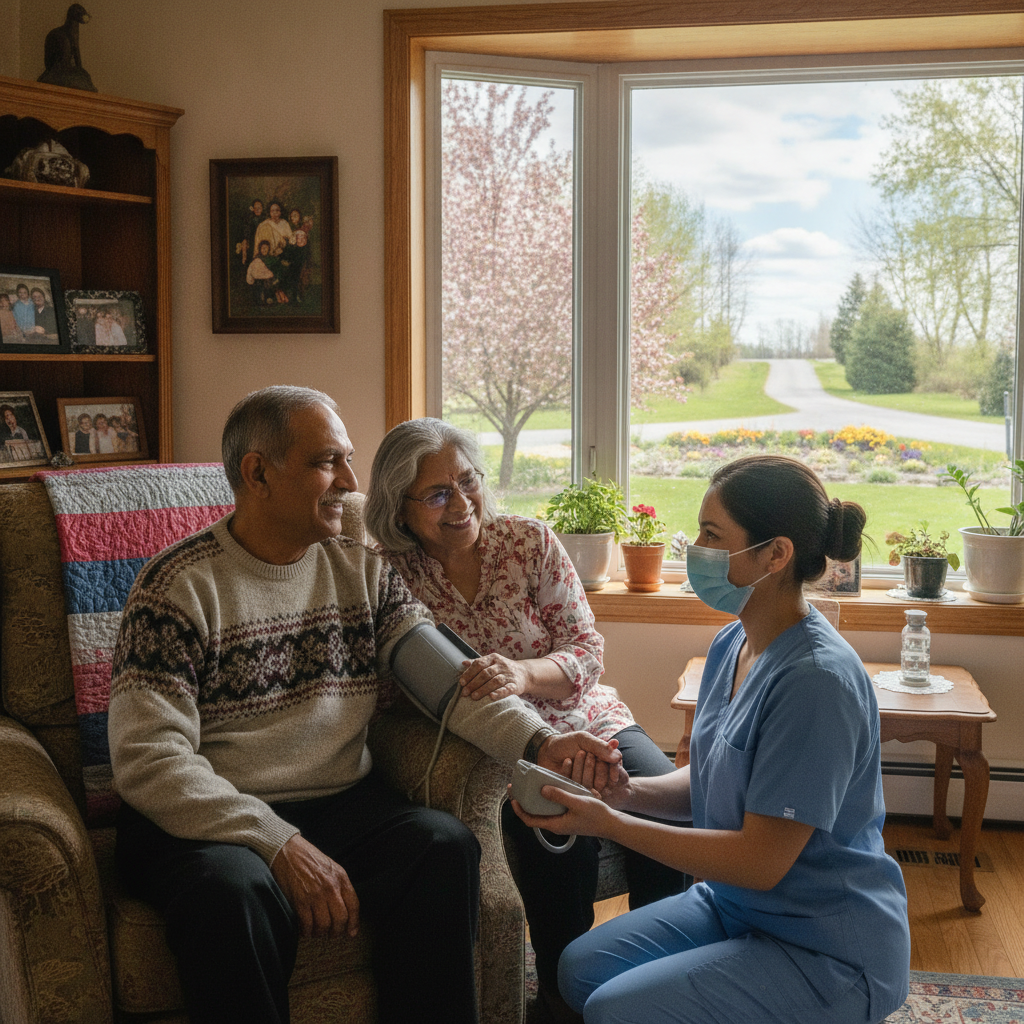
- Monthly in-home nurse visits: Vital signs, wound care, medication management ($800–$1,500/month)
- Occupational therapist home visits: Mobility, fall prevention, home safety assessment ($1,500–$3,000 per visit, quarterly)
- Mental health counselor via vehicle (mobile clinic model): Therapist travels to rural community, sees multiple patients per visit ($500–$1,200 per session)
This costs more per appointment than urban in-person care BUT prevents:
- Transportation time/cost for aging parent (saves $300–$600/month in travel fuel/wear)
- Caregiver time off work (saves adult child $500–$1,200/month in lost wages)
- Cascade health failures (blood pressure monitoring misses → stroke; medication mismanagement → hospitalization)
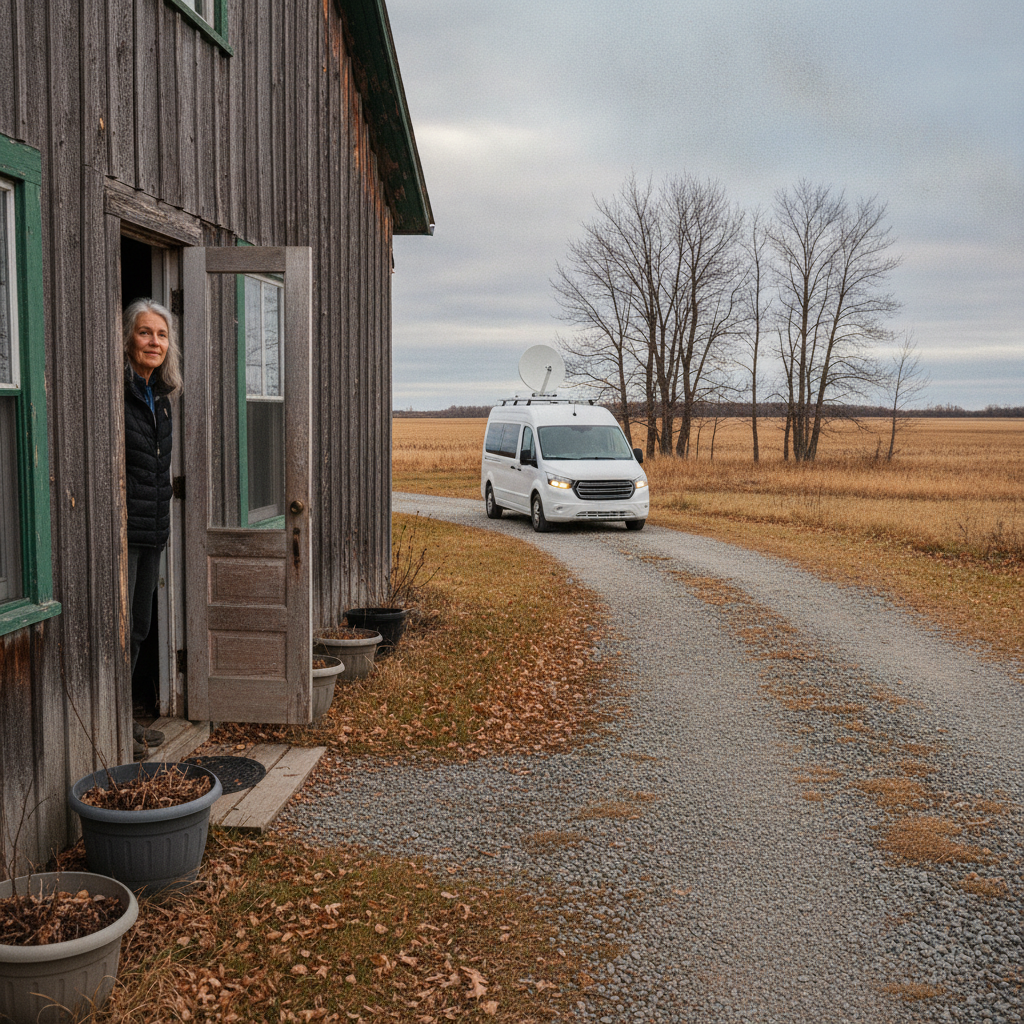
Option 2: Mobile Health Clinic Access ($1,000–$2,000/month)
Rural Ontario has limited mobile health clinics that visit communities monthly or quarterly:
- Well-woman clinics
- Foot care clinics
- Wound care services
- Blood pressure and diabetes monitoring
A reverse mortgage can fund:
- Coordination with mobile clinic schedule (nurse navigator, $500–$800/month): Ensures aging parent gets appointment, provides transportation
- Temporary accommodation near clinic if it's 90+ minutes away and aging parent needs overnight stay ($200–$400 per visit)
- Post-visit follow-up care delivered to home ($500–$1,000/month)
Option 3: Broadband Infrastructure Investment ($5,000–$15,000 one-time + $100/month)
Some rural areas now offer rural broadband improvements:
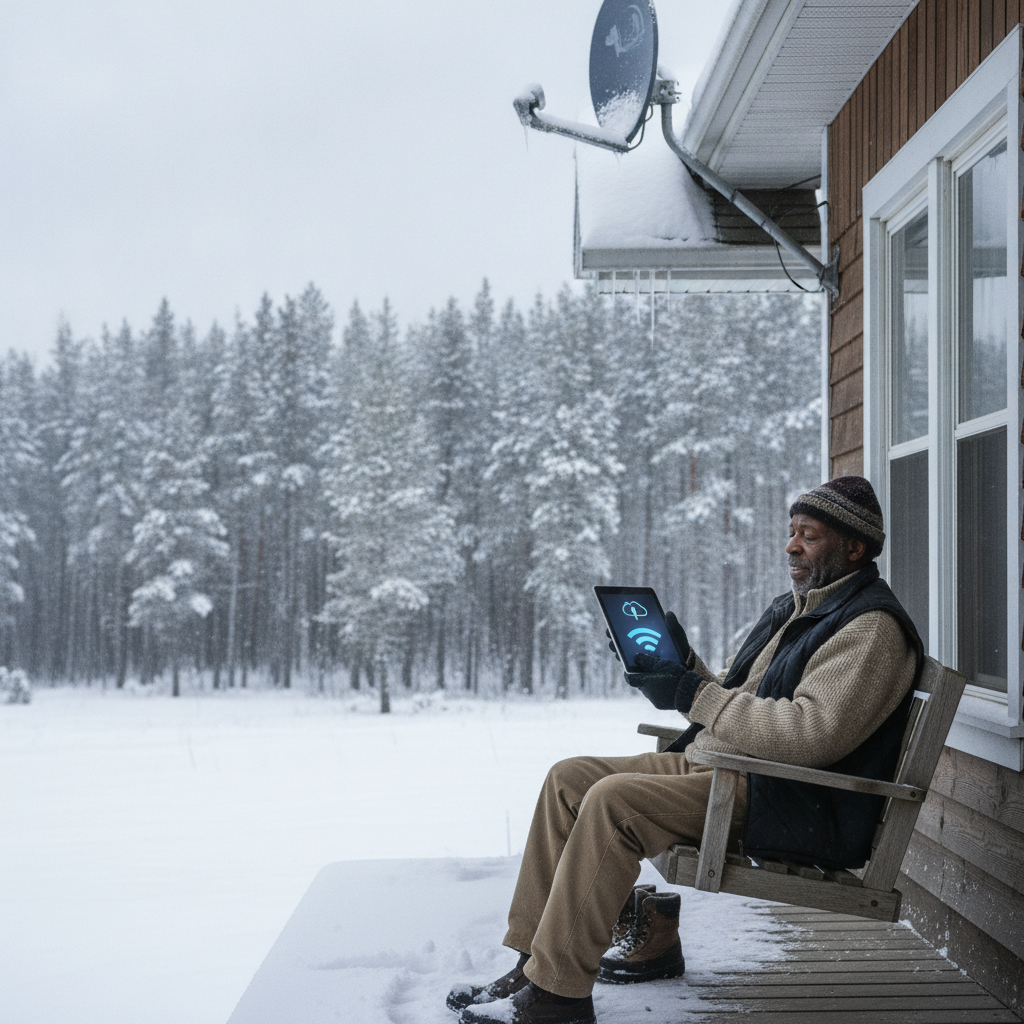
- Satellite internet (Starlink): $600 equipment + $120/month; 25–100 Mbps (unreliable in heavy weather)
- Fixed wireless (Bell/Rogers rural towers): $500 equipment + $80–$150/month; 10–25 Mbps
- Traditional ISP cable/fiber expansion: $800–$3,000 installation + $100–$150/month
A reverse mortgage can fund the equipment and first year service (where feasible), but this should be last resort if visiting care is available. Video calls are worse than useless if they prevent in-home monitoring.
| Solution | Cost/Year | Effectiveness for Aging Parent | RM Funding Recommendation |
|---|---|---|---|
| Visiting home nurse | $10,000–$18,000/year | High—direct assessment, medication management, safety monitoring | Primary solution |
| Mobile clinic + coordination | $6,000–$12,000/year | Moderate—episodic care, not ongoing monitoring | Secondary, for preventive care |
| Broadband upgrade | $2,000–$3,000 first year, then $1,200–$1,800/year | Low—unreliable in rural, requires ongoing tech support | Last resort; only if visiting care insufficient |
| Combination (visiting + broadband + clinic) | $18,000–$30,000/year | High—redundant access, safety net if visiting care unavailable | Recommended for isolated/high-risk seniors |
Real-World Example: Rural Aging Failure and RM Success
Ruth, 79, rural Perth County (45 km from London specialist care):
Without RM (2023):
- Diabetes requiring monthly specialist monitoring; internet too slow for telemedicine
- Drove 90 minutes each way (180 minutes/month) for appointments
- Adult daughter took 4 hours off work each appointment
- After 18 months: Driving became unsafe; appointments stopped; diabetes complications developed (cost: $15,000 emergency care)
With RM (2024–2026):
- Reverse mortgage approved; $1,500/month draw for 24 months
- Funded: In-home nurse visits ($1,200/month) + mobile clinic coordination ($300/month)
- Result: Diabetes stable; prevented complications; adult daughter no longer burning work time; Ruth stayed in her rural home
Total cost to family: $36,000 in RM draws. Alternative cost without RM: $45,000+ in emergency care + lost daughter work hours + Ruth forced to relocate.
Government Recognition of Rural Telemedicine Gaps
According to CMHC (Canada Mortgage and Housing Corporation) rural aging report, rural seniors cannot be expected to rely on telemedicine without broadband infrastructure. Ontario Health has acknowledged that rural providers may need to offer in-home visiting care as substitute for telemedicine.
However, this acknowledgment hasn't translated to funding. Visiting nurses and mobile clinics are largely funded through individual payments or private insurance—where reverse mortgage access becomes critical.
Reverse Mortgage Approval for Rural Healthcare Access
CHIP, Equitable Bank, and Bloom Financial all approve reverse mortgages for "healthcare costs and home-based medical services." Rural aging parent care explicitly qualifies.
Discuss with Rick Sekhon Reverse Mortgages to structure the draw:
- Flexible line-of-credit ($1,000–$2,000/month) for visiting nurse coordination
- One-time lump sum ($5,000–$10,000) for broadband infrastructure IF that's chosen as supplement
Frequently Asked Questions
Why wouldn't a rural senior just move to town to access telemedicine and specialists easily?
Aging in place—remaining in your home and community—is the primary goal for 85% of seniors. Forced relocation due to healthcare access costs is a form of healthcare inequity. A reverse mortgage preserves rural aging in place, which is lower-cost overall (lower housing costs, family support systems, familiar care) than urban facilities or long-term care homes.
Is broadband access improving in rural Ontario? When will telemedicine actually work for rural seniors?
Broadband expansion is happening, but infrastructure takes 5–10 years. Starlink satellite internet is improving, but remains unreliable in heavy weather and snow—exactly when rural seniors need health services most. The "telemedicine will solve rural access" narrative misses that infrastructure change is slow. Reverse mortgage funds current solutions while waiting for infrastructure.
Can my aging parent share broadband with neighbors to reduce cost?
Technically yes, but shared broadband for health apps is risky. If neighbor cancels service, parent loses health monitoring. Health-critical internet should be dedicated, not shared. Reverse mortgage funds dedicated broadband access if you choose that path.
Will visiting nurses be available if my rural community is very isolated?
Check with your local Community Care Access Centre (CCAC) or Family Health Teams. If visiting care isn't available locally, mobile clinics from nearby towns often travel to isolated communities. A reverse mortgage funds coordination (hiring a navigator to schedule appointments) if services exist but are hard to access. If services don't exist, consider the combination: visiting care from next-town-over + broadband upgrade as backup.
How much should I spend on broadband vs. visiting care?
General rule: If visiting care is available locally, fund that first ($1,200–$2,000/month). Broadband is supplementary (enabling appointment scheduling, medication refill orders, health apps) not primary care. A combination approach ($1,500/month visiting care + $100/month broadband) is optimal and costs $19,200/year.
Will FSRAO or FCAC have concerns about a rural senior using a reverse mortgage for healthcare access vs. traditional loan?
No. FSRAO explicitly permits reverse mortgages for "healthcare, medical services, and home modifications." Rural healthcare access is an explicit approved use. In fact, some rural seniors are MORE appropriate RM candidates than urban seniors because their healthcare costs are higher and they have fewer alternatives.
Key Takeaways
- Rural telemedicine assumes broadband that doesn't exist: 41% of rural Ontario seniors have internet <10 Mbps; video health appointments are impossible, not merely inconvenient.
- Visiting care is the functional alternative to telemedicine: In-home nurses, mobile clinics, and health coordinators cost $12,000–$24,000/year but prevent emergency care ($15,000–$50,000) and forced relocation.
- Reverse mortgage funds rural healthcare access with flexibility: Line-of-credit draws ($1,000–$2,000/month) match the unpredictable needs of rural aging parents.
- Broadband is improving but too slowly: While Starlink and fixed wireless expand, rural seniors aging NOW cannot wait 5–10 years for infrastructure. Reverse mortgage funds current solutions.
- Rural aging in place is lower-cost than relocation: With reverse mortgage support for visiting care, rural seniors stay in community with lower housing costs, family networks, and familiar care systems.
- CHIP, Equitable Bank, and FSRAO all recognize rural healthcare as standard RM use: No concerns about approval; fund with confidence.
Ready to Learn More?
Find out exactly how much you could unlock from your home — free and no obligation.
Related Articles
Reverse Mortgage After Your Caregiver Retires: Restructuring Care and Rebuilding Independence
Your longtime caregiver is retiring. A reverse mortgage funds the transition to new care arrangements and helps you rebuild independence after years of dependence.
Read →Reverse Mortgage for Rural Ontario Caregiving Deserts: When Attendants Cost 3x More
Rural aging in place costs dramatically more when care attendants are scarce. A reverse mortgage funds premium wages to attract caregivers to remote areas and stay affordable.
Read →Home Dialysis, IV Therapy, or Complex Medical Care? Reverse Mortgage for Specialized Medical Room Setup
Aging parent or adult child requires home medical care (dialysis, IV therapy, oxygen). Reverse mortgage funds specialized home modifications.
Read →