
Reverse Mortgage for Converting Waterfront Cottage to Year-Round Accessible Living
Convert seasonal cottage to primary residence: winterization, accessibility, plumbing upgrades. Reverse mortgage for waterfront property conversion and aging in place.
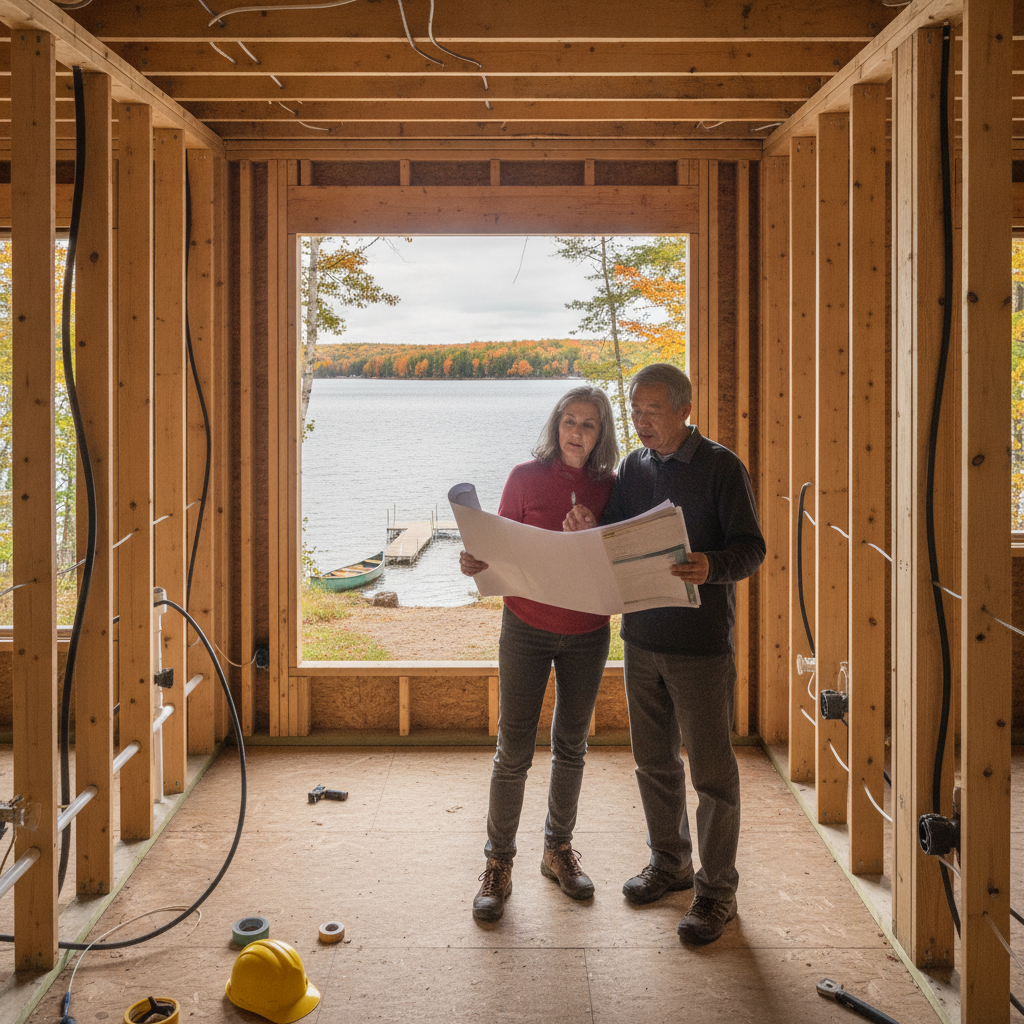
You've loved your family cottage for decades—the water view, the quiet mornings, the summer tradition. Now you want to stay there year-round, aging in place by the water instead of relocating to the city. But converting a seasonal cottage to a winter-habitable, accessible primary residence requires substantial infrastructure upgrades: insulation, heating, plumbing modifications, accessibility modifications.
A reverse mortgage converts your cottage equity into the capital needed to make waterfront living viable year-round, allowing you to age in the place you love.

The Gap Between "Seasonal Cottage" and "Year-Round Residence"
Seasonal cottages in Ontario are built for July–August comfort, not January resilience. Converting one requires rethinking almost every system:
Seasonal cottage features:
- Minimal insulation (designed for brief occupancy)
- Window coverings for summer sun, not winter cold
- Municipal water (summer) or minimal seasonal plumbing
- Septic system sized for temporary use
- Limited heating (perhaps a fireplace or small furnace)
- No winterized deck or exterior access
- Foundation designed for seasonal expansion/contraction
Year-round primary residence requirements:
- Full insulation (R-20+ walls, R-40+ attic)
- High-performance windows and doors
- Reliable year-round municipal or well water
- Full septic capacity for daily use
- Primary heating system (furnace, heat pump)
- Accessible exterior entrances, cleared walkways
- Foundation protection from freeze-thaw cycles
The cost gap between seasonal and year-round living: $60,000–$150,000 depending on property size and current condition.
According to the Canadian Home Builders' Association, cottage-to-primary-residence conversions average $85,000–$120,000 in Ontario, with winterization alone accounting for 40% of costs.
Detailed Upgrade Costs for Waterfront Cottage Conversion
Here's what actual conversion looks like in real dollars:
| Upgrade Category | Scope | Estimated Cost | Timeline |
|---|---|---|---|
| Insulation & Weatherization | Walls, attic, basement; weatherstripping; vapor barriers | $18,000–$28,000 | 6–10 weeks |
| Windows & Doors | High-performance replacement (thermal rated) | $12,000–$18,000 | 4–6 weeks |
| Heating System | Primary furnace or heat pump installation | $8,000–$15,000 | 2–4 weeks |
| Plumbing Winterization | Frost-proof faucets, drain protections, pipe insulation | $3,500–$6,000 | 2–3 weeks |
| Septic System Upgrade | Expand capacity for daily use; add winterization | $8,000–$14,000 | 4–8 weeks |
| Water Supply Upgrade | Reliable year-round source (well or municipal connection) | $5,000–$12,000 | 2–4 weeks |
| Accessibility Modifications | Ramp, wider doors, accessible bathroom, grab bars | $8,000–$15,000 | 4–6 weeks |
| Electrical & Code Updates | Upgrade panel, add circuits, ensure code compliance | $6,000–$10,000 | 2–3 weeks |
| Deck/Patio Winterization | Safe winter access, ice management, drainage | $4,000–$8,000 | 3–4 weeks |
| TOTAL ESTIMATED CONVERSION COST | $72,500–$126,000 | 3–4 months |
Real example: A 2-bedroom, 1-bath cottage in Muskoka County, currently valued at $385,000, requires $95,000 in conversion work to be a livable year-round residence. Reverse mortgage available: ~$154,000 (40% LTV). Accessing $95,000 for conversion leaves substantial equity for emergencies.
Why a Reverse Mortgage Works Specifically for Cottage Conversion
Cottage conversion is long-term, not emergency. A reverse mortgage handles this better than other options:
vs. HELOC (Home Equity Line of Credit):
- HELOC requires monthly minimum payments; RM doesn't
- HELOC has variable rates; RM is typically fixed
- HELOC can be recalled by the bank if your credit drops; RM is tenure-based
vs. Traditional mortgage refinance:
- Refinancing locks in a new 25-year mortgage; RM is tenure-based
- Refinancing requires proof of income; RM requires only home equity at 55+
- Refinancing creates monthly debt service; RM doesn't
vs. Personal savings:
- Most retirees don't have $95K liquid
- Tapping retirement savings triggers tax consequences
- Using home equity preserves liquid retirement income
A reverse mortgage is designed for exactly this scenario: You have substantial equity in an asset you want to improve, you want capital without monthly repayment pressure, and you're 55+.
Structuring the Draw Timeline for Renovation Work
Rather than borrowing the full amount upfront and paying interest on idle capital, stage the draws:
Phase 1 (Months 1–2): Insulation, weatherization, heating — $35,000 draw
- Priority 1: Make the home winter-habitable
- Complete before October (ahead of cold weather)
Phase 2 (Months 3–4): Plumbing, septic, water systems — $30,000 draw
- Ensure reliable water supply
- Frost protection systems installed before winter
Phase 3 (Months 5–6): Accessibility, electrical, decking — $30,000 draw
- Safety and comfort modifications
- Can be phased over summer if needed
Total draw: $95,000 over 6 months Interest accrual: Only on funds actually drawn and used
This staged approach saves approximately $3,000–$5,000 in interest compared to borrowing the full amount upfront.
The Waterfront Lifestyle Trade-Off: Is Year-Round Worth It?
Before committing $95K+ and years of renovation disruption, honestly assess waterfront year-round living:
Pros:
- Aging in place in a beloved environment
- Reduced seasonal moving/relocation costs
- Potential property appreciation (waterfront appreciation often exceeds inland)
- Active lifestyle opportunities (water activities adapted for mobility challenges)
- Sense of continuity and legacy
Cons:
- Winterization maintenance burden (snow removal, ice management, weather exposure)
- Isolation if rural cottage location with limited year-round community
- Emergency services response times (longer in rural areas)
- Seasonal road conditions may impact accessibility for aging, mobility issues
- Higher heating/utility costs in winter (waterfront exposure)
According to the Canadian Mortgage and Housing Corporation (CMHC), waterfront properties in Ontario have 12–18% higher appreciation than inland properties over 20-year periods—making the upgrade investment more likely to increase your home's value.

Key Takeaways
- Seasonal cottage conversion requires $70K–$130K in infrastructure upgrades: Insulation, heating, plumbing, and accessibility are all necessary.
- Winterization and heating account for 50% of conversion costs: These are non-negotiable for winter habitability.
- Staged reverse mortgage draws aligned with renovation phases minimize interest costs: Borrow only what you need when you need it.
- Waterfront property appreciation (12–18% over 20 years) often exceeds the cost of conversion: Your investment likely appreciates significantly.
- Year-round waterfront living requires accepting winter maintenance burdens: Snow removal, heating costs, and weather exposure are real daily realities.
- This is a legacy investment in your ideal retirement lifestyle: If waterfront aging in place is your vision, the conversion cost is often worth it.
Frequently Asked Questions
Will converting my cottage to year-round use affect property taxes?
Potentially, yes. Municipal tax assessments often change when seasonal properties become primary residences. Your property may reclassify from "seasonal cottage" to "primary residence," triggering reassessment and higher tax rates. Check with your local municipal assessor before starting conversion to understand tax implications. Budget for potential 10–20% annual property tax increase post-conversion.
Can I do the conversion in phases over several years to spread costs?
Absolutely. Phase the work over 2–3 years if cash flow allows. Year 1: insulation and heating (winter-habitability). Year 2: plumbing and water systems. Year 3: accessibility and finishing. A reverse mortgage can fund all phases with draws aligned to your timeline, so you're not forced to complete everything at once.
What if I realize year-round waterfront living isn't for me after conversion?
Your converted cottage becomes a more valuable asset. A winterized, accessible waterfront property is marketable to year-round buyers, and the improvements add property value. You can sell and relocate. The conversion cost isn't "wasted"—it's capitalized into the property's selling price.
Are there special permits or approvals needed to convert a seasonal cottage to year-round?
Yes. Check with your municipality and local conservation authority. Some waterfront properties have seasonal-only restrictions in original property transfers. Cottage conversion may require zoning variance, building permits, septic system approval, and conservation authority sign-off. Budget $1,500–$3,000 in permit and professional fees before starting work.
Will winterization and year-round living affect my homeowner's insurance costs?
Possibly lower. Insurance companies sometimes offer lower rates for year-round occupied properties (lower vacancy risk) compared to seasonal cottages. Get insurance quotes after conversion is complete. Your improved insulation and heating systems may also qualify for discounts.
Waterfront aging in place is a legitimate lifestyle choice—not a compromise. A reverse mortgage makes the conversion financially achievable, letting you build the year-round accessible home that lets you stay in the place you love.
Ready to Learn More?
Find out exactly how much you could unlock from your home — free and no obligation.
Related Articles
Reverse Mortgage for Aging in Place With Fibromyalgia: Home Modifications for Invisible Illness
Fund home modifications for aging with fibromyalgia. Reverse mortgage enables accessible design for pain management, energy conservation, and quality of life.
Read →Reverse Mortgage for Accessible Community Kitchen: Culinary Training and Aging in Place
Convert your home kitchen into an accessible commercial culinary training space. Reverse mortgage funds renovation while creating community impact.
Read →Reverse Mortgage When You Previously Gifted Home Down Payment to Adult Child: Reclaiming Equity for Aging in Place
Reverse mortgage strategy when aging in place after gifting down payment to adult child. Recover equity for home modifications and care.
Read →