
Reverse Mortgage for Universal Design Home Renovation: Creating Homes for All Abilities
Fund universal design home renovations with a reverse mortgage. Create adaptable spaces for all life stages, abilities, and accessibility needs in Ontario.
What if your home could adapt as your abilities changed — without costly renovations down the road? Universal design creates homes that work beautifully for people of all ages and abilities, from young grandchildren to aging parents, without looking institutional or compromising style.
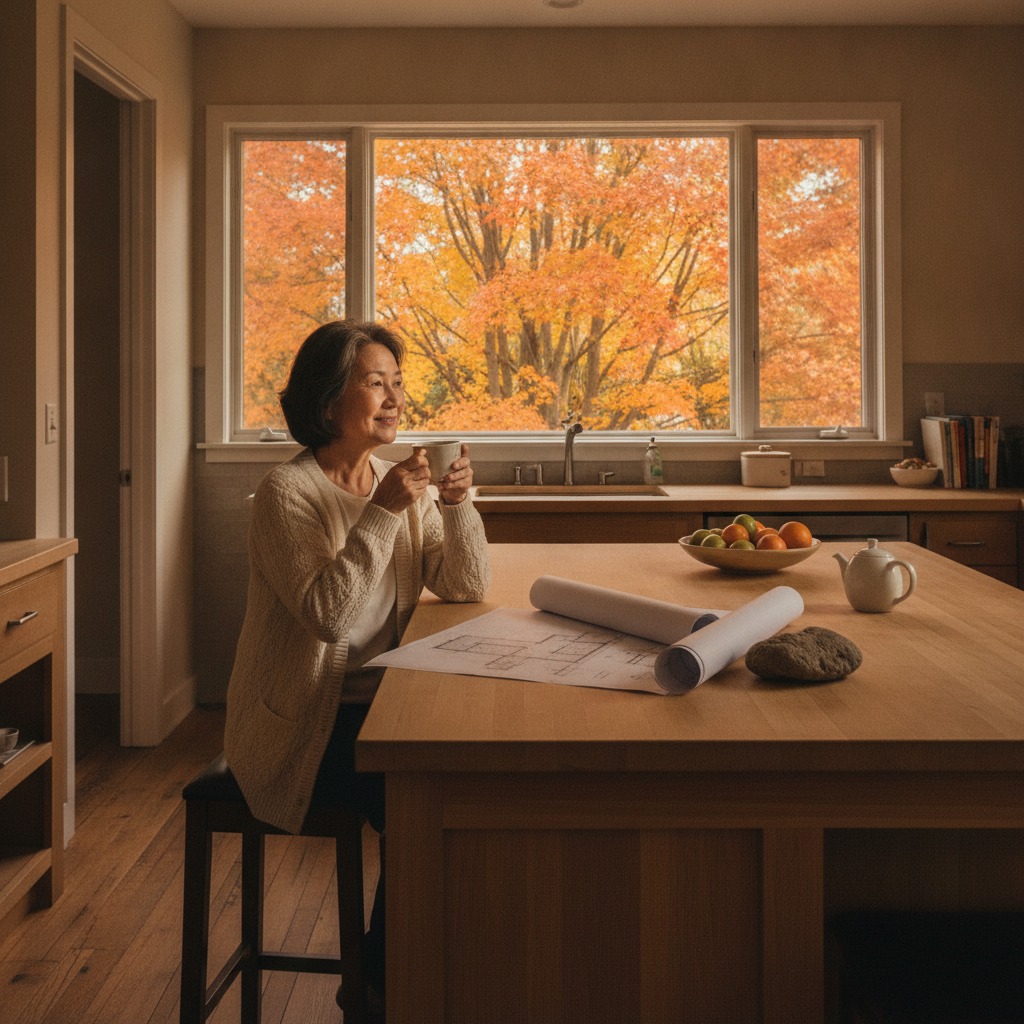
Many Ontario homeowners think "accessibility modifications" means grab bars and wheelchair ramps. But universal design goes further: it's about building flexibility into your home now, so you never face a crisis renovation. A reverse mortgage makes this proactive investment affordable.
What Is Universal Design?
Universal design is the practice of creating spaces usable by people of all ages and abilities — without adaptation or specialized design. According to the Centre for Excellence in Universal Design, universal design benefits everyone: lowered kitchen counters work for wheelchair users and shorter adults; level thresholds prevent trips for toddlers and seniors with mobility loss; good lighting helps aging eyes and reduces energy costs.
When you think about aging in your home, universal design means planning now for changes you may face in 20 years — without panic-driven $50,000+ renovations later.
Why Universal Design Matters for Ontario Homeowners
Aging in place is the preferred choice for most Canadians. According to CMHC data, over 80% of seniors want to stay in their current homes as they age. But homes built in the 1970s–2000s often have:
- Narrow doorways (standard is 32–36 inches; universal design uses 36–48 inches)
- Stairs at all entries
- Single-level layouts that isolate bedrooms or bathrooms
- Poor lighting and contrast in critical areas
- Slippery flooring materials
- Counters and appliances at heights designed for 5'8" adults
A reverse mortgage lets you fix these before they become barriers, keeping you independent longer and avoiding the stress of emergency modifications.
Universal Design Features Worth Funding
| Feature | Age-in-Place Benefit | Average Cost (Ontario) | Funded via RM? |
|---|---|---|---|
| Level entry / ramp | Mobility aid access, fall prevention | $2,000–$8,000 | ✓ Yes |
| Wider hallways (36"–48") | Wheelchair/walker clearance for all ages | $5,000–$15,000 | ✓ Yes |
| Open-concept main floor | Visibility, reduced isolation | $10,000–$40,000 | ✓ Yes |
| Grab bars + blocking (installed in walls) | Fall prevention, future grab bar addition | $1,500–$3,000 | ✓ Yes |
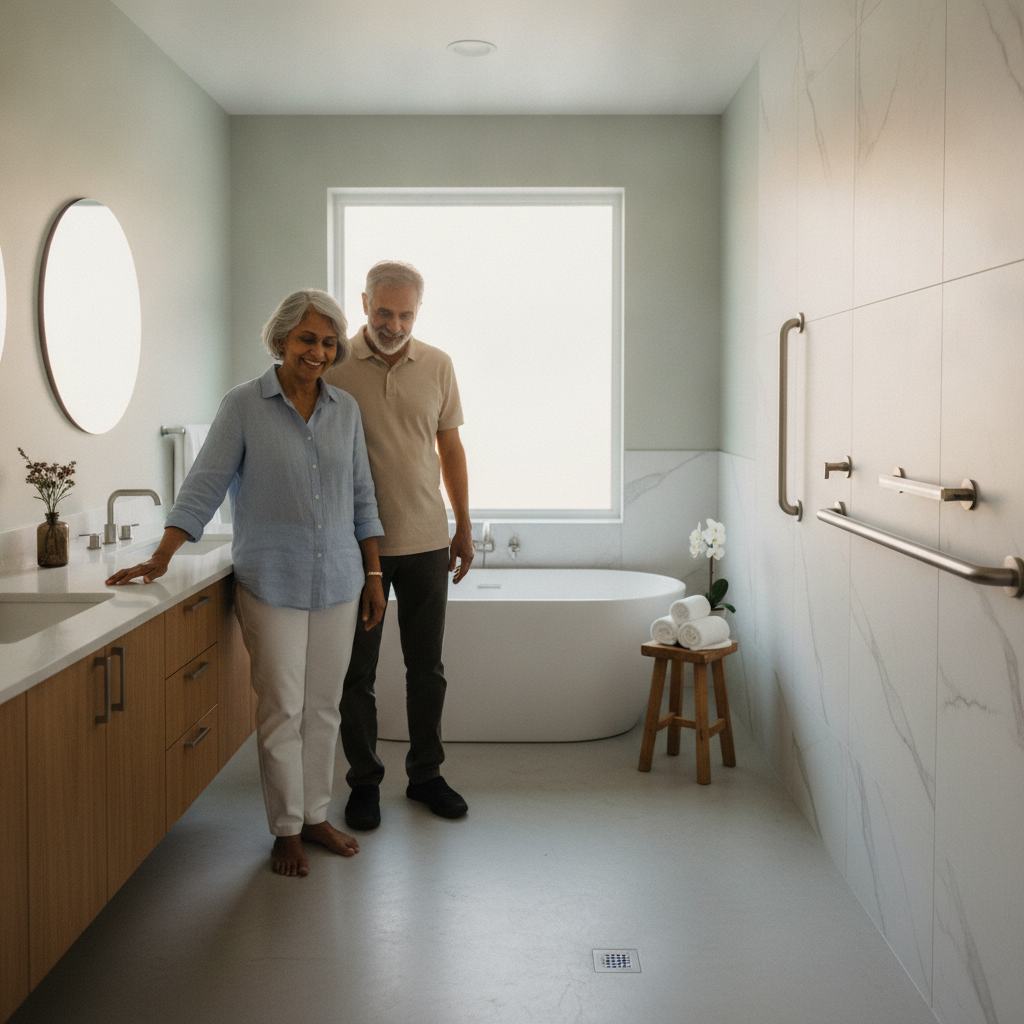
| Accessible bathroom (curbless shower, grab bars) | Safe bathing for all ability levels | $8,000–$20,000 | ✓ Yes |
| Adjustable-height counters | Use by wheelchair users and standing seniors | $3,000–$7,000 | ✓ Yes |
| Smart lighting (motion-activate, dimmers) | Fall prevention, energy savings | $2,000–$5,000 | ✓ Yes |
| Accessible laundry area | Ground-floor or height-adjusted | $3,000–$8,000 | ✓ Yes |
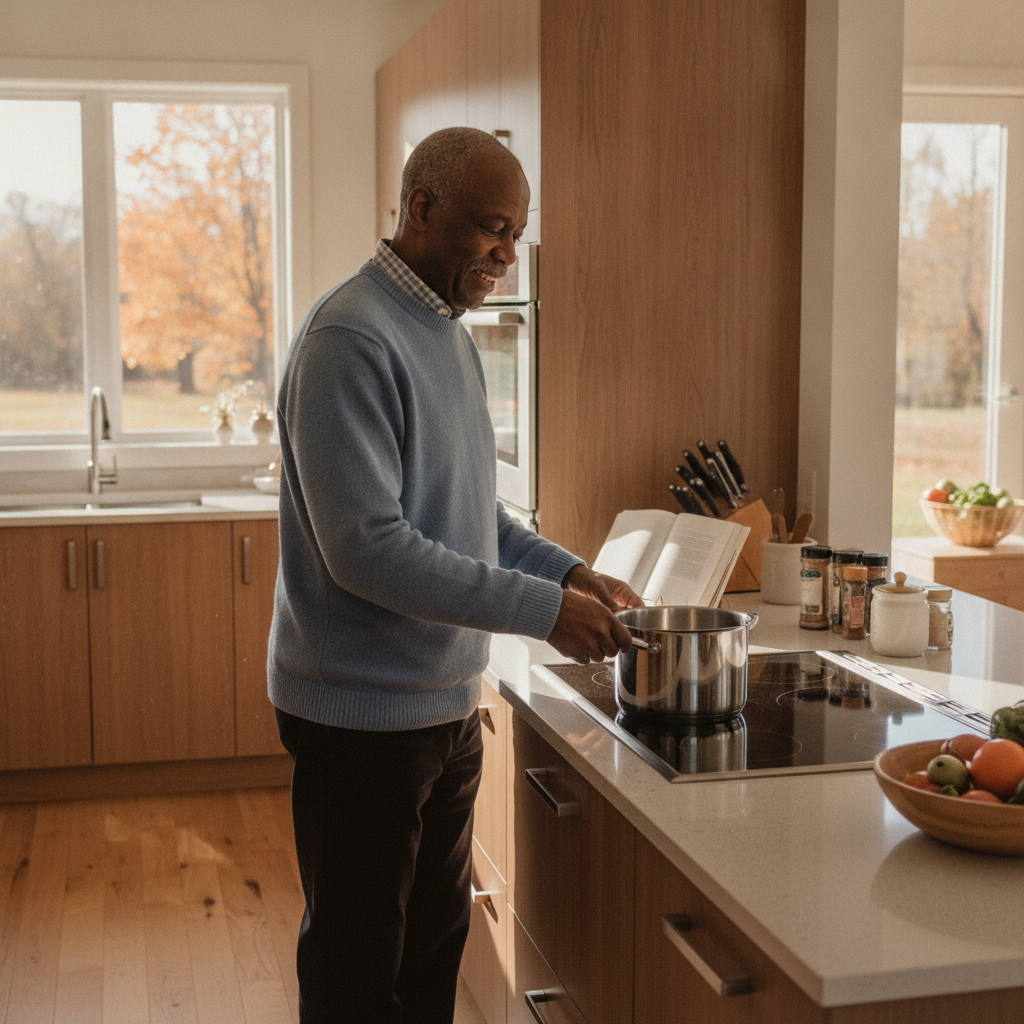
How a Reverse Mortgage Funds Universal Design Proactively
Most homeowners delay accessibility upgrades until a fall, injury, or health change forces expensive emergency renovations. A reverse mortgage lets you plan ahead:
Age 55–60: You're healthy, active, and thinking clearly. Getting a reverse mortgage now locks in your eligibility while securing funds for thoughtful, budget-friendly updates — ramps, lighting, wider doorways.
Age 65–75: You may face joint pain, vision changes, or slower mobility. With universal design already in place, your home adapts naturally; you stay independent longer without crisis spending.
Age 80+: If you need more intensive care, your home already supports walkers, wheelchairs, and in-home caregiving. You've eliminated the costliest adaptations.
According to FSRAO (Financial Services Regulatory Authority of Ontario), reverse mortgages are increasingly used for home modifications because they provide flexible, tax-free access to home equity without forced home sales.
Reverse Mortgage + Universal Design: A Smart Combination
Home Trust, CHIP, and Equitable Bank all recognize universal design as a legitimate use of reverse mortgage funds. Here's why:
- Keeps you in your home longer (lower long-term care costs for society)
- Increases home equity safety (fewer falls, injuries)
- Improves resale value (accessible homes appeal to broader markets)
- No time pressure (fund gradually vs. emergency spending)
Cost of procrastination: A bathroom retrofit done in panic mode (after a fall) can cost $25,000–$50,000 and take months. The same renovation planned proactively with universal design principles might cost $12,000–$18,000 and allow you to choose contractors and timing.
Working with Designers Who Understand Universal Design
When you use a reverse mortgage for universal design work, hire professionals who specialize in this approach — not just generic home renovators. They'll:
- Create floor plans that work for multiple life stages
- Choose materials that are beautiful and functional (non-slip flooring that doesn't look institutional)
- Install blocking for future grab bars so you can add them later without wall damage
- Design kitchens and bathrooms that adapt as you age
- Optimize lighting for both safety and ambiance
Rick Sekhon Reverse Mortgages can connect you with designers who understand how to combine reverse mortgage budgets with universal design principles.
Tax and Financial Considerations
Reverse mortgage funds are tax-free — they're loan advances, not income. However, some renovations may affect property tax assessments:
| Renovation Type | Property Tax Impact | CRA Consideration |
|---|---|---|
| Bathroom upgrade (no square footage change) | Minimal | No capital cost allowance |
| Kitchen modernization | Minimal if no expansion | No CCA |
| Open-concept renovation (removes walls) | May increase | Potential CCA eligibility |
| Room addition or expansion | Likely increase | CCA may apply |
| Accessibility upgrades only (ramps, grab bars) | Minimal to none | No CCA |
According to the CRA, accessibility modifications are generally not considered capital improvements for taxation purposes — another win for aging in place.
Key Takeaways
✓ Universal design benefits everyone — your grandchildren navigate ramps as easily as your mobility-aid users ✓ Proactive funding prevents crisis spending — a $12,000 planned renovation beats a $40,000 emergency ✓ Reverse mortgage proceeds are tax-free — funds for universal design don't trigger income or capital gains tax ✓ Boosts home value and safety — accessible homes appeal to broader markets and reduce injury risk ✓ Increases independence and longevity — well-designed homes support aging in place for decades ✓ CHIP, HomeEquity Bank, and Equitable Bank support this use — lenders recognize universal design's value
Frequently Asked Questions
Does universal design look like a medical facility?
No. Modern universal design is indistinguishable from standard renovation choices — wider hallways, open kitchens, level entries, and good lighting are mainstream design trends. Grab bars, if you choose them, come in stylish finishes (brushed nickel, matte black) that complement décor.
Will universal design renovations increase my property taxes?
Minor accessibility upgrades (ramps, grab bars, non-structural changes) typically don't trigger reassessment. However, major renovations (room additions, square footage changes) may affect your assessment. Consult a local property tax expert before planning large-scale work.
Can I get a reverse mortgage just for universal design work, or do I need other reasons?
You can use a reverse mortgage for universal design alone. Lenders don't require you to have multiple reasons; proactive aging in place is a fully legitimate use.
How much home equity do I need to fund universal design?
It depends on the scope. Basic updates (lighting, grab bar blocking, doorway widening) might cost $10,000–$25,000. Major renovations (bathroom + kitchen + open-concept) could run $40,000–$80,000. Most Ontario homeowners 55+ with mortgages paid off or near completion have sufficient equity. Speak with Rick Sekhon to assess your borrowing capacity.
What's the difference between universal design and accessibility modifications?
Accessibility modifications fix barriers (grab bars after a fall). Universal design prevents them by planning ahead (installing blocking for future grab bars, choosing slip-resistant flooring proactively, wide hallways from the start). Universal design is proactive; accessibility modification is reactive.
How long do universal design renovations take?
Timelines vary. Minor updates (lighting, grab bars, doorway widening) might take 2–4 weeks. Major renovations (bathroom, kitchen, open-concept) typically take 8–16 weeks depending on scope and contractor availability.
Ready to Learn More?
Find out exactly how much you could unlock from your home — free and no obligation.
Related Articles
Reverse Mortgage for Professional Home Organization and Downsizing Services
Your home has accumulated 40 years of belongings. Professional organizers can help, but the cost is significant. A reverse mortgage can fund this service.
Read →Reverse Mortgage for Home Accessibility: Age in Place Renovations
Fund accessibility renovations and aging-in-place modifications using reverse mortgage proceeds in Ontario.
Read →Aging in Place with a Reverse Mortgage: Home Modification Guide
How Ontario seniors can fund aging-in-place home modifications with a reverse mortgage — costs, top modifications, grants, and a complete planning guide.
Read →