
Reverse Mortgage When Spouses Disagree: Aging in Place vs Downsizing
Navigate spousal conflict over housing decisions in retirement. How a reverse mortgage can resolve the aging-in-place vs downsizing debate.
What if you and your spouse fundamentally disagree about your retirement home—one wants to age in place, the other wants to downsize and move? This is one of the most common, yet rarely discussed, conflicts in retirement planning. One spouse loves their home, has deep community roots, and wants to modify it for aging. The other spouse sees downsizing as financial liberation: lower taxes, reduced maintenance, a fresh start. A reverse mortgage can resolve this impasse by providing the financial benefits of downsizing without actually selling the home, allowing both partners to get what they need.
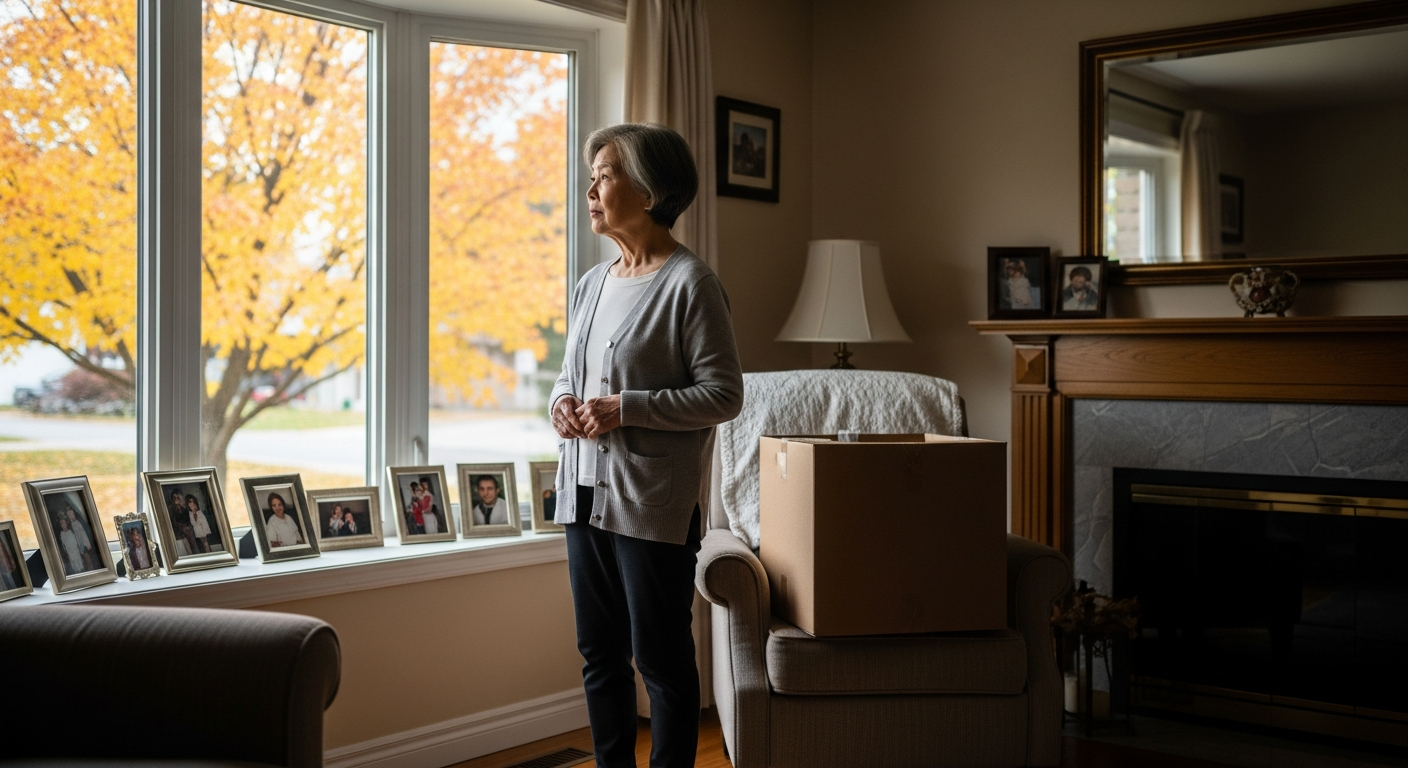
Spousal disagreement over housing in retirement often disguises deeper financial concerns. The downsize-oriented partner usually worries about affordability ("Can we really afford this home long-term?"). The aging-in-place partner values continuity, community, and autonomy. A reverse mortgage reframes the conversation: "What if we could unlock the home's financial value while staying here?" This satisfies the downsize-oriented spouse's need for cash and financial security while honoring the aging-in-place spouse's desire for stability and home.
The Core Conflict: Understanding Both Perspectives
Why do couples disagree so intensely about staying vs. moving? Each perspective is rational and emotionally rooted:
The Aging-in-Place Perspective
"I want to stay in my home."
- 30+ years of memories; children grew up here
- Established community ties (friends, church, volunteering)
- Familiar surroundings reduce anxiety and cognitive burden for aging
- Retrofitting for aging-in-place is cheaper than moving
The Downsizing Perspective
"We should sell and move to something manageable."
- Home maintenance becomes overwhelming with age
- High property taxes ($5,000–$12,000+ annually in Ontario)
- Equity locked in a depreciating asset (future home values uncertain)
- Smaller property = lower insurance, utilities, care costs
- Moving creates a "fresh start" and reduces stress
Both perspectives are valid. A reverse mortgage bridges them.
Financial Comparison: Aging in Place vs. Downsizing
Let's compare two Ontario couples' scenarios over 10 years:
Scenario A: Couple Stays (Age 70–80, $700k Home)
| Cost Category | Annual | 10-Year Total |
|---|---|---|
| Property taxes | $8,000 | $80,000 |
| Home insurance | $1,500 | $15,000 |
| Utilities & maintenance | $4,000 | $40,000 |
| Aging-in-place renovations | $2,000 avg (one-time $25k at year 1) | $45,000 |
| Healthcare services at home (if needed by year 8) | Variable; avg $1,000/year | $8,000 |
| Total 10-year housing cost | — | $188,000 |
| Home value appreciation (2% annually) | — | +$140,000 (theoretical) |
| Net cost to owners | — | ~$48,000 |
Scenario B: Couple Downsizes at Age 70 (Sell $700k Home, Buy $450k Condo)
| Cost Category | Amount |
|---|---|
| Selling costs (realtor 3%, legal, inspection) | $25,000 |
| Purchase closing costs (legal, land transfer tax) | $15,000 |
| Moving expenses | $8,000 |
| Total one-time transaction cost | $48,000 |
| New annual costs (smaller condo) | |
| Property taxes | $4,500/year |
| Condo fees (often covers utilities, maintenance) | $500/year |
| Condo insurance | $800/year |
| Annual total | $5,800/year |
| 10-year housing costs | $58,000 + $48k transaction = $106,000 |
| Proceeds from $700k → $450k sale | $250,000 (after costs) |
| Net financial position (10 years) | +$250,000 invested for income |
On paper, downsizing looks financially superior. But this ignores:
- Emotional cost of leaving the family home
- Risk of investment losses (the $250k proceeds may not grow as expected)
- Hidden costs of aging without family/community support
- Possibility that aging-in-place spouse becomes depressed, affecting health
The Reverse Mortgage Compromise: "Stay AND Unlock Value"
A reverse mortgage allows you to stay in your home while accessing its financial benefits:
| Approach | Stay in Home? | Access Home Value? | Monthly Obligations? | Maintains Equity? |
|---|---|---|---|---|
| Stay and do nothing | Yes | No | No | Yes (but illiquid) |
| Downsize | No | Yes | Maybe (new mortgage) | Reduced (by downsize amount) |
| Reverse mortgage | Yes | Yes | No | Yes (decreasing) |
How This Works in Practice
70-year-old couple with $700k home:
- Take reverse mortgage: $200,000 available (approx. 29% of home value)
- Pay off remaining traditional mortgage: $100,000
- Available cash: $100,000
- This cash replaces the financial security the downsize-oriented spouse needs
- The home-loving spouse stays put
Now both partners' needs are met:
- Home-lover stays; community and autonomy preserved
- Downsizer gets $100k in liquid capital and reduced mortgage burden
- Annual costs drop (mortgage eliminated or reduced)
- Both feel financially secure
According to FSRAO (Financial Services Regulatory Authority of Ontario), reverse mortgages are increasingly used for "spousal compromise solutions" in retirement—addressing conflicting housing preferences while maintaining household stability.
According to FCAC (Financial Consumer Agency of Canada), "spousal financial disagreement over housing is the most common conflict in retirement planning. Reverse mortgages offer a middle path that preserves relationship harmony."
Structured Compromise: The Reverse Mortgage Agreement
When spouses disagree, structure the compromise explicitly:
Sample Agreement (Consult Lawyer Before Implementing)
- We stay in our home for the next 10 years. (Aging-in-place spouse's need met)
- We take a reverse mortgage and invest $100,000 of proceeds to generate retirement income. (Downsizer's financial security need met)
- We commit to evaluating housing annually; if health changes, we revisit. (Flexibility maintained)
- The reverse mortgage is part of our estate plan; we discuss succession with our children. (Transparency)
- One spouse can't unilaterally change housing decisions; joint decision required. (Protection for both)
This agreement honors both perspectives while creating a clear path forward.
Reverse Mortgage vs. Other "Compromise" Options
| Option | Aging-in-Place Spouse Happy? | Downsizer Spouse Happy? | Practical Drawbacks |
|---|---|---|---|
| Stay, do nothing | Yes | No (feels financially insecure) | Conflict continues |
| Forced downsize | No (resentful, depressed) | Yes | Relationship damage; aging-in-place spouse's health may decline |
| Rent out spare rooms | Maybe (strangers in home) | Maybe (income) | Privacy loss; management burden; tax complications |
| Reverse mortgage | Yes | Yes | Requires financial planning discipline |
Key Takeaways
✓ Spousal disagreement over aging-in-place vs downsizing often masks financial insecurity on one side
✓ Downsizing provides cash but costs $40,000–$60,000 in transaction fees and emotional toll
✓ Aging in place costs $180,000–$250,000 over 10 years but preserves community and autonomy
✓ A reverse mortgage provides the financial benefit of downsizing (access to equity) without leaving home
✓ Reverse mortgage proceeds can fund home modifications, investments, or income while staying put
✓ Structured spousal agreements prevent future conflict and clarify decision-making roles
Frequently Asked Questions
Can we put the reverse mortgage in one spouse's name only?
In Ontario, if both spouses own the home, both must be on the reverse mortgage for clarity and protection. Placing it in only one spouse's name creates legal complications and isn't typical lender practice. Both spouses on the loan ensures both understand obligations and have equal say in draws.
What if one spouse dies—does the other have to repay immediately?
No. If one spouse passes away, the surviving spouse can typically remain in the home and continue the reverse mortgage under the same terms. However, the loan becomes due when the surviving spouse moves, sells, or passes away. Discuss succession planning with your lawyer and reverse mortgage lender.
If we take a reverse mortgage and then want to downsize later, can we do that?
Yes. A reverse mortgage doesn't lock you in. You can always choose to downsize later. The reverse mortgage is repaid from the home sale proceeds, and you keep any remaining equity. This flexibility is actually a strength—you gain security now, with freedom to change later if circumstances shift.
How do we prevent the reverse mortgage from becoming a source of conflict if we disagree on how to use the funds?
Establish clear terms upfront: Write a simple agreement stating that draws require both spouses' consent, or that funds go to a specific purpose (investment account, home modifications, etc.). Speak with Rick Sekhon about structuring the reverse mortgage to protect both partners' interests.
What if one spouse has early-stage dementia or cognitive decline?
This requires special care. Lenders need to verify both spouses understand the reverse mortgage terms. If one spouse has cognitive impairment, the other may become the primary decision-maker. Consult a lawyer specializing in elder law and capacity issues before proceeding.
Does one spouse's financial situation affect reverse mortgage qualification?
Reverse mortgages don't require income verification, so one spouse's financial situation doesn't disqualify you. However, both spouses' ages affect maximum borrowing (older spouse's age typically determines advance percentage). Full transparency with the lender ensures smooth qualification.
Next Steps
If you and your spouse disagree about aging-in-place vs downsizing:
- Have an honest conversation about underlying fears (financial insecurity, loss of community, maintenance overwhelm, etc.)
- Get a reverse mortgage quote from Rick Sekhon to understand what "staying with financial security" looks like
- Meet with a financial advisor to model both scenarios (staying with RM vs. downsizing)
- Consult a lawyer to formalize any agreement you reach about housing and reverse mortgage terms
- Schedule a joint meeting with your reverse mortgage specialist to ensure both spouses fully understand terms
Spousal harmony in retirement is worth more than any financial optimization. A reverse mortgage can provide the middle path.
For more on aging-in-place options, explore our aging in place strategies →. For downsize comparisons, see our reverse mortgage vs downsizing analysis →.
Ready to Learn More?
Find out exactly how much you could unlock from your home — free and no obligation.
Related Articles
Spousal Disputes Over Reverse Mortgages: Managing Disagreement and Decision-Making
When spouses disagree about getting a reverse mortgage. Mediation strategies, legal frameworks, and protecting both partners in Ontario.
Read →Reverse Mortgage vs. Selling & Downsizing in Ontario: Which Wins?
Compare staying in your home with a reverse mortgage vs. selling and downsizing. Includes financial analysis, emotional factors, and health/care considerations.
Read →Aging in Place with a Reverse Mortgage: Home Modification Guide
How Ontario seniors can fund aging-in-place home modifications with a reverse mortgage — costs, top modifications, grants, and a complete planning guide.
Read →