
Reverse Mortgage for Shared Home Office: Adult Child Remote Work + Aging in Place
Create a dual-use workspace that supports remote-working adult children while you age in place. Reverse mortgage funding for home office renovations in Ontario.
What if your adult child's remote work and your aging-in-place needs could share the same home space—creating mutual support while preserving privacy? Many Ontario families now face a modern challenge: adult children working from home, often with school-age children, while aging parents require accessible living modifications. A reverse mortgage can fund a thoughtfully designed shared office workspace that serves both generations simultaneously.
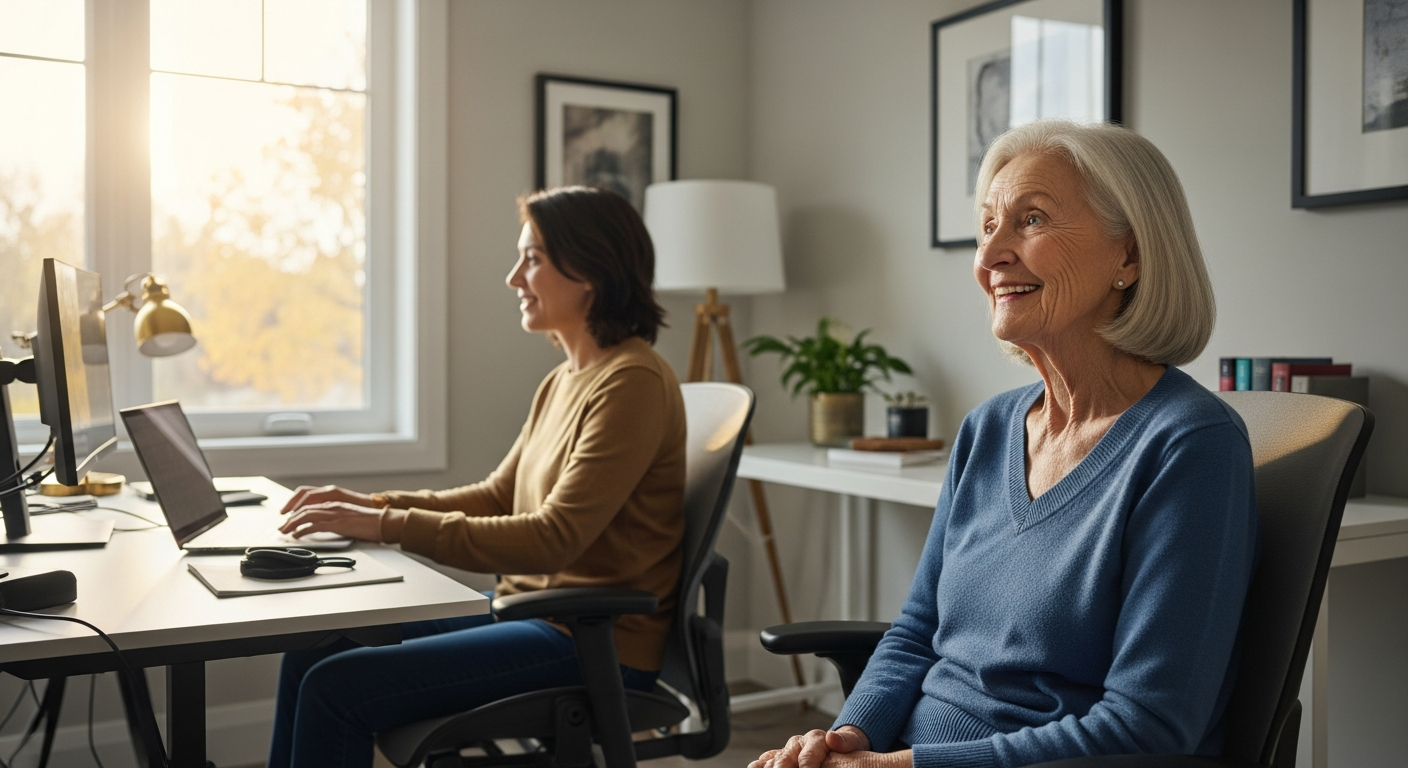
The post-pandemic remote work revolution has transformed homes into multipurpose spaces. When your adult child works from home and you're aging in place, a single-purpose home office becomes a shared economic asset. By strategically investing in a dual-use workspace—equipped with accessibility features, quiet zones, and mutual support infrastructure—both generations benefit from lower housing costs, built-in family support, and a more resilient household model.
The Rise of Multi-Generational Remote Work Households
Why are more Ontario families combining remote work with aging in place? The data is clear: according to Statistics Canada, 33% of Canadian workers now work fully or partially from home post-2024. Simultaneously, the average lifespan is increasing, and many aging parents prefer to remain in their family homes rather than transition to institutions. When both trends intersect in one household, the space and infrastructure needs become complex.
A typical scenario: your adult child earns $60,000–$90,000 working remotely for a Toronto-based tech company. Your aging parent (or you, if planning ahead) needs accessibility modifications—wider doorways, improved lighting, ergonomic furniture. Traditionally, families solve this with two separate projects: an adult child's dedicated office space plus aging-in-place renovations. Instead, a unified workspace design reduces costs while improving communication and family cohesion.
According to FCAC (Financial Consumer Agency of Canada), home equity unlocked through a reverse mortgage is increasingly used for "multigenerational housing infrastructure"—spaces that support multiple adults and varying mobility levels within a single home.
Designing a Dual-Use Home Office for Aging and Remote Work
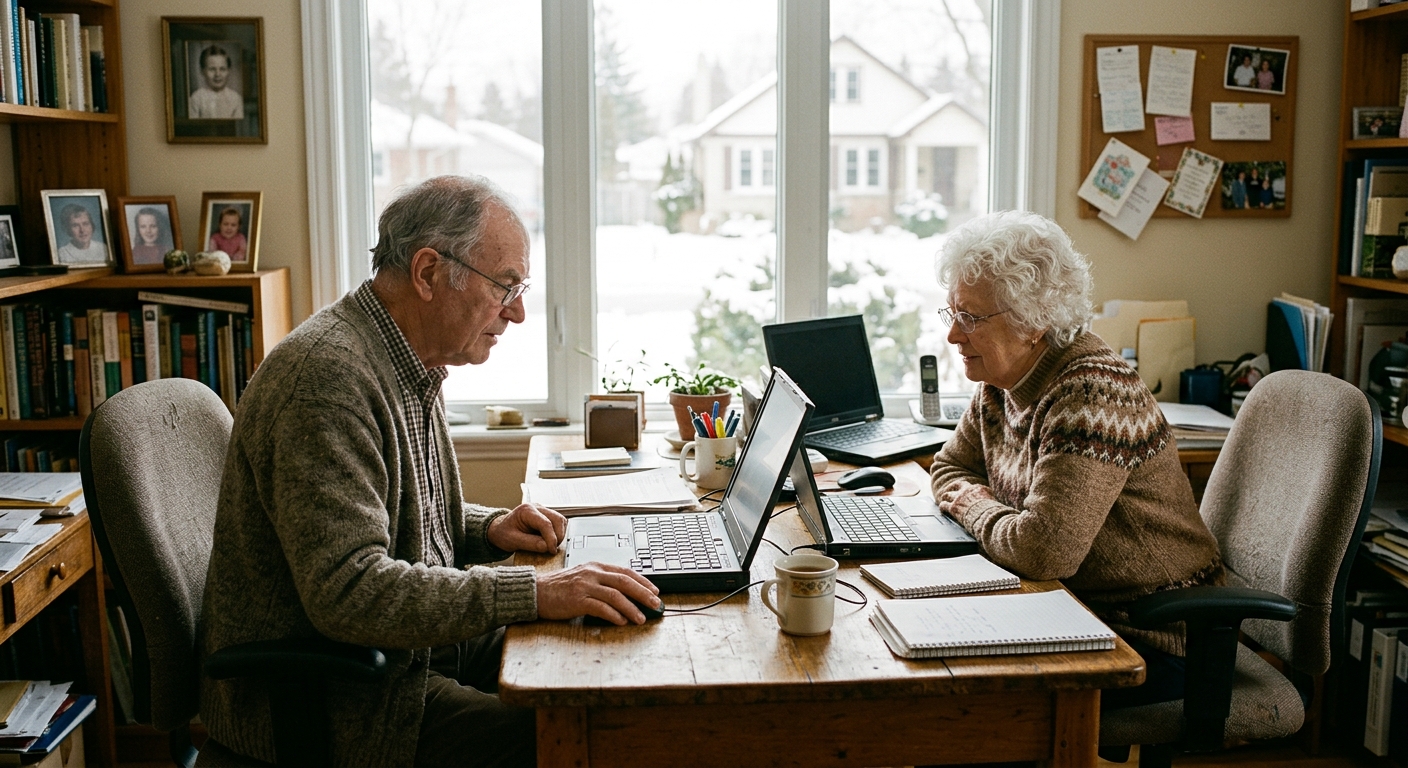
Core Elements of a Shared Office Workspace
A dual-use office maximizes efficiency. Key features:
Zone 1: Primary Work Area
- Adjustable-height desk (ergonomic for both young and aging bodies)
- Standing desk converter option (beneficial for aging joints; reduces circulation issues in older workers)
- Natural light access (critical for aging eyesight; proven productivity boost for remote workers)
- Video call backdrop (corner with neutral background for professional Zoom calls)
Zone 2: Break and Mobility Area
- Accessible seating with arm supports (supports aging mobility; provides remote worker break space)
- Small kitchenette or beverage station (encourages hydration, reduces workplace isolation)
- Walking space (accessibility requirement; improves circulation)
Zone 3: Child/Grandchild Support
- Quiet activity corner with supervised seating (aging grandparent can supervise while working; child has designated space)
- Storage solutions (reduces clutter; age-friendly organization)
Renovation Budget for Shared Office in Ontario (2026)
| Upgrade | Cost Range | Benefit Category | Priority |
|---|---|---|---|
| Accessibility ramp or threshold removal | $1,500–$3,500 | Aging in place | High |
| Adjustable-height desk + ergonomic chair | $2,000–$4,500 | Both generations | High |
| Widened doorway (3 inches to 36 inches minimum) | $1,200–$3,000 | Accessibility | High |
| Improved lighting (LED, motion-sensor, dimmer) | $800–$2,000 | Both generations | Medium |
| Flooring upgrade (non-slip, burnished concrete, sealed tile) | $3,000–$7,000 | Aging in place | High |
| Climate control (mini-split HVAC zone) | $2,500–$5,000 | Both generations | Medium |
| Sound insulation (acoustic panels, door seals) | $1,500–$3,500 | Remote work | Medium |
| Total typical renovation | $12,500–$28,500 | Combined benefit | — |
Costs vary by location within Ontario, contractor rates, and existing structural conditions.
Funding Options: Reverse Mortgage vs. Other Sources
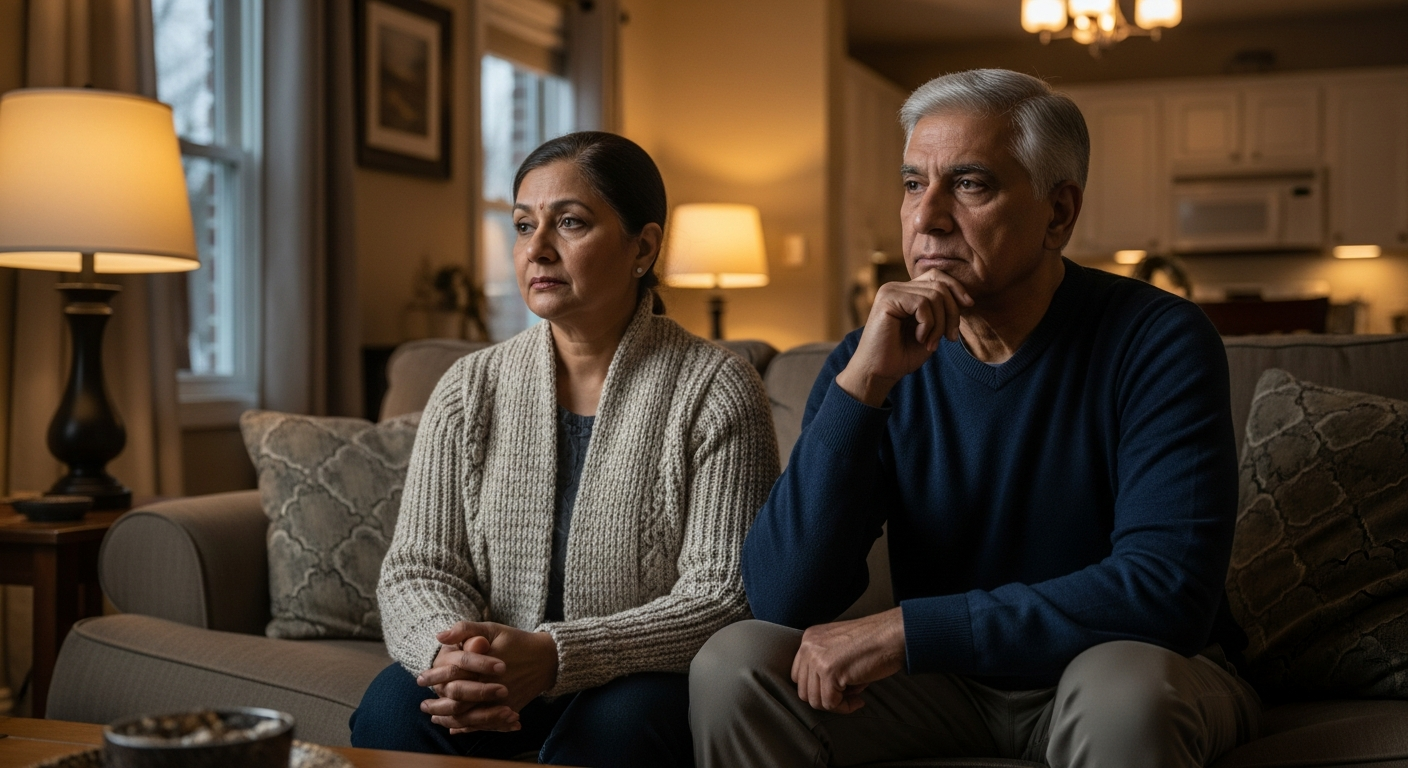
When aging parents fund home modifications to support adult children working from home, a reverse mortgage has distinct advantages over other funding sources:
| Funding Source | Access Speed | Tax Implications | Impact on Retirement Income | Flexibility |
|---|---|---|---|---|
| Savings/GIC withdrawal | 1–3 days | Taxable (interest earned) | Permanent reduction | Limited |
| HELOC on aging parent's home | 1–2 weeks | Interest-bearing debt | Monthly payments required | High |
| Reverse mortgage | 2–3 weeks | Tax-free proceeds | No payments required | Very high |
| Adult child's personal loan | 1–2 weeks | Affects child's credit; personal debt | Shifts burden to young family | Limited |
| Home Equity Bank or CHIP line of credit | 2–3 weeks | Tax-free advances | Only pay interest on draws | Very high |
The reverse mortgage advantage: You don't sacrifice retirement income or create monthly obligations. Funds are tax-free, and you retain flexibility to adjust draws if your circumstances change.
According to OSFI (Office of the Superintendent of Financial Institutions), reverse mortgages are increasingly used for "family infrastructure investment"—renovations that benefit multiple household members.
Practical Layout Example: Shared Office in a 12' x 14' Bedroom
Imagine a typical Ontario bedroom (12 feet wide, 14 feet deep):
Layout zones:
- 8' × 8' primary work area (desk near window, office chair, monitor stand)
- 4' × 6' secondary seating for aging family member (accessible armchair, side table for tea/water)
- 4' × 4' storage and circulation space
- 2' accessible clearance zones (supports mobility aids if needed later)
This layout is:
- Accessible: Meets Ontario Building Code requirements for aging in place
- Productive: Separate zones reduce video call distractions while allowing multi-generational presence
- Flexible: Can be reconfigured as mobility needs change
- Cost-effective: Single-room renovation ($15,000–$25,000) vs. separate office + aging-in-place projects ($35,000–$60,000)
How Reverse Mortgages Fund This in Ontario
Homeowners 55+ in Ontario with sufficient equity can access $150,000–$400,000+ through a reverse mortgage with lenders like Equitable Bank, HomeEquity Bank, CHIP, or Bloom Financial.
Typical structure:
- Borrow $20,000–$35,000 for shared office renovation
- Retain remaining equity for other aging-in-place needs (accessibility bathroom, kitchen modifications)
- No monthly payments; interest-only accumulates on drawn amounts
- Full flexibility to access remaining equity later if health or circumstances change
According to CRA, funds used for home modifications are not considered taxable income, whether funded by reverse mortgage or other sources. This is true for both accessibility modifications and productivity improvements.
Key Takeaways
✓ Dual-use office spaces reduce total renovation costs by 30–40% compared to separate projects
✓ Reverse mortgages provide tax-free funding without requiring monthly payments
✓ Shared workspaces support multiple generations' needs: remote work productivity, aging-in-place accessibility, family connection
✓ Ontario Building Code guidelines support accessible design that benefits both young and aging residents
✓ Typical renovation budget ($15,000–$30,000) is easily funded from home equity available to most Ontario homeowners 55+
✓ Design flexibility allows you to adapt the space as mobility and work arrangements evolve
Frequently Asked Questions
Can I claim the renovation costs as a business expense if my adult child works from home?
Home office renovation costs claimed by your adult child as a business deduction are their responsibility, not yours. You're funding a home modification as the homeowner. Keep the reverse mortgage funding separate from your child's business accounting. Speak with an accountant for your child's specific tax situation.
What if my adult child decides to move out after I've invested in the shared office?
The renovation increases your home's value. An accessible, well-designed home office appeals to many buyers or renters in Ontario's tight housing market. The improvements remain an asset of your home, benefiting your estate regardless of your child's tenure.
Does a shared office space affect my home's resale value?
Yes—positively. Accessible, well-designed multipurpose spaces are increasingly valuable in Ontario's aging demographic. Homes with aging-in-place features and modern office infrastructure command premiums, especially in urban/suburban markets where remote workers congregate.
What if I need the space for other purposes later (guest room, physical therapy, meditation)?
Shared office design is intentionally flexible. Adjustable furniture, modular storage, and neutral aesthetics mean you can repurpose the space quickly. A reverse mortgage's line-of-credit option lets you access additional funds for future modifications without refinancing.
Are there grants or tax credits for aging-in-place renovations in Ontario?
Ontario offers the Accessibility for Ontarians with Disabilities Act (AODA) tax credit (up to $20,000 in eligible costs) and the Home Accessibility Tax Credit (up to $20,000). If your adult child is disabled or if you're disabled, you may qualify. Consult a tax professional to combine reverse mortgage funding with available tax credits.
Can my adult child contribute financially to the renovation?
Absolutely. Your adult child can contribute to renovation costs while you finance the aging-in-place accessibility components through a reverse mortgage. This shared investment model is common and can reduce your reverse mortgage draw by 20–40%.
Next Steps
If you're planning multigenerational housing that supports both remote work and aging in place, start with a space audit:
- Measure your planned office space and assess natural light, accessibility, and acoustic needs
- Get quotes from Ontario contractors experienced in accessible design (budget $15,000–$30,000)
- Consult Rick Sekhon to determine how much home equity you can access through a reverse mortgage
- Explore Ontario tax credits and renovations grants that can offset reverse mortgage amounts
A well-designed shared workspace is an investment in both generations' wellbeing and financial security.
For more information on aging-in-place modifications, visit our complete aging in place guide → or explore home renovation strategies →.
Ready to Learn More?
Find out exactly how much you could unlock from your home — free and no obligation.
Related Articles
Reverse Mortgage When Adult Child Moves Back Home
How to fund multi-generational housing costs when an adult child returns home. Ontario guide for parents supporting boomerang children using home equity.
Read →Reverse Mortgage for Home Office Setup: Creating a Productive Retirement Workspace
Fund your home office with a reverse mortgage. Create a productive retirement workspace for consulting, hobbies, or part-time work in Ontario.
Read →Aging in Place with a Reverse Mortgage: Home Modification Guide
How Ontario seniors can fund aging-in-place home modifications with a reverse mortgage — costs, top modifications, grants, and a complete planning guide.
Read →