
Reverse Mortgage for Shared Home Office: Adult Child Remote Work + Aging Parent Under One Roof
When adult children work from home while aging parents live with them, space and infrastructure needs multiply. Fund shared home office design with a reverse mortgage.
You're both working from home—your adult child in a dedicated office, your aging parent needing accessible space for medical appointments and mobility. When multigenerational households combine remote work with aging in place, one home must accommodate two incompatible needs: professional workspace and accessible caregiving environment. A reverse mortgage funds thoughtful home design that separates work from care, benefiting both generations.
Multigenerational homes with remote work are increasingly common in Ontario, yet most are designed around one person's needs. Aging parents and remote-working adult children have opposing space requirements: quiet, professional offices vs. accessible, healing environments. A reverse mortgage enables integrated design—separate workspaces, accessible common areas, and private respite zones for both generations.
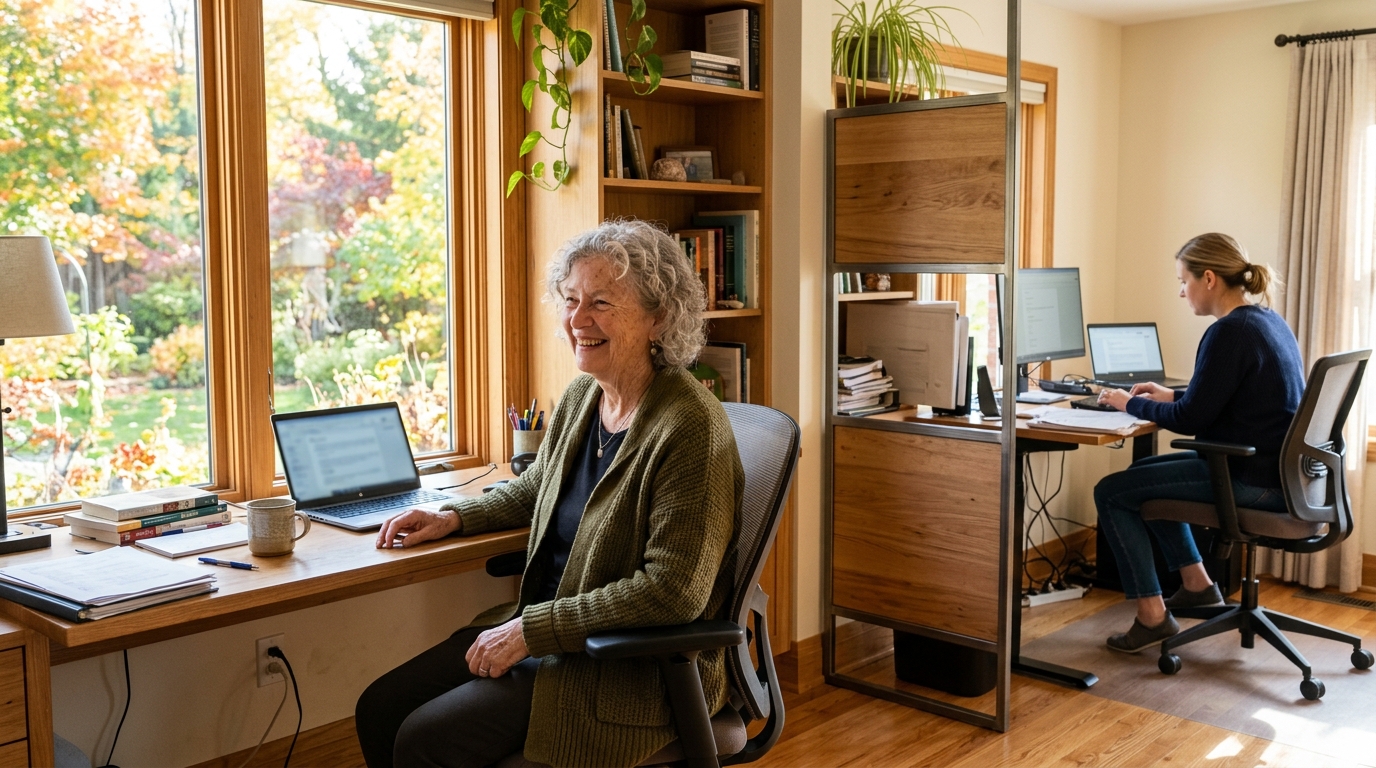
The multigenerational remote-work challenge
When adult child + aging parent + remote work converge:
| Need | Adult Child (Remote Work) | Aging Parent | Conflict |
|---|---|---|---|
| Workspace | Quiet, professional, uninterrupted | Accessible, medical equipment visible | Noise, traffic through workspace |
| Mobility | Independent; standing/walking | Limited; may use mobility aids | Stairs, narrow hallways problematic |
| Lighting | Bright, minimal glare (screen work) | Bright, warm, disability-friendly | Competing needs |
| Temperature | Cool (computers generate heat) | Warm (aging bodies lose heat regulation) | Thermostat disputes |
| Acoustics | Quiet for calls, concentration | Hearing aids may amplify background noise | TV, medical equipment sounds |
These competing needs require design separation, not shared space. A reverse mortgage funds infrastructure that accommodates both.
Home design investments for multigenerational + remote work
Infrastructure needed
Workspace separation:
- Dedicated office for adult child (soundproofed, professionally furnished, high-speed internet)
- Separate accessible zone for aging parent (ground floor or accessible bedroom + modified bathroom)
- Acoustic treatment (insulation between spaces)
Shared infrastructure:
- High-speed internet upgrade (mesh WiFi covering entire home for both work + medical monitoring)
- Accessible entrances/exits (level entry, grab rails)
- Bathroom accessibility (for aging parent; may benefit remote-working adult child)
Technology/accessibility:
- Grab bars and rails (main zones)
- Ramp or step-free entry
- Widened doorways for mobility equipment
- Accessible kitchen modifications
- Medical alert system integration
Environmental comfort:
- Dual-zone HVAC (separate temperature control for office vs. living areas)
- Lighting upgrades (accessibility + professional workspace)
- Sound insulation between spaces
Typical cost breakdown
| Category | Item | Estimated Cost |
|---|---|---|
| Workspace | Dedicated office + soundproofing | $10,000–$18,000 |
| Accessibility | Bathroom modifications + grab bars + entry ramp | $12,000–$22,000 |
| Infrastructure | High-speed internet upgrade + mesh network | $1,500–$3,000 |
| Environmental | Dual-zone HVAC + lighting upgrades | $6,000–$12,000 |
| Technology | Medical alert + security + tech integration | $2,000–$5,000 |
| TOTAL | Integrated home design | $31,500–$60,000 |
A typical multigenerational home with both remote work AND aging-in-place needs requires $35,000–$55,000 in thoughtful upgrades. A reverse mortgage funds this comprehensively.
According to CMHC (Canada Mortgage and Housing Corporation), multigenerational homes that don't address competing needs see significantly higher stress, conflict, and eventual separation. Homes that invest in design separation (dedicated offices, accessibility zones) report 40% higher satisfaction and longevity of cohabitation.
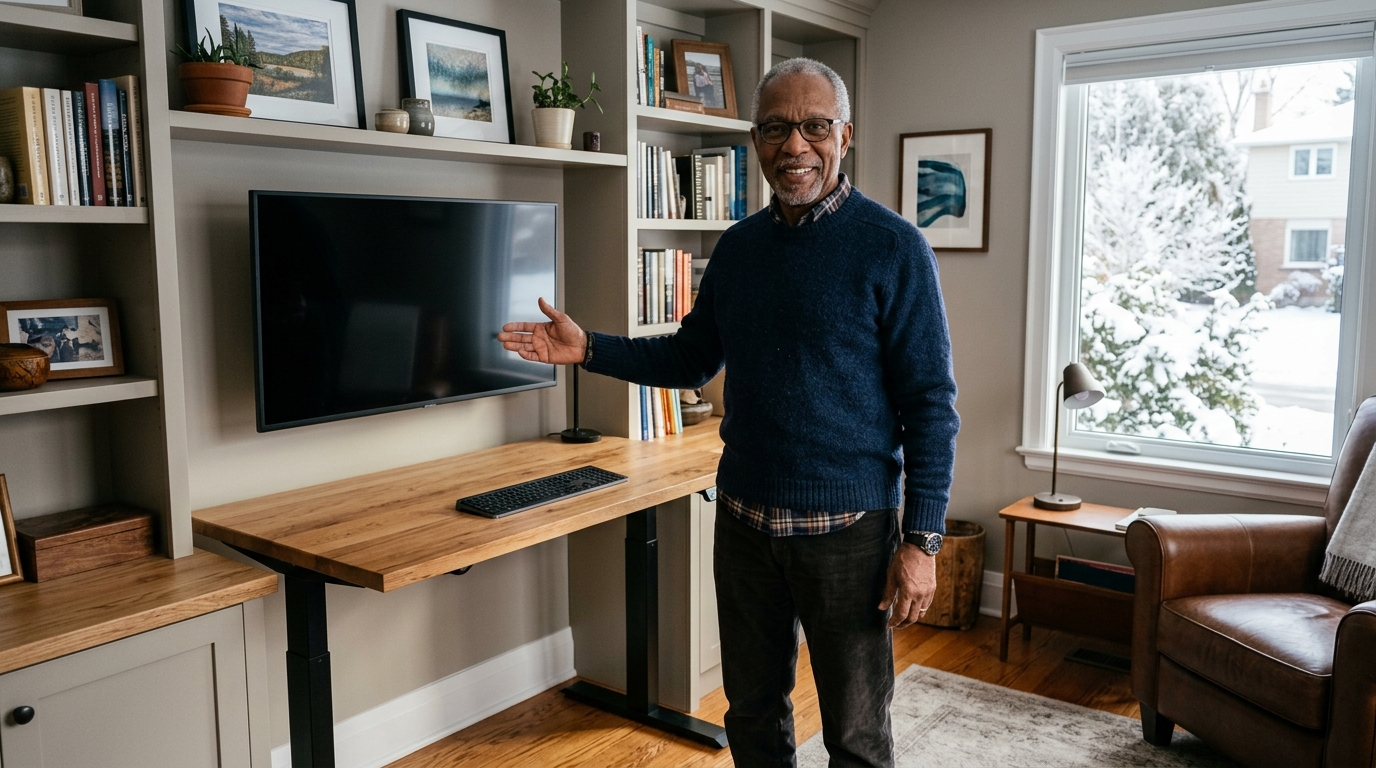
Real-world scenario: Integrated multigenerational design
The Chen family (composite example):
James Chen (age 55) worked remotely for a tech company ($90,000 salary). His widowed mother, Lin (age 81), lived with him after a fall requiring mobility support. The family home (Toronto, $520,000 value) was cramped and conflicting:
Problems:
- James's office (bedroom converted) had poor acoustics; mother's TV and mobility sounds disrupted video calls
- Lin's bedroom upstairs; she couldn't safely navigate stairs
- Shared bathroom; one bathroom for two people with conflicting needs
- No accessible entry; ramp was makeshift, unsafe
- Single HVAC; constant temperature conflicts
Reverse mortgage solution:
- Borrowed: $85,000
- Used for:
- Dedicated office with soundproofing + professional setup: $16,000
- Accessible main-floor bedroom for Lin: $8,000
- Renovated ground-floor bathroom (accessibility): $18,000
- Accessible entry ramp + widened doorways: $12,000
- Dual-zone HVAC system: $10,000
- High-speed internet upgrade + security system: $3,000
- Buffer/contingency: $18,000
Outcome:
- James's work quality improved; mother had private, accessible space
- Both had temperature control in their zones
- Mother's medical appointments and mobility were supported
- Extended family visits were comfortable
- Multigenerational cohabitation became sustainable long-term
Reverse mortgage impact: Balance ~$93,000 after 3 years (with interest). James maintained full income ($90,000/year). Home appreciation ($520,000 → $560,000) exceeded reverse mortgage growth, building equity even during loan period.
Comparing funding options for multigenerational renovation
| Approach | Cost to Adult Child | Cost to Aging Parent | Long-Term Sustainability | Family Harmony |
|---|---|---|---|---|
| Do nothing (cohabitate as-is) | $0 | $0 | Poor (conflict escalates) | Declining |
| Adult child funds from salary | $35,000–$55,000 (personal savings/loan) | $0 | Good if adult child can sustain | Dependent on adult child's goodwill |
| Reverse mortgage (aging parent) | $0 | Equity used; loan repaid from estate | Excellent (no monthly payments) | Excellent (parent funds own space) |
| Family loan from other sibling | Depends on terms | Depends on terms | Variable (relationship dependent) | Risky if terms not clear |
| Home equity loan (adult child) | Monthly payments ($400–$600) | $0 | Poor (payment burden on adult child) | Dependent on adult child's income |
A reverse mortgage is optimal because it's funded by the aging parent's equity (fairest distribution), requires no monthly payments (protects adult child's income), and makes the living arrangement sustainable for both.
Design principles for multigenerational + remote work homes
Principle 1: Spatial separation
Dedicate distinct zones:
- Adult child's zone: Office with door, professional environment, isolated from common areas
- Aging parent's zone: Bedroom + accessible bathroom, medical equipment, quiet healing space
- Shared zones: Kitchen, living room, dining room designed for both comfort and accessibility
Principle 2: Sound and privacy
- Soundproofing: Between office and parent's bedroom (insulation, acoustic panels)
- Doors: Heavy, soundproof doors on office; accessibility-compliant doors throughout
- Background: Quiet office setup; medical equipment/hearing aids accommodated in shared areas
Principle 3: Accessibility throughout
- Universal design: Grab bars, lighting, wide doorways benefit aging parent AND adult child (injuries, mobility issues)
- Entry: Level or ramped entry; safe egress for both
- Bathroom: Accessible to both; medical equipment integration
Principle 4: Environmental control
- Dual-zone HVAC: Separate temperature control for office (cooler) and living areas (warmer)
- Lighting: Bright, adjustable lighting supporting both professional work and aging parent comfort
- Humidity: Accessibility to both for health and comfort
Principle 5: Technology integration
- Internet: High-speed, whole-home coverage for remote work + medical monitoring/alerts
- Medical alert: Integrated into home; visible to adult child without intrusion on parent
- Security: Cameras, monitoring for aging parent safety; privacy-respecting
Practical planning steps
Step 1: Assess current home (Week 1) Identify:
- Existing office setup (noise? privacy? professional?)
- Parent's accessibility (stairs? bathroom access? mobility space?)
- Shared resource conflicts (HVAC, bathroom, internet)
Step 2: Design future state (Week 2) Work with architect or designer (cost: $300–$800) to:
- Propose separate zones
- Identify renovations needed
- Estimate costs
Step 3: Identify essential vs. nice-to-have (Week 2) Essential (safety/function):
- Accessible bedroom for parent
- Dedicated office for adult child
- Accessible bathroom
- Safe entry
Nice-to-have (comfort):
- Soundproofing upgrades
- Dual-zone HVAC
- Smart home automation
Step 4: Budget and phasing (Week 3)
- Phase 1 (essential): $25,000–$35,000
- Phase 2 (comfort): $10,000–$20,000
- Total: $35,000–$55,000
Step 5: Contact reverse mortgage specialist (Week 3) Call Rick Sekhon Reverse Mortgages with:
- Home value
- Aging parent's age
- Estimated renovation costs
- Desired withdrawal strategy
Step 6: Close and renovate (Week 5–8)
- Reverse mortgage funds available
- Hire contractor
- Execute Phase 1 (essential work first)
- Phase 2 as funds/timeline allow
Key Takeaways
- Multigenerational homes combining remote work + aging in place have competing needs that require thoughtful design separation, not cohabitation compromise
- Reverse mortgage funds $35,000–$55,000 in integrated design that benefits both adult child (professional workspace) and aging parent (accessibility)
- Dedicated office + accessible zones eliminate conflict and improve both parties' wellbeing and sustainability of cohabitation
- Aging parent's reverse mortgage funds their own space (fairest model), requiring no monthly payments and preserving adult child's income
- Design principles: spatial separation, soundproofing, accessibility, environmental control, and technology integration support both generations
- Rick Sekhon Reverse Mortgages can structure flexible withdrawal plans to phase renovations (essential first, then comfort upgrades)
Frequently Asked Questions
Can we both live comfortably if we're both remote working?
Yes, with intentional design. Spatial separation (dedicated office for adult child, accessible zone for parent) eliminates conflict. Without design separation, cohabitation becomes unsustainable—tension over noise, temperature, bathroom access escalates.
Should the adult child fund the renovation or the aging parent?
Ideally, the aging parent's reverse mortgage funds their own accessibility (fairest). The adult child benefits from an improved home but doesn't shoulder financial burden. This preserves goodwill and equity fairness.
What if the aging parent can't qualify for a reverse mortgage?
If the aging parent is under 55 or has insufficient equity, the adult child could fund a traditional renovation through savings or personal loan. However, this burdens the adult child financially and emotionally. Explore whether aging parent qualifies before ruling it out.
Can renovations improve both the adult child's and parent's spaces equally?
Largely yes. Whole-home upgrades (HVAC, internet, entry accessibility) benefit both. Specific upgrades serve each: dedicated office for adult child, accessible bedroom/bathroom for parent. Design should balance investment fairly.
Will the reverse mortgage affect the adult child's ability to inherit the home later?
The reverse mortgage becomes a claim on the estate (repaid from home sale proceeds). If the home appreciates above the reverse mortgage balance, substantial equity remains for inheritance. If the home depreciates, the balance may consume more equity. Transparent communication about this impact is essential.
What if the aging parent passes away—what happens to the home?
The reverse mortgage is repaid from the estate when the aging parent passes away. If the home is the primary asset, it may need to be sold to repay the loan. The adult child would inherit the remaining equity (if any). Discuss this scenario with a lawyer.
Create space for both generations
Multigenerational living is increasingly common and financially necessary. But comfort requires design—separate spaces, accessibility, professional environment, and respect for both generations' needs. A reverse mortgage funds this thoughtful design, making cohabitation sustainable and beneficial for both.
Contact Rick Sekhon Reverse Mortgages to discuss multigenerational renovation funding. Plan a home that works for both your adult child's remote work and your aging parent's safety and comfort.
Ready to Learn More?
Find out exactly how much you could unlock from your home — free and no obligation.
Related Articles
Reverse Mortgage for Multigenerational Home: Aging Parent Moving In With Adult Child and Grandchildren
Learn how to fund home accessibility and repairs when your aging parent moves in with you, your adult children, and grandchildren. Ontario guide for multigenerational housing.
Read →Reverse Mortgage for Home Office Setup: Creating a Productive Retirement Workspace
Fund your home office with a reverse mortgage. Create a productive retirement workspace for consulting, hobbies, or part-time work in Ontario.
Read →Reverse Mortgage for Multi-Generational Homes Ontario
How Ontario homeowners 55+ can use a reverse mortgage to fund basement suites, in-law suites, and ADUs for multi-generational living — with no monthly payments.
Read →