
Reverse Mortgage for Recently Retired Couples Adjusting to One Income in Ontario
How recently retired Ontario couples can use a reverse mortgage to bridge the income gap when going from two working incomes to pension-only. Covers CPP/OAS coordination, spousal protection, and payment options.
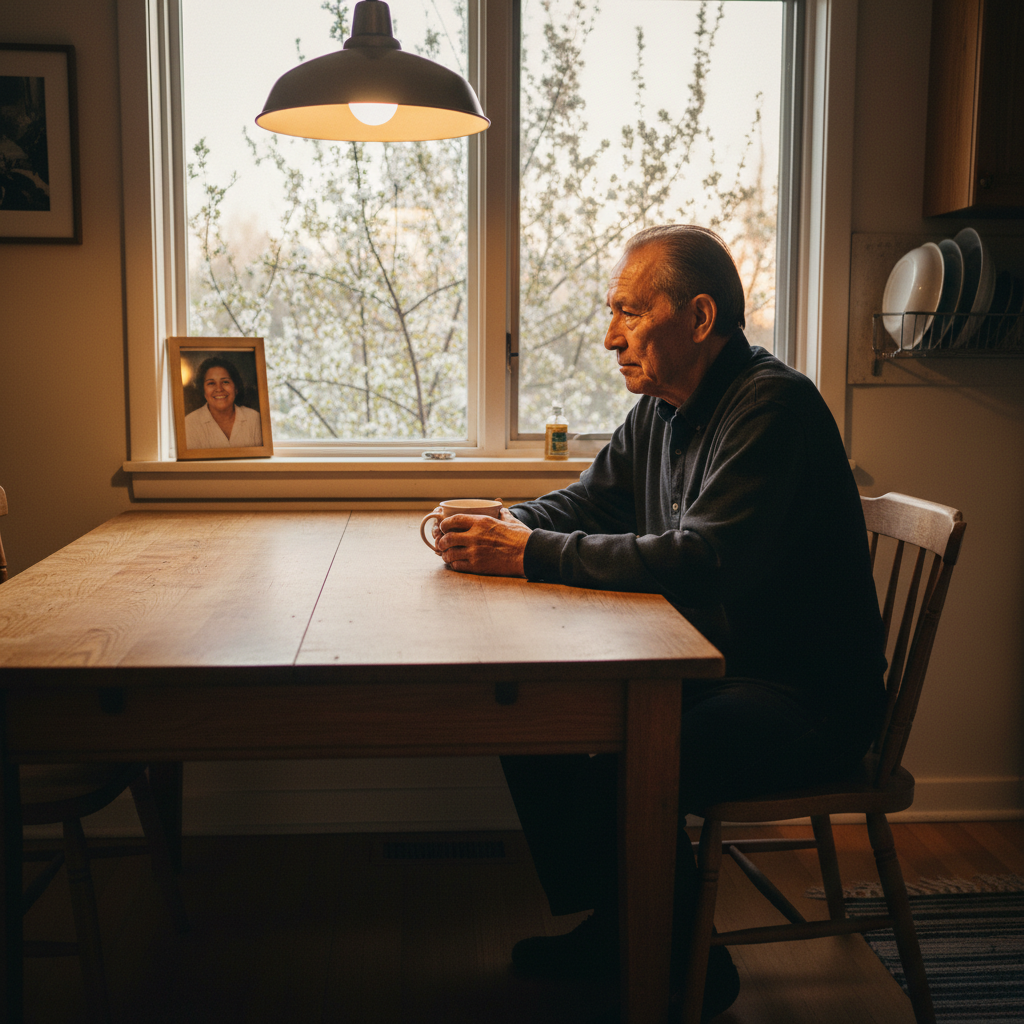
The day you both stop working is supposed to feel like freedom. For many Ontario couples, it feels more like falling off a financial cliff. Going from two working incomes to pension-only can cut household cash flow by half or more — and the adjustment hits harder and faster than most people expect. If you and your spouse recently retired and are struggling to make ends meet on reduced income, a reverse mortgage may offer a practical way to bridge the gap without selling your home or going back to work.

This article walks through the income shock that recently retired couples face, how a reverse mortgage works as an income bridge, the different ways to structure the funds, and how to protect both spouses throughout the process.
This article is for educational purposes only and does not constitute financial advice.
The Income Cliff: What Actually Happens When Two Incomes Become One Pension
Most couples understand in theory that retirement means less income. What catches people off guard is the size of the drop. When both spouses were working, household income may have been $80,000 to $140,000 or more. In retirement, the combined income from CPP, OAS, and whatever workplace pensions or savings exist can easily fall to $35,000 to $55,000.
That is not a gradual decline. It is a sudden, structural shift.
| Income Source | Pre-Retirement (Combined) | Post-Retirement (Combined) |
|---|---|---|
| Employment income | $80,000–$140,000 | $0 |
| CPP (both spouses at 65) | $0 | $9,600–$32,736 |
| OAS (both spouses at 65) | $0 | $17,448 |
| Workplace pension (if applicable) | $0 | $0–$30,000 |
| RRIF withdrawals | $0 | Varies |
| Estimated total | $80,000–$140,000 | $35,000–$55,000 |
The bills, however, do not drop by half. Property taxes, insurance, utilities, groceries, car maintenance, and medical expenses remain largely the same. Some costs actually increase in retirement — particularly health-related spending, home maintenance (as your property ages alongside you), and the cost of activities that fill the hours you used to spend working.
Why the First Two Years Are the Hardest
The first 18 to 24 months after both spouses retire tend to be the most financially stressful period. This is when:
- Spending habits have not yet adjusted. It takes time to shift from a working lifestyle to a retirement budget.
- One-time costs pile up. Deferred home repairs, a vehicle replacement, or a long-planned trip can drain savings quickly.
- Benefits have not fully kicked in. If either spouse delayed CPP or OAS, the household may be running on partial income for months or years.
- RRIF minimums have not started. Mandatory RRIF withdrawals do not begin until the year after you convert your RRSP, and the minimum percentages are low in the early years.
This is the window where many couples first consider a reverse mortgage — not as a long-term dependency, but as a bridge to get through the adjustment period.
How a Reverse Mortgage Bridges the Income Shortfall

A reverse mortgage allows Ontario homeowners aged 55 and older to access a portion of their home equity as tax-free cash. No monthly mortgage payments are required. The loan, plus accrued interest, is repaid when you sell the home or when both spouses have permanently left the property.
For recently retired couples facing an income gap, the key benefits are:
- Tax-free funds — Reverse mortgage proceeds are not income under CRA rules. They do not appear on your tax return.
- No impact on CPP or OAS — The funds do not count toward income thresholds that trigger OAS clawbacks or reduce GIS eligibility.
- No monthly payments — This is critical when the entire problem is insufficient monthly cash flow. Adding another monthly payment would make things worse, not better.
- Both spouses stay on title — When both partners are listed as borrowers, the loan does not become due until both have permanently left the home.
Lump Sum vs. Scheduled Advances: Choosing the Right Structure
One of the most important decisions for couples using a reverse mortgage as an income bridge is how to receive the funds. Canadian lenders — including CHIP (HomeEquity Bank), Equitable Bank, Bloom Financial, and Home Trust — offer different disbursement options.
| Disbursement Option | How It Works | Best For |
|---|---|---|
| Lump sum | Receive the full approved amount at closing | Paying off existing debt, one-time large expenses, creating a cash reserve |
| Scheduled advances | Receive funds in regular instalments over time | Replacing monthly income, budgeting discipline, minimizing interest accrual |
| Combination | Initial lump sum plus scheduled advances | Clearing debt immediately while also supplementing monthly income |
For couples bridging a pension income gap, scheduled advances often make the most sense. Here is why: if you take a $150,000 lump sum but only need $2,000 per month to cover the shortfall, you are paying interest on $150,000 from day one. If instead you draw $2,000 per month in scheduled advances, you only pay interest on the amount you have actually received. Over five years, the difference in total interest can be substantial.
However, if you have existing debts — a remaining mortgage balance, a line of credit, or credit card debt — a lump sum to clear those obligations first may be the smarter move. Eliminating monthly debt payments immediately frees up cash flow and removes the stress of juggling multiple creditors.
A broker like Rick Sekhon can model both scenarios for your specific situation, comparing the total cost of a lump sum versus scheduled advances over your expected time horizon.
A Key Consideration: Compound Interest
One drawback that every couple must understand is that reverse mortgage interest compounds over time. Because you are not making monthly payments, the interest you owe is added to the loan balance, and future interest is charged on the growing total. The longer the loan is in place, the larger the balance becomes. This means less equity remains in the home for you and your heirs. For recently retired couples in their early 60s, the compounding period could be 20 years or more — which is why it is essential to model the long-term numbers before proceeding.
Protecting the Lower-Income Spouse
In many Ontario couples, one spouse earned significantly more during their working years or had access to a better workplace pension. When that higher-earning spouse passes away, the surviving partner can face a second income shock:
- CPP survivor's benefit replaces only a portion of the deceased spouse's CPP — not the full amount.
- OAS for the deceased spouse stops entirely.
- Workplace pensions may have a survivor benefit, but it is often reduced to 50% or 60% of the original amount.
This means the surviving spouse's income can drop dramatically while housing costs remain the same.
How Joint Borrower Protection Works
When both spouses are listed as borrowers on a reverse mortgage, the loan does not become due when the first spouse passes away or moves to a care facility. The surviving spouse can remain in the home for as long as they wish, with no change to the terms of the reverse mortgage.
| Scenario | Single Borrower | Joint Borrowers (Both Spouses) |
|---|---|---|
| First spouse passes away | Loan may become due | Loan continues — no change |
| First spouse moves to care | Loan may become due | Loan continues — surviving spouse stays |
| Last surviving borrower leaves home | Loan is due | Loan is due |
This is why it is critical that both spouses are named as borrowers, even if one spouse is younger or was not on the original property title. Some couples make the mistake of listing only the older spouse to qualify for a higher amount. This can leave the younger partner vulnerable if the named borrower dies or enters care.
Both CHIP (HomeEquity Bank) and Equitable Bank allow joint borrower arrangements. The qualifying amount is typically based on the age of the younger spouse (younger age means a lower percentage of home value), but the protection for the surviving partner is well worth any reduction in the initial advance.
Coordinating with CPP, OAS, and Other Benefits
One of the most powerful uses of a reverse mortgage for recently retired couples is as a bridge that allows you to delay taking CPP and OAS — increasing your permanent government benefits for the rest of your life.
The Delay Strategy
CPP benefits increase by approximately 0.7% for every month you delay past age 65, up to age 70. That translates to a 42% increase if you wait from 65 to 70. OAS increases by 0.6% per month for each month of delay past 65, up to a 36% increase at age 70.
For a couple where both spouses delay CPP and OAS from 65 to 70, the combined increase in permanent annual income can be significant:
| Benefit | At Age 65 (Combined) | At Age 70 (Combined) | Annual Increase |
|---|---|---|---|
| CPP (average both spouses) | $19,200 | $27,264 | +$8,064 |
| OAS (both spouses) | $17,448 | $23,729 | +$6,281 |
| Total | $36,648 | $50,993 | +$14,345 |
Using a reverse mortgage to cover living expenses from age 65 to 70 while delaying government benefits can result in thousands of dollars more in guaranteed income every year for the rest of your lives. This is a strategy worth modelling with a professional.
Avoiding the OAS Clawback
Because reverse mortgage proceeds are not taxable income, they do not count toward the OAS recovery threshold. If one or both spouses have income from RRIFs, workplace pensions, or other taxable sources that pushes them near the OAS clawback zone, supplementing with reverse mortgage funds instead of drawing down taxable investments can preserve your full OAS entitlement.
When a Reverse Mortgage May Not Be the Right Fit
A reverse mortgage is not the right solution for every couple. Consider alternatives if:
- You plan to sell your home within the next two to three years. Closing costs and potential prepayment penalties may outweigh the benefits.
- Your home equity is modest. If you owe a significant amount on your existing mortgage, the net proceeds from a reverse mortgage may be too small to make a meaningful difference.
- One or both spouses are under 55. You must be at least 55 to qualify.
- Downsizing is a realistic and appealing option. If you are open to moving to a smaller, less expensive home, the proceeds from a sale may provide more long-term financial security than a reverse mortgage.
Frequently Asked Questions
Can we get a reverse mortgage if we still have a regular mortgage on our home?
Yes. The existing mortgage must be paid off from the reverse mortgage proceeds at closing. If your current mortgage balance is $80,000 and you qualify for $200,000 in reverse mortgage funds, the first $80,000 goes to clear the existing mortgage, and you receive $120,000 in net proceeds.
Does it matter if the home is in only one spouse's name?
Both spouses should be on title and both should be named as borrowers. If the home is currently in only one spouse's name, your lawyer can add the second spouse to title before or during the reverse mortgage process.
Will a reverse mortgage affect our Guaranteed Income Supplement (GIS)?
No. Reverse mortgage proceeds are not considered income for GIS purposes. This is one of the significant advantages for lower-income couples who rely on GIS.
What happens if one of us needs to move to a care facility?
If both spouses are joint borrowers, the reverse mortgage continues as long as one spouse remains in the home as their primary residence. The loan is not called due until both spouses have permanently left the property.
How much can we borrow?
The amount depends on your ages (the younger spouse's age is used), the appraised value of your home, and the lender. Most Ontario couples can access between 20% and 55% of their home's value. A broker like Rick Sekhon can provide a no-obligation estimate based on your specific circumstances.
The transition from two working incomes to retirement is one of the biggest financial adjustments any couple will face. For Ontario homeowners with significant home equity, a reverse mortgage offers a way to smooth that transition — preserving your lifestyle, protecting both spouses, and keeping you in the home you have built your life around.
Speak to a licensed mortgage professional. Independent legal advice is required before closing a reverse mortgage in Ontario.
Get your free Ontario Reverse Mortgage Guide →
This content is for illustrative purposes only. Rates may vary. Call Rick Sekhon for the best rates and more information.
Ready to Learn More?
Find out exactly how much you could unlock from your home — free and no obligation.
Related Articles
Delay CPP and OAS with a Reverse Mortgage: Is It Worth It?
Delay CPP OAS reverse mortgage strategy explained for Ontario seniors. See the math on bridging income from 65-70 to boost lifetime benefits by up to 42%.
Read →Bridging the Pension Income Gap with a Reverse Mortgage in Canada
Bridge the pension income gap with a reverse mortgage in Canada. Learn how tax-free home equity supplements CPP, OAS, and workplace pensions for seniors.
Read →Spousal Protection and Reverse Mortgages: Joint Borrower Rules Canada
How reverse mortgages work for couples in Canada. Joint borrower rules, spousal protection, what happens when one partner dies or moves to care, and age requirements.
Read →