
Bridging the Pension Income Gap with a Reverse Mortgage in Canada
Bridge the pension income gap with a reverse mortgage in Canada. Learn how tax-free home equity supplements CPP, OAS, and workplace pensions for seniors.
"I thought my pension would be enough. It isn't." This is the quiet reality for millions of Canadian retirees. The pension income gap — the shortfall between what government and workplace pensions provide and what a comfortable retirement actually costs — affects seniors at every income level. For homeowners aged 55 and older, a reverse mortgage offers a way to fill that gap using the equity in their home, without selling, without monthly payments, and without triggering tax or benefit consequences.
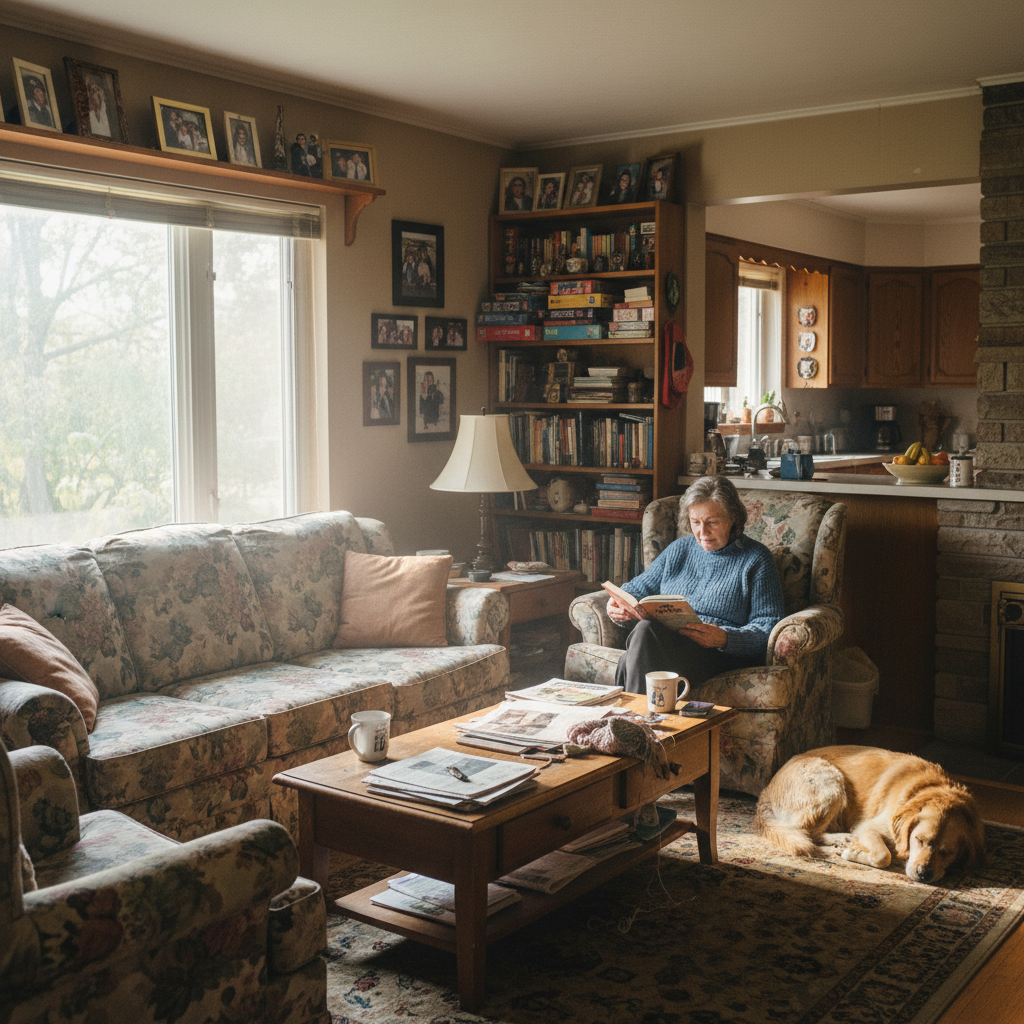
This guide breaks down the pension income gap in concrete terms, shows exactly how a reverse mortgage bridges it, and compares this approach to the alternatives. If you are an Ontario homeowner whose pension income falls short of your actual needs, this article was written for you.
The Canadian Pension Income Gap: By the Numbers
Canada's retirement income system rests on three pillars: government benefits (CPP and OAS), workplace pensions, and personal savings (RRSPs, TFSAs). The problem is that for most Canadians, these three pillars do not add up to enough.
Government Benefits: The Foundation Is Thin
| Government Benefit | Maximum Monthly (2026) | Average Monthly (2026) | Annual Maximum |
|---|---|---|---|
| CPP (starting at 65) | ~$1,364 | ~$800 | $16,368 |
| CPP (deferred to 70) | ~$1,938 | ~$1,100 | $23,256 |
| OAS (starting at 65) | ~$727 | ~$727 | $8,724 |
| OAS (deferred to 70) | ~$1,034 | ~$1,034 | $12,408 |
| GIS (single, max) | ~$1,072 | Varies | $12,864 |
| Combined CPP + OAS max at 65 | $2,091 | ~$1,527 | $25,092 |
The maximum combined CPP and OAS at age 65 is approximately $2,091 per month — but most Canadians receive far less. To receive maximum CPP, you must have contributed at or above the maximum pensionable earnings for approximately 39 years. According to Service Canada, only about 6% of new CPP recipients receive the maximum amount.
According to the Office of the Superintendent of Financial Institutions (OSFI), the CPP fund is actuarially sound for at least 75 years. However, the adequacy of individual CPP benefits depends entirely on each person's contribution history — and many Canadians, particularly women, self-employed individuals, and those with interrupted careers, receive significantly less than the maximum.
Workplace Pensions: The Vanishing Benefit
The second pillar — workplace pensions — has eroded dramatically over the past three decades:
| Workplace Pension Trend | 1990s | 2026 |
|---|---|---|
| Private sector workers with DB pension | ~30% | ~10% |
| Average DB pension (where available) | Varies | ~$1,400/month |
| Private sector workers with any pension | ~45% | ~25% |
| Public sector workers with DB pension | ~85% | ~80% |
The shift from defined benefit (DB) pensions to defined contribution (DC) plans — and the growing number of workers with no workplace pension at all — means that today's retirees are far more dependent on government benefits and personal savings than previous generations.
For those without a workplace pension, the gap between government benefits ($1,527/month average) and a comfortable retirement budget ($3,500–$4,500/month in Ontario) can exceed $2,000 per month.
Personal Savings: The Third Pillar Is Often Empty
| RRSP/RRIF Statistic | Value |
|---|---|
| Median RRSP savings at retirement (age 65) | ~$100,000 |
| Median RRIF balance (age 70) | ~$85,000 |
| Annual withdrawal from $100,000 RRIF (5% min) | $5,000 |
| Monthly income from $100,000 RRIF | ~$417 |
According to Statistics Canada, the median RRSP savings for Canadians approaching retirement is approximately $100,000. While this provides some supplemental income, a 5% annual withdrawal yields only $417 per month — and those withdrawals are fully taxable, potentially triggering OAS clawbacks and GIS reductions.
A $100,000 RRIF generating $417/month, combined with $1,527/month in CPP and OAS, gives a total income of approximately $1,944/month — still far short of the $3,500+ needed for a comfortable Ontario retirement.
How a Reverse Mortgage Fills the Pension Income Gap
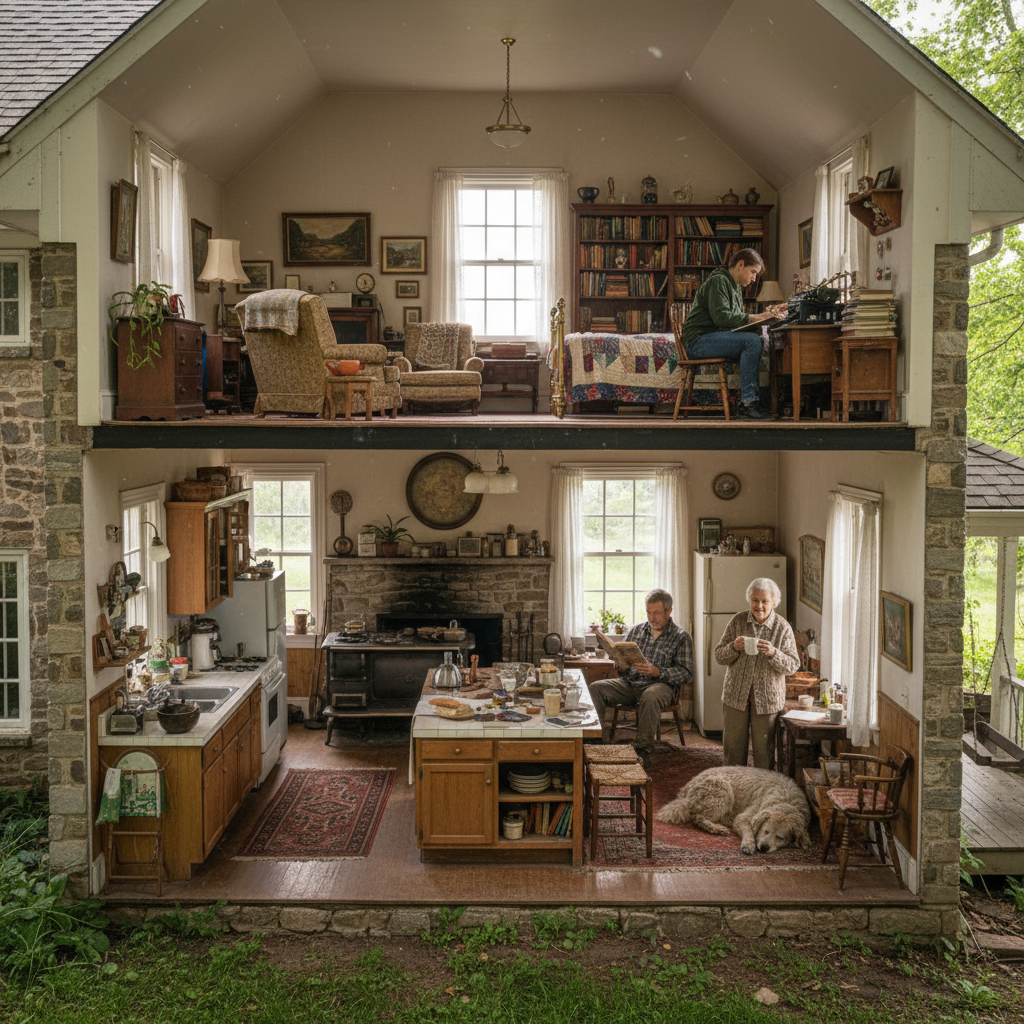
A reverse mortgage converts a portion of your home equity into cash. For pension gap purposes, the key advantages are:
✓ Tax-free — proceeds are loan advances, not income, under CRA rules ✓ No monthly payments — interest accrues but is not due until you sell or permanently leave the home ✓ No impact on OAS — does not count toward the ~$95,323 clawback threshold ✓ No impact on GIS — does not count as income for GIS calculations ✓ No impact on other income-tested benefits — Ontario Trillium Benefit, Ontario Drug Benefit, etc. ✓ You keep your home — no need to sell or downsize
The Math: Filling a $1,500/Month Gap
Consider a typical Ontario retiree with a $1,500/month pension income gap:
Current income: $2,000/month (CPP $800 + OAS $727 + small pension $473) Monthly need: $3,500 Gap: $1,500/month = $18,000/year
Home value: $650,000 Available reverse mortgage (age 70, ~40% LTV): ~$260,000
At $1,500/month ($18,000/year), the reverse mortgage funds cover the gap for approximately 14.4 years — taking this retiree to age 84. If the funds are placed in a TFSA or high-interest savings account earning 3–4% interest, the effective duration stretches further.
Comparison: Reverse Mortgage vs RRIF for Gap Filling
The difference between using a reverse mortgage and a RRIF to fill the same $1,500/month gap is dramatic for seniors near benefit thresholds:
| Factor | RRIF Withdrawal ($1,500/month) | Reverse Mortgage ($1,500/month) |
|---|---|---|
| Annual gross amount | $18,000 | $18,000 |
| Federal + provincial tax | ~$2,700–$4,500 | $0 |
| OAS clawback (if applicable) | Up to $2,700 | $0 |
| GIS reduction (if applicable) | Up to $9,000 | $0 |
| Net amount received | $4,500–$12,600 | $18,000 |
| Monthly payment required | N/A (but RRIF depletes) | None |
For a GIS-eligible senior, the reverse mortgage delivers up to four times more actual purchasing power than the same dollar amount from a RRIF, because the RRIF withdrawal triggers both taxes and benefit reductions. This calculation alone makes the reverse mortgage the most efficient gap-filling tool available to many Canadian seniors.
For a deeper dive into this comparison, see our RRIF vs reverse mortgage guide.
Who Has the Largest Pension Income Gaps?
Not all retirees face the same gap. Some groups are particularly vulnerable:
Women
Women in Canada receive, on average, significantly lower CPP benefits than men due to interrupted careers (caregiving), lower average earnings, and historical barriers to full employment. The average CPP for women at age 65 is approximately $600/month compared to $950/month for men.
Self-Employed Individuals
Self-employed Canadians contribute both the employee and employer share of CPP premiums, but many contribute at lower levels (based on net self-employment income). They also typically lack workplace pensions entirely.
Immigrants Who Arrived After Age 25
OAS requires 40 years of Canadian residency after age 18 for the full benefit. Immigrants who arrived in their 30s, 40s, or later may receive partial OAS — sometimes as little as 10/40ths of the maximum.
Single Seniors
Couples benefit from two sets of CPP and OAS, shared housing costs, and potential pension splitting. Single seniors — particularly widows and widowers who may have lost a spouse's pension — face the full cost of independent living on one income. See our guide on reverse mortgages for widows and widowers.
| Group | Typical Monthly Pension Gap | Primary Cause |
|---|---|---|
| Women (single, no workplace pension) | $1,800–$2,500 | Lower CPP, no employer pension |
| Self-employed retirees | $1,500–$2,200 | Lower CPP, no employer pension |
| Recent immigrants (20+ years in Canada) | $1,000–$2,000 | Partial OAS, limited CPP |
| Single seniors (widowed) | $1,200–$2,000 | Loss of spousal income, single-occupancy housing costs |
| Couples (no workplace pensions) | $1,000–$1,800 | Two low CPPs, no employer pensions |
Lender Options for Pension Gap Bridging

Each Canadian reverse mortgage lender offers slightly different terms. Rick Sekhon compares all available options for each client, but here is a general overview:
Lender Comparison for Income Supplementation
| Feature | HomeEquity Bank (CHIP) | Equitable Bank | Bloom Financial | Home Trust |
|---|---|---|---|---|
| Maximum LTV | Up to 55% | Up to 40% | Up to 55% | Up to 40% |
| Minimum age | 55 | 55 | 55 | 55 |
| Rate range (2026) | 6.59%–7.49% | 6.49%–7.29% | 6.74%–7.59% | 6.69%–7.39% |
| Planned advances | Available | Limited | Available | Limited |
| Minimum property value | ~$150,000 | ~$200,000 | ~$150,000 | ~$200,000 |
Rates are illustrative and subject to change. Contact Rick Sekhon for current rates.
The choice of lender affects how much you can borrow (LTV), the interest rate (which determines how fast the balance grows), and whether planned monthly advances are available directly from the lender.
HomeEquity Bank (CHIP) and Bloom Financial generally offer higher LTV ratios, which means access to more equity. Equitable Bank often offers competitive rates. The best choice depends on your specific property, age, and income needs.
As regulated by FSRAO, all mortgage brokers in Ontario must act in your best interest, and Rick Sekhon's role is to find the lender and terms that best serve your pension gap needs.
A Comprehensive Pension Gap Strategy
A reverse mortgage works best as part of a coordinated retirement income strategy, not in isolation. Here is a framework that Rick Sekhon uses with clients:
Priority 1: Maximize Government Benefits
Before touching home equity, ensure you are receiving everything you are entitled to:
✓ Apply for CPP at the optimal age (deferring to 70 increases benefits by 42% compared to age 65) ✓ Apply for OAS (consider deferring to 70 for a 36% increase) ✓ Apply for GIS if your income qualifies ✓ Apply for the Ontario Trillium Benefit, Ontario Seniors' Property Tax Grant, and other provincial programs
Priority 2: Use Tax-Efficient Savings First
✓ Draw from TFSAs first — withdrawals are tax-free and do not affect benefits ✓ Use non-registered savings next — only the capital gains portion is taxable ✓ Minimize RRIF withdrawals above the mandatory minimum — these are fully taxable
Priority 3: Fill the Remaining Gap with a Reverse Mortgage
✓ Calculate the monthly gap after all other sources ✓ Draw only what you need (staged draws are more interest-efficient) ✓ Deposit into a TFSA or high-interest savings account for systematic monthly transfers ✓ Review annually with Rick Sekhon to adjust as needs change
Priority 4: Preserve Future Flexibility
✓ Do not draw the maximum available — leave room for emergencies ✓ Consider voluntary interest payments during higher-income years ✓ Monitor home values — if your home appreciates significantly, refinancing may provide additional capacity
The Long-Term View: Balancing Income and Equity
The pension income gap is a 20–30 year problem. A 65-year-old retiree today may live to 85, 90, or beyond. The reverse mortgage must be viewed over this entire horizon.
| Age at Draw | Monthly Draw | Annual Draw | Balance at Age 85 (at 6.99%) | Home Value at 85 (3.5% growth, $650K start) |
|---|---|---|---|---|
| 65 | $1,000 | $12,000 | ~$395,000 | ~$1,138,000 |
| 70 | $1,500 | $18,000 | ~$378,000 | ~$966,000 |
| 75 | $2,000 | $24,000 | ~$292,000 | ~$820,000 |
Balances are approximate and assume staged annual draws, not lump sum. Actual results vary.
In all three scenarios, significant home equity remains at age 85 — even after years of pension gap bridging. The no-negative-equity guarantee required by all Canadian reverse mortgage lenders ensures that neither you nor your heirs will ever owe more than the home is worth.
For detailed projections specific to your situation, see our compound interest projections guide or contact Rick Sekhon directly.
The CPP Deferral Strategy
One advanced approach combines a reverse mortgage with CPP deferral. By using reverse mortgage income to bridge the gap from age 60–65 to age 70, you allow your CPP benefit to grow by 8.4% for each year deferred past 65.
| CPP Start Age | Monthly CPP (based on $800 average at 65) | Lifetime CPP Gain (if live to 85) |
|---|---|---|
| 60 | ~$512 | Baseline |
| 65 | ~$800 | +$57,600 vs age 60 |
| 70 | ~$1,136 | +$124,800 vs age 60 |
Deferring CPP from 65 to 70 and using a reverse mortgage for the 5-year gap costs approximately $90,000 in draws (5 years x $18,000/year). But the increased CPP from age 70 onward adds approximately $336/month ($4,032/year) for life. The breakeven is approximately 10 years — by age 80, the deferral strategy has paid for itself and continues generating higher income for life.
This strategy is particularly effective for healthy seniors with a family history of longevity. Rick Sekhon can model this scenario with your actual CPP statement to determine whether deferral makes sense for your situation.
Frequently Asked Questions
How much of my pension gap can a reverse mortgage realistically fill?
This depends on your home value, age, and chosen lender. A homeowner aged 70 with a $600,000 home can typically access $210,000–$330,000 — enough to supplement income by $1,000–$1,500/month for 12–20 years.
Will using a reverse mortgage for income affect my OAS or GIS?
No. The CRA treats reverse mortgage proceeds as loan advances, not income. They do not appear on your tax return and have zero impact on OAS, GIS, or any other income-tested benefit.
Can I use a reverse mortgage to defer taking CPP until 70?
Yes. This is one of the most financially powerful applications of a reverse mortgage. Using home equity to bridge the gap from 65 to 70 allows your CPP to grow by 42%, resulting in significantly higher lifetime income. The strategy works best for healthy seniors expected to live past 80.
What if I need more money after I have used my full reverse mortgage limit?
If your home value has increased, you may be able to refinance your reverse mortgage to access additional equity. Otherwise, you would need to rely on other income sources or consider selling the home. This is why borrowing only what you need — and leaving a buffer — is important.
Is a reverse mortgage better than an annuity for filling the pension gap?
They serve different purposes. An annuity provides guaranteed income for life from a lump sum but requires you to give up that capital permanently. A reverse mortgage preserves your home and allows you to stay in it. Some retirees use both — a reverse mortgage for flexible supplemental income and a small annuity for guaranteed baseline income. The FCAC recommends comparing multiple options before making a decision.
How do I get started?
Contact Rick Sekhon for a free, no-obligation assessment. Rick will review your pension income, calculate your gap, determine your reverse mortgage borrowing capacity, and model the long-term cost to help you make an informed decision. The consultation covers all available lenders and options.
Ready to bridge your pension income gap?
Get your free Ontario Reverse Mortgage Guide →
This content is for illustrative purposes only. Rates may vary. Call Rick Sekhon for the best rates and more information.
Ready to Learn More?
Find out exactly how much you could unlock from your home — free and no obligation.
Related Articles
How to Supplement CPP and OAS with a Reverse Mortgage in Canada
Ontario retirees: learn how a reverse mortgage creates tax-free income to supplement CPP and OAS without triggering clawbacks or affecting GIS eligibility.
Read →RRIF Drawdowns vs Reverse Mortgage: Retirement Cash Flow Planning
RRIF drawdown vs reverse mortgage for retirement cash flow — which strategy preserves more wealth? Ontario-focused guide with OAS clawback scenarios and tax analysis.
Read →Reverse Mortgage and OAS Clawback: Avoidance Strategy 2026
How Ontario seniors use a reverse mortgage to avoid the OAS Recovery Tax in 2026. Includes current thresholds, strategic income planning, and GIS protection scenarios.
Read →