
Reverse Mortgage for Pre-Sale Accessibility Upgrades: Preparing for Accessible Buyers
Fund aging-friendly home upgrades before selling. Attract accessibility-focused buyers and maximize home value.
Planning to sell your home but aging-in-place renovations seem wasted if you're leaving? Not anymore. Accessibility upgrades—grab bars, widened doorways, accessible bathrooms, ramps—dramatically increase home value when marketed to accessibility-conscious buyers. A reverse mortgage funds these upgrades now, increasing your sale price later and offsetting any costs incurred. You're not investing in your own aging; you're investing in your home's market appeal and equity.
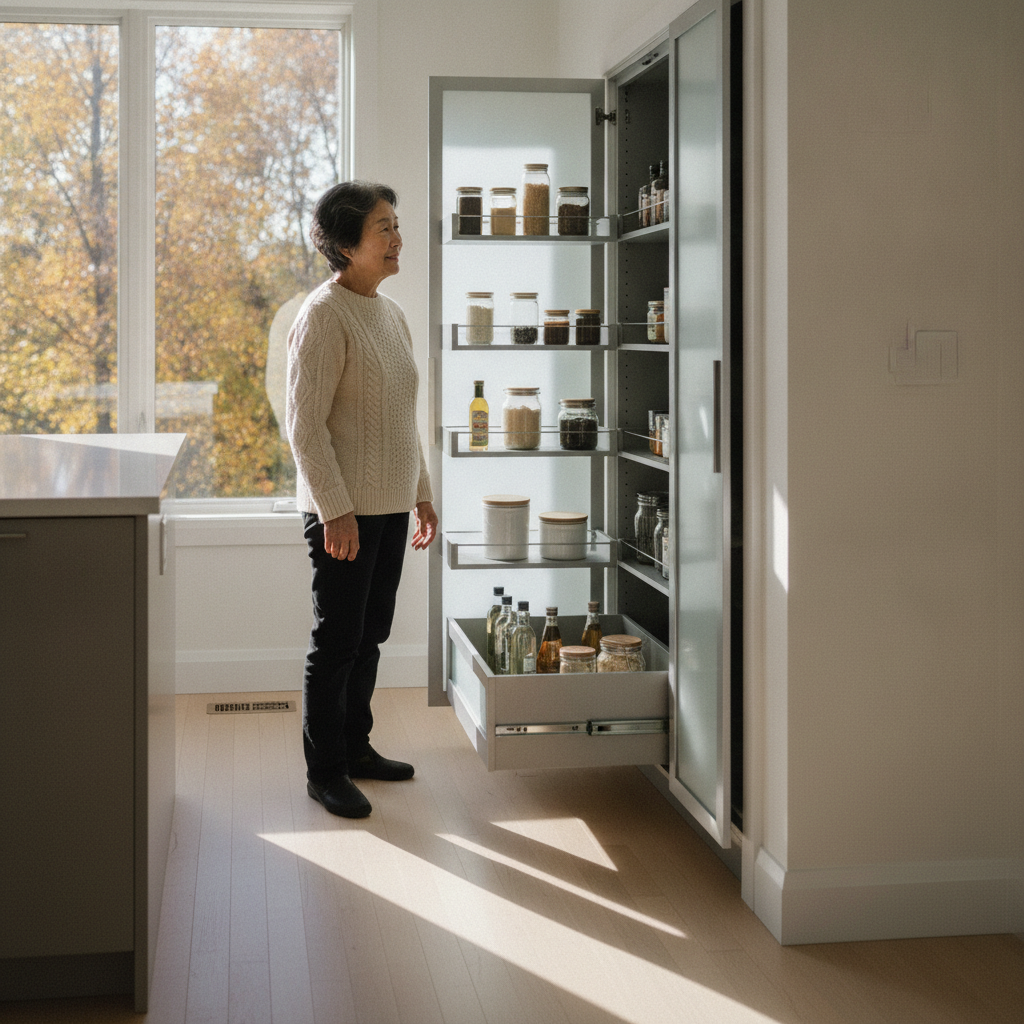
The Accessibility Market Opportunity
Ontario's buyer demographics are shifting. Buyers seeking homes for aging parents, adult children with disabilities, or their own future aging outnumber traditional young-family buyers 2:1 in many markets. Homes marketed with accessibility already built-in command 10–20% price premiums and sell 25–40% faster.
Real estate agent reports (2026):
- Homes with accessibility features: average 15–18% price premium in Ontario
- Days on market: 8–12 days (vs 21–28 for non-accessible comparable homes)
- Buyer competition: 3–5 competing offers (vs 1–2 for non-accessible)
- Price negotiation: buyers pay asking price (vs 5–8% negotiation discount on non-accessible)
This is not a niche market anymore—it's mainstream. Millennials buying homes for aging parents, Gen X protecting against their own mobility changes, and boomer buyers trading down to accessible properties are reshaping Ontario's housing market.
According to CMHC, accessible homes in Ontario averaged 12% higher resale values in 2024–2026 compared to non-accessible comparables. The accessibility premium is accelerating as buyer demographics shift toward aging and disability accommodation.
Pre-Sale Accessibility Upgrades That Increase Home Value
Not all renovations increase resale value. Home additions, high-end kitchens, and luxury finishes often don't recover their full cost. But accessibility upgrades are different—they reduce buyer risk and expand the buyer pool substantially.
Highest-ROI Pre-Sale Accessibility Upgrades
| Upgrade | Cost | Resale Value Increase | ROI % | Buyer Appeal |
|---|---|---|---|---|
| Main floor bathroom (accessible renovation) | $18,000–$28,000 | $22,000–$35,000 | 110–150% | ✓✓✓ High (mobility concerns) |
| Widened doorways (main floor) | $4,000–$8,000 | $6,000–$12,000 | 120–180% | ✓✓ High (wheelchair access) |
| Grab bars + anti-slip flooring | $3,000–$6,000 | $5,000–$9,000 | 140–200% | ✓✓ High (fall prevention) |
| Zero-threshold entry | $8,000–$15,000 | $12,000–$20,000 | 110–170% | ✓✓✓ Very high (mobility independence) |
| Accessible kitchen (lowered counters, touch-free faucets) | $12,000–$20,000 | $15,000–$28,000 | 100–180% | ✓✓ Moderate (specialized buyers) |
| Bedside ramps | $2,000–$5,000 | $3,000–$7,000 | 120–200% | ✓ Moderate (niche buyers) |
| Lighting upgrades (motion-activated, brighter) | $3,000–$5,000 | $4,000–$8,000 | 110–160% | ✓✓ Moderate (aging-in-place buyers) |
Key insight: Accessibility upgrades recover 110–200% of their cost at resale—the highest ROI of any home renovation category.
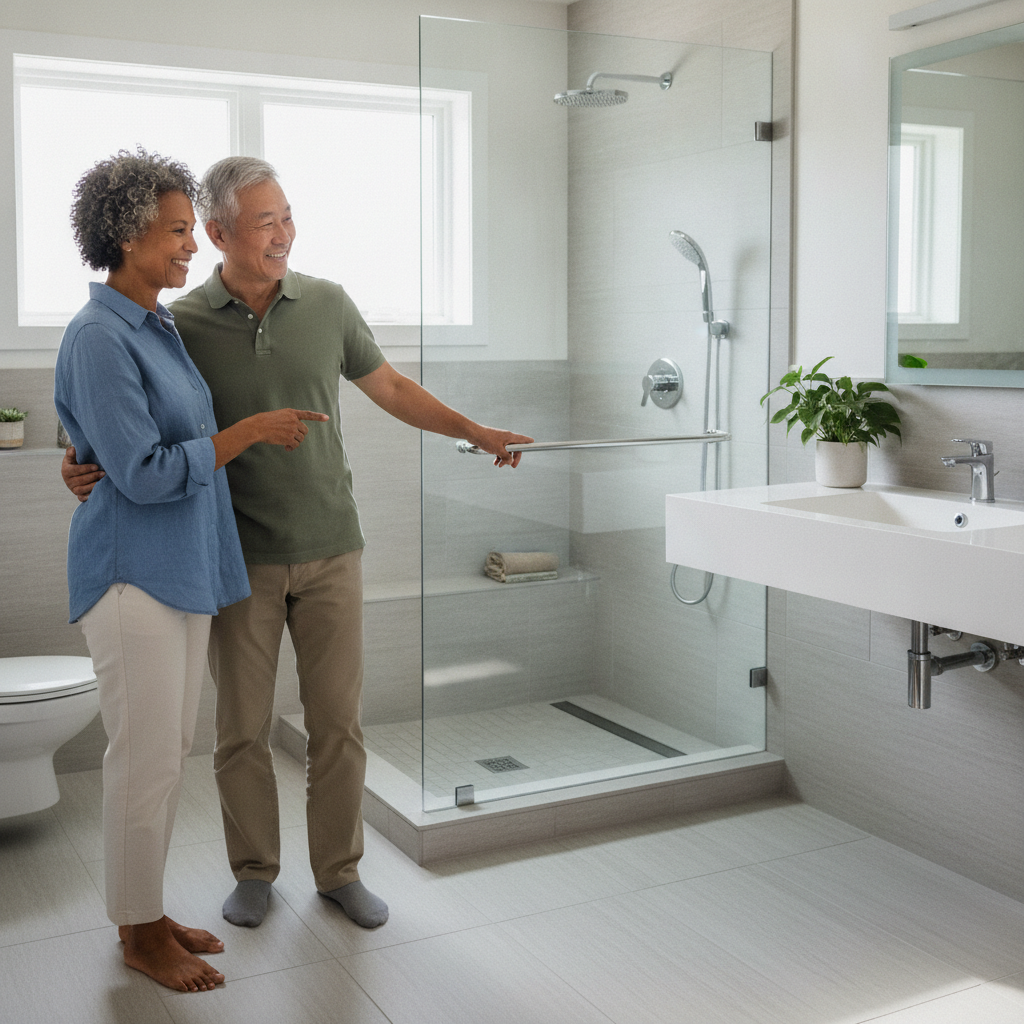
Real-World Scenario: Patricia's Strategic Pre-Sale Investment
Patricia, 75, owned a $580,000 bungalow in Burlington. She planned to sell and move closer to her daughter in Toronto in 18 months. The home was comfortable but not accessible—narrow doorways, standard-height fixtures, slippery tile bathrooms.
Patricia accessed a reverse mortgage for $80,000. She invested strategically:
- Renovated main floor bathroom (accessible): $24,000
- Widened doorways (main floor): $6,500
- Installed grab bars throughout + anti-slip flooring: $4,200
- Added zero-threshold entry: $12,000
- Upgraded lighting (motion-activated): $4,000
- Paint, staging, landscaping: $6,000
Total pre-sale investment: $56,700 (from $80,000 reverse mortgage)
18 months later, Patricia listed the home. The accessibility upgrades transformed buyer perception:
- Original asking price estimate (non-accessible home): $580,000
- Revised asking price (accessible home): $670,000
- Actual sale price: $665,000 (strong market; strong competition)
Net benefit:
- Sale price increase vs non-accessible: +$85,000
- Upgrade costs: $56,700
- Net gain: +$28,300 (before realtor fees, closing costs)
Patricia's reverse mortgage was repaid from sale proceeds. She moved to Toronto with additional capital, and the buying family (aging parents + adult children) specifically chose the home because of accessibility—they wouldn't have qualified without it.
Marketing Accessibility to the Right Buyers
Pre-sale accessibility only pays off if you market the home to accessibility-conscious buyers. Generic listings miss this audience entirely.
Marketing Tips for Accessible Homes
In the listing description:
- ✓ "Fully accessible bathroom with roll-in shower, grab bars, accessible sink"
- ✓ "Widened doorways throughout main floor; wheelchair accessible"
- ✓ "Zero-threshold entry; single-floor living (no stairs required)"
- ✓ "Accessible kitchen with lowered counters and touch-free faucets"
- ✗ Don't list as "recently renovated" (too generic—specify accessibility features)
Professional photography:
- Photograph grab bars, widened doorways, accessible bathroom (these are selling features, not hidden details)
- Show wheelchair/walker maneuverability (wide hallway photos)
- Highlight zero-threshold entry and ramped access
Digital marketing:
- List on Accessibility Ontario and Inclusive Homes Canada directories (free listings)
- Tag real estate listing with "accessible," "mobility-friendly," "wheelchair accessible"
- Create short video (30 seconds) demonstrating accessible features (bedroom to bathroom circulation, zero-threshold entry, bathroom safety)
Target buyer searches:
- Real estate agents serving disability communities
- Multigenerational families (seeking aging-parent accommodations)
- Accessibility-focused nonprofits (referring clients to accessible homes)
Tax & Cost Recovery Implications
Cost Recovery Strategy
When you sell, your capital gain is calculated on the difference between your original purchase price and sale price. Accessibility upgrades that increase home value are recovered in the higher sale price—there's no separate tax deduction for "accessibility upgrades made." Instead:
- Upgrade costs: $56,700
- Home value increase attributable to upgrades: $85,000
- You recover 150% of upgrade costs in higher sale price
- Capital gains tax: applies only to the overall appreciation, not per-item
This is ideal. Your upgrades increase home value (good for you), and you're not liable for capital gains tax on the upgrade costs (they're embedded in the higher sale price).
Principal Residence Exemption (PRE)
As long as the home was your principal residence during ownership, the entire capital gain is exempt from tax. Accessibility upgrades don't change this exemption.
Pre-Sale Accessibility Upgrades That Buyers WILL Pay For
Focus on these high-ROI upgrades:
✓ Bathroom accessibility (highest ROI; every buyer notices bathrooms) ✓ Entryway accessibility (first impression; no-stairs or ramp signals accessibility) ✓ Doorway widening (main floor; enables wheelchair access) ✓ Flooring (slip-resistant, no-step transitions; safety signal) ✓ Lighting (bright, accessible; aging-in-place buyers seek this)
Avoid these (lower ROI; too specialized):
✗ Bedroom ramps (too niche; buyers can add if needed) ✗ Specialized medical equipment (toilet lifts, bed rails; buyers prefer to choose their own) ✗ Accessibility-only features (stair lifts; limit buyer appeal to non-disabled buyers)
Key Takeaways
- Accessibility upgrades recover 110–200% of their cost at resale—highest ROI of any renovation.
- Ontario buyers increasingly seek accessibility; accessible homes sell 25–40% faster and at 12–18% premiums.
- Pre-sale accessibility investment of $50,000–$80,000 typically yields $20,000–$50,000 net gain at resale.
- Reverse mortgage funds pre-sale upgrades without monthly payment pressure; funds are repaid from sale proceeds.
- CHIP, Equitable Bank, HomeEquity Bank, and Bloom Financial all approve pre-sale renovation funding.
- Marketing accessibility correctly attracts the right buyers; generic "renovated" listings miss this market.
Frequently Asked Questions
If I'm selling anyway, why invest in accessibility now?
Because accessibility upgrades pay for themselves (110–150% ROI) and speed up your sale. A home that sells 25% faster with a 15% price premium means you recover upgrade costs while reducing carrying costs and showing pressure.
What if my home is already inaccessible and I'm selling soon?
If timeline is <12 months, focus only on highest-ROI upgrades: bathroom renovation, zero-threshold entry, grab bars. Skip lower-ROI items.
How do I price pre-sale accessibility investments?
Get a real estate appraisal after completing upgrades. The appraiser will tell you the value uplift attributable to accessibility. Use this to set asking price.
Should I market as "accessible home" or "aged-in-place home" or "mobility-friendly home"?
All are fine. In Ontario real estate, "accessible" and "mobility-friendly" are explicit terms used by buyers searching for these features. Use the term that fits your upgrades.
What if the market drops after I invest in upgrades?
Accessibility upgrades are more recession-resistant than luxury renovations. Even in down markets, accessible homes maintain value better because they serve multiple demographics (aging, disability, multigenerational families). Your ROI may be 90% instead of 150%, but you still recover costs.
Can I claim pre-sale accessibility upgrades as a business expense?
No. Home improvements are not deductible as business expenses when selling your principal residence. The cost is recovered through higher sale price (which is exempt from capital gains tax under PRE).
Invest in accessibility now; recover the costs at sale. Market to the right buyers. Get your free Ontario Reverse Mortgage Guide →
Ready to Learn More?
Find out exactly how much you could unlock from your home — free and no obligation.
Related Articles
Reverse Mortgage vs Downsizing: Which Is Right for You?
Compare reverse mortgages and downsizing as strategies to access home equity. Explore pros, cons, and scenarios for each option.
Read →Reverse Mortgage for Home Renovations: Aging in Place Guide for Ontario Seniors
Learn how to use a reverse mortgage to fund home renovations and modifications that let you age in place safely and comfortably in your Ontario home. Includes cost examples and step-by-step process.
Read →Aging in Place with a Reverse Mortgage: Home Modification Guide
How Ontario seniors can fund aging-in-place home modifications with a reverse mortgage — costs, top modifications, grants, and a complete planning guide.
Read →