
Reverse Mortgage for Funding Multiple Grandchildren's RESP Gaps
When RESP grants max out but multiple grandchildren still need post-secondary funding, a reverse mortgage bridges the education gap for your whole legacy.
You've maximized RESP contributions for three grandchildren, but grants topped out at $500/child. Their tuition and living costs still require $60,000+ total. A reverse mortgage can fund the remaining gap—and give each grandchild a debt-free education choice. This is what lasting legacy truly means.
The RESP Ceiling Problem for Multi-Grandchild Families
The Canada Education Savings Grant (CESG) matches 20% of RESP contributions up to $2,500/year—capping grants at $500/year. Over 18 years, a single grandchild receives maximum grants of $7,200. For three grandchildren, that's $21,600 total in matched government money.
But tuition hasn't stopped growing. According to Statistics Canada, Ontario university tuition averages $6,300/year for in-province programs, or $25,200 for four years. Add living costs ($12,000–$18,000/year for residence or off-campus housing), and a four-year degree costs $40,000–$60,000 per student.
For a grandparent funding three grandchildren's education with RESPs alone, you hit a wall: government grants are fully captured, but the total education cost still requires $30,000–$40,000+ in additional grandparent funding.
A reverse mortgage bridges that final gap—letting you gift each grandchild a debt-free education without straining your retirement income.
Why RESP + Reverse Mortgage Is a Powerful Legacy Strategy
RESPs Are Efficient:
- Tax-deferred growth (investment gains aren't taxed until withdrawal)
- Government grants (free money from CESG)
- Accumulated growth over 18 years ($50,000 in contributions + $10,000 in grants can grow to $80,000–$100,000)
Reverse Mortgages Fill the Gap:
- Access lump sums when grandchildren are in school (tuition due dates)
- Supplement RESP withdrawals without forcing early withdrawal penalties
- Let you keep your monthly income untouched for living expenses
- Maintain flexibility as needs change
Together, they create a comprehensive education funding strategy: RESPs handle the base, reverse mortgage handles the overage.
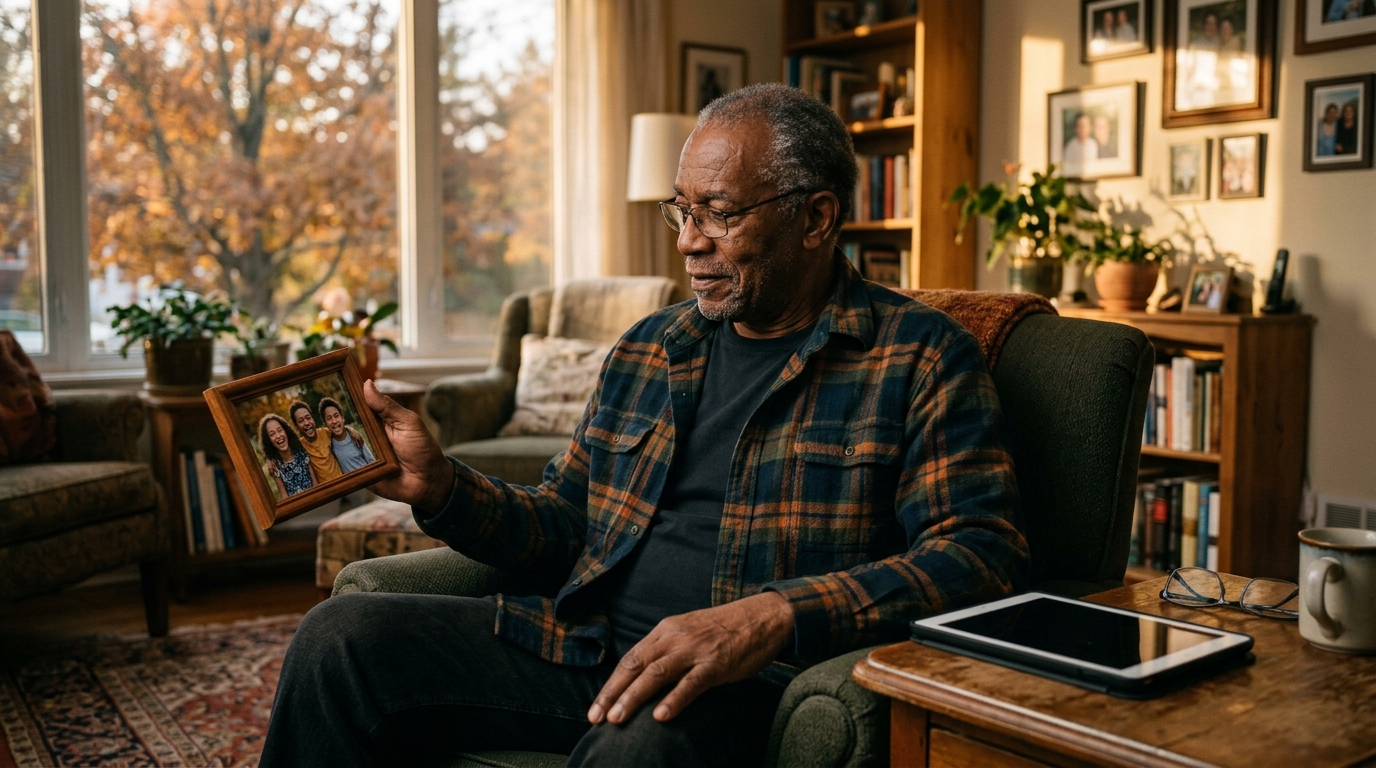
Real Ontario Scenario: Three Grandchildren, Three Universities
Robert and Susan, both 73, have three grandchildren starting post-secondary education in 2026, 2027, and 2028:
- Maya (oldest): Attending University of Toronto for Engineering ($30,000 tuition + $15,000/year living = $45K/year × 4 = $180K estimated)
- Joshua: Attending McMaster University for Health Sciences ($27,000 tuition + $14,000 living = $41K/year × 4 = $164K)
- Aisha: Planning to attend Western University for Medicine prerequisites ($28,000 + $13,000 = $41K/year × 4 = $164K)
Robert and Susan had invested $2,500/year in each child's RESP since age 0. By age 18:
- Maya's RESP: $62,000 (contributions + growth + CESG)
- Joshua's RESP: $58,000
- Aisha's RESP: $60,000
- Total RESP pool: $180,000
But total education costs: $508,000 across three four-year degrees.
The RESP covers about 35% of actual costs. Using those funds first, each grandchild needs an additional $41,000–$60,000 in funding.
Robert and Susan obtained a reverse mortgage for $300,000 at 6.2% at age 73/72. They committed:
- $50,000 for Maya's engineering (2026–2030)
- $45,000 for Joshua's health sciences (2027–2031)
- $45,000 for Aisha's medicine prerequisites (2028–2032)
- $160,000 remaining for their own care needs
Over the years, each grandchild received RESP withdrawals + grandparent reverse mortgage gifts totaling $102,000–$110,000 each—enough to avoid student loans entirely.
Reverse Mortgage Funding Compared to Student Loans
| Funding Source | Total for One 4-Year Degree | Ongoing Cost | Repayment Obligation |
|---|---|---|---|
| Full Student Loan (OSAP) | $40,000 | $400–$500/month, 10 years | On graduate; 20-year repayment |
| RESP Only | $18,000–$25,000 | $0 | N/A (grandparent-funded) |
| RESP + Reverse Mortgage Gift | $45,000–$60,000 | $0 | On grandparent (no repayment from grad) |
| Hybrid: RESP + Small Loan | $35,000 | $100–$200/month | Reduced loan burden |
The key difference: with a reverse mortgage gift, the grandchild graduates debt-free. With a student loan, they graduate owing $35,000–$40,000 and spend 10–15 years repaying.
How to Structure Multiple-Grandchild RESP Top-Up Funding
Step 1: Maximize Each RESP Before Age 17
Contribute $2,500/year per grandchild to capture full CESG. By age 17, you've contributed $42,500 total for three grandchildren and received $12,750 in grants.
Step 2: Project Total Education Costs
- Contact each school's admissions office for tuition estimates
- Research residence/living costs for each location
- Add 3–4% annual inflation over future years
- Identify the shortfall (total cost minus expected RESP balance)
Step 3: Apply for Reverse Mortgage
- Specify to your lender (CHIP, Equitable Bank, Bloom Financial) that funds will go to education gifting
- Borrow the shortfall amount plus a buffer (say, $40K per grandchild)
- Close the reverse mortgage before the first grandchild starts university
Step 4: Create a Distribution Plan
- Withdraw RESP in years 1–4 (when first grandchild is in school)
- Add reverse mortgage gifts in years 2–5 (when second grandchild starts)
- Continue layering for each subsequent grandchild
Step 5: Gift Directly to Grandchildren
- Transfer funds as tuition is due (not all at once)
- Ask the grandchild to keep you updated on actual costs
- Preserve flexibility to adjust if circumstances change
Tax Implications of RESP Withdrawals + Reverse Mortgage Gifts
RESP Withdrawals:
- Contributions (money you deposited) come out tax-free
- Growth and grants come out taxable to the student (who likely has low/no income, minimal tax)
- This is actually beneficial: grandchild pays little tax on RESP gains
Reverse Mortgage Gifts:
- Not taxable to you (you're spending your own borrowed equity)
- Not taxable to the grandchild (gifts aren't income)
- No GST/HST (education itself isn't taxed; funding it isn't either)
"RESP withdrawals are taxable to the student in the year received, using the student's marginal tax rate. Since full-time students typically have low income, tax on growth is often minimal or zero." — Canada Revenue Agency, RESP Rules
RESP Account Holder Considerations
If YOU (the grandparent) are the RESP account holder, you control all decisions:
- When to withdraw (before or after age 18)
- How much to withdraw
- Whether to carry forward unused grant room
But if the parent (your adult child) is the RESP holder, coordination is essential:
- Discuss withdrawal timing with them
- Confirm they understand your reverse mortgage gift is coming
- Ensure you're not both trying to fund education simultaneously
A quick conversation prevents misunderstandings: "We're planning to gift $15,000 toward Maya's first year. Should we withdraw her RESP in the same year, or would you prefer we gift it separately?"

Government Program Coordination: RESP + Grants + Reverse Mortgage
Ontario and federal programs don't restrict RESP recipients from receiving other gifts:
| Program | Overlap Issue? | How It Works |
|---|---|---|
| CESG (Federal) | No | Unaffected by reverse mortgage |
| RRSP (Grandparent's) | No | Separate accounts; no conflict |
| OAS/GIS (Grandparent's) | No | Gifts to others don't affect your benefits |
| Student Loans (Grandchild's) | Reduces need | Grandchild may qualify for reduced OSAP if family support exists |
| Scholarships (Grandchild's) | No conflict | Scholarships + gifts + RESP all stack |
The main point: there's no tax penalty or benefit reduction for using a reverse mortgage to supplement RESP education funding.
Key Takeaways
- RESPs capture government grants but max out at $21,600 for three grandchildren over 18 years.
- Total post-secondary costs for three students often exceed $400,000–$500,000.
- A reverse mortgage bridges the RESP gap by funding the remaining $30,000–$50,000 per grandchild.
- Debt-free graduates start their careers with $35,000–$40,000 less financial burden.
- Coordination with RESP holders (often your adult children) prevents confusion and maximizes efficiency.
- First-year reverse mortgage costs (~$5,000–$8,000 for $100K borrowed) become trivial over a 15+ year horizon.
Frequently Asked Questions
Can I withdraw RESP funds after the grandchild turns 18?
Yes. RESPs can remain open and funded until the end of the year the beneficiary turns 35. But most families withdraw during the post-secondary years when tuition is actually due, as this minimizes investment volatility risk.
What if one grandchild doesn't go to university?
You can redirect RESP funds to a different beneficiary (sibling, cousin) or withdraw them. Growth and grants become taxable to the original beneficiary, but contributions come out tax-free. A flexible reverse mortgage lets you redirect personal funds to the grandchild who does pursue education.
Do I need to formally tell the reverse mortgage lender the funds are for education?
No, but it's smart to mention it. Lenders including CHIP and Equitable Bank appreciate knowing your purpose and can sometimes offer slightly better terms or closure for "education gifting" purposes. It also helps with future communication about draw timing.
What if my reverse mortgage interest rate goes up during the repayment period?
Reverse mortgage rates are typically variable. If rates rise, your interest accrual increases. However, since this is a legacy gift strategy, many grandparents view the modest interest cost (typically $400–$800/year on a $100K reverse mortgage) as acceptable for enabling debt-free education.
Can I use a reverse mortgage to fund RESP contributions directly?
Yes, legally you could borrow via reverse mortgage and then contribute to RESP to capture grants. However, this creates unnecessary layering. Better approach: contribute to RESP from income first (to maximize grants), then use reverse mortgage for the final education gap when grandchildren are actually in school.
What if the grandchild wants to work instead of attending university?
You maintain flexibility. The reverse mortgage funds are yours to use as needed. If a grandchild chooses work over education, you can redirect those funds toward helping them start a business, buy a home, or save for your own care needs. Nothing is locked in.
Ready to Learn More?
Find out exactly how much you could unlock from your home — free and no obligation.
Related Articles
Reverse Mortgage to Hire a Professional Palliative Care Transition Coordinator
Before hospice, a care transition coordinator helps plan the shift from treatment to comfort care. A reverse mortgage funds this crucial professional guide.
Read →Reverse Mortgage to Fund Family Mediation When Siblings Disagree on Parent Care
When siblings fundamentally disagree on aging parent's living situation and care approach, professional mediation prevents family fracture. A reverse mortgage funds neutral expertise.
Read →Reverse Mortgage When Home Contamination Discovered During Appraisal
Mold, asbestos, radon, or lead discovered during appraisal dramatically cuts your home's value. A reverse mortgage funds remediation before the property becomes unmortgageable.
Read →