
Reverse Mortgage When Managing Multiple Aging In-Laws Without Siblings to Share Care
Support aging in-laws without sibling help using a reverse mortgage. Manage multi-generational care costs in Ontario without family backup.
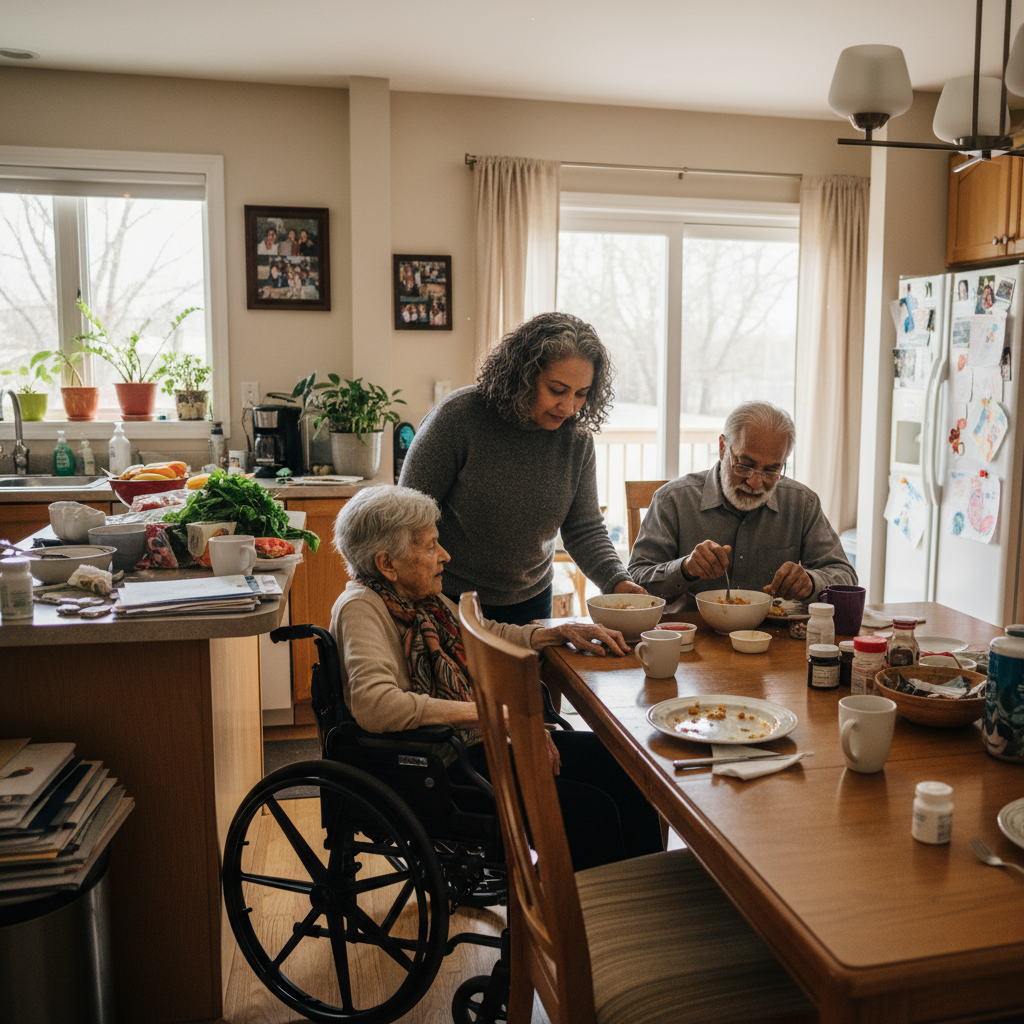
Are you the sole caregiver for your spouse's aging parents—or worse, both your spouse and your spouse's siblings' aging parent—without siblings to share the burden? This is an increasingly common scenario in Ontario: adult children are either only children or estranged from siblings, leaving one daughter-in-law or son-in-law to manage aging parents' care, housing, and medical costs entirely alone. A reverse mortgage can provide the financial flexibility needed to manage this complex, ongoing responsibility without decimating your retirement.

The Invisible Burden of Multi-Generational In-Law Care
Managing aging in-laws is often more complex than aging parents, yet fewer resources address it:
- Less legal clarity: You have fewer decision-making rights, even as primary caregiver
- Emotional complexity: You may have never had a close relationship with your in-laws
- No sibling backup: If your spouse is an only child, you carry the entire burden alone
- Family drama: If siblings exist but are estranged, you may face criticism despite doing all the work
- Financial exposure: You may be pressured to cover costs while inheriting nothing
When multiple aging in-laws live nearby (or in your home), costs escalate rapidly. Home care, medical equipment, modifications, emergency expenses, and lost work income from caregiving can consume $3,000–$8,000 monthly for an uninsured, single-caregiver family.
Real-World Example: The Martinez Situation
Rosa Martinez, 58, lived in Mississauga with her husband. His parents lived 15 minutes away; his sister lived in Vancouver and was "too busy" to contribute. Rosa had become the default caregiver for both in-laws, managing:
- Weekly grocery shopping and meal prep for both households
- Doctor's appointments, medication management, and health coordination
- Home maintenance and repairs (her father-in-law could no longer climb ladders)
- Emotional support and social contact (her mother-in-law was isolated and depressed)
- Emergency crisis management when her father-in-law fell and broke his hip
Rosa was working part-time, managing her own health issues, and burning out. Her husband helped, but ultimately, the burden fell on her because she was more available and had stronger relationships with both in-laws.
The financial costs were substantial: $600/month for her father's medications (not fully covered), $300/month for enhanced home care during his recovery, $200/month for home maintenance, plus lost work income from caregiving.
Rosa accessed $18,000 from a reverse mortgage to:
- Hire a part-time home care aide for her in-laws (8 hours/week)
- Fund home accessibility modifications (grab bars, ramp, bathroom access)
- Create a financial buffer for medical emergencies
- Allow herself to reduce work stress and focus on caregiving without burning out
The Hidden Costs of Multi-Generational Care
| Cost Category | Monthly/Annual Cost | Cumulative 5-Year |
|---|---|---|
| Home care (part-time) | $600–$1,500/month | $36,000–$90,000 |
| Medical equipment and supplies | $200–$500/month | $12,000–$30,000 |
| Home modifications and repairs | $200–$600/month (variable) | $12,000–$36,000 |
| Medications and treatments | $300–$800/month | $18,000–$48,000 |
| Lost work income from caregiving | $500–$1,500/month | $30,000–$90,000 |
| Meals, groceries, supplies | $300–$600/month | $18,000–$36,000 |
| Emergency costs (hospital, crisis care) | Unpredictable | $5,000–$20,000 |
Total 5-year burden for single caregiver: $131,000–$350,000
When these costs come from your retirement budget, they're catastrophic. A reverse mortgage allows you to spread costs across available home equity rather than destroying monthly retirement income.
Why Reverse Mortgages Work for In-Law Care
Traditional financing (personal loans, credit cards, lines of credit) requires monthly payments—exactly what you can't afford while already stretched thin. A reverse mortgage:
- Provides lump sum or line of credit access without monthly payments
- Allows flexible, phased draws as needs evolve
- Doesn't require income qualification (only home value and age)
- Lets you age in place while funding in-law care
- Provides psychological relief—funds available for genuine emergencies
Strategic Use of RM Funds for In-Law Care
Rather than viewing RM funds as a blank check, target them strategically:
Home modification and accessibility (Years 1–2): $15,000–$30,000
- Bathroom modifications for aging in-laws visiting frequently
- Ramp or accessibility upgrades if in-laws move into your home
- Grab bars, lighting, flooring for safety
In-home support services (Years 1–5, ongoing): $500–$1,500/month from RM line of credit
- Part-time home care aide (8–16 hours/week)
- Cleaning service to reduce your caregiving burden
- Meal delivery service for days you can't cook
Medical equipment and home health supplies (As-needed): $200–$500/month from line of credit
- Hospital bed, wheelchair, walker, mobility aids
- Monitoring equipment for seniors with health conditions
- Personal alarm systems
Emergency buffer: Keep $5,000–$10,000 accessible for crisis costs
- Unexpected hospitalizations
- Urgent home repairs
- Last-minute medical needs
This strategic approach lets you say "no" to overextending yourself while still providing essential support.

Protecting Yourself Emotionally and Financially
When you're the sole caregiver, boundaries become critical:
- Define your role: "I'll provide this level of support, and no further"
- Get other family members' commitment in writing: If siblings won't help with care, can they contribute financially?
- Hire professional help: Using RM funds to pay for aides protects you from complete burnout
- Plan for succession: If in-laws live longer than expected, what's your exit strategy?
- Discuss with your spouse: Ensure you're aligned on in-law support vs. your retirement
Frequently Asked Questions
What if my siblings-in-law resent that I'm using a reverse mortgage for their parents?
That's their problem. You're the one doing the work. If they want decision-making power or inheritance claims, they need to contribute—financially or otherwise. Document your caregiving and expenditures for clarity.
Can I require my in-laws to help repay the reverse mortgage?
Generally not—reverse mortgages are your personal obligation, not the care recipient's. However, you could structure separate family loans if adult children want to contribute. Consult a lawyer if large amounts are at stake.
What if my in-laws move to long-term care? Does the reverse mortgage become due?
No. The RM is tied to your home, not your in-laws'. Even if they move to LTC, you keep your home, and the RM stays in place. You only repay when you sell the home or permanently move out.
Will reverse mortgage funds affect my in-laws' benefits or my inheritance claims?
Funds go to you, not your in-laws, so they don't affect their benefits. If in-laws have significant assets, inheritance could be complicated—consult a lawyer. But most aging parents have limited assets, making this less relevant.
How do I discuss in-law caregiving with my spouse?
Directly and early. Say: "Your parents need care. I'm willing to help, but we need to discuss boundaries and costs. A reverse mortgage could help, but it's a family decision. Let's talk about what we can realistically provide."
Key Takeaways
| Question | Answer |
|---|---|
| Can a reverse mortgage fund in-law care? | Yes—this is a common, valid use for multi-generational support |
| What's a realistic monthly cost for part-time care? | $600–$1,500/month for part-time in-home support |
| Does it affect my retirement plans? | Only if you over-borrow; strategic borrowing is manageable |
| Can I update my borrowing as needs change? | Yes—most RMs offer flexible lines of credit |
Moving Forward
Being the sole caregiver for aging in-laws is an enormous responsibility. You didn't sign up for it, yet you're providing it. That deserves support—both emotional and financial.
A reverse mortgage isn't giving up. It's acknowledging reality: multi-generational care is expensive, and your retirement income alone can't cover it. By tapping your home equity strategically, you're giving yourself permission to do what matters—support your family—without sacrificing your own security.
Ready to Learn More?
Find out exactly how much you could unlock from your home — free and no obligation.
Related Articles
Reverse Mortgage When Caring for In-Laws: Managing Extended Family Obligations
Learn how a reverse mortgage can help when supporting aging in-laws while managing your own retirement. Ontario guide for adult children in extended family caregiving.
Read →Aging Together: Reverse Mortgage to Help Couples Stay in Their Home
For couples aging together, a reverse mortgage enables one spouse to manage care for the other while staying in your shared home. Here's how it works and what to plan for.
Read →Reverse Mortgage for Aging in Place With Fibromyalgia: Home Modifications for Invisible Illness
Fund home modifications for aging with fibromyalgia. Reverse mortgage enables accessible design for pain management, energy conservation, and quality of life.
Read →