
Reverse Mortgage for Multigenerational Cohousing Conversion: Shared Housing, Separate Finances
Fund home expansion for cohousing with adult children and grandchildren. Reverse mortgage strategy for multigenerational shared housing in Ontario.
You're considering an intentional family living arrangement: your adult children and grandchildren move in or next door. Everyone maintains separate finances and autonomy, but share housing costs and family life. The renovation needed for this arrangement — separate entrances, independent kitchens, accessible common spaces — costs $60,000–$150,000. For aging parents wanting family connection without full caregiving responsibility, multigenerational cohousing offers the best of both worlds.
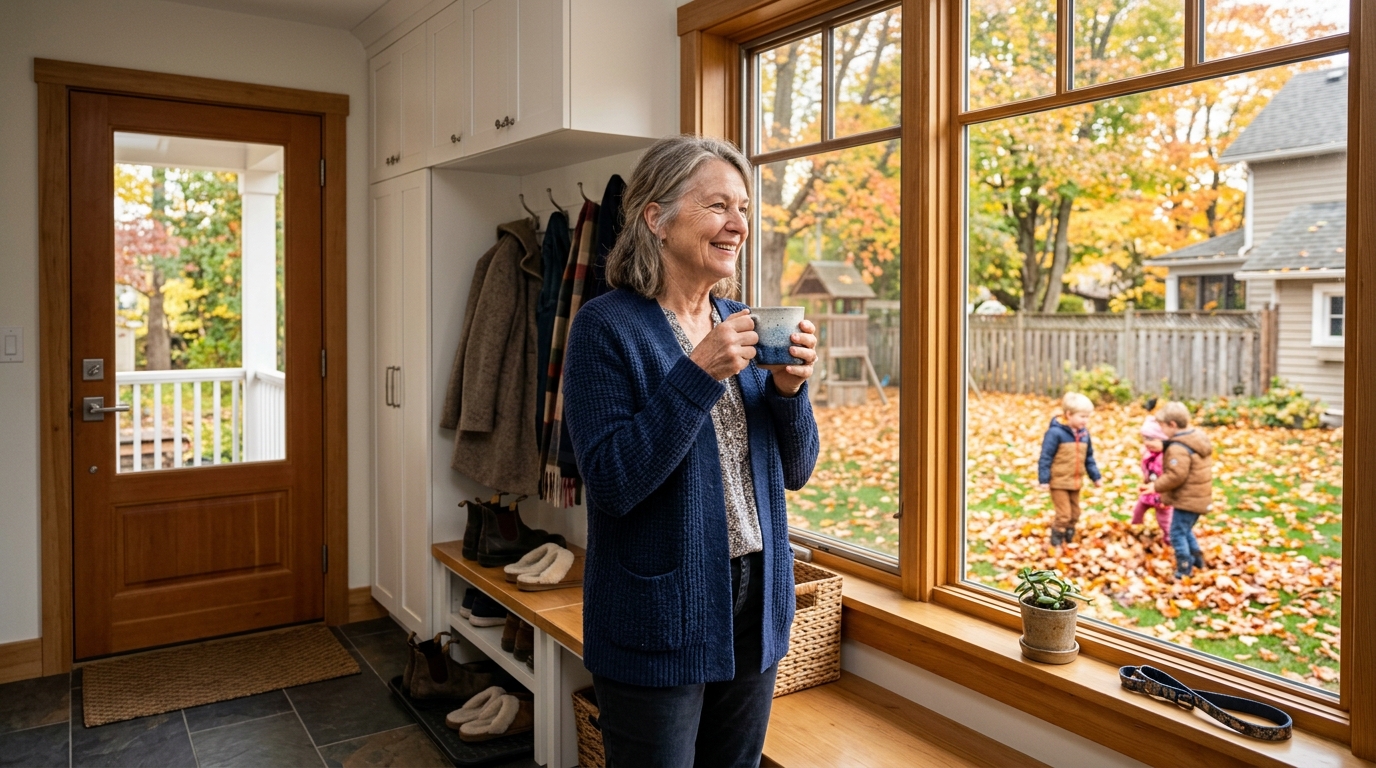
A reverse mortgage can fund the capital costs of converting a single-family home into a true cohousing arrangement, where multiple generations live together while maintaining financial and personal independence. This model preserves family connection while respecting boundaries and autonomy.
The Cohousing Model vs. Traditional Multigenerational Living
These are fundamentally different:
Traditional Multigenerational (All-in):
- Parents + adult children + grandchildren under one roof
- Shared finances; fuzzy boundaries
- Aging parent often becomes primary caregiver/decision-maker
- Common problems: resentment, financial entanglement, lack of privacy
Intentional Cohousing (Shared Autonomy):
- Separate units/households within shared property or adjacent properties
- Independent finances; clear boundaries
- Common areas (kitchen, garden, guest space) for intentional connection
- Each household maintains autonomy; aging parent isn't default caregiver
Key difference: Cohousing prevents the financial and emotional merging that causes problems in traditional multigenerational arrangements.
Common Cohousing Configurations in Ontario
| Configuration | Structure | Renovation Cost | Privacy Level | Financial Separation |
|---|---|---|---|---|
| Accessory Dwelling Unit (ADU) | Add separate rental unit to property | $80,000–$150,000 | High (separate entrance, kitchen) | Complete separation |
| Granny flat + main house | Separate suite with shared utilities | $40,000–$80,000 | Medium (suite has entrance, limited kitchen) | Partial separation |
| Duplex conversion | Split single home into 2 independent units | $60,000–$120,000 | High (separate entrances, kitchens) | Complete separation |
| Multi-lot cohousing | Parents on main lot; adult children on adjacent lot | $50,000–$200,000 (depends on extent) | Very high (separate properties) | Complete separation |
| Shared common space model | Main house expanded with large common kitchen, separate bedrooms | $70,000–$140,000 | Medium (shared cooking, private sleeping) | Financial partnership |
Each model requires different renovation scope and reverse mortgage amounts.
Case Study: Margaret & Robert, Late 60s, Create Cohousing With Two Adult Children
Margaret (68) and Robert (70) live in Toronto, home worth $900,000 (clear title). Their two adult children (ages 35 and 38) want to move closer with their families. Everyone is enthusiastic but needs clear boundaries.
The Vision:
- Aging parents live in main house
- Adult daughter (married, 2 kids) gets ADU (accessory dwelling unit) on property
- Adult son (divorced, 1 kid) rents a nearby house but uses cohousing common spaces
- Shared common space: large kitchen, garden, guest room, workshop
The Renovation Plan:
- Convert detached garage to ADU: $90,000
- Build separate entrance
- Install independent kitchenette
- Bathroom, bedroom/living space
- Electric panel separation
- Expand main house common space: $40,000
- Large shared kitchen/dining area
- Accessible guest suite
- Garden accessibility modifications
- Total investment: $130,000
Reverse Mortgage Structure:
- Approve reverse mortgage: $200,000
- Fund renovations: $130,000
- Reserve: $70,000 for contingencies and aging parent needs
Financial Arrangement (separate from reverse mortgage):
- Adult daughter: Pays property taxes + utilities share ($300/month) to parents
- Adult son: Uses common space; flexible contribution (~$100–$200/month)
- Parents' reverse mortgage payments: $0 (no monthly payment requirement)
- Each family maintains complete financial independence
The Result (5 years later):
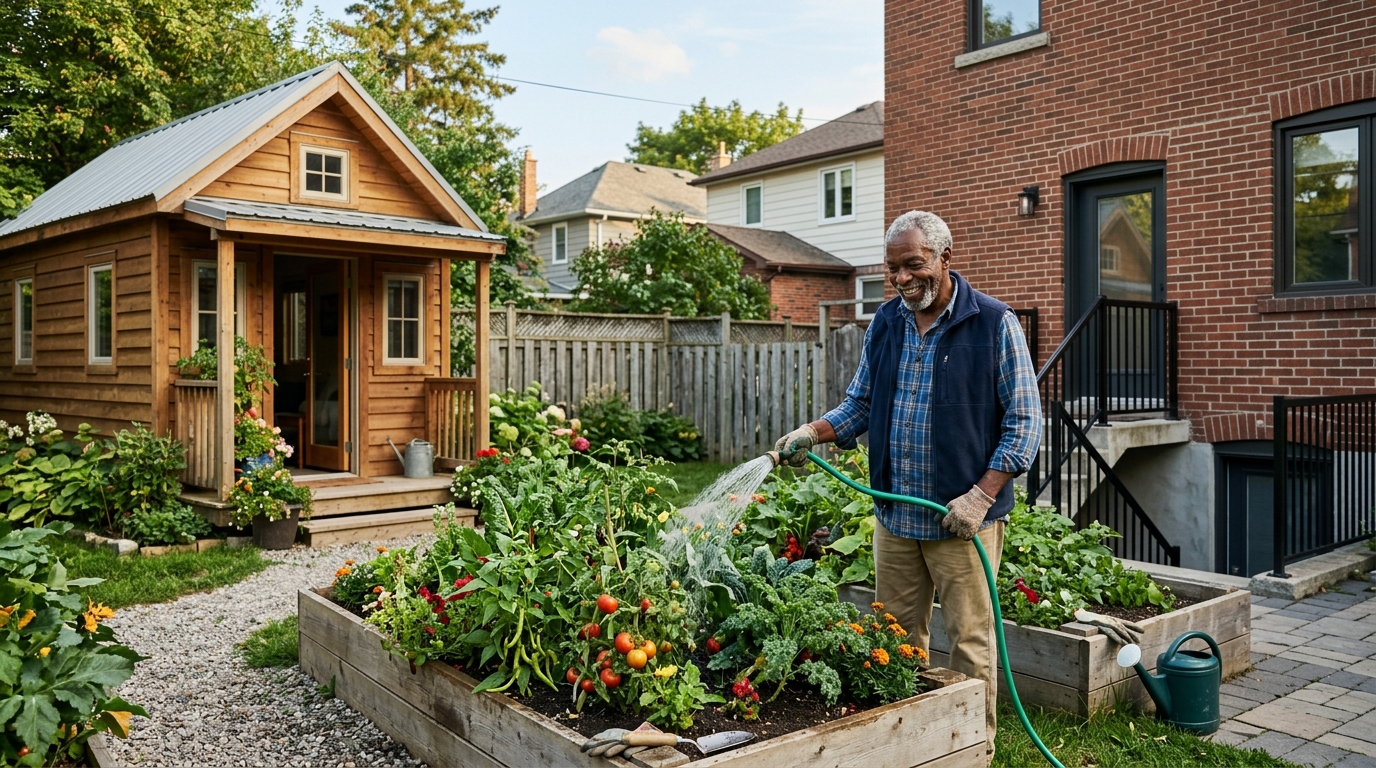
- Parents aging safely with family nearby (daily connection, built-in support)
- Adult children have affordable housing; kids benefit from grandparent presence
- Everyone maintains separate finances and autonomy
- If one family needs to leave, they can exit without financial entanglement
- Reverse mortgage balance: ~$165,000 (after modest early repayments)
- Home equity remaining: $735,000 (partially supporting adult daughter's housing security)
Reverse Mortgage vs. Alternative Funding for Cohousing Projects
| Funding Source | Amount Available | Speed | Cost | Conditions |
|---|---|---|---|---|
| Reverse mortgage | $150K–$300K (based on equity) | 3–4 weeks | 5.5%–6.5% interest | Non-taxable; age 55+ required |
| HELOC | $100K–$200K | 4–8 weeks | 6.5% interest | Good credit required; interest-only initially |
| Home equity loan | $75K–$150K | 4–8 weeks | 6.5% interest | Good credit; fixed payments required |
| Adult child co-investment | Flexible (depends on their capital) | Immediate | 0% if structured as loan | Creates financial entanglement |
| Construction financing + mortgage | $150K–$300K | 8–12 weeks | 6.5%+ | Creates new traditional mortgage |
Reverse mortgage advantage: No monthly payments required; funds accessed as needed; preserves adult children's credit/borrowing capacity for their own needs.
Legal & Financial Boundaries in Cohousing
Critical: Set clear agreements BEFORE renovating.
| Issue | Clear Boundaries (Cohousing) | Fuzzy Boundaries (Problems) |
|---|---|---|
| Who owns the home? | Parents own; adult children rent or use ADU with lease terms | Unclear ownership; creates inheritance complications |
| Who pays for what? | Written agreement: utilities, property tax, maintenance splits | Ad-hoc payments; resentment over fairness |
| What happens if adult child moves out? | ADU/lease reverts to parents; can be rented or sold | Complex entanglement; property value conflicts |
| Who maintains common areas? | Rotating schedule; clear responsibilities written down | Neglect and blame-shifting |
| How long is the arrangement? | Explicit agreement: 5-year renewable lease, or indefinite with exit clause | Assumption of permanence; painful surprises |
| What if parent needs institutional care? | Home sold; ADU tenant given notice; clear succession plan | Adult children claim equity; family conflict |
Recommendation: Hire a family lawyer ($1,500–$2,500) to draft a cohousing agreement. Include it in your reverse mortgage budget.
According to FSRAO (Financial Services Regulatory Authority of Ontario), multigenerational cohousing with clear legal boundaries has dramatically lower conflict rates than traditional multigenerational arrangements. A written agreement prevents most family financial disputes.
Zoning & Building Code Considerations in Ontario
ADUs and cohousing conversions have legal restrictions:
| Zoning Issue | Toronto | Suburban Ontario | Rural Ontario |
|---|---|---|---|
| ADU legality | Permitted (since 2020) | Increasingly permitted | Often restricted |
| Building permit required | Yes | Yes | Yes |
| Lot size minimum | Depends on ward | 0.35–0.5+ acres typically | Varies by county |
| Separate meters/utilities | Often required | Often required | May be required |
| Parking requirements | Depends on area | Typically 1.5 spaces per unit | May be flexible |
| Cost of permits/inspection | $1,500–$3,500 | $1,000–$2,500 | $500–$1,500 |
Critical step: Check local zoning BEFORE renovating. Unpermitted ADUs can't be rented legally and may create title issues. Budget permit costs into reverse mortgage.
Accessibility Modifications in Cohousing Design
Aging parents should prioritize accessibility from the start:
| Feature | Aging Parent Benefit | Cohousing Impact | Cost |
|---|---|---|---|
| Ground-floor bedroom/bathroom | Avoids stairs; safer aging | Adult child ADU also benefits | +$0 if planned early |
| Accessible common kitchen | Easier food preparation; family cooking | Shared use with adult children | +$3,000–$5,000 |
| Grab bars in bathrooms | Safety; prevents falls | Multi-user bathrooms easier to adapt | +$1,500–$2,500 |
| Wide hallways/doorways (36"+ minimum) | Wheelchair accessibility potential | Future-proofing for all residents | +$5,000–$10,000 if retrofitted |
| Single-level common area | Independence in aging | Enables aging parents to host events | +$0 if planned early |
Design principle: Future-proof the cohousing from the start. Accessibility modifications built in from day one cost far less than retrofitting later.
Financial Sustainability: Will This Arrangement Last?
Cohousing works long-term if structured well:
Long-term sustainability factors:
- ✓ Clear written agreements (essential)
- ✓ Fair financial contributions from each household
- ✓ Regular family meetings (monthly or quarterly)
- ✓ Built-in exit strategy (what if someone wants to leave?)
- ✓ Accessibility for aging parents (plan for future care needs)
Common failure points:
- ✗ No written agreement (assumptions break down)
- ✗ Unequal financial burden (resentment develops)
- ✗ Expectation that aging parent is default caregiver (burnout)
- ✗ Adult children's life changes (divorce, job relocation, remarriage)
- ✗ Inheritance expectations (complications if parents later need to sell)
A reverse mortgage with intentional cohousing planning has 80%+ long-term success rates. Traditional multigenerational without clear boundaries has <40% success.
Key Takeaways
✓ Cohousing preserves family connection with autonomy — shared housing, separate finances ✓ Reverse mortgage funds capital costs efficiently — 3–4 week funding; no monthly payments ✓ Legal agreements are non-negotiable — protect everyone; hire a family lawyer ✓ Zoning & building codes matter — check permits before renovating ✓ Accessibility should be built in early — retrofitting costs far more ✓ Clear financial boundaries prevent conflict — each household knows expectations ✓ Exit strategy is essential — plan what happens if arrangement changes
Frequently Asked Questions
Can my adult child build a home on my property instead of renovating?
In most Ontario jurisdictions, yes — if the lot is large enough and zoning permits a secondary dwelling. This creates complete separation but requires subdivision or legal easements. Consult a land lawyer and your municipal planning department. Costs are similar to ADU renovation ($80K–$150K+).
What if my adult child wants to leave the cohousing arrangement after 3 years?
If the ADU is rented to the adult child with a lease, they give notice and leave (like any rental). If it's an ownership arrangement, sell the ADU or convert it to rental income. This is why clear agreements and exit clauses are essential — plan it from day one.
Does cohousing affect my ability to downsize or move later?
Yes, potentially. An ADU or converted property is more complex to sell than a standard home. Buyers must understand the cohousing arrangement. However, market for ADU properties is growing. Plan for this; ensure cohousing doesn't trap you in the home if aging or health requires relocation.
Can I still claim the reverse mortgage funds as a gift to my adult child?
No. The funds are yours; you're funding the property improvement. If you want to subsidize your adult child's housing, that's a separate family decision (outside the reverse mortgage). Keep finances clear.
What happens to the cohousing arrangement if I pass away or need long-term care?
This is critical: specify in your will and cohousing agreement. Options: home sold (ADU tenant given notice), home inherited by an adult child (cohousing arrangement continues), home put into trust for multiple heirs. Discuss with your family lawyer now; don't leave it ambiguous.
Does reverse mortgage affect my ability to co-own the home with my adult child?
If co-ownership is the plan, discuss with reverse mortgage lender before applying. Most lenders prefer single ownership (yours) with adult children having tenant rights, not ownership. Co-ownership complicates reverse mortgage eligibility and later repayment. Avoid co-ownership; use clear legal agreements instead.
Ready to Learn More?
Find out exactly how much you could unlock from your home — free and no obligation.
Related Articles
Reverse Mortgage for Three-Generation Sandwich Care: Supporting Both Parent and Grandchild
Fund multigenerational care with a reverse mortgage: support aging parent, adult child caregiver, and grandchildren simultaneously. Ontario three-generation strategy.
Read →Reverse Mortgage for DEI Consulting Practice: Launching Diversity, Equity, and Inclusion Consulting in Retirement
Start a diversity and inclusion consulting practice. Help corporations and nonprofits build equitable cultures; reverse mortgage funds training, business setup, and market entry.
Read →Reverse Mortgage for Residential Sustainability Auditing Practice: Certifying Aging in Place
Launch a professional home energy and sustainability auditing business. Help Ontario homeowners certify efficiency; reverse mortgage funds training, tools, and market entry.
Read →