
Reverse Mortgage for Multi-Generational Food Co-op and Bulk Purchasing Network
Create a family food cooperative and bulk purchasing network to manage costs across multiple generations living together. Reverse mortgage funds food security infrastructure.
When multiple generations share a home—grandparents, adult children, grandchildren—food costs can consume 20–30% of household budgets. A reverse mortgage can fund food purchasing infrastructure (bulk storage, cooperative buying, shared meal planning) that dramatically reduces per-person food costs while improving nutrition and reducing food waste.
This strategy is particularly relevant for multigenerational homes becoming more common in Ontario. When an aging parent moves in with adult children and grandchildren, household food costs escalate dramatically. Instead of individual household shopping, a coordinated, bulk-based approach can reduce grocery spending by 15–30% while ensuring better nutrition and reducing food waste.
The Multi-Generational Food Cost Crisis
When multiple households consolidate into one:
| Household Type | Average Monthly Food Cost | Bulk Buying Potential | Annual Savings |
|---|---|---|---|
| Single adult | $300–$400 | 5–10% | $200–$480 |
| Couple, no kids | $500–$700 | 10–15% | $700–$1,260 |
| Family (2 adults + 2 kids) | $900–$1,200 | 15–20% | $1,800–$2,880 |
| Multi-generational (4–6 people) | $1,800–$2,400 | 20–30% | $4,320–$8,640 |
A multi-generational household of 5–6 people (aging parent, adult child, partner, 2–3 grandchildren) typically spends $1,800–$2,400/month on groceries. With strategic bulk buying, food purchasing cooperatives, and coordinated meal planning, this can drop to $1,300–$1,800/month.
Annual savings: $6,000–$14,400
Creating a Multi-Generational Food Co-op: What's Needed?
Setting up a coordinated, bulk-purchasing food system requires infrastructure investment:
| Infrastructure Component | Cost (CAD) | Purpose | Annual Savings from Component |
|---|---|---|---|
| Deep chest freezer(s) | $800–$1,500 | Bulk meat, prepared meals storage | $1,200–$1,800 |
| Pantry storage shelving | $600–$1,200 | Dry goods, bulk non-perishables | $800–$1,200 |
| Commercial-grade food storage containers | $400–$800 | Portioning, waste reduction | $400–$600 |
| Meal planning software / shared system | $100–$300/year | Coordinating meals, reducing duplication | $500–$800 |
| Bulk buying membership (Costco, etc.) | $60–$120/year | Access to bulk pricing | $2,000–$3,000 |
| Gardening/greenhouse infrastructure | $2,000–$5,000 (optional) | Summer/fall produce; seed-saving | $800–$2,000 |
| Food processing equipment (pressure canner, dehydrator) | $400–$1,200 (optional) | Preserving bulk purchases; reducing waste | $600–$1,200 |
| Total Infrastructure Investment | $4,360–$10,120 | Enables coordinated system | $6,300–$10,600/year |
Payback timeline: 5–18 months (infrastructure costs recover through savings within 1–2 years).
Real-World Example: The Chen Multi-Generational Food Co-op
David Chen, 68, lived in Mississauga with his wife Linda (65). Their son Marcus, 38, moved in with his two children (ages 8 and 12) and his partner Sarah after a marriage separation. Suddenly, the household grew from 2 to 5 people.
Before moving in together:
- David and Linda: $600/month groceries
- Marcus + kids + Sarah: $1,100/month groceries
- Combined: $1,700/month
After moving together (initially):
- Consolidated household: $2,300/month (economies of scale helped, but not much)
- Everyone was buying separately, duplicating, wasting food
David decided to implement a "Chen Family Food Cooperative." He had $280,000 in home equity. He obtained a reverse mortgage line of credit ($120,000, 43% of equity) and drew $8,000 for food infrastructure:
Investment breakdown:
- 2 large chest freezers: $1,200
- Pantry shelving system: $800
- Food storage containers: $400
- Costco membership (3-year prepay): $300
- Gardening beds and supplies: $2,500
- Pressure canner and dehydrator: $1,100
- Shared meal planning software/board: $200
- Initial bulk purchase seed stock: $1,500
Implementation:
- Rotating meal planning: Each family unit plans 2 weeks of dinners (5 people = shared meals)
- Weekly bulk shopping: One coordinated Costco/grocery run instead of 4 separate trips
- Freezer meal prep: Sunday prep sessions where family cooks in bulk, freezes portions
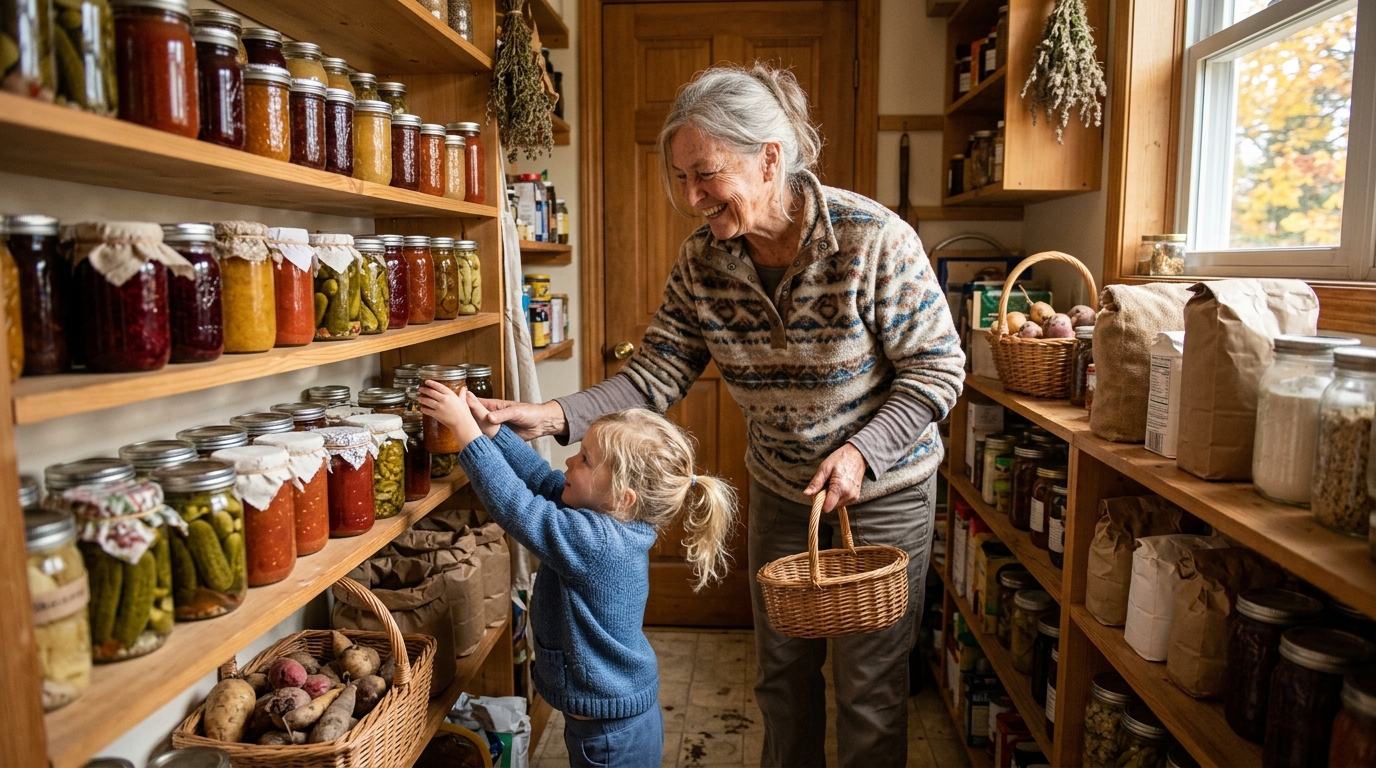
- Garden coordination: Summer produce grown on shared property; fall canning/preservation
- Waste tracking: Monthly accounting of food waste (initially high, then reduced 40%+)
Results after 18 months:
- New household food budget: $1,450/month
- Savings: $850/month ($10,200/year)
- Improved nutrition: Family eating more vegetables, less processed food
- Reduced food waste: 40% reduction in spoilage and disposal
- Relationship benefit: Shared meal prep became family bonding time
- David's reverse mortgage cost: ~$400/month in interest on the $8,000 drawn
- Net savings to household: $450/month
The infrastructure investment paid for itself in 10 months. The household now saves $10,200 annually, more than offsetting David's reverse mortgage interest.
Food Cooperative Models for Multi-Generational Homes
Different structures work for different families:
| Model | Structure | Best For | Complexity |
|---|---|---|---|
| Unified Budget | All money pooled; one person manages | Highly cooperative, trust-based families | Low |
| Shared Cost Split | Proportional contribution (by person/by income) | Mixed-income multi-gen households | Medium |
| Individual Accounts | Each unit tracks their spending; periodic settlement | More independent adult children | Medium-High |
| Rotating Responsibility | Different person manages each month | Shared ownership and engagement | Medium |
| Hybrid (Shared + Individual) | Staples pooled (rice, oils, basics); individuals buy preferences | Diverse dietary needs/preferences | High |
Most successful multi-generational food co-ops use a hybrid model: shared staple purchasing (bulk basics) + individual budget for preferences.
Tax and Benefits Coordination
Multi-generational household food cost management can affect government benefits:
- GIS (Guaranteed Income Supplement) — If an aging parent receives GIS, pooling household income may trigger clawback. Clarify with Service Canada that shared food purchases don't constitute "shared income."
- ODSP (Ontario Disability Support Program) — Similar income-sharing concerns. Consult with your caseworker.
- Child Tax Benefit — Not affected by multi-generational food co-ops; structure is household support, not income transfer.
According to FCAC (Financial Consumer Agency of Canada), multigenerational households should document their shared cost arrangements. If government agencies question whether benefits should be affected, having written agreements (even informal family agreements) showing cost-sharing helps clarify the situation.
Frequently Asked Questions
What if one family member wastes food or doesn't follow the meal plan?
This is the biggest challenge with multi-generational food co-ops. Mitigation strategies: (1) Start with a trial period (3 months) before infrastructure investment; (2) Establish clear roles and expectations in writing; (3) Monthly check-ins to address issues; (4) Rotate responsibility to ensure ownership; (5) Build flexibility (not everyone must participate in every meal).
Can I get an agriculture/environmental grant to fund the gardening component?
Possibly. Ontario offers small grants through programs like:
- Local Food Stream — For urban agriculture and community gardens
- Canadian Agricultural Adaptation Program — For farm/agricultural infrastructure
- Community Development Trust grants — For multi-generational community projects
However, these typically require nonprofit status or community organization filing. Individual households usually don't qualify, but worth investigating.
What if my aging parent needs to leave the household (long-term care) — do I still benefit from the infrastructure?
Yes. Multi-generational food infrastructure benefits whoever remains in the household. Even if your aging parent moves to long-term care, your adult children and grandchildren continue benefiting from the freezers, storage, bulk buying system, and coordinated purchasing.
How do I track who consumes what if people leave/join?
Simplified approach: Don't. Track aggregate household food spending and savings. If people leave or join, adjust the household budget proportionally. Trying to track individual consumption is more work than the savings justify.
Is growing my own food actually cheaper than buying bulk?
Depends on the produce. Tomatoes, peppers, herbs, and leafy greens are very profitable to grow. Root vegetables and grains less so (labor-intensive, lower-value yields). Strategic gardening (focusing on high-value vegetables) combined with bulk buying is most efficient.
Key Takeaways
- Multi-generational households can reduce food costs by 20–30% through coordinated bulk buying and meal planning.
- Infrastructure investment ($4,000–$10,000) pays for itself in 10–18 months through direct savings.
- A reverse mortgage efficiently funds the upfront infrastructure without burdening the household with additional debt.
- Hybrid food co-op models (shared basics + individual preferences) work best for diverse family structures.
- Tax and benefits coordination matters — Verify that shared cost arrangements don't trigger clawback for aging parents on GIS/ODSP.
- Shared meal planning creates relationship benefits beyond financial savings (bonding, nutrition, reduced waste).
If you're managing a multi-generational household in Ontario, consider whether strategic food purchasing infrastructure could reduce costs while improving nutrition and family connection. Contact Rick Sekhon Reverse Mortgages or lenders like CHIP, Equitable Bank, or Home Trust about reverse mortgage funding for multi-generational household optimization.
Ready to Learn More?
Find out exactly how much you could unlock from your home — free and no obligation.
Related Articles
Reverse Mortgage for Aging in Place With Fibromyalgia: Home Modifications for Invisible Illness
Fund home modifications for aging with fibromyalgia. Reverse mortgage enables accessible design for pain management, energy conservation, and quality of life.
Read →Reverse Mortgage for Accessible Community Kitchen: Culinary Training and Aging in Place
Convert your home kitchen into an accessible commercial culinary training space. Reverse mortgage funds renovation while creating community impact.
Read →Reverse Mortgage When You Previously Gifted Home Down Payment to Adult Child: Reclaiming Equity for Aging in Place
Reverse mortgage strategy when aging in place after gifting down payment to adult child. Recover equity for home modifications and care.
Read →