
Reverse Mortgage for Late Career Licensing: Professional Certification at 55+
Fund a new professional license or certification at 55+ using a reverse mortgage. Retrain in a new skilled profession during early retirement.
Can you afford a professional license or certification at 55+ when you're thinking about winding down? Many Ontario seniors discover that early retirement (65–70) is too long to stay completely inactive, but returning to full employment isn't appealing either. A solution: pursue a new professional credential in a skilled trade or specialized field—electrician, plumber, real estate appraiser, building inspector—that offers part-time, project-based, or flexible work. Licensing costs $8,000–$30,000 (tuition, exam prep, exam fees, license application), but the investment returns flexibility and income for a 10–15 year semi-retired career. A reverse mortgage funds the credential without forcing continued work in your old field or retirement depletion.
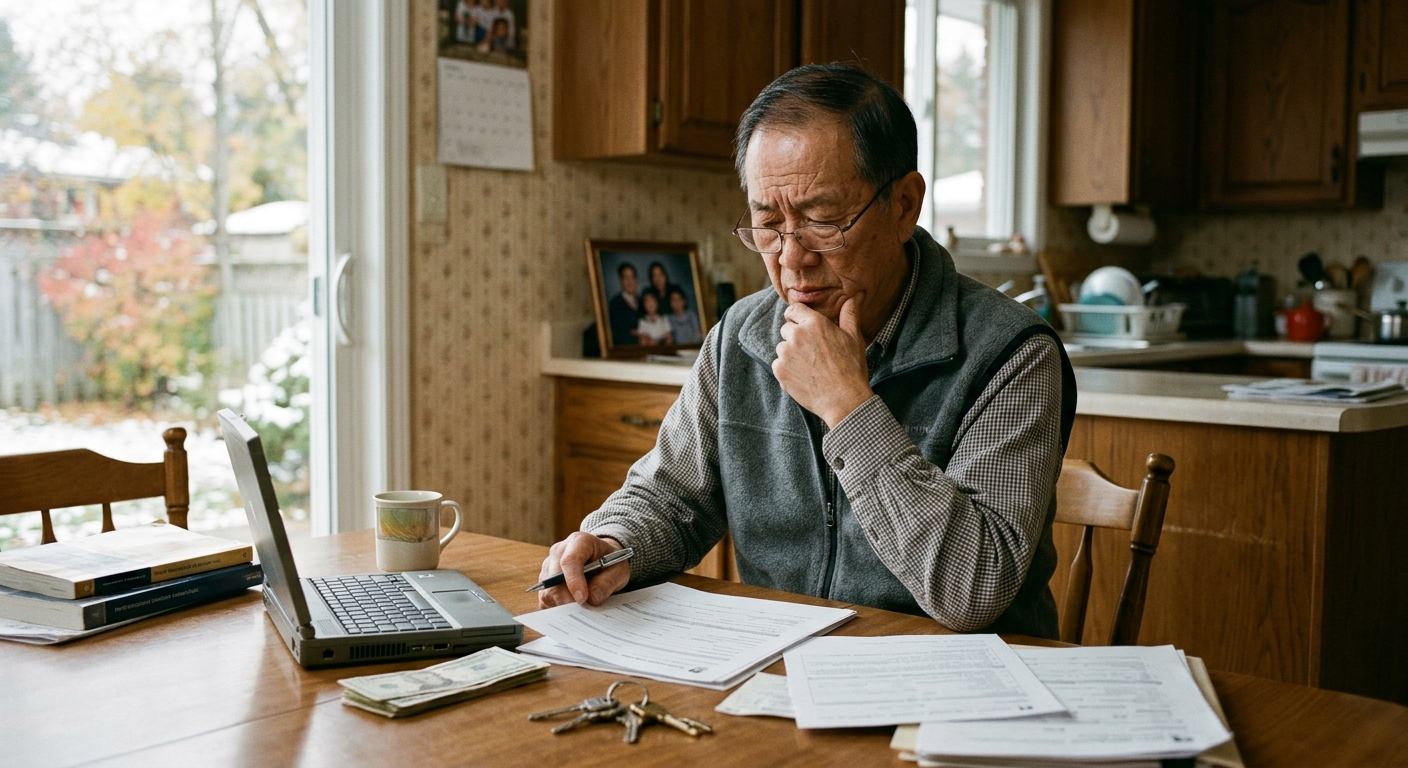
Late-Career Licensing: The Emerging Retirement Path
Many retirees want "active retirement," not full withdrawal from work. According to Statistics Canada, 35% of Canadians 65+ continue working part-time, and 60% of those cite "staying engaged and purposeful" as the primary reason (not pure financial need). A late-career professional license lets you:
- Change fields: Escape a burnout industry (e.g., healthcare to building inspection)
- Increase autonomy: Become self-employed or pick projects flexibly (not clock-in employment)
- Stay financially engaged: Part-time income supplements CPP/OAS without full-time work
- Build legacy: Use expertise in a second career (mentoring, specialized niches)
High-demand late-career licensing fields in Ontario
| Profession | License Cost | Training Timeline | Part-Time Income Potential | Age Flexibility |
|---|---|---|---|---|
| Electrician (journeyperson) | $5,000–$10,000 | 2–4 years (apprenticeship) | $35–$50/hour (flexible projects) | Excellent (project-based) |
| Plumber (journeyperson) | $5,000–$10,000 | 2–4 years (apprenticeship) | $40–$60/hour (service calls) | Excellent (emergency calls = premium pay) |
| HVAC technician | $6,000–$12,000 | 1–3 years (apprenticeship) | $35–$50/hour (seasonal demand) | Good (winter peaks) |
| Real estate appraiser (licensed) | $8,000–$15,000 | 1–2 years (course + exam) | $75–$150/appraisal (15–30/year = $20K–$45K) | Excellent (appraisals outsource easily) |
| Building inspector (municipal certif.) | $6,000–$12,000 | 1–2 years (course + exam) | $60–$100/inspection (contract basis) | Excellent (municipalities contract inspection) |
| Home inspector (HCAO licensed) | $8,000–$15,000 | 2–3 months (bootcamp) + exam | $400–$600/inspection (20–30/year = $10K–$20K) | Excellent (flexible scheduling) |
| Real estate agent (broker license) | $3,000–$8,000 | 3–6 months (course + exam) | Commission-based; highly variable | Excellent (referral-based at 55+) |
| Coaching certification (ICF) | $6,000–$15,000 | 6–12 months (part-time program) | $75–$150/hour (15–20 clients = $30K–$50K) | Excellent (online/flexible) |
Why late-career licensing makes financial sense
| Financial Scenario | Reverse Mortgage License Investment | Outcome |
|---|---|---|
| Early retiree (62) wants income bridge to 70 | $20,000 RM draw for license | 8 years × 15 projects/year × $500/project = $60,000 income (repays RM 3x) |
| Burnout professional (55) wants career escape | $15,000 RM draw for license | 15 years × 30 inspections/year × $500/inspection = $225,000 income (repays RM 15x) |
| Semi-retired senior (68) wants engagement | $10,000 RM draw for license | 5 years × 20 jobs/year × $600/job = $60,000 income (repays RM 6x) |
The return on investment for late-career licensing is 3–15x the initial cost over a 5–15 year semi-retired career.

Reverse Mortgage Funding for Late-Career Licensing
A reverse mortgage funds professional licensing in two ways:
Strategy 1: Lump sum for immediate training
Take $15,000–$25,000 as a lump sum to cover:
- Training tuition: $5,000–$12,000
- Exam prep courses: $1,000–$3,000
- License application & exam fees: $500–$1,500
- Professional tools/startup (for trades): $2,000–$8,000
- Initial business setup (business license, insurance, marketing): $1,000–$3,000
- Living costs during training (if you reduce other work to study): $2,000–$5,000
Timeline: Complete training + licensing in 3–12 months, then launch semi-retired career immediately.
Strategy 2: Line of credit for extended training
Some late-career licensings (like apprenticeships: electrician, plumber, HVAC) require 2–4 years. A reverse mortgage line of credit funds this extended timeline:
| Year | Training Status | Monthly RM Draw | Use |
|---|---|---|---|
| 1 | Full-time apprentice (earning $20K/year) | $500/month | Top up low apprentice wages |
| 2 | Apprentice + part-time work (earning $35K/year) | $300/month | Maintain household income |
| 3 | Apprentice + part-time work (earning $40K/year) | $200/month | Reduce as earn increases |
| 4 | Journeyperson (earning $60K+ part-time) | $0 | Draws stop; income sufficient |
Outcome: Reverse mortgage line of credit allows you to pursue apprenticeship without forced full-time work or income collapse.
Real-world example: Electrician's second act
Robert, 57, worked 32 years in IT management for a large Toronto corporation. His job is being automated; he faces redundancy at 62. Instead of forced early retirement (painful financially and psychologically), Robert pursues journeyperson electrician licensing.
Robert's situation:
- Current salary: $95,000/year
- Redundancy package (if laid off at 62): $180,000 (severance)
- CPP (age 62, early): $13,000/year
- CPP (age 70, deferred): $21,000/year (8-year gap = ~$64,000 cumulative lower benefits)
- Home equity: $380,000 (mortgage-free)
- Retirement anxiety: Doesn't want to stop working; wants purposeful income
Robert's plan:
- Take a $50,000 reverse mortgage line of credit (secured against home equity)
- Pursue 3-year journeyperson apprenticeship (part-time work + apprenticeship)
- Year 1: $20,000 apprentice wage + $500/month RM draw ($6,000) + IT contract work ($30,000) = $56,000 total
- Year 2: $30,000 apprentice wage + $400/month RM draw ($4,800) + IT contract work ($25,000) = $59,800 total
- Year 3: $45,000 journey wages + $200/month RM draw ($2,400) + IT contract wind-down ($10,000) = $57,400 total
- At age 60: Achieve journeyperson electrician license
- Age 60–70: Semi-retired electrician career (project-based work, 20–25 projects/year = $40,000–$60,000 annually)
Outcome: Robert avoids forced early retirement at 62. He transitions into a skilled trade that offers flexibility and semi-retired income. His reverse mortgage draws ($300/month average over 3 years = $10,800) are repaid many times over by his electrical income (10 years × $50,000 avg = $500,000). He defers CPP to 70, maximizing lifetime benefits (+36% enhancement = $8,000/year additional). Home equity remains strong; reverse mortgage is repaid from his electrical practice income or from home sale decades later.
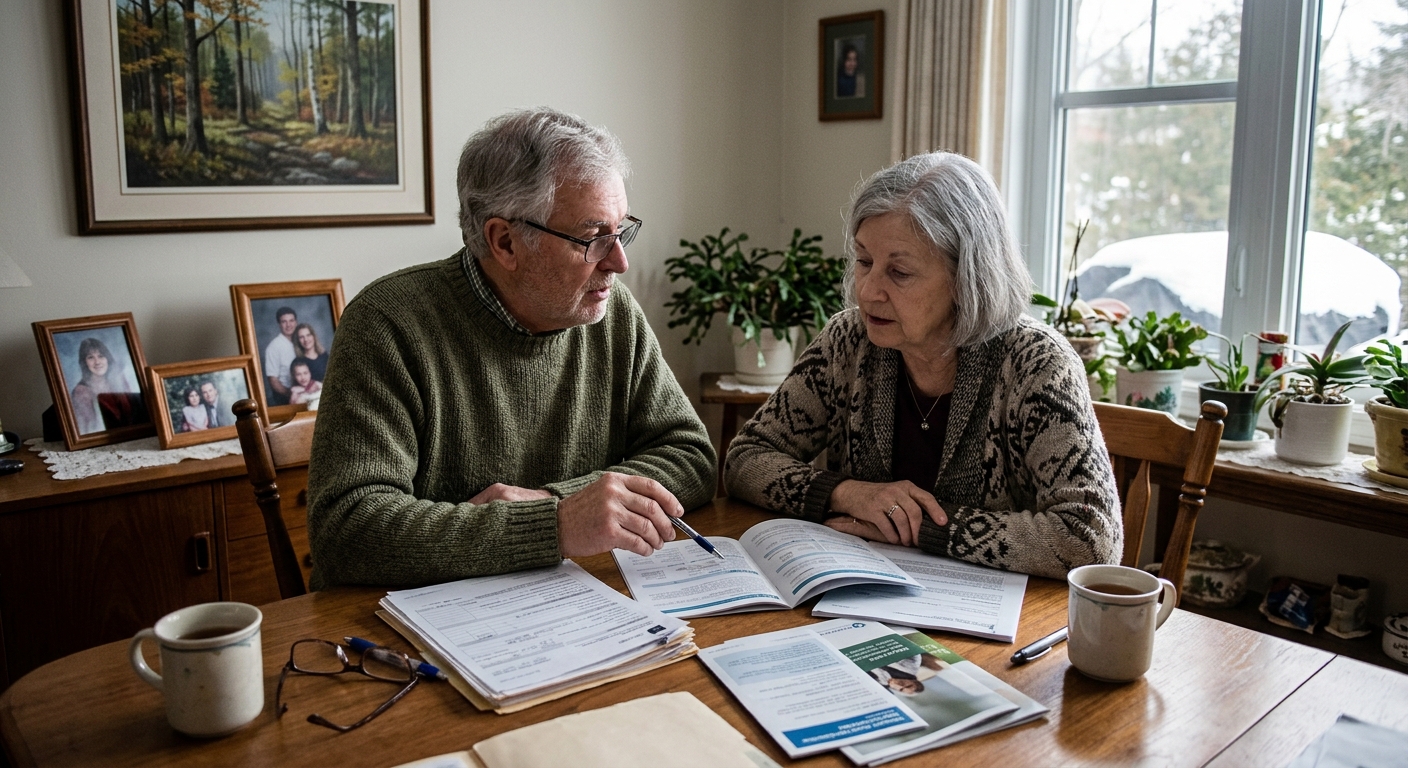
Comparing Late-Career Licensing Funding Options
When funding a new professional license at 55+, seniors have several options:
| Funding Method | Capital | Training Timeline | Impact on Current Work | Retirement Impact |
|---|---|---|---|---|
| Reverse mortgage (lump sum or LOC) | $15K–$25K | Flexible (3 months–4 years) | Flexible; can reduce current work hours | Enables semi-retirement; no forced exit |
| Student loan (career change) | $20K–$40K | Flexible | May require full-time study | Debt obligation during retirement (risky) |
| RRSP withdrawal (early) | $30K–$60K | Immediate | None (immediate access) | Heavy tax hit (50%+ tax if high earner); RRSP permanently depleted |
| Severance/redundancy package | $100K–$300K | One-time only | Triggered by job loss (forced) | May force retirement sooner than desired |
| Employer tuition reimbursement | $5K–$15K | Employer-limited | May require continued work | Limited; only if employer supports retraining |
| Self-funded from savings | $20K–$40K | Depends on savings rate | None | Depletes emergency reserves; risky |
Reverse mortgage wins for late-career licensing because:
- ✓ Funding is accessible (no student loan debt, no RRSP tax hit)
- ✓ Timing is flexible (you control training pace, can study part-time while working)
- ✓ No forced retirement (you can transition gradually)
- ✓ Repayment is deferred (no monthly obligations during low-income training years)
Licensing Credibility at 55+: Addressing Employer Bias
One concern: Will employers or clients accept a license from a 55+ career-changer?
The answer: Most do, especially in trades and specialized fields. Here's why:
| Field | 55+ Acceptance | Key Advantages |
|---|---|---|
| Skilled trades (electrician, plumber, HVAC) | Excellent | Maturity, reliability, problem-solving skills valued |
| Building inspector | Excellent | Life experience = better judgment in complex inspections |
| Real estate appraiser | Good | Market experience + credentials = credibility |
| Home inspector | Good | Meticulousness often correlated with age/experience |
| Coaching | Excellent | Life experience is a selling point |
Most regulatory bodies (Electrical Safety Authority, Professional Engineers Ontario) don't discriminate based on age. Your license is valid regardless of when you earned it. Clients and employers often prefer mature licensed professionals (trust, reliability, judgment).
Key Takeaways
✓ 35% of Canadians 65+ work part-time, seeking engagement rather than pure income, making late-career licensing an ideal solution for purposeful semi-retirement
✓ Professional licenses cost $8,000–$30,000 (tuition, exams, startup), but ROI is 3–15x over a 5–15 year semi-retired career
✓ Reverse mortgage funds training without forcing full-time study (line of credit allows gradual funding), letting you maintain current work while retraining
✓ Late-career licensing creates flexible income ($30,000–$60,000 annually part-time), extending CPP deferral and increasing lifetime retirement benefits by 8–36%
✓ Reverse mortgage funds are tax-free and don't affect CPP/OAS eligibility, making this the cleanest funding method
✓ Employers and clients accept 55+ licensees readily, especially in trades and inspections where maturity is a strength, not a liability
Frequently Asked Questions
Can I pursue apprenticeship while still employed full-time in my current job?
Yes. Apprenticeships (electrician, plumber, HVAC) are designed for working adults. You complete classroom modules evenings/weekends + on-the-job training. Many employers even sponsor apprenticeships. A reverse mortgage line of credit can supplement your wages if your apprentice pay is lower than your current job (most are), allowing you to reduce hours and still maintain household income.
Will a new professional license affect my CPP or early retirement benefits?
No. Professional licensing and training have no impact on CPP eligibility or benefits. Income earned from your new profession does affect CPP contributions (if you keep working beyond CPP start age), but that's a good thing—additional contributions increase lifetime CPP benefits by 8–16%.
What if I pursue a license and then can't find work in that field?
Low risk with skilled trades. Electricians, plumbers, and HVAC technicians have chronic labor shortages in Ontario (projected to worsen as older trades workers retire). Most graduates find work easily. Less certain fields (real estate, coaching) have more competition, so research demand in your specific area before committing. However, a reverse mortgage lets you test the field part-time before fully committing—if it doesn't work out, you have ongoing income from your current work.
Are there age limits for professional licensing in Ontario?
No. Ontario's regulated professions (trades, real estate, appraisal, inspection) have no maximum age for licensing. Electricians, plumbers, and home inspectors in their 70s are common and highly respected. Physical capacity (e.g., climbing for electricians) may be a personal consideration, but regulatory bodies don't discriminate by age.
Can I pursue licensing while on CPP early (age 62)?
Yes. Early CPP (taken at 62) has no work restrictions. You can earn unlimited income from a new profession while receiving CPP. However, if you're able-bodied, you might consider delaying CPP (deferring to 70 for +36% benefit increase) and using reverse mortgage to fund licensing + live on the proceeds while your CPP compounds. Consult a retirement advisor on the math for your situation.
How much should I borrow from a reverse mortgage for licensing?
Most professionals spend $15,000–$25,000 total (tuition + exams + startup). A conservative approach: take a reverse mortgage line of credit for 1.5x your expected cost ($22,500–$37,500), allowing for unexpected expenses or extended study. Draw only what you need as expenses arrive, preserving capital for other aging-in-place needs. According to CHIP and HomeEquity Bank, flexibility is a key benefit of reverse mortgage lines of credit.
Ready to explore reverse mortgage funding for your late-career licensing? Get your free Ontario Reverse Mortgage Guide →
Ready to Learn More?
Find out exactly how much you could unlock from your home — free and no obligation.
Related Articles
Reverse Mortgage for Your Own Career Pivot at 55-60: Funding Your Active Professional Transition
Career change at 55-60? Use reverse mortgage to fund retraining, credentials, and income gap during your professional transition in Ontario.
Read →Reverse Mortgage for Skills Training: Career Transitions in Retirement
Fund professional development and career transitions in retirement using a reverse mortgage. New skills, new income, new purpose for Ontario seniors.
Read →Reverse Mortgage for Professional Mentorship Matching Service: Connecting Experienced Mentors With Mentees
Create a professional mentorship matching platform from home. Connect retiring experts with emerging professionals; subscription revenue $1,500-$4,000 monthly.
Read →