
Reverse Mortgage When Home Value Drops Due to Neighborhood Blight or Abandonment
Protect equity when neighborhood decline erodes home value. Ontario guide for aging homeowners in declining communities facing depreciation.
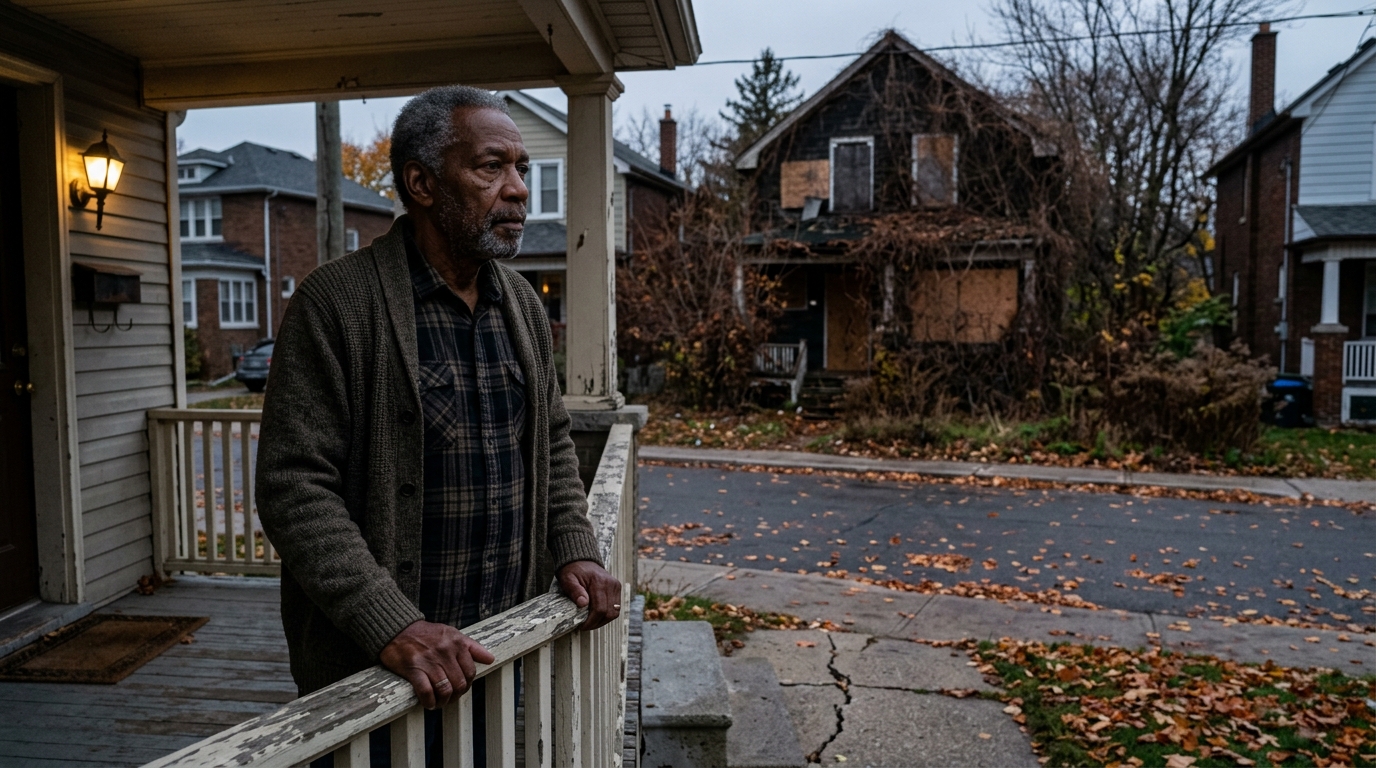
Your neighborhood is declining. Abandoned homes, reduced services, falling property values. Your home—once worth $450,000—is now appraised at $380,000. You can't afford to leave, but your equity is evaporating. A reverse mortgage now protects what equity remains. Neighborhood decline is a silent equity risk for aging homeowners in some Ontario communities.
When neighborhoods face disinvestment, property values can drop 15–40% in a decade. For aging homeowners nearing or in retirement, this creates a painful choice: leave your community or watch accumulated equity disappear.
The Neighborhood Decline Phenomenon in Ontario
Certain Ontario communities face structural decline:
| Decline Trigger | Affected Communities | Property Value Impact | Aging Homeowner Risk |
|---|---|---|---|
| Manufacturing plant closure | Hamilton, Windsor, some GTA regions | 15–25% over 5–10 years | Home equity reduced; forced sale at lower price |
| Urban-to-suburb migration (population loss) | Downtown core areas; industrial neighborhoods | 10–20% over decade | Tax base shrinks; municipal services decline |
| Property abandonment wave | Parts of Toronto, Hamilton, Windsor | 20–35% over 5–7 years | Neighborhood safety/aesthetics decline; property values fall |
| Institutional disinvestment (schools, hospitals close) | Rural Ontario, some mid-size cities | 10–30% over decade | Community services disappear; younger residents leave |
| Transit route changes (GO Transit reroute, streetcar removal) | Pockets of Toronto, Mississauga | 8–15% over 5 years | Accessibility reduced; commute times increase; appeal drops |
For aging homeowners, neighborhood decline creates a financial trap:
- Can't move: Life equity is in current home; declining value makes relocation expensive (selling at loss; buying elsewhere requires liquid capital)
- Can't access equity through sale: Home is worth less; reverse mortgage becomes only option to tap remaining equity
- Can't afford to stay: Aging-in-place costs (modifications, care) increase as home values fall; property taxes remain high relative to lower property values
How Reverse Mortgage Timing Protects Declining Equity
The key to protecting equity in declining neighborhoods is acting before values fall further.
Pre-Decline Strategy (Optimal)
If rumors of community decline emerge (factory closure announced, institutions relocating), a proactive reverse mortgage captures equity before values drop significantly.
Example:
- Year 0: Home value $450,000. Rumors of factory closure. Apply for reverse mortgage; approval; capture $150,000 credit line based on $450,000 value.
- Year 3: Factory closes. Home values fall to $380,000. Reverse mortgage credit line remains $150,000 (based on original approval; not reduced).
- Benefit: You captured equity based on $450,000 value, even though neighborhood decline later reduced actual value to $380,000.
Post-Decline Emergency (Last Resort)
If neighborhood decline happens before you access reverse mortgage, you can still apply—but available equity is reduced.
Example:
- Year 0: Home value $450,000. Unaware of pending factory closure.
- Year 3: Factory closes. Home values fall to $380,000. NOW you apply for reverse mortgage.
- Available equity: Based on $380,000, not $450,000. Less capital available.
- Disadvantage: You lost $70,000 in equity; reverse mortgage captures what remains.
Lesson: In communities with early warning signs of decline, proactive reverse mortgage application captures equity at higher valuation.
Recognizing Neighborhood Decline Early
Aging homeowners should monitor for these indicators:
| Warning Sign | Timeline to Value Impact | Action |
|---|---|---|
| Major employer announces closure | 2–3 years | Apply for reverse mortgage immediately; capture equity before announcement impacts comps |
| Transit route changes or service cuts | 1–2 years | Values typically drop within 6–12 months; reverse mortgage application urgent |
| Municipal services decline (fire station closure, reduced garbage collection) | 2–5 years | Property appeal diminishes gradually; early application prudent |
| Multiple vacant/abandoned homes appear in surrounding blocks | Ongoing | Value erosion accelerates; each vacant property depreciates neighbors 2–5%; act quickly |
| Property tax increases despite declining values | Annual basis | Tax-to-value ratio rises; affordability crisis; reverse mortgage may be necessary for property tax payment |
| Population census shows net migration loss | 5-year intervals | Structural decline; long-term value risk; reverse mortgage should be contingency option |
| Institutional relocations (hospital, college campus moves) | 3–5 years | Services loss drives value down; early reverse mortgage captures pre-decline equity |
In Hamilton's East End, Windsor's core, and parts of Toronto's industrial neighborhoods, these indicators emerged 3–5 years before significant property value declines materialized. Aging homeowners who applied for reverse mortgages in 2015–2018 captured equity before 2020–2023 neighborhood decline significantly eroded values.
Reverse Mortgage vs. Forced Sale at Lower Value
When neighborhood decline accelerates, aging homeowners face time pressure:
| Option | Equity Recovered | Effort | Timeline |
|---|---|---|---|
| Sell immediately during early decline | 85–90% of pre-decline value | Moderate; requires moving, relocation costs | 2–4 months |
| Wait and sell after stabilization | 70–75% of pre-decline value (if stabilizes); may decline further | Moderate; emotional toll; risk value falls more | 3–10 years (uncertain) |
| Reverse mortgage; stay and age in place | 100% of approved equity (locked in at current or higher value) | Minimal; remain in home; no relocation | Immediate; phased access |
| Do nothing; let equity evaporate | 50–60% of original value (by decade's end) | Zero effort; maximum financial loss | Passive; regretful outcome |
A reverse mortgage is the only strategy that:
- Captures current equity value (doesn't wait for lower prices)
- Allows you to age in place (doesn't force relocation)
- Provides immediate access (don't wait for market stabilization)

Appraisal Challenges During Neighborhood Decline
One risk: reverse mortgage lenders may appraise your home LOWER than you expect if neighborhood decline is already visible.
Strategy to address:
- Obtain independent appraisal BEFORE reverse mortgage application: Hire appraiser; document your home's actual condition and value.
- Gather comparable sales data: Recent sales in your neighborhood; if lender's appraisal is lower, provide comps justifying higher value.
- Disclose neighborhood concerns proactively: Tell lender about factory closure, transit changes, etc. They'll factor this into appraisal anyway; your transparency builds credibility.
- Request appraisal review if lender's valuation is lower than independent: Lenders (CHIP, HomeEquity Bank, Equitable Bank, Bloom Financial) allow review request and typically conduct secondary appraisal.
A $30,000–$50,000 appraisal gap can mean $10,000–$20,000 difference in available reverse mortgage equity. Protecting your appraisal value through documentation is critical.
Property Tax Pressures During Neighborhood Decline
A hidden risk: As neighborhood values decline, property tax reassessments often lag. You may face:
- Tax-to-value inversion: Your property taxes remain high (based on older assessment), but home value has declined. Tax burden becomes unsustainable.
- Example: Home reassessed at $380,000, but property taxes calculated for $450,000 valuation. You're paying taxes on phantom equity.
A reverse mortgage can fund property tax payments during this period while you appeal the tax assessment or wait for next reassessment cycle.
| Strategy | Cost | Timeline | Outcome |
|---|---|---|---|
| Appeal MPAC assessment | $500–$2,000 (legal/consultant fees) | 6–12 months | Possible reduction in assessed value; tax relief |
| Self-fund tax payments via reverse mortgage | $2,000–$5,000/year during appeal | 1–3 years | Maintains property; no foreclosure risk; buys time |
| Sell home | Real estate commission 4–6%; relocation costs | 2–4 months | Exits situation; but may sell at lower value |
Reverse mortgage funding for tax payments bridges the gap while appeals process.
Community Revitalization: When Neighborhood Decline Reverses
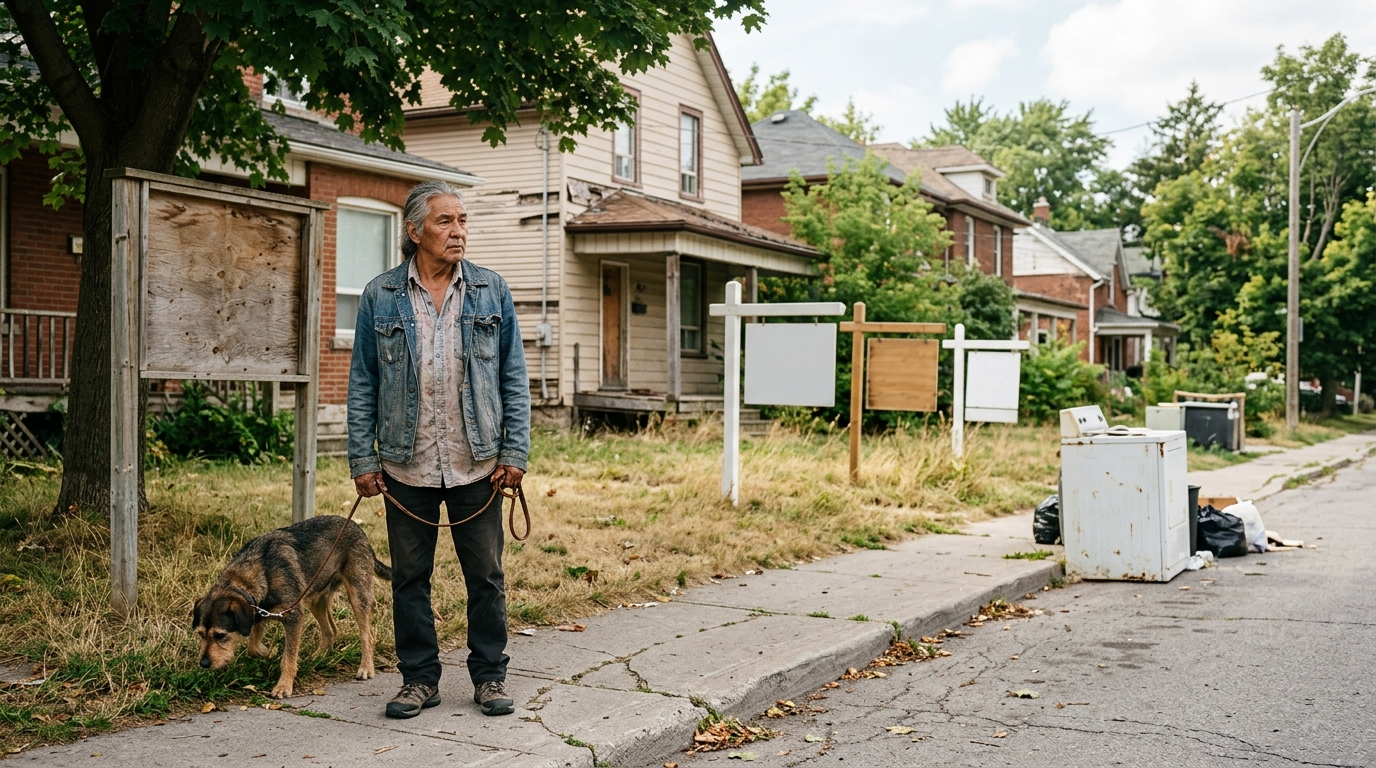
Importantly, neighborhood decline can reverse through community revitalization:
- New transit investment (GO Transit expansion into declining neighborhood)
- Mixed-use redevelopment (warehouse-to-loft conversion, retail revival)
- Institutional investment (university campus expansion, hospital renovation)
- Demographic shift (younger professionals moving into affordable neighborhoods)
In these cases, aging homeowners who held their homes and used reverse mortgage to age in place may see VALUES RECOVER—and their reverse mortgage is still in place as flexible credit line.
Example:
- 2018: Home value $380,000 (after decline). Reverse mortgage approved; $100,000 available credit.
- 2024: GO Transit expansion announced; community revitalization begins. Home value rebounds to $450,000.
- Benefit: Aging homeowner stays through decline, ages in place, and sees equity recovery. Reverse mortgage cost (interest accrual) is modest insurance against community decline risk.
FCAC research shows: Aging homeowners who remain in neighborhoods that eventually revitalize recover their equity losses and realize further appreciation. Those who panic-sell at the bottom lose 25–40% of original equity permanently.
Key Takeaways
- Neighborhood decline is structural and predictable: Factory closures, transit changes, institutional relocations provide 2–3 year warning windows.
- Early reverse mortgage application captures equity before values fall: Acting at $450,000 home value is better than waiting to apply at $380,000.
- Reverse mortgages allow aging in place during neighborhood transition: No forced relocation at bottom-market prices.
- Property tax pressures intensify during decline: Tax-to-value inversion creates affordability crisis; reverse mortgage funds tax payments during appeal.
- Community revitalization is possible: Aging homeowners who stay through decline may see value recovery; reverse mortgage is low-cost insurance against decline risk.
- Appraisal protection is critical: Independent appraisals, comparable sales documentation, and lender review requests protect available equity against low valuations.
Frequently Asked Questions
Will a reverse mortgage lender decline my application if my neighborhood is declining?
Possibly, if decline is already visible and property values are falling rapidly. However, transparent disclosure helps. Tell lender about neighborhood changes; provide comparable sales showing market value. Lenders (CHIP, HomeEquity Bank, Equitable Bank) may request additional appraisals or documentation, but many will still approve if your home equity is sufficient.
Can I appeal the reverse mortgage lender's appraisal if it's lower than my expected value?
Yes. Most lenders allow appraisal review requests. If you have comparable sales justifying higher value, submit them and request secondary appraisal. The process adds 2–4 weeks, but can increase available equity substantially.
What if my neighborhood declines further after I get a reverse mortgage—will my available credit be reduced?
No. Once a reverse mortgage is approved, your available credit line is locked in. Subsequent neighborhood decline doesn't retroactively reduce your available credit. The line is secure as long as you maintain property taxes and insurance.
Should I reverse mortgage if I'm planning to leave my neighborhood soon anyway?
No. If you're planning to sell within 2–3 years, a reverse mortgage adds interest costs for minimal benefit. Reverse mortgages are best for aging-in-place strategies, not temporary holds.
Will community revitalization plans be visible to the reverse mortgage lender—could that affect my approval positively?
Yes. If revitalization is announced or planned, mention it to the lender. Evidence of future development (GO Transit expansion, mixed-use rezoning, institutional investment) can support your appraisal value and strengthen approval odds.
If my neighborhood revitalizes and property value increases, do I benefit?
Yes. The increased equity remains yours; the reverse mortgage is a fixed lien on the property. If revitalization increases home value from $380,000 to $450,000+, your estate benefits when the home is eventually sold.
Ready to Learn More?
Find out exactly how much you could unlock from your home — free and no obligation.
Related Articles
Reverse Mortgage for Retirement Community Entrance Fees: Active Adult Transitions
Fund retirement community move without forced downsizing. Ontario guide for 55+ aging in place now, transitioning later to active adult communities.
Read →Reverse Mortgage for Home Modifications After Adult Child's Psychiatric Hospitalization
Fund safe-return-home planning after mental health crisis. Ontario guide for parents supporting adult children transitioning from psychiatric care to home.
Read →Reverse Mortgage When Pension Is Reduced Mid-Retirement: Backfilling Income Gaps
Replace lost pension income after mid-career reduction. Ontario guide for retirees facing pension cuts, terminations, or conversion impacts on retirement security.
Read →