
Reverse Mortgage When Home Insurance Premiums Spike: Protecting Your Coverage in Ontario
Home insurance premiums are skyrocketing in Ontario. Learn how a reverse mortgage can bridge the gap when your insurance costs become unaffordable.
The Insurance Crisis No One Talks About
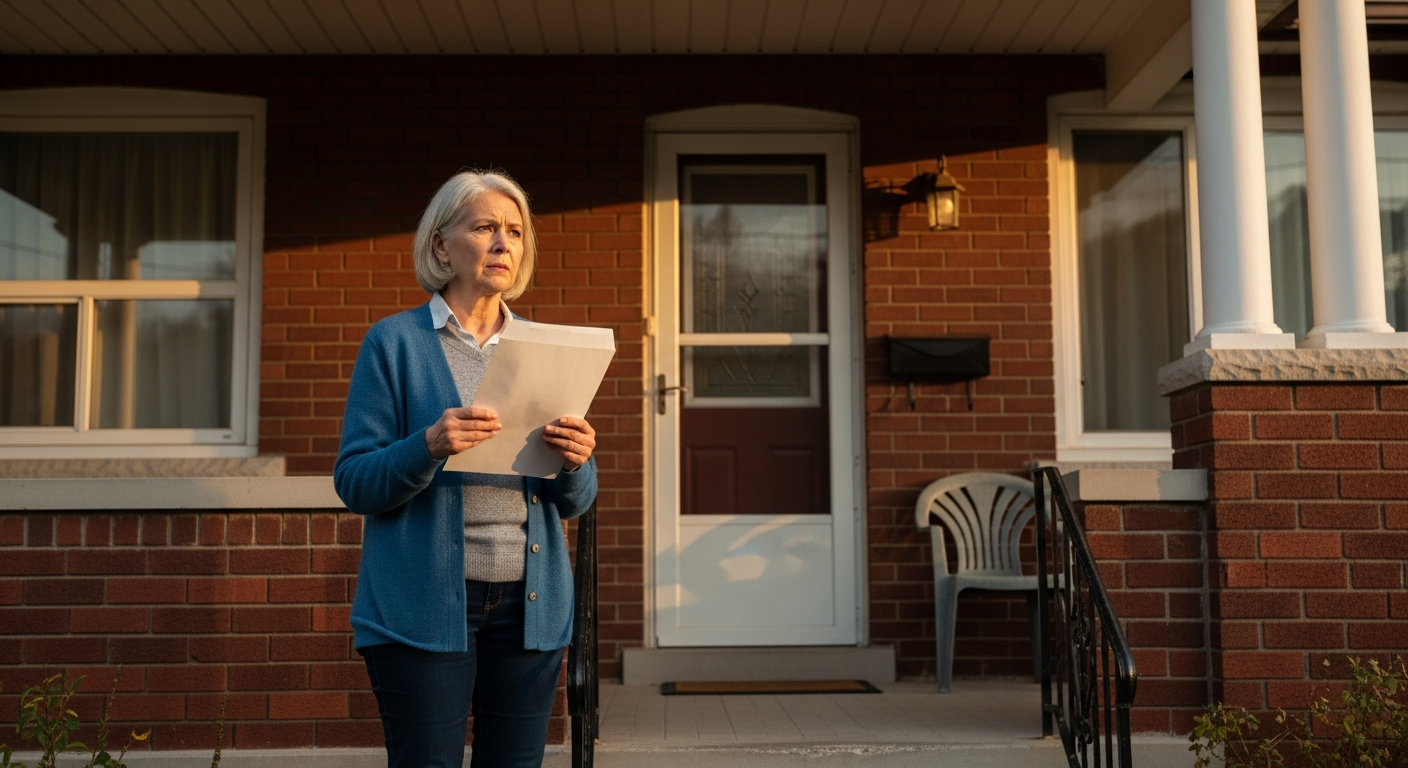
You just opened your home insurance renewal notice. Your heart sank. The premium jumped from $1,200 to $1,800 per year—or worse, your insurer dropped you entirely, forcing you into Ontario's "insurer of last resort" at double the cost.
For Ontario homeowners aged 55+, this isn't a hypothetical scenario. Home insurance premiums have skyrocketed 40-60% over the past three years due to climate risks, increased claim frequency, and tightening profit margins for insurers. Many insurers have stopped writing new policies in Ontario entirely, leaving homeowners with limited options and rising costs.
Unlike your mortgage payment, which you can refinance or renegotiate, home insurance costs are largely non-negotiable. Your insurance company sets the rate. You either pay it or risk going uninsured—which means risking financial catastrophe if your home is damaged or destroyed.
For retirees on fixed incomes, this insurance spike can be the difference between affording your home and being forced to sell.
A reverse mortgage can help bridge this gap.
Why Ontario Insurance Costs Are Exploding
Three factors are colliding in Ontario:
Climate Risk & Extreme Weather Ontario is experiencing more frequent and severe weather events: ice storms (2013), flooding (2017, 2019, 2023), hail damage, and heat domes. Each claim cycle convinces insurers that Ontario is higher-risk than previously modeled.
Urban Development & Aging Infrastructure Rapid condo development, aging water mains, and strained municipal services mean more water damage claims. Aging roofs and HVAC systems increase breakdown claims.
Insurer Exits & Market Consolidation As insurers lose money in Ontario, they exit the market or tighten underwriting. This reduces competition and pushes remaining insurers to raise rates to maintain profitability. Some of Canada's largest insurers have stopped accepting new Ontario customers.
The result: a homeowner renewal that doubles or triples your annual insurance cost.
Your Insurance Cost Options (All Painful)
Option 1: Pay the Renewal Rate Accept your insurer's new $1,800+ annual premium. For a $1,500 CPP recipient, this is 14% of gross income—unsustainable for many retirees.
Option 2: Switch Insurers Shop for better rates. You might find 10-20% savings, but you're still paying 20-30% more than you did three years ago. The "better deal" is still unaffordable.
Option 3: Move to Insurer of Last Resort If no one will insure you, Ontario's "Facility Association" provides coverage—but at 40-60% higher cost than standard market rates. This is intentionally expensive to discourage people from using it.
Option 4: Go Uninsured Skip insurance entirely and hope nothing happens. This is financial roulette. One hail storm damages your roof ($15,000). One basement flood ruins your furnace and foundation ($30,000+). You're financially ruined.
Option 5: Use a Reverse Mortgage Borrow against your home equity to cover the higher insurance costs while you age in place. You defer the cost, maintain coverage, and protect your home investment.
| Option | Typical Annual Cost | Impact on Monthly Cash Flow |
|---|---|---|
| Pay renewal rate | $1,800–$2,400 | Full increase absorbed immediately |
| Switch insurers | $1,600–$2,100 | Partial relief, still above prior years |
| Facility Association (last resort) | $2,500–$3,800 | Largest ongoing burden |
| Go uninsured | $0 (until a claim) | No monthly cost, but full risk exposure |
| Reverse mortgage draw | $0 monthly payment | No cash flow impact; balance accrues at ~6.5%–8.5% |
How a Reverse Mortgage Helps With Insurance Costs
A reverse mortgage gives you access to home equity without monthly payments. Here's how you use it for insurance:
Scenario:
- Your home is worth $600,000
- You're 72 years old
- Your insurance renewal increased from $1,400 to $2,100/year—a $700 annual increase
- Your fixed retirement income (CPP + OAS) is $28,000/year
- You don't have $700/month in extra cash
The Solution:
- Apply for a reverse mortgage for $15,000-$20,000
- Receive proceeds as a lump sum or line of credit
- Use the money to cover insurance renewal and build a buffer for future increases
- The reverse mortgage balance grows silently at ~6.5% annually
- You have no monthly insurance payment shock
Over 10 years, your $15,000 reverse mortgage borrowing grows to approximately $28,000 in debt. But you've had 10 years of affordability and stability. You aged in place. Your home may have appreciated from $600,000 to $750,000, meaning you still have $722,000 in home equity after reverse mortgage payoff.
Real Ontario Scenarios
Scenario 1: The Suburban Homeowner
- House value: $800,000 (typical suburban Toronto)
- Insurance jumped from $1,500 to $2,400/year
- Annual increase: $900
- Reverse mortgage solution: Borrow $18,000, covers 20 years of increases
- This is painless, non-intrusive, and protects cash flow
Scenario 2: The Older Homeowner on Minimal Income
- House value: $550,000 (smaller Ontario city)
- Insurance jumped from $1,200 to $1,900/year
- Annual increase: $700
- CPP/OAS income: $24,000/year
- Reverse mortgage solution: Borrow $10,000, establishes buffer
- Provides peace of mind when insurance market is unstable
Scenario 3: The Multi-Property Owner
- Primary residence: $700,000
- Cottage: $400,000
- Combined insurance increase: $1,200/year
- Reverse mortgage solution: Borrow $18,000-$20,000 on primary residence
- Covers cottage insurance increases without affecting retirement cash flow
| Scenario | Home Value | Annual Insurance Increase | Reverse Mortgage Draw |
|---|---|---|---|
| Suburban Toronto homeowner | $800,000 | $900 | $18,000 |
| Older homeowner, minimal income | $550,000 | $700 | $10,000 |
| Multi-property owner | $700,000 (primary) | $1,200 | $18,000–$20,000 |
Why This Matters for Your Legacy
One concern: using a reverse mortgage for insurance costs means you'll have less equity to leave your adult children.
However, consider the alternative:
- Skip the insurance cost increase and hope nothing happens? Your home could be damaged, uninsured, and unsellable
- Forced to sell now to afford insurance? Your adult children inherit the sale proceeds but you lose your home
- Use a reverse mortgage to maintain coverage? Your home appreciates, insurance is current, and your children inherit a well-maintained, insured property
For most retirees, maintaining insurance coverage and staying in your home is better for your legacy than saving $10,000-$20,000 in reverse mortgage debt while risking your home through lack of insurance.
The Insurance + Reverse Mortgage Strategy
Step 1: Get Quotes (3 months before renewal) Contact multiple insurers and the Facility Association. Understand all your options and costs.
Step 2: Analyze Your Affordability Can you genuinely afford the new premium with your fixed income? Or will it require cutting essential expenses (prescriptions, food, heat)?
Step 3: Get a Reverse Mortgage Quote If insurance costs are unsustainable, get a reverse mortgage quote. You might only need to borrow $10,000-$20,000.
Step 4: Make a Decision Compare:
- Cost of paying new insurance premium vs. retirement income
- Cost of reverse mortgage interest accumulation over time
- Cost of other alternatives (selling, downsizing, going uninsured)
Step 5: Execute Before Renewal Date Apply for the reverse mortgage 60-90 days before your insurance renewal. This gives you time to receive funds before your premium is due.
Red Flags: When NOT to Use a Reverse Mortgage for Insurance
Don't use a reverse mortgage for insurance costs if:
- Your home is worth less than $300,000 (limited borrowing capacity)
- You have less than 5 years to live (the insurance cost problem might resolve sooner than debt accumulation)
- You have adult children ready to co-help with insurance costs (family solution is better)
- Your insurance spike is temporary or a one-time event (check with your broker)
Do use a reverse mortgage for insurance costs if:
- Your insurance costs will remain elevated for 10+ years (climate risks aren't going away)
- You're on a fixed income that won't increase with inflation
- You have significant home equity
- You plan to age in place in your current home
- Other affordability options don't exist
Key Takeaways
- Ontario home insurance premiums have risen 40-60% over the past three years, driven by climate risk, aging infrastructure, and insurers exiting the market.
- Ontario's Facility Association ("insurer of last resort") charges 40-60% more than standard market rates for homeowners who can't find coverage elsewhere.
- A reverse mortgage lets you borrow $10,000-$20,000 against home equity to cover insurance increases without adding a monthly payment.
- Reverse mortgage balances grow at roughly 6.5%-8.5% annually, so a $15,000 draw can grow to about $28,000 over 10 years—still a small fraction of most Ontario home values.
- Applying 60-90 days before your insurance renewal date gives enough time to receive funds before the premium is due.
- The no-negative-equity guarantee means you or your estate will never owe more than your home's fair market value when the loan is repaid.
Frequently Asked Questions
How much can I borrow from a reverse mortgage just to cover insurance costs?
Most homeowners only need $10,000-$20,000 to cover several years of insurance increases, well within the 15-59% of home value that Canadian reverse mortgage lenders typically allow you to access.
Will using a reverse mortgage for insurance affect my eligibility for CPP, OAS, or GIS?
No. Reverse mortgage proceeds are tax-free and are not counted as income, so they don't reduce your CPP, OAS, or GIS benefits.
Is it better to switch insurers or use a reverse mortgage to cover a premium spike?
Both can work together. Shopping for a better rate can reduce the increase by 10-20%, and a reverse mortgage can then cover whatever gap remains without touching your monthly cash flow.
What happens if insurance costs keep rising after I take a reverse mortgage draw?
You can typically request additional draws over time, up to your approved limit, as long as sufficient equity remains in your home.
Does a reverse mortgage change who is responsible for paying the insurance premium?
No. You still hold the policy and pay the insurer directly. The reverse mortgage simply gives you the cash to make those payments without straining your fixed income.
Protecting Your Home in Ontario's Insurance Crisis
Home insurance isn't optional. Your mortgage lender requires it. Your peace of mind demands it. Your financial security depends on it.
If rising insurance premiums are threatening your ability to stay in your home, a reverse mortgage can bridge the gap. You access your equity, maintain coverage, and continue aging in place without the pressure of unaffordable insurance costs.
For Ontario homeowners 55+, this might be the most practical use of reverse mortgage funds in 2026.
Your home is your largest asset. Maintaining insurance on it is worth the cost—and sometimes worth a reverse mortgage to make that cost sustainable.
Ready to Learn More?
Find out exactly how much you could unlock from your home — free and no obligation.
Related Articles
Reverse Mortgage for Home EV Charging and Smart Utility Grid Upgrade: Modernizing Your Ontario Home
Fund electrical panel upgrades, EV charger installation, and smart meter readiness for aging in place with a reverse mortgage in Ontario.
Read →Reverse Mortgage Before Industrial Rezoning: Securing Equity When Your Neighborhood Changes
Protect your home equity with a reverse mortgage before industrial rezoning or commercial development reduces your property value in Ontario.
Read →Reverse Mortgage for Multilingual Household Caregiving: Language Support and Cognitive Decline Management
Fund bilingual caregivers, professional interpreters, and language-specific cognitive assessment for aging parents in Ontario multilingual homes.
Read →