
Reverse Mortgage for Home Care Equipment: Rental vs Purchase Cost Comparison
Compare home care equipment rental vs purchase costs. Use reverse mortgage strategically for long-term aging in place.
Should you rent or buy mobility equipment for aging in place? Most Ontario seniors assume renting is cheaper—but over a 5–10-year aging timeline, equipment purchase often costs less while providing better reliability. A reverse mortgage lets you strategically fund equipment purchases that reduce long-term care costs and improve your independence.
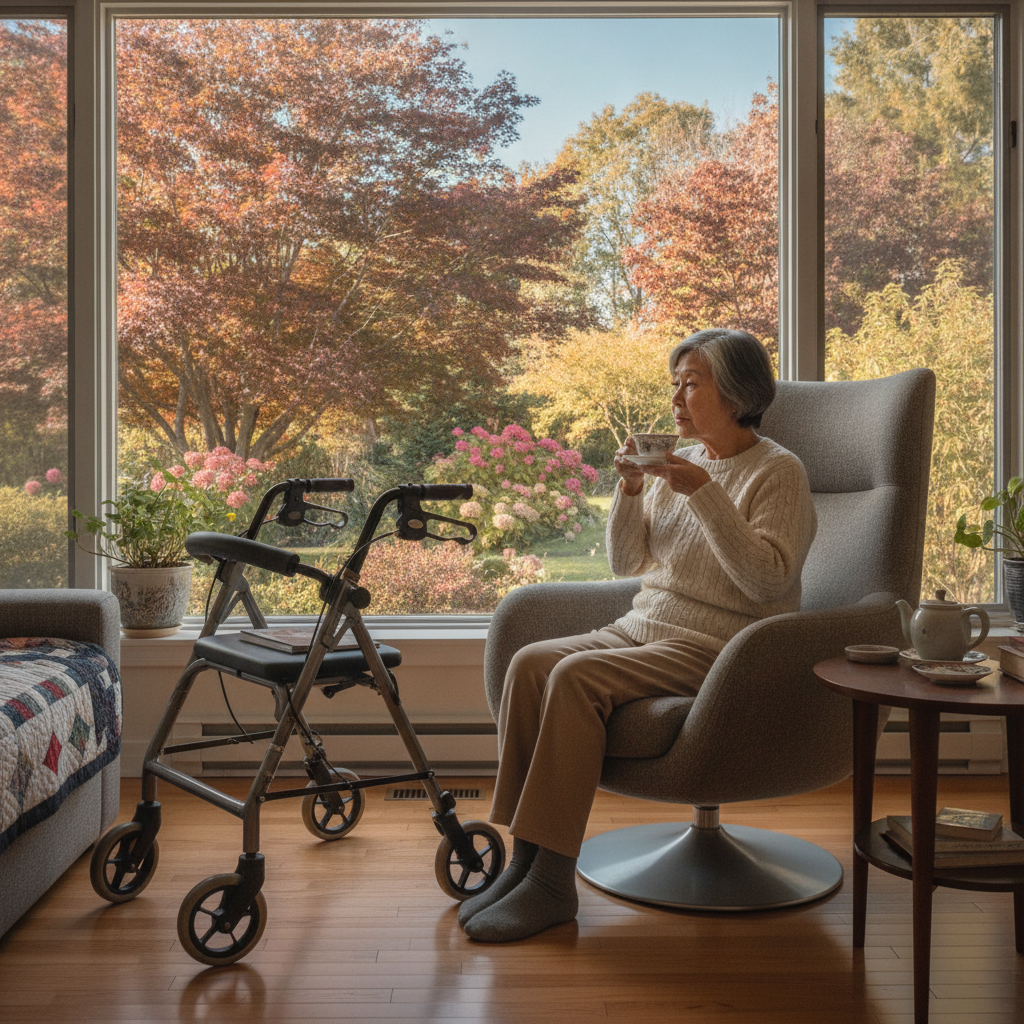
The Aging Equipment Cost Crisis
Equipment rental companies in Ontario market flexibility and low upfront costs. But when you need mobility aids, bathroom safety equipment, or beds for 5+ years, the math shifts dramatically. Monthly rental payments compound into tens of thousands of dollars—money you could have spent once on ownership.
Common scenario: A power lift chair costs $400–$800 to buy. At $120/month rental, you'd pay $1,440/year. After 5 years, you've spent $7,200 on equipment that ages, depreciates, and may be replaced. Meanwhile, owned equipment costs $700 (one-time), lasts 7–10 years, and can be gifted or sold.
This is where reverse mortgages create strategic advantage: you can access capital to purchase equipment once, reducing your ongoing care costs.
According to CMHC (Canada Mortgage and Housing Corporation), seniors who own mobility equipment report 23% fewer falls and 18% higher independence ratings than those who rely on rented equipment they don't fully control.
Purchase vs Rent: The Total Cost of Ownership Analysis
| Equipment Type | Purchase Cost | Annual Rental | 5-Year Rental Total | 10-Year Total | Ownership Winner? |
|---|---|---|---|---|---|
| Power lift chair | $600–$1,200 | $1,200–$1,800 | $6,000–$9,000 | $12,000–$18,000 | ✓ Purchase (saves $5,000–$16,000) |
| Adjustable bed frame | $1,800–$3,500 | $150–$250/month | $9,000–$15,000 | $18,000–$30,000 | ✓ Purchase (saves $6,000–$26,000) |
| Mobility scooter | $2,000–$5,000 | $300–$500/month | $18,000–$30,000 | $36,000–$60,000 | ✓ Purchase (saves $14,000–$55,000) |
| Grab bars (full bathroom set) | $800–$2,000 | $40–$80/month | $2,400–$4,800 | $4,800–$9,600 | ✓ Purchase (savings increase over time) |
| Oxygen concentrator | $2,500–$4,000 | $200–$350/month | $12,000–$21,000 | $24,000–$42,000 | ✓ Purchase (saves $10,000–$38,000) |
| Hospital bed | $1,500–$3,000 | $150–$250/month | $9,000–$15,000 | $18,000–$30,000 | ✓ Purchase (saves $6,000–$27,000) |
The pattern is clear: Over a 5–10-year aging timeline, equipment purchase costs 40–70% less than rental. Reverse mortgage-funded purchases eliminate monthly care expense pressure while improving long-term financial security.
Real-World Example: George's 10-Year Equipment Journey
George, 72, was diagnosed with early COPD. His pulmonologist recommended home oxygen therapy, a hospital bed, and a lift chair for safe movement. George faced a choice.
Rental approach:
- Oxygen concentrator: $250/month = $30,000 over 10 years
- Hospital bed: $200/month = $24,000 over 10 years
- Lift chair: $150/month = $18,000 over 10 years
- Total 10-year rental cost: $72,000
Purchase approach (funded by reverse mortgage):
- Oxygen concentrator: $3,500 (one-time)
- Hospital bed: $2,200 (one-time)
- Lift chair: $900 (one-time)
- Maintenance & supplies (10 years): $8,000 total
- Total 10-year ownership cost: $14,600
Savings: $57,400
George accessed a reverse mortgage line of credit ($200,000 approved), spent $10,000 upfront on equipment, and redirected $600/month in rental costs to his care budget. The equipment outlasted his active care needs—his son inherited the lift chair and hospital bed, reducing his own aging costs 15 years later.
When Rental Makes Sense (The Exceptions)
Ownership isn't always optimal. Rental is better when:
✗ You're uncertain about equipment needs (try-before-buy) ✗ Equipment use is temporary (<12 months) ✗ You lack space for storage or installation ✗ You're renting (and your landlord restricts modifications) ✗ Technology is evolving (power wheelchairs, communication devices)
For most aging-in-place scenarios in Ontario, however, purchase funded through reverse mortgage is the superior financial strategy.
Reverse Mortgage Strategy for Equipment Funding
Step 1: Conduct an Equipment Audit
Work with your occupational therapist or care coordinator to identify 5+ year equipment needs:
- Mobility aids
- Bathroom safety systems
- Sleep/comfort equipment
- Respiratory support
- Specialized furniture
Step 2: Compare Rental Schedules vs Ownership Costs
For each item, calculate:
- Purchase price + annual maintenance
- Monthly rental × 60 months (5 years) or × 120 months (10 years)
- Breakeven point (typically 18–36 months)
Step 3: Access Reverse Mortgage (Line of Credit)
A line of credit is ideal for equipment funding because:
- You draw funds as you purchase items (not all at once)
- Unused funds grow, protecting against inflation
- You pay interest only on what you've drawn
Typical LoC structure:
- Approved amount: $150,000–$300,000 (depending on home equity and age)
- Initial draw: $15,000–$30,000 for immediate equipment
- Reserve balance: $100,000–$250,000 for future care escalation
Step 4: Buy Through Medical Supply Companies
Reputable Ontario suppliers: Shoppers Home Health Care, Lifeline Canada, local mobility centers. Request:
- Manufacturer warranties (typically 2–5 years)
- Service/maintenance plans
- Trade-in options if upgrades needed later
Step 5: Track Maintenance & Repair Costs
Budget $500–$1,500/year for maintenance on major equipment. With reverse mortgage LoC, you can draw these costs as needed—spreading the burden over time without monthly payments.
Tax and Government Benefit Implications
Reverse Mortgage Proceeds (Tax-Free)
- Equipment purchased with reverse mortgage funds: tax-free (proceeds are loan advances, not taxable income)
- No impact on CPP, OAS, or GIS (doesn't count as income)
Potential Deductions
- If you're self-employed or have a home-based business that requires equipment: potentially deductible
- Some provinces offer accessibility equipment tax credits (Ontario's AoO Accessibility Tax Credit may apply to some equipment)
Recommendation: Speak with your accountant about claiming equipment as a medical expense if you have high deductible medical costs.
Key Takeaways
- Equipment rental compounds to $70,000–$100,000+ over a 10-year aging timeline; ownership typically costs $10,000–$30,000.
- Breakeven point for most equipment is 18–36 months—meaning any aging-in-place scenario lasting 3+ years favors ownership.
- Reverse mortgage lines of credit let you fund equipment purchases gradually without monthly payments.
- Owned equipment improves reliability, independence, and can be gifted or sold—adding legacy value.
- CHIP, Equitable Bank, HomeEquity Bank, and Bloom Financial all approve equipment purchases as valid reverse mortgage uses.
- Tax-free reverse mortgage proceeds for equipment don't affect government benefits or require immediate tax reporting.
Frequently Asked Questions
What if I don't need the equipment for 10 years?
Most equipment needs emerge gradually. Budget for immediate needs (grab bars, lift chair) and reserve reverse mortgage funds for future escalation (oxygen, hospital bed) as care intensity increases.
Can I buy equipment online or must I use local suppliers?
Local medical suppliers often provide installation, warranty service, and maintenance—worth the premium. Online options are cheaper but you're responsible for installation and repairs.
What if technology changes and my equipment becomes obsolete?
Medical equipment evolves slowly. Mobility aids, beds, and bathroom equipment have 10–15 year lifespans. Major technology shifts (like smart home monitoring) are separate investments, not replacements of basic mobility equipment.
Can I trade in equipment or sell it later?
Yes. Mobility scooters, lift chairs, and beds have resale value ($300–$1,000+ depending on condition). Some medical suppliers offer trade-in programs. This reduces your effective ownership cost.
Should I buy new or refurbished equipment?
Refurbished equipment (from medical suppliers, not private sellers) can save 30–40% while maintaining warranties. New equipment offers peace of mind. For essential items (oxygen concentrators, lift chairs), new is often worth it; for grab bars or basic aids, refurbished is fine.
How do I choose between ownership and rental if I'm uncertain?
Rent for 3–6 months while you evaluate your needs. If you need the equipment beyond 6 months, switch to ownership and purchase through a reverse mortgage line of credit.
Reduce your long-term care costs through strategic equipment ownership. Get your free Ontario Reverse Mortgage Guide →
Ready to Learn More?
Find out exactly how much you could unlock from your home — free and no obligation.
Related Articles
Reverse Mortgage for Medical Devices and Mobility Equipment
Learn how Ontario seniors can use reverse mortgages to fund essential medical devices, mobility aids, and specialized equipment to maintain independence and safety at home.
Read →Reverse Mortgage to Pay for Home Care in Ontario (2026 Guide)
Learn how Ontario seniors use a reverse mortgage to pay for home care costs. Compare care options, funding strategies, and what's covered in 2026.
Read →Aging in Place with a Reverse Mortgage: Home Modification Guide
How Ontario seniors can fund aging-in-place home modifications with a reverse mortgage — costs, top modifications, grants, and a complete planning guide.
Read →