
Reverse Mortgage for Home-Based Podcasting and Audio Content Creator Business
Fund your retirement podcasting or audio business with a reverse mortgage. Launch your audio creator business at 55+ without monthly payments in Ontario.
Are you retiring with stories, expertise, or a message you want to share with the world, but lack the startup capital to build a professional podcasting setup? The creator economy has opened doors for retirees to build meaningful, income-generating businesses—yet many stumble at the startup phase. A reverse mortgage can fund your professional podcast studio, audio equipment, and marketing without derailing your retirement. For Ontario homeowners 55+, this is an overlooked path to legacy and income.
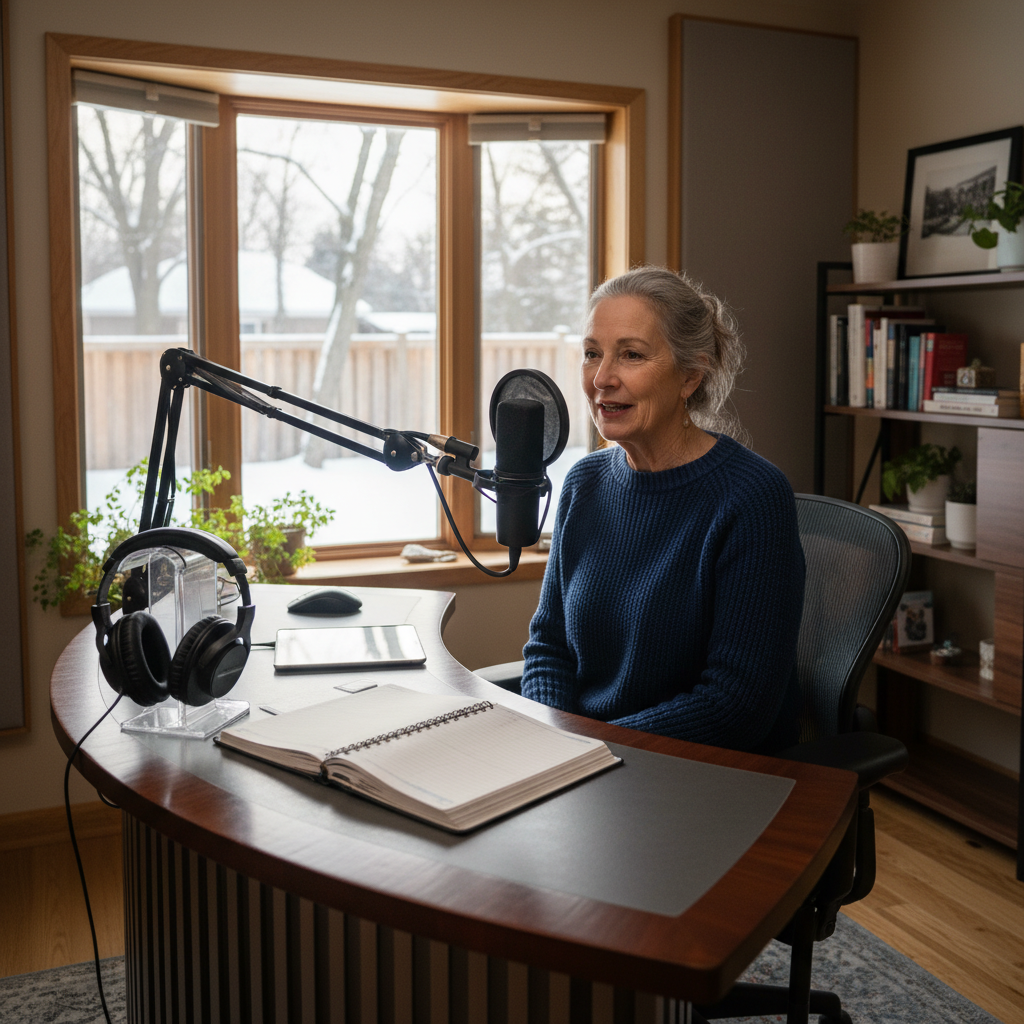
The Podcast Opportunity for Retirees
Podcasting has exploded in Canada. According to Podtrac, Canada had over 3.2 million podcast listeners in 2025, and the industry is growing 20% annually. More importantly, niche podcasts—focused on specific expertise, life experience, or community—are outperforming mainstream content.
Retirees are uniquely positioned to win in podcasting because they have:
- Deep expertise accumulated over 30–40 years of professional work
- Time to develop consistent, high-quality content
- Life stories that audiences crave
- Credibility that younger creators struggle to build
- Authentic voice that resonates in an over-polished media landscape
Yet launching a professional podcast requires upfront investment that many retirees can't justify from fixed-income budgets:
| Equipment/Service | Purpose | Typical Cost |
|---|---|---|
| Studio microphone (Shure SM7B or equivalent) | Professional-grade audio capture | $400–$600 |
| Audio interface (Focusrite Scarlett, etc.) | Convert audio to digital | $150–$300 |
| Acoustic treatment (panels, bass traps) | Eliminate room noise and echo | $1,500–$4,000 |
| Microphone arm, cables, pop filter | Studio setup hardware | $200–$400 |
| Editing software license (Adobe Audition, Reaper) | Annual editing and production | $300–$500/year |
| Web hosting and podcast hosting (Buzzsprout, Podbean) | Distribute your podcast to all platforms | $150–$300/year |
| Website and email list (Webflow, ConvertKit) | Audience engagement and monetization | $200–$400/month |
| Intro/outro music and sound design | Branding and professional finish | $500–$2,000 |
| Professional coaching or training | Learn podcasting best practices | $1,000–$3,000 |
Total professional setup: $4,400–$11,600 (first year), with $650–$1,200/year ongoing.
This is precisely where a reverse mortgage fits—enabling the upfront investment that traditional retirement income can't absorb.
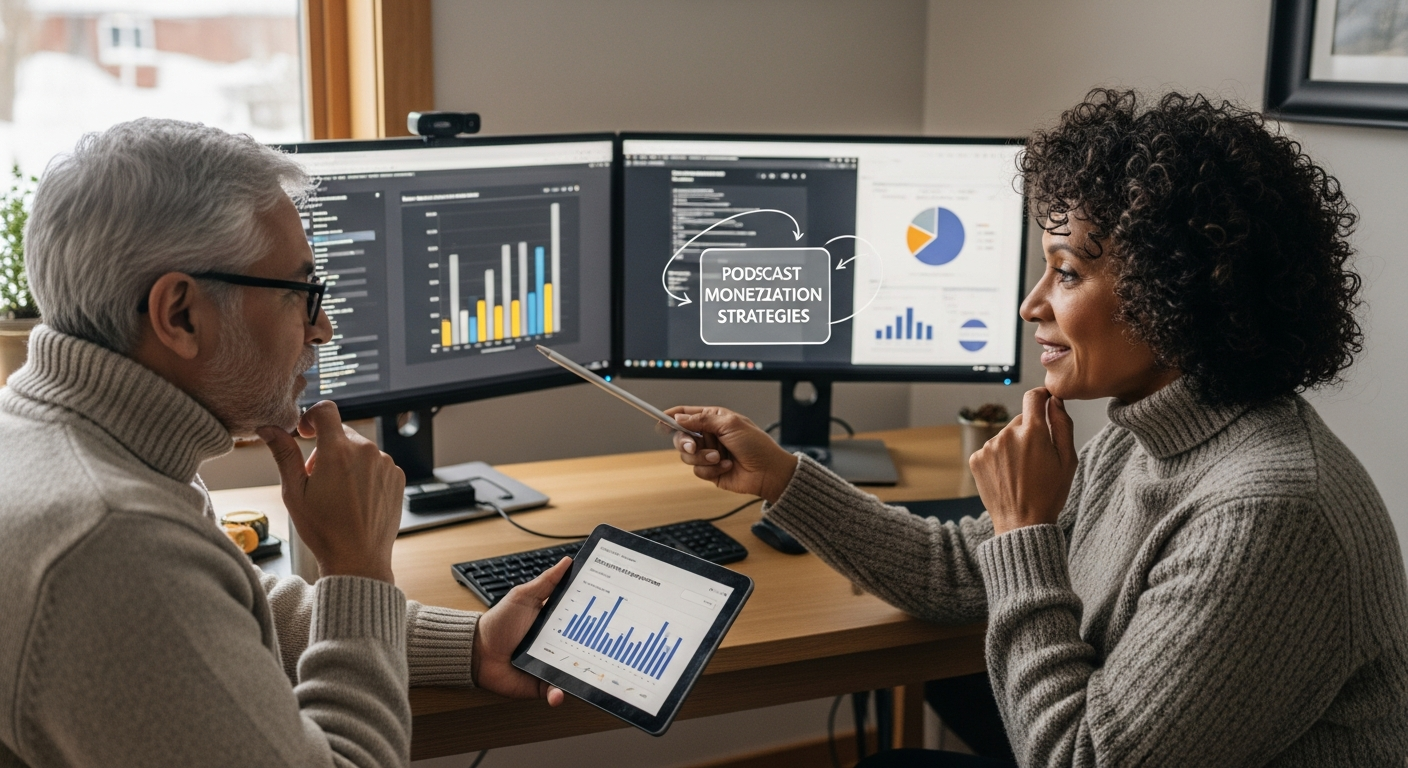
Podcast Business Models and Revenue Potential
Before borrowing, understand how retirees monetize podcasts:
Sponsorship and advertising: Once you reach 5,000+ listeners per episode, you can pursue sponsorships from brands aligned with your audience. Mid-tier podcasts generate $300–$2,000 per episode in ad revenue.
Patreon and listener support: Direct audience contributions. Successful creator podcasts average $1,000–$5,000/month from 50–200 patrons.
Digital products: E-books, courses, or coaching using your podcast audience. Retirees with professional credentials (former teacher, accountant, engineer) often generate $2,000–$15,000/month from these.
Affiliate marketing: Recommend products or services aligned with your show. Commissions range from 5–50%.
Speaking and consulting: Podcasting builds authority; successful creators often land speaking gigs ($1,000–$5,000 per engagement) or consulting clients ($100–$300/hour).
Realistic timeline: Most podcasts take 12–18 months to reach 5,000 listeners. Monetization typically begins in months 8–12, generating modest income ($200–$500/month initially) that grows to $1,000–$3,000/month by year two if you're consistent and talented.
Why Home-Based Podcasting Works in Retirement
Unlike other home businesses, podcasting has remarkable advantages:
- Flexible schedule: Record content on YOUR timeline, not listener demand
- Passive income potential: Once episodes are published, they generate revenue indefinitely
- Low operational costs: Just internet, software, and hosting after initial equipment investment
- Perfect for aging in place: Entirely manageable from home—no client meetings, no heavy lifting
- Scalable audience: Start with 50 listeners; grow to 50,000 over 3–5 years
- Legacy building: Your podcast becomes a permanent record of your expertise and perspective
According to the Social Media Examiner, 48% of podcast listeners say they discover new shows through recommendations. This means consistency and quality—not massive marketing budgets—drive growth.
Setting Up Your Home Studio
A professional podcast studio doesn't require a separate room. Many successful podcasters work from spare bedrooms, home offices, or even closets (which have excellent acoustic properties).
Essential elements:
- Quiet environment (away from traffic, HVAC, appliances)
- Treated acoustic space (panels to absorb echo and reduce room noise)
- Professional microphone and interface
- Editing software and hosting platform
- Basic lighting if you plan video content later
A reverse mortgage allows you to invest in quality equipment that'll serve you for years. Rather than compromising with budget equipment, you can afford tools used by professional broadcasters.
Real-World Example: The Peterson Podcast
Robert Peterson, 63, retired after 35 years as a civil engineer in Toronto. He had deep expertise in sustainable building and urban planning—knowledge he'd accumulated through hundreds of projects. Frustrated that this expertise was disappearing with his retirement, he decided to launch a podcast interviewing other engineers, architects, and city planners.
He accessed $12,000 from a reverse mortgage to build a professional home studio. He purchased quality equipment, created a professional website, and hired a podcast coach for $2,000.
His podcast, "Building Tomorrow," launched in 2024. After 18 months:
- 8,000 monthly listeners
- 3 sponsorships at $500/month each ($1,500/month)
- A digital course on sustainable urban planning generating $800/month
- Speaking invitations from industry conferences ($3,000–$5,000 per event)
Robert's podcast has become his most fulfilling retirement activity—connecting with peers, influencing industry thinking, and generating supplemental income. His RM balance at 18 months? Just $12,200 (minimal interest), while his new income stream will likely generate $30,000+ over the next five years.
Podcast Niches Where Retirees Excel
- Professional expertise: Your 40-year career as an accountant, lawyer, therapist, engineer, or tradesperson
- Life experience: Parenting, marriage longevity, health challenges overcome, cultural heritage
- Hobbies and crafts: Woodworking, gardening, cooking, art—taught to an engaged audience
- Historical narratives: Local history, family stories, community change over time
- Underrepresented voices: Marginalized communities, aging perspectives, immigrant experiences
The most successful niche podcasts aren't the ones with the biggest audiences—they're the ones that serve passionate, underserved audiences. Retirees often excel here because they have depth that younger creators haven't yet developed.
Tax and Business Implications
Before you borrow for your podcast business, understand the tax landscape:
Good news: Podcast business income is ordinary business income—fully taxable, but also fully deductible for related business expenses.
Deductible expenses include:
- Equipment (depreciated over several years)
- Software subscriptions
- Website hosting and domain
- Podcast hosting and distribution
- Coaching and training
- Professional development
- Home office allocation (utilities, rent/mortgage, internet)
Structure option: Many podcasters operate as sole proprietorships and file self-employment income on their personal tax return. Consult a tax professional to understand whether a corporate structure makes sense for your situation.
Impact on government benefits: Podcast income is reported to the CRA and may affect means-tested benefits if you're receiving GIS or other income-tested programs. Plan accordingly.
Frequently Asked Questions
Do I need previous podcasting experience to succeed?
Not at all. You need expertise, consistency, and authentic voice. Podcasting skills can be learned quickly—consider hiring a podcast coach ($1,000–$3,000) to accelerate your learning curve.
What's a realistic timeline to recoup my $10,000 investment?
Approximately 18–24 months of consistent weekly episodes, assuming you reach 5,000+ listeners and secure sponsorships. Some retirees monetize faster by leveraging existing audiences or professional networks; others take longer if their niche is more specialized.
Can I podcast while managing home care or health challenges?
Yes, with planning. You can batch-record episodes (record 4–8 episodes in one session, release weekly), outsource editing, and adjust your release schedule. The flexibility of podcasting makes it ideal for variable health situations.
Do I need to worry about audio quality affecting my business?
Professional audio quality matters, but it's not all that matters. Successful podcasts balance good-enough audio with authentic content. Don't use poor audio as a barrier to starting—but do invest in equipment that eliminates significant background noise.
What if my podcast doesn't generate income?
That's okay. Many retirees launch podcasts for legacy, not monetization. A reverse mortgage funds the equipment; if your podcast becomes a fulfilling hobby rather than income, that's still a win. The equipment isn't wasted—it's invested in something meaningful.
Can I include my adult children as co-hosts or editors?
Absolutely. Many family podcasts feature multiple generations—adult children or grandchildren contributing as co-hosts, editors, or producers. This can also create bonding and shared purpose in retirement.
Key Takeaways
| Question | Answer |
|---|---|
| Can I launch a podcast with reverse mortgage funds? | Yes—home-based podcasting is an excellent use of RM proceeds |
| What's the typical startup cost? | $4,500–$12,000 for professional equipment and initial marketing |
| When do podcasts typically monetize? | Months 12–18, once you reach 5,000+ listeners per episode |
| Is podcast income taxable? | Yes—it's self-employment income, fully deductible for business expenses |
Moving Forward
A podcast is more than a business—it's a voice amplified, expertise shared, and a legacy recorded for generations. For retirees, it's a path to continued relevance, income, and meaning.
A reverse mortgage removes the financial barrier that stops many people from starting. Instead of wondering "What if?" your podcast becomes real, accessible, and ready to launch.
Ready to Learn More?
Find out exactly how much you could unlock from your home — free and no obligation.
Related Articles
Reverse Mortgage to Start Home-Based Wellness Business in Retirement
Fund your retirement wellness business: yoga studio, meditation, coaching. Use reverse mortgage to launch from home with zero startup debt.
Read →Reverse Mortgage for Your Retirement Hobby Business: Turning Passion Into Income
Transform your retirement hobby into a small income-generating business. Use a reverse mortgage to fund startup costs for creative entrepreneurship.
Read →Reverse Mortgage for Home Office Setup: Creating a Productive Retirement Workspace
Fund your home office with a reverse mortgage. Create a productive retirement workspace for consulting, hobbies, or part-time work in Ontario.
Read →