
Reverse Mortgage for Home Accessibility After Sudden Adult Child Disability Diagnosis
Rapid-response accessibility funding when adult child receives disability diagnosis. Crisis renovation strategy for unexpected mobility changes in Ontario homes.
Your adult child just received a life-changing diagnosis — multiple sclerosis, spinal cord injury, or advanced arthritis. Your home suddenly needs $30,000–$80,000 in accessibility modifications. Your RRSP and savings aren't enough, and you can't wait months for financing. For parents facing this crisis, a reverse mortgage is often the only rapid-access funding source that can support their child's independence at home.
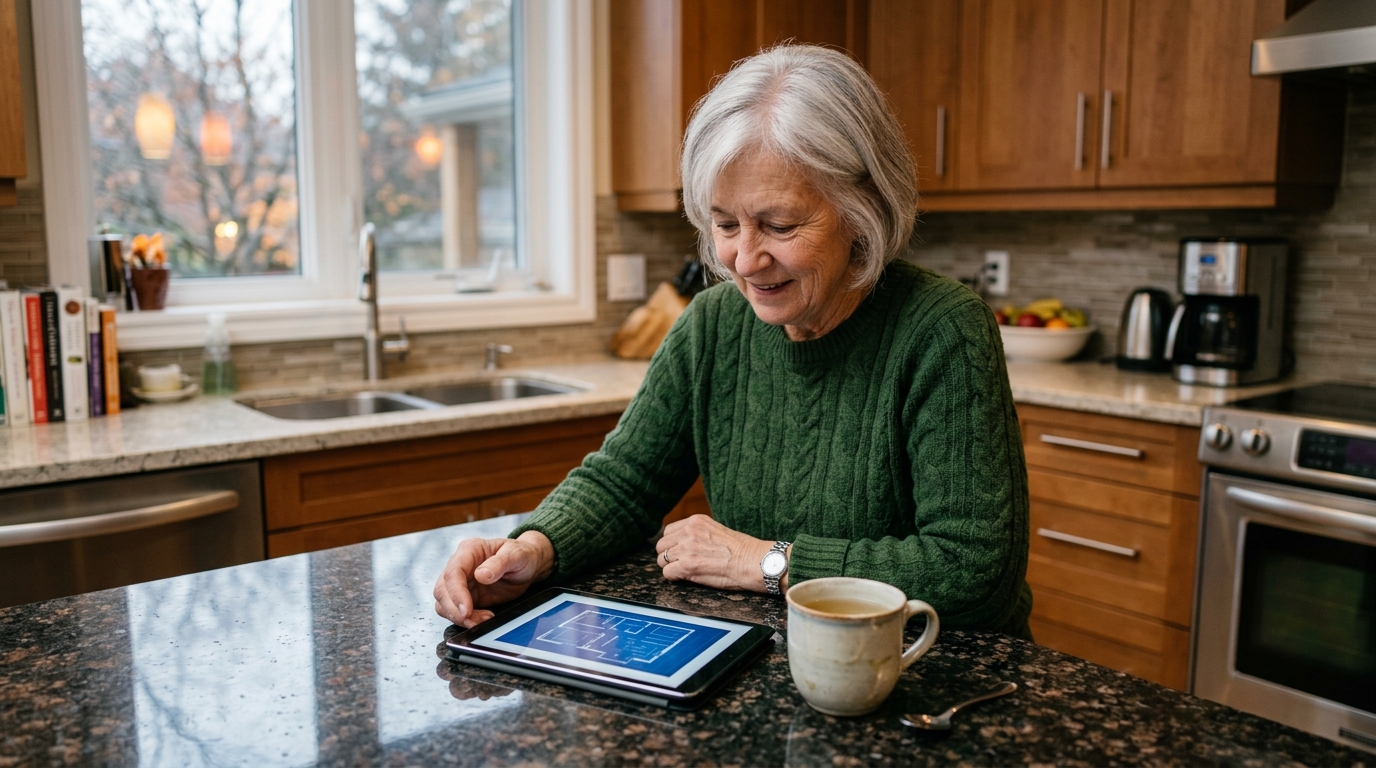
When disability strikes suddenly, every day of delay impacts your adult child's independence, recovery, and mental health. A reverse mortgage can fund emergency accessibility modifications within weeks, transforming a barrier-filled home into an accessible sanctuary while your family processes the diagnosis.
The Crisis Timeline: Diagnosis to Modifications
When a diagnosis changes mobility overnight, parents face urgent decisions:
Week 1–2 (Shock & Medical Crisis)
- Diagnosis confirmed; immediate hospitalization or outpatient care begins
- Doctors recommend home modifications for safe discharge
- Family begins investigating accessibility costs
- Problem: Home isn't accessible; discharge is delayed or unsafe
Week 3–6 (Planning Panic)
- Accessibility assessments reveal $40,000–$60,000 in needed modifications
- RRSP or savings insufficient; bank financing takes 4–8 weeks
- Insurance may cover some equipment but not structural changes
- Problem: Discharge windows close; extended hospital stays increase costs
Week 7–12 (Access Solutions)
- Reverse mortgage approved and funded (2–4 weeks if priorities are clear)
- Renovations begin immediately; modifications completed before discharge
- Adult child comes home to accessible, safe environment
- Advantage: Faster than traditional financing; no credit score barriers
This timeline is why reverse mortgages exist for crises — they move capital quickly when timing matters.
Common Accessibility Needs & Costs (Ontario 2026)
| Modification | Scope | Ontario Cost | Timeline |
|---|---|---|---|
| Wheelchair ramp (entry) | 6–10 ft outdoor ramp | $2,500–$5,000 | 2–3 weeks |
| Bathroom grab bars + safety | Bars, non-slip flooring, wider doorway | $4,000–$8,000 | 3–4 weeks |
| Elevator/stair lift | 1-story lift or small residential elevator | $8,000–$30,000 | 4–8 weeks |
| Doorway & hallway widening | Structural changes to access wheelchair | $5,000–$15,000 | 4–6 weeks |
| Accessible kitchen modifications | Lowered counters, accessible stove/sink | $6,000–$12,000 | 3–4 weeks |
| Bedroom/bathroom relocation | Move bedroom/bath to accessible ground floor | $15,000–$40,000 | 6–10 weeks |
| Total typical project | Combination of above | $30,000–$80,000 | 8–12 weeks |
The question: Can you fund this in 4–6 weeks while your adult child is still hospitalized or in rehab? Most families can't wait 8–12 weeks for traditional financing.
Crisis Accessibility Case Study: David, 32, Diagnosed With MS
David (32), a teacher, is diagnosed with relapsing-remitting multiple sclerosis. Within months, he experiences mobility loss. His parents, Margaret (64) and Tom (66), live in Toronto.
Medical reality:
- David needs wheelchair accessibility within 6 months
- Early modification prevents long-term disability complications
- His own income (as a teacher on leave) can't fund renovations
Margaret and Tom's options:
- RRSP withdrawal — $50,000 withdrawal triggers ~$15,000 in taxes
- Traditional mortgage/HELOC — 4–8 week approval; impacts credit
- Family loan — strains relationships; uncertain repayment
- Reverse mortgage — Fast approval; non-taxable funds; flexible repayment
They choose reverse mortgage:
- Approve reverse mortgage: $100,000 available
- Fund accessibility immediately: $60,000 for complete home modifications
- Timeline: Approved in 3 weeks, renovations complete in 10 weeks
- David returns home to accessible environment before winter
The difference: Without the reverse mortgage, Margaret and Tom would have faced:
- 4+ month delay (traditional financing + renovation time)
- David's independence delayed; psychological impact of waiting
- Possible emergency institutional care (long-term care home) due to timing
- Significant tax burden from RRSP withdrawal
With the reverse mortgage, David comes home to an accessible space, preserving independence and family cohesion.
Designing Accessibility for Specific Diagnoses
Multiple Sclerosis / Progressive Neurological Conditions:
- Ground-floor bedroom/bathroom (avoid stairs)
- Wide hallways (48+ inches for future wheelchair use)
- Grab bars in strategic locations
- Accessible kitchen counter heights
Spinal Cord Injury / Complete Wheelchair Dependence:
- Full wheelchair accessibility (all doorways 36+ inches)
- Zero-threshold bathrooms (no curbs)
- Stair lift or residential elevator
- Accessible kitchen (lowered cabinets, side-approach stove)
Arthritis / Chronic Pain / Limited Mobility:
- Strategic grab bars (not full accessibility initially)
- Ground-floor living option
- Ergonomic modifications (heated floors, adjustable counters)
- Accessible entryway with minimal steps
Acquired Brain Injury / Cognitive Changes:
- Simplified home layout
- Clear sightlines (dementia-friendly design)
- Safety modifications (secured pathways, non-slip flooring)
- Future-proofing for potential physical changes
A professional accessibility consultant ($1,500–$2,500 for assessment) can identify which modifications matter most for your adult child's specific diagnosis.
Reverse Mortgage vs. Other Funding Sources for Crisis Accessibility
| Funding Source | Speed | Cost | Ease | Tax Impact |
|---|---|---|---|---|
| Reverse mortgage | 2–4 weeks | 5.5%–6.5% interest | No credit check | Non-taxable funds |
| RRSP withdrawal | Immediate | Direct (taxable) | Easy but expensive | ~30% tax on withdrawal |
| HELOC | 4–8 weeks | ~6.5% interest | Requires good credit | Interest only (deductible if business) |
| Home equity loan | 4–8 weeks | ~6.5% interest | Requires good credit | Interest not deductible |
| Family loan | Variable | Relationship risk | Emotionally difficult | Non-taxable |
| Government grants | 8–12 weeks+ | Free, but limited | Complex application | Tax-free |
Reality check: Reverse mortgages win on speed (critical for medical crises) and don't require good credit (some disability impacts employment, affecting credit scores). RRSP withdrawals are immediately available but cost ~30% in taxes on the withdrawal amount.
According to the Canada Mortgage and Housing Corporation (CMHC), home accessibility modifications after disability diagnosis are among the fastest-growing uses of reverse mortgages in Canada, reflecting the aging population and rising disability rates in younger adults.
Reverse Mortgage Strategy for Crisis Accessibility
Phase 1: Diagnosis & Assessment (Week 1–3)
- Secure disability diagnosis; understand medical needs
- Consult accessibility specialist (~$2,000–$2,500)
- Identify critical modifications (prioritize safety first)
- Pre-qualify for reverse mortgage (2–3 weeks)
Phase 2: Rapid Funding (Week 4–6)
- Approve reverse mortgage (lump sum, not line of credit for speed)
- Obtain home appraisal and finalize amount
- Close on reverse mortgage
- Timeline target: 4 weeks from application to funding
Phase 3: Renovation (Week 7–16)
- Contract accessible renovation specialist
- Begin high-priority modifications immediately
- Manage timeline with contractor; expect 8–12 weeks for major work
- Adult child transitions home as sections complete
Phase 4: Ongoing Support (Month 4+)
- Maintain remaining reverse mortgage equity as emergency backup
- Assess additional needs as disability evolves
- Potential for increased draws if future modifications needed
- Plan repayment strategy (when employed, through estate, etc.)
This phased approach prioritizes speed while maintaining financial flexibility.
Insurance & Accessibility Modification Funding
Some benefits may offset reverse mortgage costs:
| Program | Funding | Applicability | Ontario Connection |
|---|---|---|---|
| CPP-D (Disability) | Up to $2,500/year grants | Available to beneficiaries | Part of federal CPP-D |
| ODSP | Shelter allowance increase | Disabled adults on ODSP | Provincial program; covers rent/mortgage |
| Accessibility for Ontarians With Disabilities Act (AODA) | Tax credits for business accessibility | Business-owned properties only | Not applicable for homes |
| Registered Disability Savings Plan (RDSP) | Government grants ($90K lifetime) | If RDSP opened before age 50 | Federal plan; significant funding source |
| Ontario Healthy Homes Renovation Tax Credit | Tax credit (not cash grant) | Energy efficiency focus, not accessibility | Limited for accessibility |
Key insight: RDSP is often the best funding source if available (opens before age 50 for disabled adult). If RDSP is exhausted or unavailable, reverse mortgage is the next option.
Tax & Government Benefits Implications
Reverse mortgage funds are NOT income, so they don't affect:
- CPP-D benefit calculation
- ODSP income limits
- GIS/OAS eligibility
- Registered Disability Savings Plan (RDSP) contribution room
This is a major advantage over RRSP withdrawals (taxable income) or selling investments (capital gains).
Key Takeaways
✓ Sudden disability requires rapid funding — reverse mortgages deliver capital in 3–4 weeks ✓ Accessibility costs $30K–$80K on average — professional assessment identifies true needs ✓ Speed saves psychological & medical costs — early modifications preserve independence and mental health ✓ Reverse mortgage funds avoid taxation — unlike RRSP withdrawals (30% tax cost) ✓ No credit score barriers — unlike traditional loans; critical for families with health-impacted finances ✓ RDSP should be priority #1 — if available; reverse mortgage bridges any gap
Frequently Asked Questions
How quickly can a reverse mortgage be approved for accessibility needs?
Most lenders prioritize disability-related accessibility modifications and can approve within 2–3 weeks if paperwork is complete. Funding typically follows within 4 weeks total. Traditional mortgages and HELOCs take 4–8 weeks, making reverse mortgages faster for crises.
Can I use a reverse mortgage to cover both accessibility renovations and my adult child's living costs while they recover?
Yes. The reverse mortgage can fund both. A typical approval might be $80,000–$150,000 depending on your home value. Use portions for renovations (lump sum) and ongoing living support (line of credit draws) as needed.
Will my adult child's disability benefits be affected if I use a reverse mortgage?
No. Reverse mortgage funds are not income to you or your adult child. CPP-D, ODSP, GIS, and RDSP are unaffected. This is a major advantage over other funding sources (RRSP withdrawals count as income and can reduce certain benefits).
What if the accessibility modifications cost more than my reverse mortgage amount?
Start with essentials (bathroom, entry access, bedroom) and phase additional work over time. You can increase your reverse mortgage line of credit as your home equity allows, or use recovered income later. Alternatively, explore RDSP, provincial grants, and charitable organizations that fund accessibility (some exist specifically for disability).
Can my adult child stay in the house during renovations?
Usually not for major work (bathroom overhauls, elevator installation). Plan for temporary housing (with relatives, apartment rental, or temporary care facility) during 8–12 week renovation period. This cost should be included in your reverse mortgage planning.
If my adult child's condition worsens and requires institutional care later, what happens to the reverse mortgage?
The reverse mortgage remains a lien against your home. When you sell the home (or it's sold after your death), the reverse mortgage balance (plus accrued interest) is repaid from proceeds. The remaining equity goes to your heirs. Plan accordingly.
Ready to Learn More?
Find out exactly how much you could unlock from your home — free and no obligation.
Related Articles
Reverse Mortgage for DEI Consulting Practice: Launching Diversity, Equity, and Inclusion Consulting in Retirement
Start a diversity and inclusion consulting practice. Help corporations and nonprofits build equitable cultures; reverse mortgage funds training, business setup, and market entry.
Read →Reverse Mortgage for Residential Sustainability Auditing Practice: Certifying Aging in Place
Launch a professional home energy and sustainability auditing business. Help Ontario homeowners certify efficiency; reverse mortgage funds training, tools, and market entry.
Read →Reverse Mortgage for Archival and Digital Preservation Consulting: Preserving Institutional History and Heritage
Launch archival consulting practice preserving records for institutions. Help libraries, archives, nonprofits; reverse mortgage funds training, tools, and market entry.
Read →