
Reverse Mortgage for Health-Driven Relocation: Moving to Warmer Climate Due to Arthritis or Chronic Pain
Arthritis, chronic pain, or cold-weather conditions pushing you to relocate south? Use reverse mortgage to fund a move to a warmer climate while managing transition costs.
Your arthritis or fibromyalgia worsens with Ontario winters. Your rheumatologist suggests a warmer climate could reduce symptoms and medication dependency. But selling your home in Ontario, purchasing in Florida or Arizona, and managing the move feels financially daunting. Can a reverse mortgage fund this health-driven relocation without forcing you to downsize or deplete savings? Yes. For retirees with substantial home equity and medical justification for climate change, a reverse mortgage can fund a relocation that improves quality of life and potentially reduces healthcare costs.
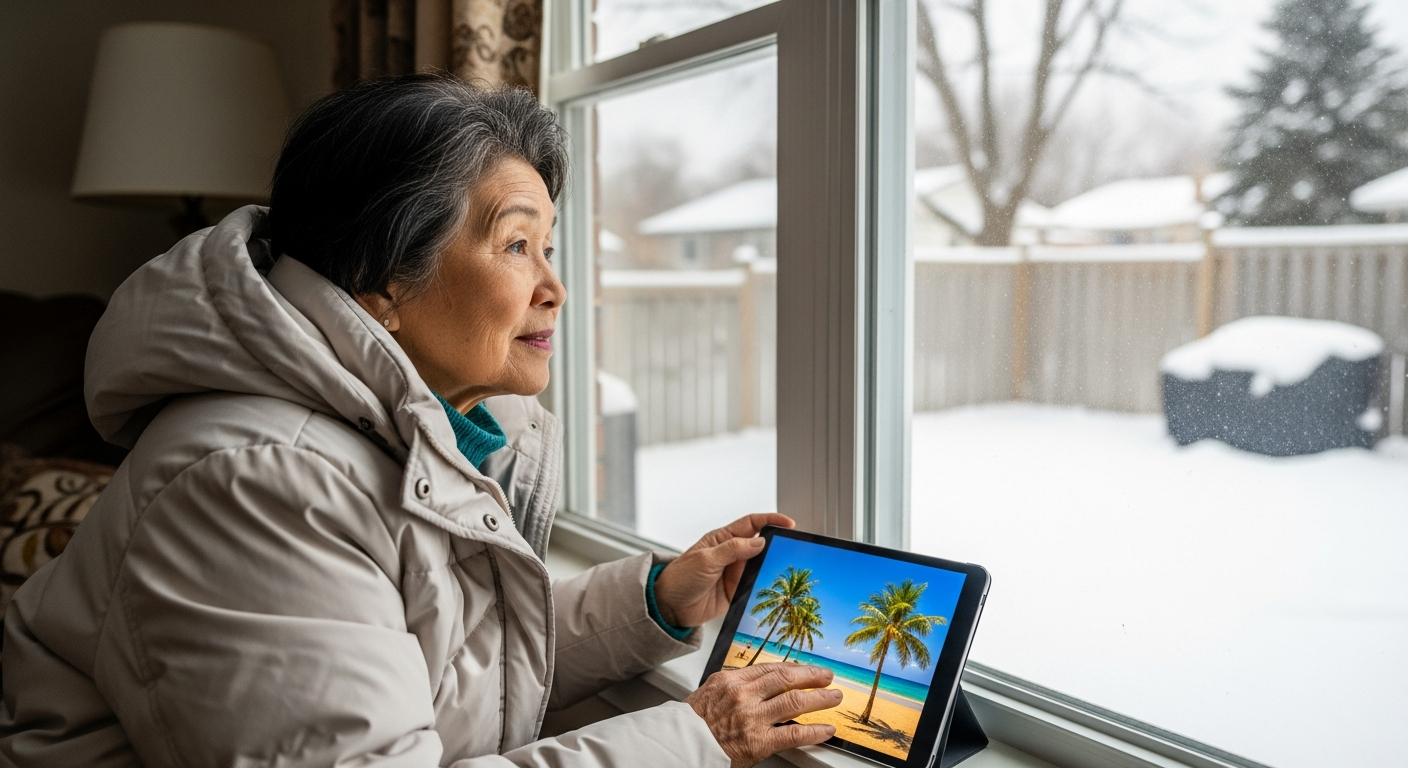
The Medical Case for Warm-Climate Relocation
Cold, damp climates exacerbate symptoms in several chronic conditions. According to medical research:
- Arthritis: Cold temperatures reduce synovial fluid viscosity, making joints stiffer. Studies show arthritis pain increases 15–20% with every 10°F drop in temperature. Warm climates reduce pain and improve mobility.
- Fibromyalgia: Muscle pain, fatigue, and sleep disturbances worsen in cold weather. Warm climates provide modest symptom relief for many sufferers.
- Raynaud's disease: Cold-triggered vascular spasms are eliminated in warm climates.
- Seasonal Affective Disorder (SAD): Increased sunlight and warmth improve mood and energy in sunny destinations.
According to Arthritis Society Canada, approximately 40% of Canadian arthritis patients report significant seasonal variation in symptoms, with winters being most challenging. For 15–20% of patients, climate change results in meaningful symptom improvement and reduced medication requirements.
Healthcare Cost Reduction From Climate Relocation
| Medical Outcome | Ontario Cost (annual) | Warm Climate Outcome | Potential Savings |
|---|---|---|---|
| Physical therapy for arthritis (2x/week) | $2,400–$3,500 | Reduced to 1x/month (warm weather enables self-care) | $1,800–$2,500 |
| Arthritis medications (at escalated doses) | $1,200–$2,000 | Reduced doses or elimination (less pain = less medication) | $400–$1,200 |
| Seasonal depression management (therapy/meds) | $500–$1,500 | Eliminated (increased sun exposure) | $500–$1,500 |
| Home heating in winter | $1,500–$2,500 | Minimal heating costs | $1,200–$2,200 |
| Emergency room visits (winter-related pain crises) | $600–$1,200 | Reduced frequency | $400–$800 |
| Total annual healthcare/comfort savings | $6,200–$10,700 | $4,300–$8,300 |
For some retirees, the healthcare cost reductions offset a portion of relocation and increased property costs.
Funding Relocation With a Reverse Mortgage
A reverse mortgage can fund several aspects of a health-driven relocation:
| Relocation Cost | Typical Amount | Funded by Reverse Mortgage? |
|---|---|---|
| Home sale transaction costs (realtor, legal, inspections) | $20,000–$35,000 | Yes; covers 6–10% of sale price |
| Down payment on warm-climate home (if purchasing, not renting) | $50,000–$150,000 | Yes; reverse mortgage can provide bridge |
| Moving and relocation costs (movers, travel, temporary housing) | $8,000–$15,000 | Yes; usually covered by reverse mortgage proceeds |
| Medical evaluations for new healthcare providers | $2,000–$5,000 | Yes; minimal cost |
| Initial property taxes and insurance (warm-climate property) | $3,000–$8,000 | Yes; one-time setup |
| Accessibility modifications (new home may need updates) | $5,000–$20,000 | Yes; covered by reverse mortgage |
| Total relocation costs | $88,000–$213,000 | Yes; accessible through reverse mortgage |
Real-World Example: Arthritis-Driven Move to Arizona
Patricia, 68, has had rheumatoid arthritis for 12 years. Her symptoms have worsened; she is on high-dose medications and requires physical therapy twice weekly. Her rheumatologist suggests relocating to a warm, dry climate could significantly reduce symptoms and medication dependency.
Patricia owns a home in Toronto valued at $520,000 (fully paid). She has modest savings ($85,000) and a CPP/pension totaling $48,000/year. She is considering moving to Tucson, Arizona, where she has a sister and a strong medical community focused on autoimmune diseases.
Patricia's reverse mortgage strategy:
-
Apply for reverse mortgage against Toronto home
- Available equity: ~$286,000 (55% LTV at age 68)
- Initial draw: $80,000 (covers relocation costs and down payment on Arizona home)
-
Execute the move
- Sells Toronto home for $520,000
- Uses reverse mortgage draw ($80,000) to cover sale costs and relocation
- Net proceeds: $440,000–$460,000
- Purchases $350,000 home in Tucson; places reverse mortgage draw ($80,000) as down payment
- Remaining liquid assets: $120,000–$140,000 (safety net)
-
Outcome
- Patricia lives in warm Arizona climate; arthritis symptoms improve 30–40%
- Medication reduced from 4 drugs to 2 (annual savings: $1,000+)
- Physical therapy reduced to monthly maintenance
- New Arizona home is paid for with modest reverse mortgage balance (~$80,000)
- Patricia retains $120,000–$140,000 emergency fund
- Retirement is secure; health is improved
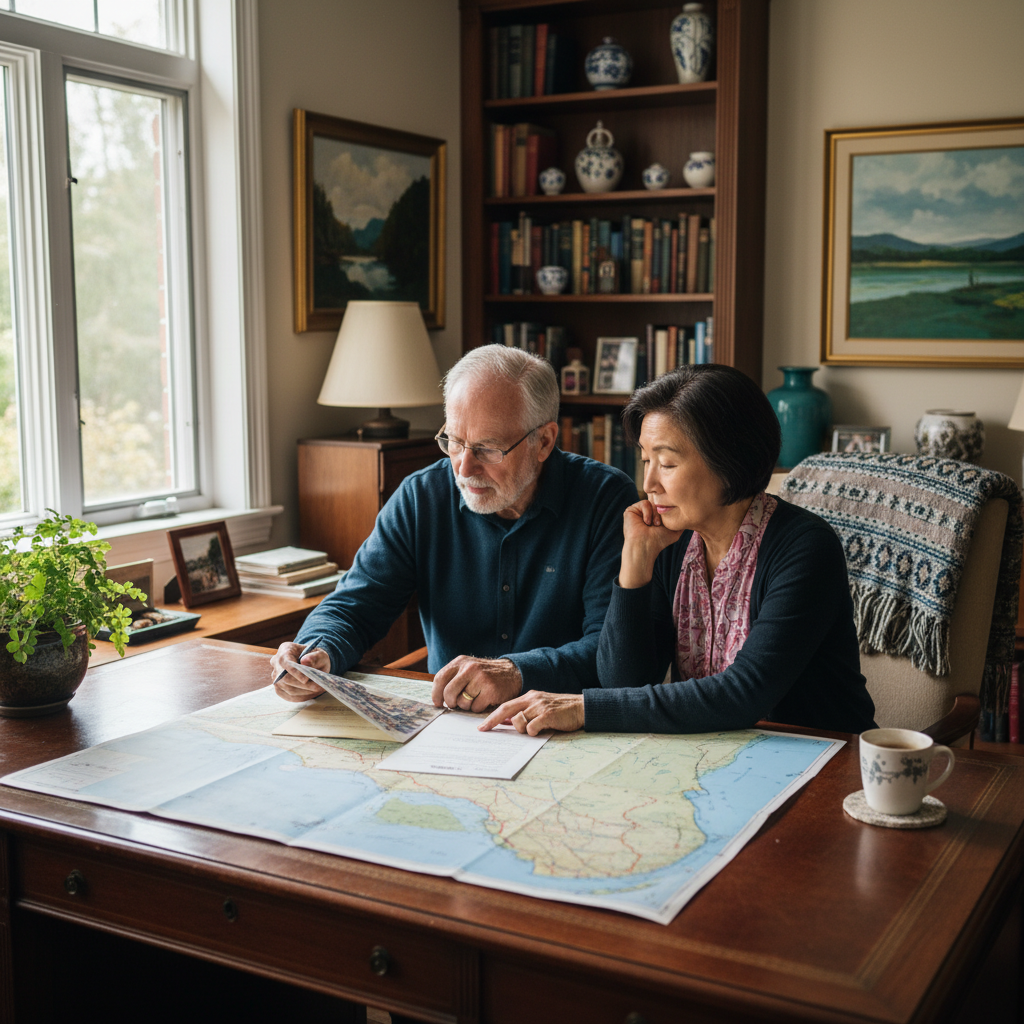
Practical Considerations for Health-Driven Relocation
Before committing to relocation, validate the decision:
Step 1: Medical consultation Your rheumatologist or pain specialist should affirm that climate relocation is likely to provide meaningful symptom relief (not speculative). Ideally, you have spent 2–4 weeks in the target climate during the season you plan to live there.
Step 2: Explore temporary relocation first Before selling your home, consider renting in the target climate for 3–6 months (winter season) to confirm the health benefits are real and sustainable. This removes some relocation risk.
Step 3: Understand tax and legal implications Moving to the US (Florida, Arizona, Texas) triggers several considerations:
- You remain a Canadian tax resident (if Canada is home base)
- US state income tax may apply (varies by state; Florida has no income tax; Arizona does)
- Healthcare coordination between Canadian and US systems
- Consult a cross-border tax accountant and immigration lawyer
Step 4: Financial stress-test Calculate your retirement income in the new location. Factor in:
- Reduced healthcare costs (savings)
- Increased property taxes and insurance (varies dramatically by state/region)
- Currency risk (if relying on Canadian income in USD)
- Cost of travel back to Ontario (visiting family)
Comparing Relocation Scenarios: Reverse Mortgage vs. Home Equity Loan

When considering relocation funding, compare options:
| Funding Option | Cost Structure | Monthly Payment | Flexibility | Best For |
|---|---|---|---|---|
| Reverse Mortgage | 7–8% fixed; compound interest on unpaid balance | None required during relocation | High; you can repay early if desired | Funding relocation while keeping options open |
| HELOC | Variable rate (~7% + prime); interest calculated on balance | Monthly interest-only payments required | Moderate; requires ongoing payments | Homeowners planning to stay in Ontario |
| Home Equity Loan | Fixed rate; amortized payments | Monthly principal + interest (~$600–$1,200/month) | Low; locked terms | Structured repayment over fixed term |
| Personal Loan | High rates (8–12%); unsecured | Fixed monthly payments | Low | Small loans; poor fit for relocation |
| RRSP Withdrawal | 20–50% withholding tax; income inclusion | None (lump sum) | Very high (all at once) | Poor option; tax cost is prohibitive |
For health-driven relocation, a reverse mortgage is often optimal because: ✓ No monthly payments required (especially important if health worsens and you need to move again) ✓ Interest-only cost (interest on amounts drawn, not compounded on full available balance) ✓ Full flexibility to repay early if desired ✓ No income implications (tax-free advance, not employment income)
Healthcare Coordination: Canada and the US
If relocating to the United States, healthcare coordination is complex but manageable:
Before relocation:
- Register with provincial health insurance office to maintain OHIP while living in US (covered for up to 7 months/year)
- Obtain US health insurance (critical; Canadian coverage does not apply in US)
- Arrange transfer of medical records to new US healthcare provider
- Identify Canadian hospital in region (Mayo Clinic, Cleveland Clinic, etc.) for complex care
After relocation:
- US medical providers will bill US insurance; coordinate with Ontario to avoid gaps
- Prescriptions filled in US; coordinate with Canadian pharmacy if returning seasonally
- Specialist referrals may require new authorizations in US system
According to Health Canada, Canadians relocating to the US should maintain some Canadian medical connections and understand provincial coverage limits while abroad.
Frequently Asked Questions
Will relocating to the US affect my CPP or OAS payments?
No. CPP and OAS payments continue to Canadian account regardless of residence. However, US tax authorities may tax the income depending on your US residence status. Consult a cross-border tax accountant.
What if the warm climate doesn't improve my symptoms as expected?
You can move back to Ontario or elsewhere. This is why a temporary rental period before selling is important — it validates the decision before making it permanent.
Can I use a reverse mortgage to fund a temporary relocation (winter in Florida, summer in Ontario)?
Yes. Reverse mortgage funds can support part-time residence in multiple locations. However, one property must be your principal residence for reverse mortgage qualification; secondary properties have different rules.
Do I have to sell my Ontario home if I relocate permanently?
No. Some retirees keep their Ontario home and rent it out or leave it empty as a future return option. However, this complicates reverse mortgage qualification (lenders typically require principal residence). Consult your lender.
What if I relocate but want to return to Ontario for medical care?
Plan for this in advance. Maintain connections with Canadian healthcare providers, understand OHIP coverage for US residents, and budget for travel costs to return for specialist care if needed.
Quick Reference: Is Health-Driven Relocation Right for You?
| Consideration | Yes, Good Fit | No, Poor Fit |
|---|---|---|
| Medical professional affirms climate will help | Yes; explicit recommendation | No; speculative benefit |
| Tried warm climate during relevant season (tested) | Yes; 4+ weeks trial | No; never experienced target climate in winter |
| Home equity available | $250,000+ | <$150,000 |
| Retirement income stable and portable | Yes; CPP, pension, fixed investments | No; dependent on specific Ontario location or employment |
| Family support in target location | Yes; existing network | No; relocating to unfamiliar area |
| Health stable enough for major move | Moderate stability; improvement expected | Declining rapidly; move may be too stressful |
| Comfort with US healthcare and taxes | Willing to navigate complexity | Uncomfortable with cross-border complications |
A health-driven relocation to a warm climate can meaningfully improve quality of life and reduce healthcare costs for retirees with chronic pain or arthritis. A reverse mortgage provides the financial flexibility to make this move without forcing a rushed sale or depleting retirement savings. Contact Rick Sekhon Reverse Mortgages to discuss funding a climate-driven relocation.
Ready to Learn More?
Find out exactly how much you could unlock from your home — free and no obligation.
Related Articles
Reverse Mortgage for Remote Work Relocation: Choosing Your Retirement Location in Ontario
Use a reverse mortgage to relocate within Ontario while maintaining remote work flexibility and aging in place lifestyle in your chosen community.
Read →Stay in Your Neighborhood as It Gentrifies: Reverse Mortgage Strategy
Your neighborhood is changing—property taxes rising, longtime friends moving. Use a reverse mortgage to afford aging in place where you belong.
Read →How a Reverse Mortgage Affects Moving Into a Retirement Residence in Ontario
What happens to your reverse mortgage if you move into a retirement residence or assisted living in Ontario? Covers repayment triggers, timelines, spousal protection, and financial planning for the transition.
Read →