
Reverse Mortgage for Accessible Gaming and Brain Health: Stay Sharp With Vision and Mobility Changes
Explore how a reverse mortgage can fund adaptive gaming equipment, smart home technology, and therapeutic gaming programs to support cognitive health and social connection in retirement.
The Overlooked Connection Between Gaming and Brain Health in Retirement
When most people think about reverse mortgages, gaming and brain health don't immediately come to mind. Yet cognitive decline is one of the fastest-growing health concerns for Ontario seniors, and research consistently shows that mentally engaging activities—including gaming—help maintain neural plasticity and reduce the risk of cognitive decline.
The challenge? Adaptive gaming equipment, accessibility controllers, specialized displays, and the smart home technology that makes gaming accessible for seniors with vision loss, arthritis, or mobility limitations can be expensive—often $2,000 to $8,000 for a fully set up gaming system with accessibility features.
A reverse mortgage can unlock the equity in your home to fund a therapeutic gaming setup, transforming your retirement from passive watching into active, brain-boosting engagement.
Why Gaming Matters for Aging Adults
The Science of Cognitive Stimulation
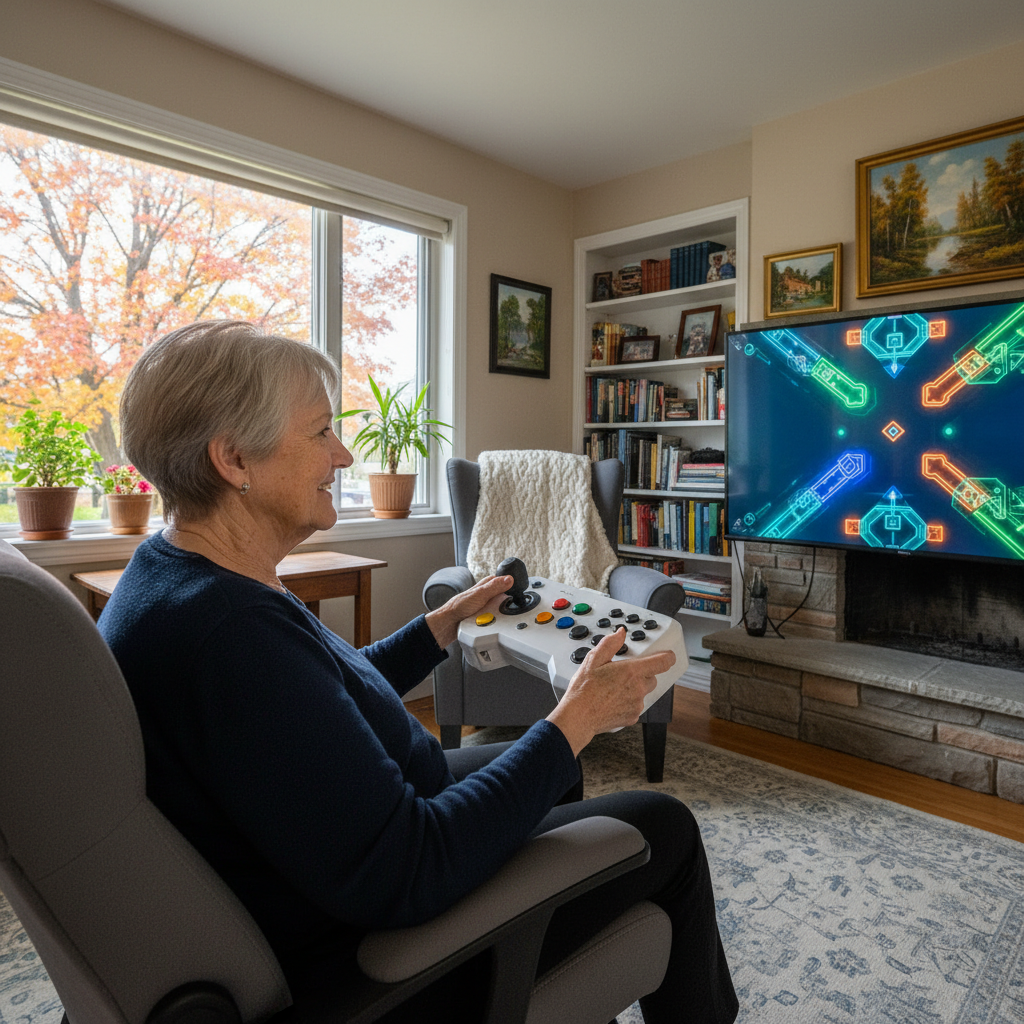
Seniors who engage in mentally challenging activities—like video games, puzzle games, and strategy games—show measurably slower rates of cognitive decline compared to peers who remain passive. Games that require:
- Strategic thinking (chess, strategy games)
- Quick decision-making (action games with accessibility mods)
- Memory and pattern recognition (puzzle games)
- Social connection (multiplayer games, online communities)
These activities have been shown in multiple studies to maintain cognitive reserve—essentially building a buffer against age-related memory loss and mild cognitive impairment.
Accessibility as the Missing Piece
The problem isn't that games aren't available—it's that standard gaming equipment isn't designed for seniors with:
- Arthritis or limited hand dexterity
- Vision loss or macular degeneration
- Hearing loss
- Limited mobility or balance issues
- Cognitive changes that make complex controller systems overwhelming
Adaptive gaming equipment—custom controllers, large-print overlays, voice-command systems, motion-controlled interfaces—enables seniors to access the cognitive benefits of gaming without frustration.
What Does an Adaptive Gaming Setup Cost?
A fully accessible gaming system for an Ontario senior typically includes:
| Component | Cost Range | Purpose |
|---|---|---|
| Adaptive controller (one-handed, large grip) | $150–$400 | Enables play with arthritis or limited dexterity |
| Large-display monitor or TV with gaming features | $400–$800 | High contrast, adjustable refresh rate for vision loss |
| Voice-command gaming headset | $100–$250 | Hands-free control, hearing-aid compatible |
| Smart home controller integration | $200–$500 | Voice control for game launch, volume, accessibility settings |
| Gaming PC or console with accessibility software | $500–$1,200 | Already may own; updates for accessibility |
| Professional setup and calibration | $300–$600 | Ensure equipment works with your home environment |
| Therapeutic gaming software subscriptions (annual) | $60–$150/year | Brain-training, social gaming platforms |
| Total Setup Cost | $1,750–$3,900 | Can be higher with specialized medical gaming |
For seniors with significant vision or mobility challenges, a therapeutic gaming setup with professional consultation can exceed $5,000.
The Reverse Mortgage Funding Model for Gaming and Brain Health
Scenario: Margaret, 72, Vision Loss in Ontario
Margaret is a 67-year-old Toronto homeowner with early-stage macular degeneration. Her home is worth $650,000 with no mortgage. She's always been an avid reader and active problem-solver, and she's worried about cognitive decline as her vision worsens.
Her family suggests adaptive gaming—large-display puzzle games, voice-controlled strategy games, and multiplayer card games—as a way to keep her mind sharp while accommodating her vision loss.
The Cost Problem: A professional adaptive gaming setup with large display, voice control, and accessibility software comes to $4,200. Margaret's retirement income is stable (CPP + OAS + modest pension), but she doesn't want to drain her TFSA savings for recreational equipment.
The Reverse Mortgage Solution:
- Reverse mortgage on her $650,000 home: approximately $195,000 available (assuming ~30% of home value)
- Funds for gaming setup: $4,200
- Remaining available credit for future needs: ~$190,800
- Margaret keeps full ownership and can stay in her home indefinitely
- No monthly payments required
The Outcome: Margaret sets up her gaming system, joins online puzzle leagues, and plays cooperative games with her grandchildren from across Canada. Her neurologist notes stable cognitive function at her next checkup—a win compared to projected decline.
Beyond the Hardware: Social Connection Through Gaming
One overlooked benefit of gaming in retirement is social connection. Online gaming communities for seniors are growing rapidly, with platforms like:
- Senior-focused puzzle leagues where players compete in daily challenges
- Multiplayer card games (bridge, gin rummy, poker) played online with players worldwide
- Trivia and knowledge games that connect seniors with similar interests
- Virtual group gaming nights hosted by retirement communities and senior centers
A reverse mortgage can fund not just the equipment but also:
- Annual memberships to senior gaming communities
- Internet upgrades for lag-free online play
- Video conferencing setup for family gaming sessions
- Specialized training sessions with occupational therapists on adaptive gaming techniques
How to Get Started: Assessment and Setup
Step 1: Occupational Therapy Assessment
Before purchasing equipment, work with an occupational therapist ($150–$300 assessment) who specializes in aging and accessibility. They'll evaluate:
- Your specific vision, hearing, and mobility limitations
- Which game types suit your abilities and interests
- What accessibility features you actually need vs. nice-to-have features
- How to prevent repetitive strain or postural problems during gameplay
This assessment is crucial and can be partially funded through:
- AADL (Assistive Devices Program) in Ontario (covers some costs if through approved provider)
- Your private health insurance if offered
- Your reverse mortgage proceeds
Step 2: Professional Setup and Calibration
A gaming setup professional ($300–$600) ensures:
- All equipment works together seamlessly
- Accessibility settings are properly configured
- Lighting and positioning prevent eye strain
- Audio levels work with your hearing aids if applicable
- Internet speed supports lag-free play
Step 3: Ongoing Support and Community Connection
Once your system is live, consider:
- Monthly check-ins with an occupational therapist ($50–$100) to adjust settings
- Joining a senior gaming community for motivation and social connection
- Setting up family gaming nights with grandchildren (free but valuable for connection)
Government and Insurance Support
Ontario's Assistive Devices Program (ADP)
If your adaptive gaming equipment qualifies as assistive technology (which it does for accessibility), you may be eligible for ADP funding:
- Covers up to 75% of approved assistive devices
- Device must be prescribed by a regulated health professional
- Annual limit: approximately $2,500 per approved device category
A reverse mortgage can cover the 25% out-of-pocket cost while ADP funds the equipment itself.
Private Health Insurance
Many extended health insurance plans cover occupational therapy assessments and some adaptive equipment. Check your policy before using reverse mortgage proceeds.
Potential Concerns and How to Address Them
"Isn't gaming just a distraction from real exercise?"
No. Research shows that gaming plus physical activity is the optimal cognitive health formula. A gaming setup doesn't replace physical therapy or walking—it complements them by providing another form of cognitive engagement. Many seniors use gaming during bad-weather days when outdoor walking isn't safe.
"Will gaming addiction be a problem in retirement?"
Adaptive gaming for seniors is typically low-intensity and social, not the high-stimulation gaming that creates addiction in younger people. The goal is 30–60 minutes of engagement several times weekly, similar to a hobby or sport.
"Is the equipment future-proof?"
Gaming technology evolves, but adaptive controllers and accessibility software standards are fairly stable. Budget for equipment updates every 5–7 years, which a reverse mortgage's flexible access can address.
The Broader Picture: Brain Health Investment
A reverse mortgage for gaming and brain health isn't just about entertainment—it's a preventive health investment that:
- Reduces cognitive decline risk by up to 30% in longitudinal studies
- Increases social connection and reduces isolation-related depression
- Maintains cognitive reserve for longer independent living
- Provides early warning signs of cognitive change through gameplay performance
For many Ontario seniors, the cost of a therapeutic gaming setup is far less than the cost of cognitive decline interventions or earlier-than-necessary moves to assisted living.
Key Takeaways
- A fully accessible gaming setup with adaptive controllers, large displays, and voice control typically costs $1,750-$3,900, with specialized setups reaching $5,000+.
- Ontario's Assistive Devices Program (ADP) can cover up to 75% of approved assistive devices, leaving a reverse mortgage to fund the remaining cost.
- On a $650,000 home with no existing mortgage, a homeowner could access roughly $195,000 through a reverse mortgage, more than enough for even the most comprehensive gaming setup.
- Reverse mortgage proceeds are tax-free and don't require monthly payments, making them well suited to funding recreational or preventive-health equipment.
- Research links mentally engaging activities like gaming to slower cognitive decline and reduced isolation-related depression in retirement.
- Budget for equipment refreshes every 5-7 years as adaptive gaming technology evolves.
Frequently Asked Questions
How much does an adaptive gaming setup typically cost for a senior?
A fully accessible system—including an adaptive controller, large-display monitor, voice-command headset, and professional setup—generally costs $1,750 to $3,900. Seniors with more significant vision or mobility needs may spend $5,000 or more with specialized professional consultation.
Can I use government funding along with a reverse mortgage for gaming equipment?
Yes. Ontario's Assistive Devices Program (ADP) can cover up to 75% of the cost of approved assistive devices when prescribed by a regulated health professional, and a reverse mortgage can cover the remaining out-of-pocket portion.
Does gaming really help prevent cognitive decline?
Research shows that mentally engaging activities—including strategy games, puzzle games, and social multiplayer games—help maintain cognitive reserve and have been associated with meaningfully slower rates of cognitive decline in longitudinal studies.
Will using a reverse mortgage for gaming equipment affect my CPP, OAS, or GIS?
No. Reverse mortgage funds are loan proceeds, not income, so they generally don't affect government benefit eligibility or trigger clawbacks.
Do I need an occupational therapy assessment before buying equipment?
It's strongly recommended. An occupational therapist assessment (typically $150-$300) helps identify which accessibility features you actually need based on your vision, hearing, and mobility, preventing wasted spending on unnecessary equipment.
Is gaming addiction a real concern for seniors using this kind of setup?
Adaptive gaming for seniors tends to be low-intensity and social rather than the high-stimulation gaming associated with addiction risk in younger players. The typical goal is 30-60 minutes of engagement several times a week, similar to any hobby.
Next Steps
If you're interested in exploring a reverse mortgage to fund adaptive gaming and brain health:
- Meet with an occupational therapist to assess your specific needs
- Get a reverse mortgage pre-qualification to understand your available equity
- Research adaptive gaming equipment based on your abilities and interests
- Consult with a reverse mortgage specialist about structuring proceeds for the gaming setup plus future health needs
- Connect with local senior gaming communities to ensure the investment matches your actual interests
Your home's equity can work as hard as your brain. A reverse mortgage transforms home equity into cognitive health—keeping your mind sharp and your retirement engaging.
Ready to Learn More?
Find out exactly how much you could unlock from your home — free and no obligation.
Related Articles
Reverse Mortgage for Aging in Place With Fibromyalgia: Home Modifications for Invisible Illness
Fund home modifications for aging with fibromyalgia. Reverse mortgage enables accessible design for pain management, energy conservation, and quality of life.
Read →Reverse Mortgage for Accessible Community Kitchen: Culinary Training and Aging in Place
Convert your home kitchen into an accessible commercial culinary training space. Reverse mortgage funds renovation while creating community impact.
Read →Reverse Mortgage When You Previously Gifted Home Down Payment to Adult Child: Reclaiming Equity for Aging in Place
Reverse mortgage strategy when aging in place after gifting down payment to adult child. Recover equity for home modifications and care.
Read →