
Reverse Mortgage for Funding Grief Counseling and Bereavement Support After Loss
Grief counseling after losing a spouse or parent is expensive and crucial for mental health. A reverse mortgage can fund professional bereavement support.
You lost your spouse or parent, and grief is overwhelming. Professional grief counseling is proven to reduce depression, prevent complicated grief, and help you rebuild your life — but it's expensive and often not covered by insurance.
A reverse mortgage can fund the therapy and bereavement support that helps you process this profound loss.

The Hidden Cost of Grief
When you lose a spouse or parent, you face both emotional and financial challenges simultaneously:
Emotional challenges:
- Severe depression (30–40% of bereaved people experience major depression)
- Complicated grief (5–10% develop chronic, non-improving grief)
- Anxiety and PTSD (especially after sudden or traumatic death)
- Loss of identity and purpose
- Suicidal ideation (3–5 times higher in bereaved populations)
Physical health challenges:
- Sleep disruption
- Weakened immune system
- Increased risk of heart attack and stroke (especially in first months)
- Chronic pain and fatigue
Financial challenges:
- Loss of household income (if deceased spouse contributed)
- Funeral and legal costs ($15,000–$30,000)
- Estate settlement costs ($5,000–$15,000)
- Therapy and counseling (not covered by most insurance)
Why Professional Grief Counseling Matters
Research from the American Psychological Association shows that people who receive grief counseling within 6 months of loss experience:
✓ 40% reduction in depression symptoms within 12 weeks
✓ Faster return to normal functioning
✓ Lower risk of complicated grief
✓ Better physical health outcomes (lower blood pressure, stronger immune function)
Cost of grief counseling:
- Individual therapy: $150–$250/session
- 20–30 sessions recommended: $3,000–$7,500
- Group grief support: $20–$50/session (lower cost, good for many people)
- Intensive grief workshops: $500–$2,000 per workshop
Most insurance covers minimal counseling — often 10–20 sessions maximum, and only if the loss is recent. If your grief becomes complicated or extends beyond the initial period, additional therapy falls entirely on you.
How a Reverse Mortgage Funds Your Healing
A reverse mortgage provides funds specifically for bereavement support without forcing you to:
✗ Choose between therapy and other essential expenses
✗ Deplete emergency savings when you're emotionally vulnerable
✗ Go into credit card debt during a crisis
✗ Skip therapy sessions because you can't afford them
Funding bereavement support with a reverse mortgage:
- Access funds immediately (within 2–3 weeks of approval)
- No monthly payment pressure while grieving
- Funds available for multiple types of support: individual therapy, grief groups, intensive workshops, support retreats
- Preserve your retirement savings for long-term security
Real-World Example: Patricia's Grief Journey
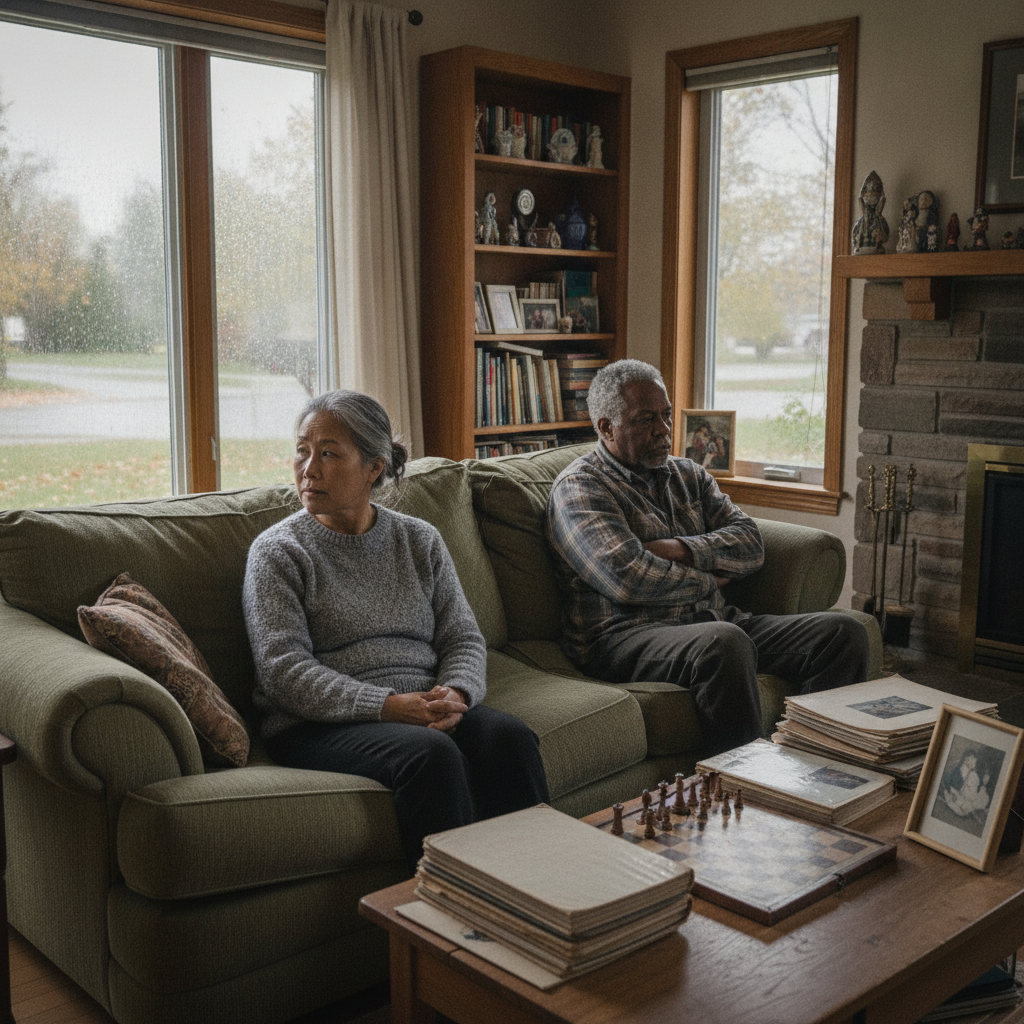
Patricia, 71, lost her husband Robert unexpectedly to a heart attack. They'd been married 43 years.
In the weeks after Robert's death, Patricia experienced:
- Severe depression and suicidal thoughts
- Sleep disruption (3–4 hours nightly)
- Weight loss and loss of appetite
- Inability to manage household finances
- Social isolation (couldn't face friends)
Patricia's GP recommended professional grief counseling. However:
- Her insurance covered only 10 sessions at 80%
- Out-of-pocket: $500
- She needed 30–40 sessions to work through her grief effectively
- Total cost for full grief counseling: $4,500–$6,000
- Insurance covered: $400
- Patricia's out-of-pocket: $4,100–$5,600
Patricia's financial situation:
- Modest pension: $1,400/month
- CPP/OAS: $1,200/month
- Total income: $2,600/month
- Rent, utilities, food: $2,400/month
- Monthly buffer: $200
She couldn't afford $4,100 in grief counseling while managing living expenses.
With a reverse mortgage:
Patricia accessed a $20,000 line of credit. She used $5,000 for grief counseling over 18 months:
- Individual therapy with grief specialist: 30 sessions at $180/session = $5,400
- Group grief support: 24 sessions at $30/session (group is cheaper) = $720
- Intensive grief retreat (7 days): $1,200
- Total grief support: approximately $7,320 (higher than expected because she benefited and extended treatment)
- Insurance covered: $400
- Reverse mortgage funded: $6,920
The outcome:
After 18 months of professional grief support, Patricia:
- No longer experiences suicidal ideation
- Sleeps 6–7 hours nightly
- Has rebuilt her social connections
- Manages household finances confidently
- Is open to eventual companionship (not desperately searching, but open)
The alternative: Without access to grief counseling, Patricia likely would have experienced:
- Prolonged depression lasting 2–3+ years
- Possible suicide attempt
- Accelerated physical decline (grief increases mortality risk)
- Loss of independence and home
- Permanent isolation
The $6,920 investment in grief counseling likely extended and improved her life significantly.
Types of Bereavement Support to Fund
A reverse mortgage can fund various forms of grief support:
| Type | Cost Per Unit | Benefit | Best For |
|---|---|---|---|
| Individual grief therapy (1 hour) | $150–$250 | Personalized processing | Complex grief, trauma |
| Group grief support (2 hours) | $20–$50 | Shared experience, community | Most bereaved people |
| Grief counselor certification course | $500–$3,000 | Structured learning, peer support | Active learners |
| Grief workshop/retreat (2–7 days) | $500–$2,500 | Intensive support, peer bonding | Those needing immersion |
| Grief recovery semininar | $100–$300 | Structured curriculum | Preference for groups |
| Online grief counseling (cheaper alternative) | $60–$150/session | Accessibility, convenience | Rural or homebound individuals |
Frequently Asked Questions
Is grief counseling actually effective?
Yes. Multiple large studies show professional grief counseling significantly reduces depression, anxiety, and risk of complicated grief. The benefit is strongest when counseling begins within 6 months of loss.
Will a reverse mortgage affect my government benefits?
Reverse mortgage proceeds are loan advances, not income. They typically don't count toward GIS or other benefits. However, if you're near GIS thresholds, confirm with CRA.
Can I include my adult child in grief counseling funded by my reverse mortgage?
Yes. If your adult child is also grieving (lost a parent, in the case of spousal death), some grief counselors offer family or group sessions that could benefit both of you. Your reverse mortgage funds can support family healing.
What if I need grief counseling longer than expected?
Many people need grief support for 1–3 years, not just the initial 6 months. A reverse mortgage line of credit can accommodate extended counseling needs. Draw funds as needed without a pre-set limit.
Is grief counseling tax-deductible?
Not for personal grief. However, if you're caring for an aging parent or child and fund their grief counseling, some of those costs might be deductible as dependent care. Consult a tax professional.
Key Takeaways
| Goal | Reverse Mortgage Benefit |
|---|---|
| Access grief counseling without financial stress | Funds available immediately for therapy |
| Preserve retirement savings during grief | Alternative to depleting emergency funds |
| Support family members' grief too | Can fund family or group counseling |
| Flexible, extended support | Line of credit allows ongoing access |
Protecting Your Mental Health During Profound Loss
Grief is one of life's most challenging experiences. Professional support isn't a luxury — it's a crucial investment in your health and future happiness. A reverse mortgage removes the financial barrier to healing.
Contact Rick Sekhon Reverse Mortgages to explore how much support you could access for grief counseling and bereavement services.
Ready to Learn More?
Find out exactly how much you could unlock from your home — free and no obligation.
Related Articles
Reverse Mortgage After Unexpected Spousal Death: Bridging the Income Gap
When your spouse dies unexpectedly in retirement, some pensions and benefits stop immediately. A reverse mortgage can bridge the sudden income gap. Ontario guide.
Read →Reverse Mortgage for Your Own Mental Health and Wellness Recovery
Invest in your mental health recovery in retirement. Use a reverse mortgage to fund therapy, wellness programs, and healing after life challenges.
Read →Reverse Mortgage for Widows and Widowers in Ontario: A Complete Guide
How widows and widowers in Ontario use a reverse mortgage to manage financial changes after losing a spouse. Estate settlement, sole borrower rules, and income planning.
Read →