
Reverse Mortgage for Forensic Accounting Investigation: Uncovering Elder Financial Abuse
Suspect financial abuse of aging parent? Reverse mortgage funds forensic accounting investigation to uncover hidden exploitation and protect assets.
Has someone suddenly gained unusual influence over your aging parent's finances? The warning signs are unmistakable: unexpected major gifts, sudden changes to wills, unexplained credit card charges, or a new "advisor" making all financial decisions.
Forensic accounting investigation can expose the truth — and a reverse mortgage can fund that critical investigation.
The Hidden Epidemic of Elder Financial Abuse
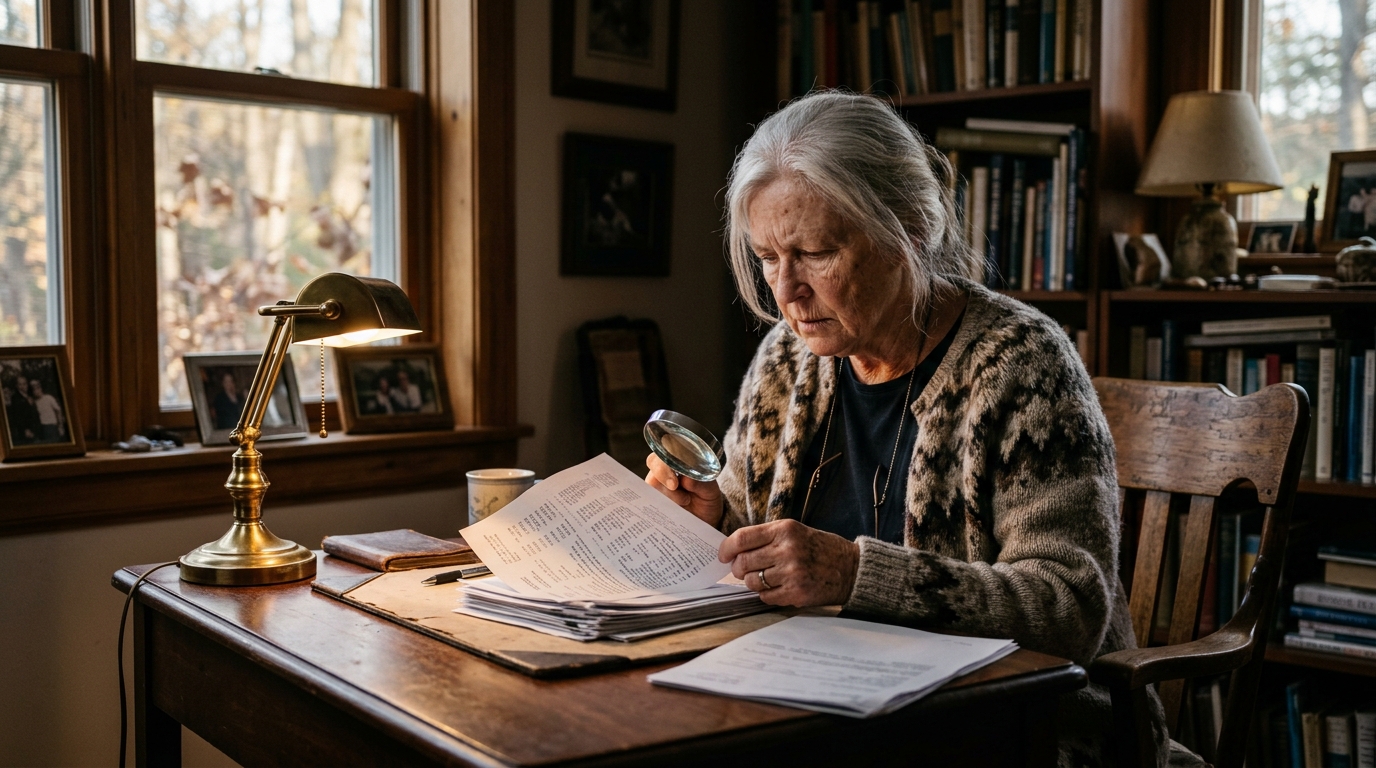
Financial elder abuse is Canada's fastest-growing crime against seniors. According to the Canadian Anti-Fraud Centre, over $30 million in reported losses occur annually — but experts estimate actual losses are 10 times higher, as many abuse cases go unreported.
Elder financial abuse occurs silently:
- A caregiver gradually consolidates control over parent's finances
- A "trusted advisor" recommends increasingly aggressive financial products
- An adult child or in-law convinces an aging parent to fund questionable investments
- A romantic partner moves assets into joint accounts before the relationship is even formalized
- A healthcare worker gains access to banking passwords and makes unexplained transfers
The victim often doesn't realize they're being exploited — and by the time family members notice, hundreds of thousands of dollars may have disappeared.
When You Suspect Abuse: The Investigation Phase
Suspecting elder abuse is one thing. Proving it is another. Your aging parent may deny the abuse (out of shame, fear, or cognitive impairment), the person exploiting them may have covered their tracks carefully, and the financial trail may be deliberately obscured.
This is where forensic accounting comes in.
A forensic accountant is a financial detective who specializes in uncovering hidden money flows, identifying where assets went, and building a legal case for recovery.
What a Forensic Accountant Does
| Investigation Phase | Typical Actions | Cost |
|---|---|---|
| Initial assessment | Review bank statements, credit reports, investment accounts | $2,000–$5,000 |
| Deep dive | Track money transfers, identify hidden accounts, analyze payment patterns | $5,000–$15,000 |
| Expert analysis | Build timeline of abuse, quantify losses, prepare legal testimony | $5,000–$20,000 |
| Report and testimony | Written findings and courtroom testimony (if case goes to trial) | $3,000–$10,000 |
Total typical cost: $15,000–$50,000 depending on complexity.
According to the FCAC, forensic accounting investigations often reveal that elder financial abuse began years earlier than the family suspected — tracing back 5–10 years of unauthorized transfers and hidden accounts.
Why Forensic Accounting Matters
Without professional investigation, family members often guess at what happened. With forensic accounting, you get:
- A clear financial timeline — exactly when the abuse started and how much money left your parent's accounts
- Identification of hidden accounts — forensic accountants find money moved to joint accounts, offshore accounts, or accounts under assumed names
- Expert testimony for court — if legal action is necessary (against a caregiver, advisor, or family member), a forensic accountant's testimony carries weight
- Evidence for law enforcement — if criminal charges are appropriate, forensic accounting provides the proof
When to Consider Forensic Accounting
Red flags that warrant investigation:
- Sudden major gifts or transfers to one person
- Change to will benefiting a caregiver or new romantic partner
- Unexplained bank account activity or sudden credit card charges
- New "investment advisor" recommending high-risk or unusual products
- Aging parent increasingly isolated from family or financial information
- Missing financial documents or passports
- Adult child or caregiver discouraging the aging parent from reviewing finances
Funding Investigation Without Draining Family Savings
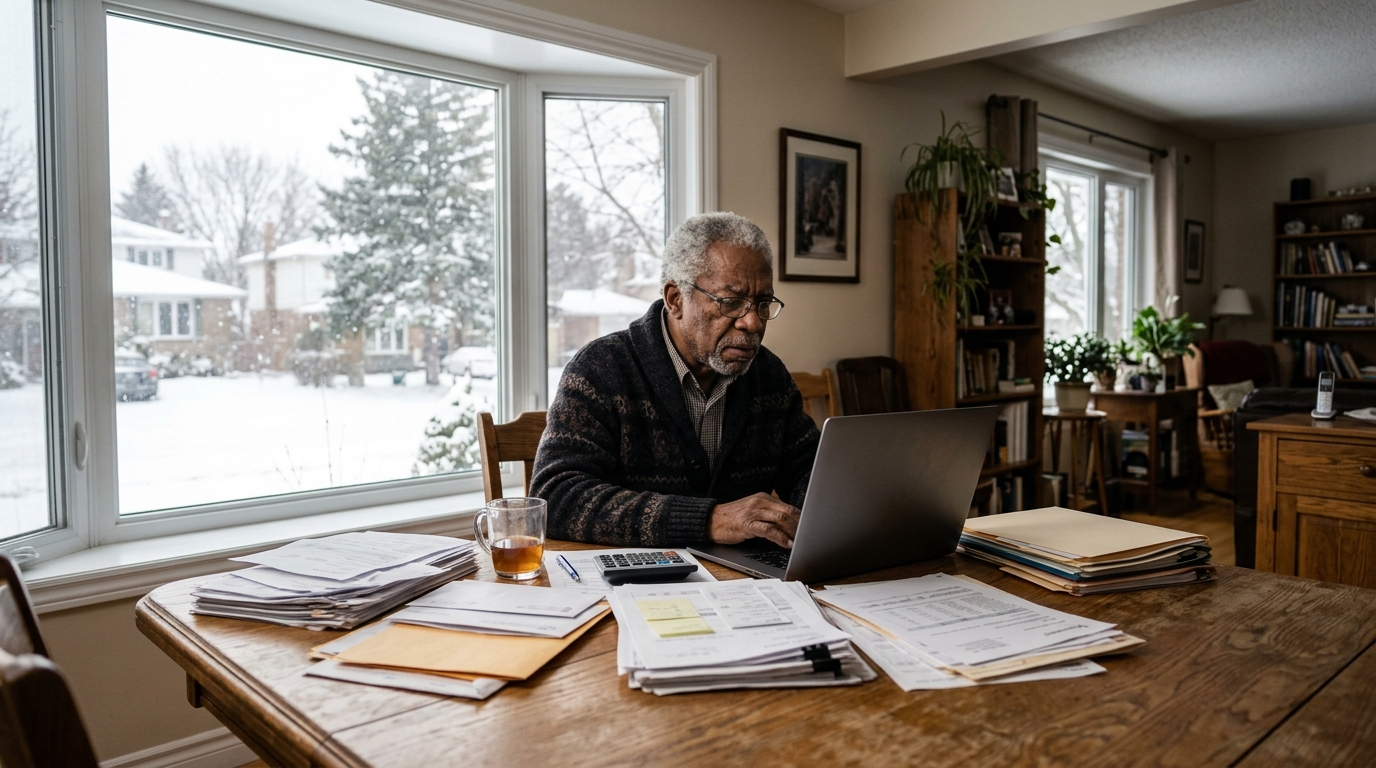
Here's the dilemma: you suspect abuse, but investigating costs $15,000–$50,000. If you're paying this from your own savings, you're making a huge financial commitment. If the abuse is real and assets can be recovered, the investigation pays for itself. If the abuse can't be proven, you've spent significant money on a dead-end case.
A reverse mortgage provides a structured way to fund the investigation without draining your own retirement savings.
Scenario: Suspected Caregiver Exploitation
Sarah, age 72, is concerned about her mother's finances. Her mother, age 92, recently hired a live-in caregiver. Within 6 months, the caregiver has:
- Convinced Sarah's mother to gift her $50,000
- Changed the mother's will to name the caregiver as a beneficiary for $100,000
- Opened a joint credit card in the mother's and caregiver's names (balance: $30,000)
- Restricted access to the mother's bank accounts and investment accounts
Sarah suspects the caregiver is exploiting her mother — but she can't prove it without professional investigation.
Sarah's situation:
- She's retired with a modest CPP/OAS income
- She has $300,000 in home equity
- Forensic accounting will cost $25,000–$40,000
- She doesn't want to deplete her savings if this goes nowhere
Using a reverse mortgage:
- Sarah accesses $40,000 from her home equity
- She hires a forensic accountant to investigate the mother's accounts
- The investigation reveals the caregiver systematically moved money into hidden accounts
- With forensic accounting evidence, Sarah can take legal action to recover assets
- If recovery is successful, some of the recovered funds can go toward the investigation costs
- If recovery fails, Sarah's reverse mortgage provides the cushion — her CPP/OAS income remains intact
How Forensic Accounting Leads to Recovery
Once abuse is proven, recovery becomes possible:
- Civil lawsuit for return of assets (often faster and cheaper than criminal prosecution)
- Caregiver removal (if legal guardian or power of attorney changes)
- Criminal charges filed with police (for significant fraud or theft)
- Restitution ordered as part of court settlement
According to FSRAO, civil lawsuits for elder financial abuse succeed in roughly 70–80% of cases where forensic accounting provides clear evidence.
Protecting Other Assets During Investigation
While forensic accounting uncovers what happened, you may also need to protect remaining assets:
| Protective Action | Cost | Purpose |
|---|---|---|
| Power of attorney change (legal) | $1,000–$2,000 | Remove exploiter's control |
| Will review/update | $800–$1,500 | Reverse unauthorized beneficiary changes |
| Bank account freeze/review | Free to $500 | Stop ongoing unauthorized transfers |
| Credit report freeze | Free | Prevent new accounts opened in parent's name |
| Guardianship application (if needed) | $3,000–$8,000 | Regain control if parent is cognitively impaired |
Total protective action costs: $5,000–$12,000.
A reverse mortgage can fund both investigation AND protection simultaneously.
Working With Law Enforcement
If you suspect criminal elder financial abuse (theft, fraud, breach of trust), you can report it to:
- Local police (non-emergency line for initial report)
- Canadian Anti-Fraud Centre (1-888-495-8501 or online report)
- RCMP (if the case involves cross-provincial or cross-country crime)
Police do NOT charge for investigation. However, they often take 3–6 months to open a case, and resources for elder fraud are limited. That's why private forensic accounting is often faster and more thorough.
Key Takeaways
- Elder financial abuse affects 1 in 10 Canadian seniors — and many cases go undetected for years
- Forensic accounting investigation typically costs $15,000–$50,000 — a significant expense if paid from personal savings
- A reverse mortgage funds investigation without depleting retirement savings or forcing the purchase of insurance you can't afford
- Proven abuse often leads to successful civil recovery — a percentage of recovered assets can reimburse investigation costs
- Early investigation is critical — the sooner you act, the fresher the paper trail and the easier the recovery
- Expert forensic testimony is essential in court — a family member's suspicion isn't enough; a forensic accountant's sworn testimony carries legal weight
Steps to Investigate Suspected Elder Financial Abuse
1. Gather evidence quietly. Collect bank statements, credit card bills, investment statements, and any documentation of unusual transactions. Do NOT confront the suspected abuser yet.
2. Consult a lawyer. Explain your concerns to an elder law attorney. They'll advise whether you have a case and what protective steps to take immediately.
3. Get forensic accounting quotes. Interview 2–3 forensic accountants. Explain the situation and ask for an estimated scope, timeline, and cost.
4. Assess your options. Can you fund investigation from personal savings? Is a reverse mortgage appropriate? Should you report to police first?
5. Talk to Rick Sekhon Reverse Mortgages. If a reverse mortgage is part of your funding strategy, get a quote. Understand your costs and timeline.
6. Hire a forensic accountant. Once funded and legally advised, move forward with investigation. Document everything.
7. Take protective action immediately. Whether or not investigation is underway, work with a lawyer to remove the suspected abuser from power-of-attorney roles and change beneficiary designations.
Frequently Asked Questions
How long does a forensic accounting investigation take?
Typically 3–6 months for a straightforward case, 6–12 months for complex cases involving hidden accounts or multiple institutions. Don't expect overnight answers.
What if my aging parent denies the abuse?
This is common. Exploitation victims often feel shame and deny the abuse, even to family. Work with a lawyer and forensic accountant regardless — they can sometimes convince your parent once evidence is presented, or they can advise on legal guardianship if your parent lacks capacity.
Can I get the investigation costs back from the abuser?
Often yes, if the case is successful. As part of a civil settlement or court award, you can request restitution for investigation costs. Criminal restitution is sometimes ordered as well.
Should I tell my aging parent I'm investigating?
Generally, no — not until you have solid evidence and legal advice. Tipping off the suspected abuser allows them to cover tracks or move assets further. Work with your lawyer on timing.
What if the investigation finds nothing?
That's possible. Not every suspicious situation is abuse — sometimes there are innocent explanations. If investigation turns up nothing, you can use the forensic accountant's report as peace of mind.
How does a reverse mortgage affect my ability to pursue legal action?
It doesn't. A reverse mortgage is a loan against your home — it doesn't affect your legal standing or ability to take civil or criminal action against someone who harmed your parent.
Next Steps
If you suspect your aging parent is being financially exploited, don't wait. The longer abuse continues, the more money disappears.
Talk to Rick Sekhon Reverse Mortgages about funding investigation costs through a reverse mortgage. Understanding your options — and acting quickly — could save your parent's estate and protect your own retirement security.
Ready to Learn More?
Find out exactly how much you could unlock from your home — free and no obligation.
Related Articles
Reverse Mortgage and Elder Financial Fraud Protection: Safeguarding Your Estate
How to use a reverse mortgage strategically to protect assets from fraud, scams, and financial exploitation in retirement. Ontario elder abuse prevention guide.
Read →Reverse Mortgage for Aging in Place With Fibromyalgia: Home Modifications for Invisible Illness
Fund home modifications for aging with fibromyalgia. Reverse mortgage enables accessible design for pain management, energy conservation, and quality of life.
Read →Reverse Mortgage for Accessible Community Kitchen: Culinary Training and Aging in Place
Convert your home kitchen into an accessible commercial culinary training space. Reverse mortgage funds renovation while creating community impact.
Read →