
When Extended Parental Health Needs Derail Your Career: Reverse Mortgage for Adult Children
Adult children caring for aging parents with prolonged illnesses need financial support. Learn how a reverse mortgage can bridge income loss from extended caregiving responsibilities.
Are you struggling to keep your career intact while your aging parent's extended health condition demands more and more of your time? Many Ontario adult children face this impossible choice: stay employed or become their parent's primary caregiver during a multi-year illness. A reverse mortgage offers your aging parent a way to fund household care, allowing you to keep your job and your income.
When extended health conditions (not acute injuries, but chronic illnesses lasting 12+ months) disrupt family caregiving, the financial impact ripples through both generations. Your parent may need months or years of care management at home, and the professional support required can cost $3,000–$6,000 monthly. If you step back from work, you lose income and career momentum. A reverse mortgage accessed by your aging parent can fund professional in-home care, reducing pressure on you to leave employment.
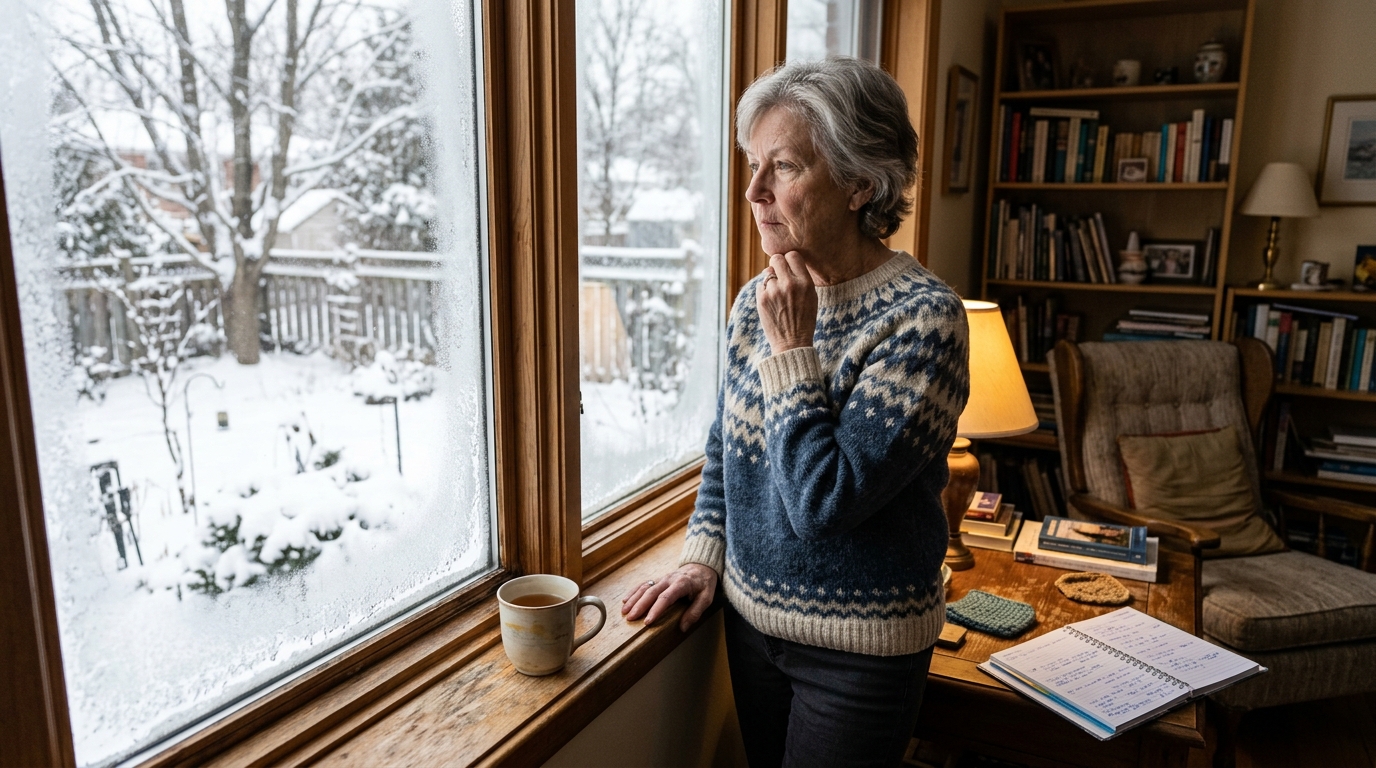
What counts as "extended" parental health conditions?
Extended parental health needs are chronic illnesses or progressive disabilities lasting 12+ months, requiring ongoing care management and professional support. These differ from acute crises (surgery recovery, short hospitalization) that resolve within months. Examples include Parkinson's disease, advanced diabetes, chronic pulmonary disease, or post-stroke rehabilitation, all requiring multi-year care coordination.
According to CMHC (Canada Mortgage and Housing Corporation), aging in place during extended health conditions is affordable when caregiving costs are funded proactively. A reverse mortgage provides liquidity to pay for professional home care without forcing your adult child to reduce employment income.
The financial impact on your career
When your parent's condition requires 20+ hours weekly of hands-on care:
Income impact scenarios
| Scenario | Annual Income Loss | Career Consequence | Financial Gap |
|---|---|---|---|
| Part-time transition (30 hrs/week) | $15,000–$25,000 | Reduced benefits, slower advancement | Medium |
| Career interruption (1-2 years) | $40,000–$80,000 | Seniority loss, re-entry difficulty | High |
| Full-time caregiving | $50,000–$100,000+ | Career suspension, skill erosion | Critical |
Professional home care costs range from $3,500–$6,500 monthly (Ontario rates, 2026). If your parent funds this through a reverse mortgage instead of relying on your unpaid labor, you maintain employment and income security.
How a reverse mortgage solves the dilemma
Your aging parent can access home equity without selling, without making payments, and without affecting government benefits (CPP/OAS/GIS are not means-tested on reverse mortgage proceeds). The funds are classified as loan advances, not income, so they don't trigger tax consequences or benefit clawbacks.
Using a reverse mortgage, your parent:
- Maintains full home ownership and occupancy
- Funds professional caregiving without burdening you to leave work
- Keeps CPP, OAS, and GIS benefits unaffected
- Preserves home for inheritance after death

Real-world example: Extended caregiving without career loss
Sarah's story (composite example):
Sarah's mother was diagnosed with progressive dementia requiring 25 hours/week of care supervision—medication management, meal preparation, hygiene support. Professional care costs $5,000 monthly. Sarah earned $65,000 annually as a healthcare administrator.
Without reverse mortgage: Sarah would reduce to part-time (losing $25,000 annually) or leave work entirely (losing $65,000). Over 4 years: $100,000–$260,000 in lost income.
With reverse mortgage: Sarah's mother accessed $180,000 via reverse mortgage (48-month care funding) at 5.2% interest. Sarah maintained full-time employment, earning $65,000 annually. After 4 years, the reverse mortgage balance grew to approximately $223,000 (with interest accrual), but Sarah's household income remained stable and her mother received professional care.
According to the FCAC (Financial Consumer Agency of Canada), reverse mortgage borrowers who fund caregiving costs report significantly better financial stability and family wellbeing compared to those relying on unpaid adult child caregiving.
Critical timeline: When to apply
For extended health conditions, timing is essential. The earlier your parent applies, the better:
- Age 55–65: Qualification is easiest; home appraisal values are typically higher; interest rates may be more favorable
- After diagnosis of chronic condition: Don't wait for the condition to worsen; cognitive decline or hospitalization can make assessment more difficult
- Before full-time caregiving becomes necessary: Proactive planning prevents crisis decisions
Reverse mortgage approval criteria
✓ Home must be primary residence in Ontario
✓ At least one owner must be 55+
✓ No credit or income requirements
✓ Home appraisal value must be $75,000+
✓ No limit on how proceeds are used (caregiving, maintenance, debt)
Comparing care funding options
| Funding Method | Monthly Cost | Impact on Parent's Finances | Impact on Your Career |
|---|---|---|---|
| Adult child unpaid caregiving | $0 (your income loss) | No loan debt | Career interrupted, $25,000–$65,000 annual loss |
| Reverse mortgage | ~$5,000 (funded from RM) | Mortgage debt on estate; no monthly payments | Career maintained; household income stable |
| Traditional mortgage/HELOC | ~$5,000 + mortgage payment | Monthly obligation; qualification required | May require debt servicing from reduced household income |
| Family loan from other siblings | $5,000 (negotiated repayment) | Relationship strain; repayment obligation | Depends on loan terms |
| Selling the home + moving to long-term care | Variable (~$4,000–$7,000/month) | No debt; loss of home ownership | Career maintained but parent loses independence |
Practical steps to implement
Step 1: Get professional assessment (Week 1) Contact Rick Sekhon Reverse Mortgages for a free consultation. Discuss current home equity, anticipated caregiving duration, and monthly funding needs. No obligation.
Step 2: Home appraisal (Week 2–3) A professional appraisal determines available equity. Ontario homes valued at $300,000–$600,000 typically unlock $80,000–$180,000 in accessible equity.
Step 3: Review with family (Week 3–4) Discuss the reverse mortgage with siblings and your parent. Clarify that:
- Your parent retains full ownership
- Funds can be accessed as lump sum or monthly draws
- Your parent continues living in the home
- The loan is repaid from estate after death (or voluntary earlier repayment)
Step 4: Secure independent legal advice (Week 4) Your parent must receive independent legal advice before closing. This protects against any hint of coercion and is a regulatory requirement in Ontario.
Step 5: Close and access funds (Week 5–6) Once approved, funds are typically available within 5–7 business days. Set up professional caregiving immediately.
Protecting your career while managing caregiving
Even with professional care funded, you'll need to oversee care coordination, medical appointments, and medication management. To protect your career:
- Set boundaries: Professional care means someone else provides daily hands-on support; your role is supervision, not substitution
- Negotiate flexible hours: Many Ontario employers offer accommodation for caregiving during extended family health crises
- Use your benefits: Employee Assistance Programs often cover counseling and respite care coordination
- Plan respite: Budget rotating respite days to recharge—your mental health matters as much as your parent's physical care
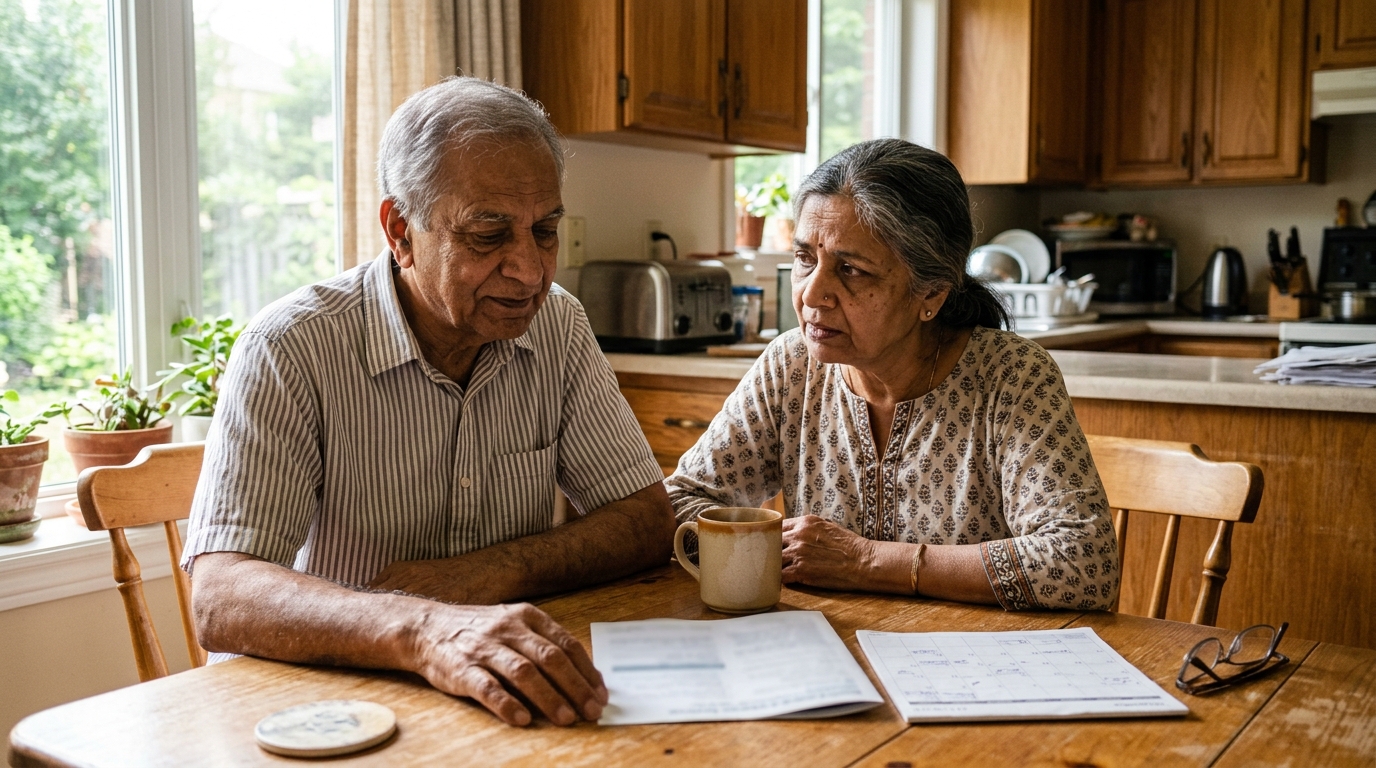
Key considerations for extended conditions
Duration clarity: If your parent's condition is truly long-term (12+ months), the reverse mortgage math favors significant funding. Short-term care is cheaper to fund through savings or family loan.
Interest accrual: The reverse mortgage balance grows as you withdraw funds and interest accrues. After 4 years of $5,000 monthly draws, the balance may reach $250,000–$280,000 depending on interest rates and compounding. However, your parent's estate repays this from the home's sale after death—not from your inheritance directly.
Estate impact: Heirs inherit what remains after the reverse mortgage is repaid. If the home is worth $500,000 and the reverse mortgage balance is $230,000, heirs receive equity of approximately $270,000. This is still significant and transparent.
Key Takeaways
- Extended parental health conditions (12+ months) justify reverse mortgage use — the funding window is long enough to justify lender costs
- Professional caregiving funded by reverse mortgage preserves your career income — a $50,000–$80,000 annual income stream is worth more than forcing you into unpaid caregiving
- Reverse mortgage proceeds don't affect CPP, OAS, or GIS — your parent keeps all government benefits while funding care professionally
- Early application is critical — apply before cognitive decline or hospitalization complicates the approval process
- Estate transparency matters — discuss how the reverse mortgage balance will be repaid so heirs understand the impact on inheritance
- Rick Sekhon Reverse Mortgages can provide a free consultation — no obligation, and it clarifies your parent's options
Frequently Asked Questions
Can my parent get a reverse mortgage if they have an extended chronic illness?
Yes. There is no health requirement for reverse mortgages. Your parent must be 55+, own their Ontario home, and meet basic property qualifications. Chronic illness does not disqualify them.
What if my parent can't work anymore—doesn't that affect reverse mortgage approval?
No. Reverse mortgages have no income or employment requirements. They are purely asset-based (home value) and age-based (55+). Your parent's employment status is irrelevant.
Will the reverse mortgage affect my parent's government benefits?
No. Reverse mortgage proceeds are classified as loan advances, not income. CPP, OAS, GIS, and ODSP are unaffected. If your parent receives means-tested provincial benefits, confirm with the benefit administrator, but most Canadian benefits do not count reverse mortgage proceeds as income.
How much can my parent borrow?
It depends on home value, your parent's age, and current interest rates. A typical Ontario homeowner (age 65, home valued at $400,000) might access $140,000–$160,000. Rick Sekhon Reverse Mortgages can provide a no-obligation quote.
What if I want to preserve the full home equity for inheritance?
A reverse mortgage reduces inheritance. If maximizing inheritance is the priority, then professional caregiving funded from other sources (savings, family contributions, part-time caregiving from you) might be preferable. Discuss with your family and financial advisor.
Can we use the reverse mortgage for things other than caregiving?
Yes. Reverse mortgage funds can be used for any purpose—home maintenance, property taxes, medical equipment, debt repayment, or travel. There is no restriction on use. If caregiving is the primary need, that guides the withdrawal strategy.
Get started today
Your parent's extended health needs are legitimate financial demands. A reverse mortgage is a tool designed for exactly this situation: allowing aging parents to stay in their homes while accessing funds for professional care, reducing pressure on adult children to sacrifice their careers.
Contact Rick Sekhon Reverse Mortgages today for a free, no-obligation consultation. Discuss your parent's situation, home equity, and anticipated caregiving timeline. Understand how much is available and whether a reverse mortgage makes sense for your family.
Ready to Learn More?
Find out exactly how much you could unlock from your home — free and no obligation.
Related Articles
When Your Adult Child Becomes Your Caregiver: Managing Income Loss With a Reverse Mortgage
Your adult child quit their job to care for you. Learn how a reverse mortgage can bridge the income gap they've sacrificed.
Read →Reverse Mortgage for Aging in Place With Fibromyalgia: Home Modifications for Invisible Illness
Fund home modifications for aging with fibromyalgia. Reverse mortgage enables accessible design for pain management, energy conservation, and quality of life.
Read →Reverse Mortgage for Accessible Community Kitchen: Culinary Training and Aging in Place
Convert your home kitchen into an accessible commercial culinary training space. Reverse mortgage funds renovation while creating community impact.
Read →