
Reverse Mortgage for Cross-Border Care Planning: Managing US Long-Term Care Decisions From Ontario
Navigate long-term care decisions when retirement spans the US-Canada border. Learn how a reverse mortgage supports complex healthcare planning for snowbirds and cross-border retirees.
The Hidden Complexity of Aging Across Borders
You're a 74-year-old snowbird who's spent the last 20 winters in Florida and the last 20 summers in Ontario. You own a home in both places. Your husband is becoming frailer, and you're both facing health questions that don't have simple answers:
- If one of you needs long-term care, do you stay in Florida (where you have medical connections) or return to Ontario (where healthcare is public)?
- Long-term care in the US costs $4,500–$8,000/month; Ontario facilities cost much less but have long waiting lists
- Your Florida home is in a community without accessible medical care; your Ontario home is in an isolated rural area
- Your adult children live in Toronto, but your closest friends and routines are in Florida
- Medicare doesn't cover long-term care; do you have enough US insurance, or should you rely on Ontario's public system?
- If you move back to Ontario for care, you're leaving your Florida home (and potentially selling at unfavorable timing)
- Your Canadian retirement income is indexed; your US expenses keep rising
This isn't just a healthcare question. It's a complex financial, legal, and emotional decision that thousands of snowbird retirees face—and most are unprepared.
A reverse mortgage can provide the financial flexibility to make these decisions based on what's best for your health and happiness, not desperation.
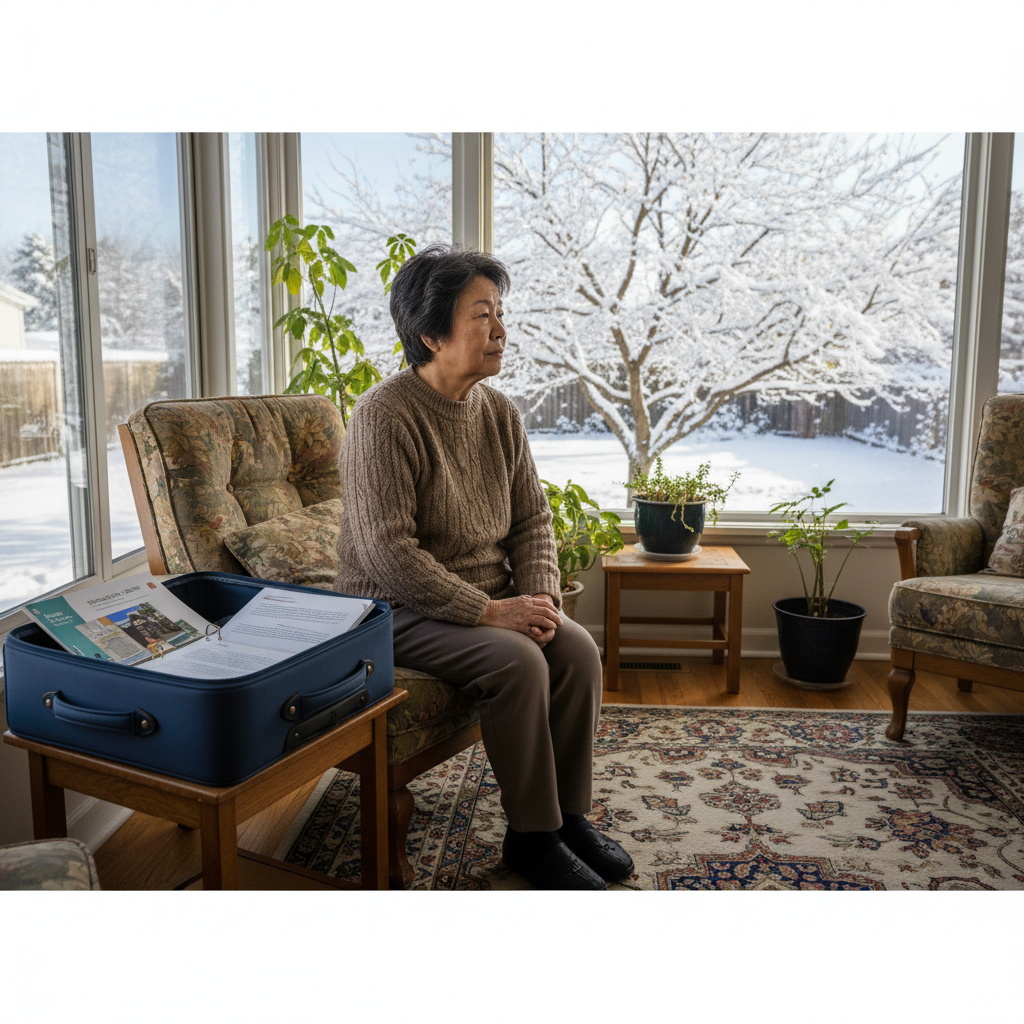
The Cost and Complexity of Cross-Border Long-Term Care
Long-Term Care Costs: Canada vs USA
| Care Type | Ontario, Canada | Florida, USA | Difference |
|---|---|---|---|
| Nursing home (private room, 24-hour care) | $2,500–$4,500/month | $5,000–$8,000/month | US: 2-3x more expensive |
| Assisted living facility | $2,000–$3,500/month | $2,500–$4,500/month | US: 20-40% more |
| Home care (personal support worker, full-time) | $3,500–$5,500/month | $4,500–$7,000/month | US: 20-30% more |
| Specialized care (dementia, post-stroke) | $4,000–$6,000/month | $6,000–$10,000/month | US: 50-70% more |
For a couple: If both require care simultaneously, costs in the US ($10,000–$16,000/month) vs Ontario ($5,000–$10,000/month) represent a massive difference.
Hidden Costs of Cross-Border Care
Beyond direct facility costs:
- Medical transportation: Emergency medical flights between countries ($3,000–$8,000)
- Healthcare coordination: Managing two healthcare systems (administrative costs, duplicate tests, travel)
- Dual property maintenance: Keeping both homes vs. emergency selling at bad pricing
- Legal complexity: Cross-border power of attorney, advance directives valid in both countries
- Currency risk: Retirement income in Canadian dollars; US expenses in US dollars
- Insurance gaps: Medicare doesn't cover long-term care; provincial coverage requires residency
Total Long-Term Care Cost Over 5 Years (One Person)
| Scenario | Ontario Care | US Care | Difference |
|---|---|---|---|
| Nursing home care, moderate care level | $150,000–$270,000 | $300,000–$480,000 | +$150,000–$210,000 |
| In-home care, same care level | $210,000–$330,000 | $270,000–$420,000 | +$60,000–$90,000 |
| Hybrid (in-home + facility) | $180,000–$300,000 | $280,000–$440,000 | +$100,000–$140,000 |
For many snowbirds, the cost difference between US and Ontario care is $100,000–$200,000+ over 5 years.

Scenario: Margaret and Bill, 73 and 76, Facing the Snowbird Care Decision
Margaret and Bill have owned homes in both Toronto (worth $650,000, paid off) and Sarasota, Florida (worth $580,000, paid off) for 20 years. They've split their year: June–September in Ontario with family, October–May in Florida.
Now Bill has early signs of cognitive decline. Margaret's arthritis is limiting her mobility. They're both facing the reality that their current lifestyle isn't sustainable. Within 2–3 years, one or both will need significant care support.
The Impossible Questions:
- Stay in Florida and access expensive US healthcare? ($7,000/month for care)
- Return to Ontario and access cheaper public care but leave their established Florida community?
- Sell the Florida home to fund US care? (Bad timing, emotional loss)
- Maintain both homes while paying for care? (Unaffordable)
- Return to Ontario, get on the LTC waitlist (8–18 months), and live in their home during the wait?
None of these options feel right.
The Reverse Mortgage Solution:
Margaret gets a reverse mortgage on her Ontario home:
- Reverse mortgage on $650,000 home: approximately $195,000 available
- Funds allocated for cross-border care planning: $120,000
- Premium private care in Ontario while waiting for public LTC: $4,500/month × 24 months = $108,000
- Professional care coordination and transition support: $5,000
- Legal fees for US-Canada care planning documents: $2,000
- Medical consultation for optimal care location: $2,000
- Remaining reserves: $3,000
- Bill's Florida home remains an asset (sold on their timeline, not forced sale)
- Additional available credit: ~$75,000 (for future care escalation or emergencies)
- No monthly payments; they stay in their Ontario home
The Outcome: Margaret and Bill can afford to return to Ontario (where family and public healthcare are), get into quality private care while waiting for public LTC placement, and sell the Florida home when it makes financial sense—not forced by care crisis.
The reverse mortgage buys them TIME and CHOICE, the two most valuable things in healthcare planning.
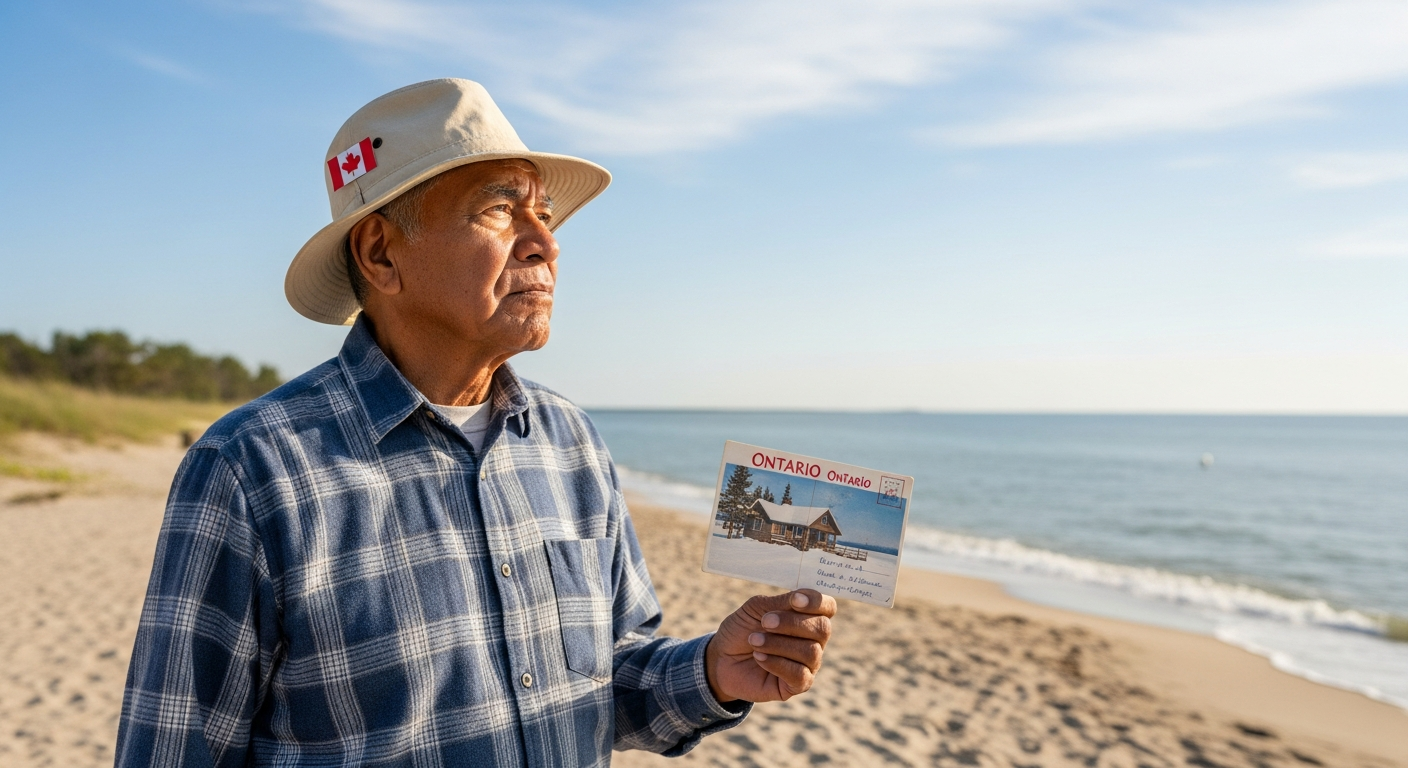
Healthcare System Comparison: What You Need to Know
Ontario Healthcare System
Advantages:
- Public healthcare covers medical care (doctor visits, hospital, basic LTC)
- LTC is subsidized; private portion is means-tested ($0–$1,500/month depending on income)
- No medical bankruptcy risk (healthcare costs won't destroy your finances)
- Integrated system (family knows one hospital, one doctor)
- Adult children can coordinate care easily
Disadvantages:
- LTC waitlists: 8–18 months average (longer in some regions)
- During wait, you pay full private care costs OR stay at home with inadequate support
- Quality varies significantly between facilities
- Limited choice if you're on public system (assigned facility, often not your preference)
- Snowbirds face residence requirements and coverage gaps
Cost: Subsidized LTC $0–$1,500/month public portion + private care during waitlist $2,500–$4,500/month
US Healthcare System (Medicare)
Advantages:
- Immediate access to care (no waitlists for LTC facilities)
- Choice of facilities and providers
- Medicare covers hospital care and doctors
- Can stay in your preferred location (Florida)
- Familiar environment and established community
Disadvantages:
- Medicare does NOT cover long-term care (critical gap)
- Private LTC costs $5,000–$8,000/month out-of-pocket
- Medical bankruptcy is real (no safety net if costs exceed your savings)
- Requires supplemental insurance (Medigap, long-term care insurance)
- Healthcare system is fragmented; coordinating care is complex
- Adult children managing US care from Canada face administrative challenges
Cost: LTC $5,000–$8,000/month private + Medicare supplemental insurance
The Reverse Mortgage Strategy for Cross-Border Planning
For Snowbirds Choosing Canada-Based Care
A reverse mortgage on your Ontario home lets you:
- Stay in Ontario when care becomes necessary (close to family, public healthcare)
- Afford private care during LTC waitlist (typically 8–18 months)
- Get public LTC at subsidized rates once placement available
- Sell Florida home on your timeline, not crisis timeline
- Avoid emergency medical transport costs (care is local)
- Give adult children a single coordination point (Ontario home, Ontario doctors)
Recommended reverse mortgage use:
- Fund 2–3 years of private care at $3,000–$4,000/month while waiting for public LTC
- Cover costs of selling Florida home (realtor fees, legal)
- Fund care coordination and transition support
- Maintain emergency reserves for care escalation
For Snowbirds Choosing US-Based Care
A reverse mortgage on your Ontario home lets you:
- Maintain your Florida presence (emotional and social importance)
- Afford private US LTC costs ($5,000–$8,000/month) without financial crisis
- Keep Ontario home as backup (if health needs change or US care fails)
- Hire professional care coordinators in the US (bridge the US-Canada healthcare gap)
- Manage currency risk (US expenses covered by Canadian equity without time pressure)
Recommended reverse mortgage use:
- Fund long-term care costs in the US ($6,000/month × 60 months = $360,000 potential need)
- Cover US medical coordination and professional healthcare advocates
- Maintain Ontario home as reserve (accessible if needed)
- Keep emergency reserves for complications or care location change
For Dual-Home Strategy (Transition Plan)
Many snowbirds benefit from a flexible, adaptable approach:
- Return to Ontario for initial care
- Assess whether you want to return to Florida long-term
- Maintain flexibility to move back to Florida if care situation improves
- Have both homes as viable options (not forced choice)
A reverse mortgage on your Ontario home funds this flexibility.
Critical: Legal and Insurance Planning for Cross-Border Care
Power of Attorney: US vs Canada
- Ontario power of attorney: Valid in Canada, NOT recognized in the US
- Florida power of attorney: Valid in Florida, confusing in Canada
- Solution: Get BOTH documents prepared by cross-border lawyers
- Cost: $400–$600 per jurisdiction with lawyer specializing in cross-border planning
- Reverse mortgage benefit: Funds legal complexity that many people skip
Advance Directives and Healthcare Proxy
- Ontario: Living will and healthcare proxy specified differently than US
- US: Healthcare proxy documents vary by state
- Solution: Provide both jurisdictions with advance directives
- Critical: Adult children need copies in both countries; ensure care facilities know your wishes
Insurance Review
- US: Don't rely on Medicare for long-term care (it doesn't cover it)
- Medigap: Supplemental insurance is essential; covers gaps Medicare doesn't
- Long-term care insurance: Buy before you're uninsurable; very expensive in your 70s
- Canada: Provincial coverage depends on residency and duration; review carefully
- Reverse mortgage benefit: Funds gap insurance and specialized planning
The Professional Team You Need
If you're a snowbird considering long-term care options:
- Cross-border estate/care attorney ($300–$600 consultation) — specializes in US-Canada healthcare and legal planning
- Care coordinator in each jurisdiction ($1,000–$2,000 for planning) — assesses options, facilities, costs
- Accountant with cross-border experience — tax optimization for care decisions
- Insurance advisor — ensures you have adequate coverage in both countries
- Medical advisor — helps assess whether you can sustain your current lifestyle
Total professional planning cost: $5,000–$10,000 Value: Prevents $50,000–$150,000 in bad decisions
Your reverse mortgage can fund this essential professional guidance.
Financial Coordination: Making the Numbers Work
Sample Budget: Snowbird Couple, Ages 74 and 76, One Person Requiring Care
Canadian Retirement Income:
- CPP (both): $1,200/month × 2 = $2,400/month
- OAS (both): $700/month × 2 = $1,400/month
- Pensions (combined): $2,000/month
- Total income: $5,800/month
Living Expenses (Ontario):
- Housing (mortgage-free): $800 (property tax, insurance, maintenance)
- Utilities and food: $800
- Healthcare copays and supplements: $300
- Transportation: $400
- Miscellaneous: $500
- Total baseline: $2,800/month
LTC Care Costs (Ontario):
- Private care during waitlist: $3,500/month
- Shortfall: $500/month (income doesn't cover)
- Over 18 months (typical waitlist): $9,000 shortfall
Reverse Mortgage Solution: Fund the $9,000–$12,000 gap (plus legal and coordination costs) from home equity. Once public LTC placement occurs, care costs drop to $500–$1,000/month (means-tested).
Migration Planning: The Timeline
If You're 65–70 Now
- Now: Get cross-border legal planning done; understand your options
- Age 70–75: Use reverse mortgage strategically; fund care planning while healthy
- Age 75+: Implement care decisions from position of strength, not crisis
If You're 75+ Now
- Now: Urgent to plan; healthcare decisions become critical
- Immediate: Get reverse mortgage pre-qualification; understand available equity
- Within 3 months: Complete legal and care planning
- Within 6 months: Implement care decisions before health crisis forces them
Key Takeaways
- US long-term care can cost 2-3 times more than Ontario care, with nursing home care running $5,000–$8,000/month in Florida versus $2,500–$4,500/month in Ontario.
- Ontario's public long-term care waitlists average 8–18 months, during which private care ($2,500–$4,500/month) must be paid out of pocket.
- Medicare does not cover long-term care in the US, making private LTC insurance or substantial savings essential for snowbirds who choose to age in place there.
- Over a 5-year period, the cost gap between US and Ontario long-term care can reach $100,000–$210,000 for a single person.
- A reverse mortgage on an Ontario home can fund cross-border legal planning (power of attorney, advance directives valid in both countries), typically costing $400–$600 per jurisdiction.
- A reverse mortgage requires no monthly payments, letting snowbird couples bridge care-planning gaps without being forced to sell either home on an unfavorable timeline.
Frequently Asked Questions
Can I use a reverse mortgage on my Ontario home to help pay for care costs in the US?
Yes. A reverse mortgage on your Ontario property gives you access to home equity that can be used flexibly, including funding US-based long-term care, cross-border legal fees, or care coordination costs, since the funds are not restricted to Canadian expenses.
Does Medicare cover long-term care if I choose to stay in Florida?
No. Medicare does not cover long-term care costs, which is one of the most significant gaps facing Canadian snowbirds who spend part of the year in the US. Private LTC insurance, supplemental coverage, or personal funds—such as those from a reverse mortgage—are needed to cover these costs.
How long is the wait for public long-term care placement in Ontario?
Waitlists for Ontario long-term care facilities typically run 8–18 months, and can be longer in some regions. During this time, many families pay for private care, which is where reverse mortgage funds are often used as a bridge.
Is a Canadian power of attorney valid in the United States?
Not automatically. An Ontario power of attorney is valid in Canada but is not generally recognized in the US, and the reverse is also true. Cross-border families typically need separate documents prepared for each jurisdiction, usually costing $400–$600 per jurisdiction with a specialized lawyer.
At what age can I qualify for a reverse mortgage on my Ontario home?
All homeowners on title must be at least 55 years old to qualify for a reverse mortgage in Ontario. The amount available depends on your age, home value, and location, typically ranging from 15% to 59% of the appraised value.
Will a reverse mortgage affect my ability to also keep my US property?
No. A reverse mortgage is secured only against your Ontario home and does not require you to sell or encumber your US property. This is part of what allows snowbird couples to sell a second home on their own timeline rather than under financial pressure.
Next Steps: Cross-Border Care Planning
- Assess your current situation: Where are you now? Where do you want to be if you need care?
- Consult with a cross-border estate lawyer ($300–$600) to understand your legal options
- Research care options in both locations (costs, facilities, wait times)
- Get professional care assessments in both jurisdictions
- Review your health insurance (Medicare, supplemental, provincial coverage)
- Get reverse mortgage pre-qualification on your Ontario home
- Create a flexible care plan (not just one option, but contingencies)
- Fund legal complexity through reverse mortgage if needed
- Communicate with family about your preferences
- Review and update annually as healthcare and financial situations change
Your retirement location shouldn't be determined by care crisis. A reverse mortgage gives you the financial flexibility to make optimal healthcare decisions across the border.
Plan now. Decide later. From a position of strength.
Ready to Learn More?
Find out exactly how much you could unlock from your home — free and no obligation.
Related Articles
Reverse Mortgage for Aging in Place With Fibromyalgia: Home Modifications for Invisible Illness
Fund home modifications for aging with fibromyalgia. Reverse mortgage enables accessible design for pain management, energy conservation, and quality of life.
Read →Reverse Mortgage for Accessible Community Kitchen: Culinary Training and Aging in Place
Convert your home kitchen into an accessible commercial culinary training space. Reverse mortgage funds renovation while creating community impact.
Read →Reverse Mortgage When You Previously Gifted Home Down Payment to Adult Child: Reclaiming Equity for Aging in Place
Reverse mortgage strategy when aging in place after gifting down payment to adult child. Recover equity for home modifications and care.
Read →