
Reverse Mortgage and CPP Survivor Benefits: Optimizing Family Income After Spousal Loss
How to coordinate CPP survivor benefits with reverse mortgage for income stability after spouse's death. Maximize retirement income for widows and widowers in Ontario.
What happens to your retirement income when your spouse passes away—and how can you bridge the financial gap while waiting for CPP survivor benefits? Many Ontario widows and widowers experience a sudden, significant drop in household income when a spouse's CPP contributions cease. Survivor benefits eventually arrive, but applications take weeks or months to process, creating a dangerous gap where bills are due but income has collapsed. A reverse mortgage can bridge that immediate shortfall while you navigate the survivor benefits process and optimize your long-term income strategy.
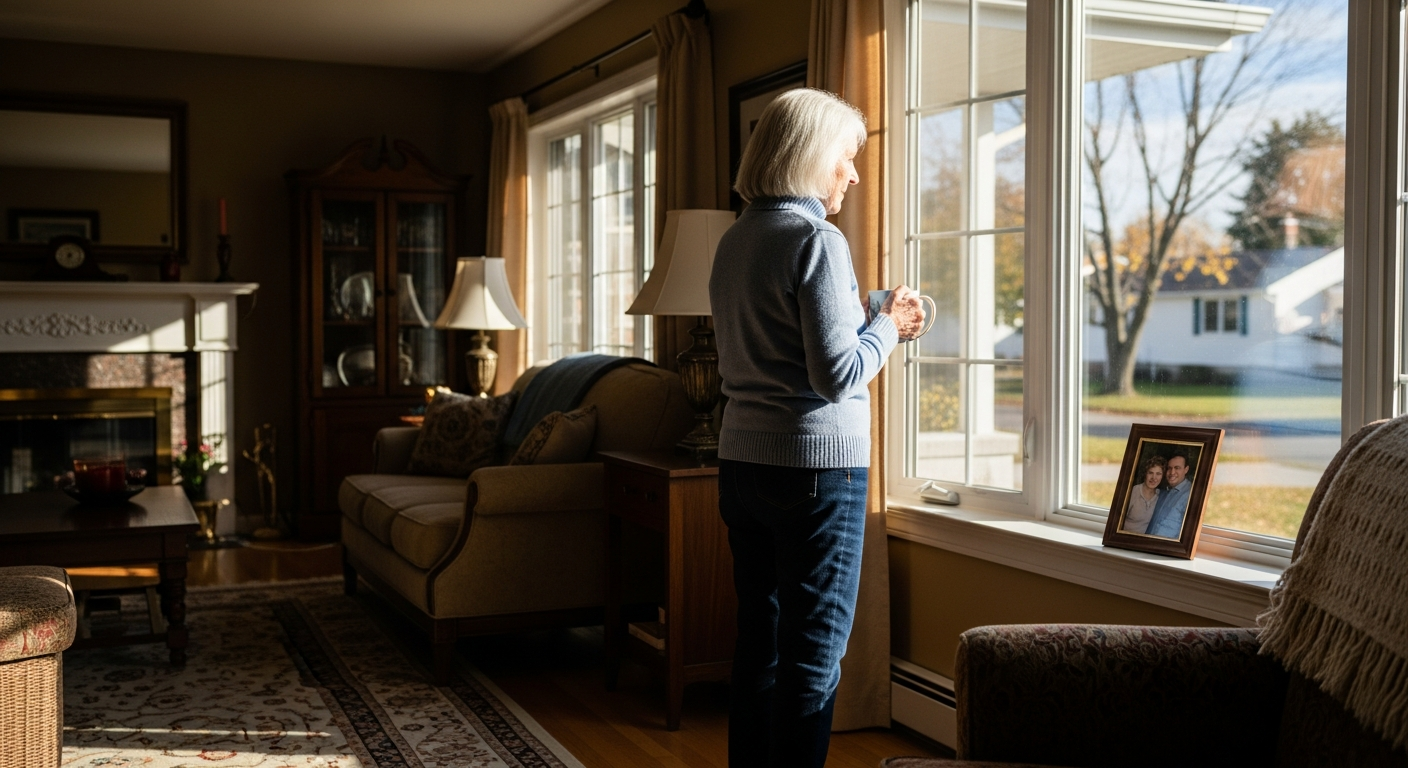
Understanding CPP Survivor Benefits in Canada
CPP survivor benefits include the Survivor's Allowance and the Death Benefit, both paid by Service Canada when a CPP contributor dies. Survivor's Allowance is a monthly income payment to the surviving spouse or dependent children based on the deceased contributor's CPP earnings record. It's different from the survivor's estate inheritance—it's a government income replacement benefit.
When your spouse dies, you become eligible for:
- Survivor's Allowance — Monthly income based on your spouse's CPP contributions (60–100% of their benefit, depending on your age)
- Children's Benefit — Monthly payments for any dependent children under age 18 (or 25 if in full-time school)
- Death Benefit — A lump-sum payment (max $2,500) to cover funeral or estate costs
The challenge: Application processing takes 30–60 days, and survivor benefits don't begin until approval is granted. Your household income drops immediately (your spouse's CPP ends the month they pass), but replacement income arrives later.
CPP Survivor Benefit Amounts (2026 Ontario Estimates)
| Survivor Type | Approximate Monthly Amount | Conditions |
|---|---|---|
| Surviving spouse, age 60+ | $800–$1,200 | Based on deceased's CPP; age-reduced if younger than 65 |
| Surviving spouse, age 45–59 | $600–$1,000 | Must be caring for child under 7 or disabled |
| Surviving spouse, under age 45 | $0 | Not eligible unless caring for young/disabled child |
| Dependent child (per child) | $200–$300 | Up to age 18 (25 if full-time school) |
| Death Benefit (one-time) | $0–$2,500 | Lump sum; amount varies |
These are estimates based on 2026 rates. Your actual benefit depends on your spouse's CPP contributions over their lifetime.
The Income Gap Problem
When your spouse dies, your household loses:
- Their monthly CPP benefit — Gone immediately
- OAS (Old Age Security) benefit — Ends the month of death
- Any income from their employment or pension — Stops unless there's a survivor pension plan
For a couple where the spouse earned $1,200/month in CPP, the household immediately loses that $1,200. Meanwhile, the surviving spouse may receive $800–$900/month in survivor's allowance, creating a net loss of $300–$400/month.
Example: Jack and Susan's Situation
Before Jack's death:
- Jack's CPP: $1,400/month
- Susan's CPP: $800/month
- Combined household CPP income: $2,200/month
After Jack's death (during the 30-60 day benefit application period):
- Jack's CPP: $0 (ceased)
- Susan's CPP: $800/month (unchanged)
- Survivor's allowance: $0 (awaiting approval)
- Temporary household income: $800/month
Income loss during the waiting period: $1,400/month. Even after survivor's allowance is approved, if Susan receives $1,000/month, the household is still down $400/month compared to their pre-death situation.
This is where a reverse mortgage bridges the gap.

How a Reverse Mortgage Bridges the Survivor Benefit Gap
A reverse mortgage accessed immediately after your spouse's death provides immediate liquidity to cover:
- Funeral and estate costs — Up to $10,000–$15,000
- Property taxes and home insurance — Payments due this month even though income has dropped
- Utility and household costs — Mortgage/rent, groceries, medications must be paid while waiting for benefits
- Application fees — Cost to obtain death certificates, legal consultations, CPP application support
Once survivor benefits are approved and begin, you can reduce or eliminate reverse mortgage draws, relying primarily on CPP survivor income.
Timeline and Financial Planning:
| Timeline | Income Situation | Reverse Mortgage Role |
|---|---|---|
| Month of death | Spouse's income ends; household income drops | Bridge funding for immediate costs |
| Month 1-2 after death | CPP/OAS applications in progress; household on reduced income | Weekly draws for living expenses |
| Month 2-3 after death | Service Canada processes claims; delays common | Continued bridge funding while waiting |
| Month 3+ after death | Survivor benefits approved; new baseline income established | Stop draws; maintain line of credit for emergencies |
A reverse mortgage is particularly valuable here because it requires no monthly payments. Your widow/widower status doesn't create an additional monthly burden on an already-stressed budget.
Optimizing CPP Survivor and Spousal Income Strategy
Beyond bridging the immediate gap, a reverse mortgage can be part of a larger strategy to optimize your CPP income:
Strategy 1: Delay Your Own CPP Until Higher Benefit Age
If you haven't yet applied for your own CPP (before age 65), a reverse mortgage can provide income to delay your application. CPP increases 0.6% per month (7.2% per year) if you wait past age 65. For someone with a potential $1,000/month CPP at 62, waiting until 70 increases the benefit to $1,400/month for life.
During the delay years, your spouse's survivor allowance + your household assets can be supplemented with reverse mortgage draws, allowing you to defer your CPP to a higher age.
Strategy 2: Use Survivor Benefits + Reverse Mortgage for Larger Expenses
Survivor benefits provide stable monthly income. A reverse mortgage provides access to capital for one-time large expenses (like home repairs, vehicle replacement, or family support) without forcing you to liquidate assets or take out high-interest debt.
Strategy 3: Estate and Inheritance Optimization
If your spouse's estate includes registered accounts (RRSP, TFSA) or other assets, a reverse mortgage can fund immediate needs while you allow these assets to grow tax-advantaged through the estate settlement period.
According to Service Canada, the average survivor's allowance for a surviving spouse aged 65+ is approximately $1,050/month (2026). This varies significantly based on the deceased contributor's CPP history. Contact Service Canada or use the CPP calculator at https://www.servicecanada.gc.ca to estimate your specific survivor benefit.
Key Takeaways
✓ CPP survivor benefits bridge income gaps when a spouse dies — average allowance of $1,050+/month replaces partial lost income from deceased spouse's CPP
✓ Survivor benefit processing takes 30–60 days; bridge income immediately — a reverse mortgage covers living expenses while Service Canada approves your claim
✓ You may receive either your own CPP or survivor's allowance, whichever is higher — coordinate with Service Canada to optimize your income
✓ CHIP and HomeEquity Bank support widow/widower income bridging — zero monthly payments allow you to focus on grieving and recovery
✓ CPP Disability may be an alternative if you're under 60 and meet medical criteria — pursue both survivor benefits and CPP-D simultaneously while your reverse mortgage bridges the gap
Frequently Asked Questions
How long does it take to receive CPP survivor benefits after my spouse dies?
Service Canada typically processes survivor benefit applications within 30–60 days of receiving a complete application. However, if supporting documents are missing or if there are complications (like multiple marriages), processing can take 90+ days. During this waiting period, a reverse mortgage provides immediate bridge funding.
Can I receive both my own CPP and survivor's allowance?
In most cases, no. Service Canada will determine whether you receive your own CPP or the survivor's allowance, whichever is higher. However, you may also be eligible for the Contributor's Supplement (if your spouse contributed to CPP-D), which can increase your total benefit. Consult Service Canada or a CPP benefits counselor to understand your specific situation.
Does receiving survivor benefits affect my OAS or GIS eligibility?
Survivor benefits don't directly affect your OAS eligibility, but they do count as income for GIS (Guaranteed Income Supplement) calculations. If your household income is very low, survivor benefits might reduce GIS eligibility. A financial planner can model the impact on your specific situation.
Can I apply for survivor benefits online or do I need to visit Service Canada in person?
You can apply online through My Service Canada Account or by mail. You do not need to visit in person, though Service Canada offices can provide assistance if needed. A reverse mortgage advisor can help coordinate the timing of your application while providing bridge funding.
What if my spouse didn't contribute much to CPP because they were a homemaker or stayed home to raise children?
Homemakers who didn't work can receive a survivor's allowance only if they were caring for dependent children at the time of death or are aged 45+ with children under 7. Otherwise, they may not qualify for survivor benefits themselves. However, dependent children can receive children's benefits. Consult Service Canada about your specific eligibility.
Should I apply for survivor benefits immediately after my spouse's death?
Yes. Apply as soon as possible (within the same month, if feasible). Even if you're grieving and managing funeral arrangements, filing the application early ensures benefits begin processing. Service Canada understands you may not have all documents immediately—you can provide them as you gather them.
Can a reverse mortgage be used to pay for funeral expenses that insurance doesn't cover?
Yes. If your spouse's life insurance doesn't fully cover funeral costs, a reverse mortgage can provide the additional funds needed. Many funeral homes also offer payment plans, but a reverse mortgage avoids high-interest financing through the funeral provider.
What happens to my survivor benefits if I remarry?
Survivor's allowance stops if you remarry. This is an important consideration in your long-term income planning. Some widows/widowers choose to delay remarriage until they reach a higher CPP age to protect their survivor income stream.
Lost your spouse and facing an income gap? A reverse mortgage bridges the gap while CPP survivor benefits process. Get your free Ontario Reverse Mortgage Guide →
Ready to Learn More?
Find out exactly how much you could unlock from your home — free and no obligation.
Related Articles
Reverse Mortgage After Unexpected Spousal Death: Bridging the Income Gap
When your spouse dies unexpectedly in retirement, some pensions and benefits stop immediately. A reverse mortgage can bridge the sudden income gap. Ontario guide.
Read →Reverse Mortgage for Widows and Widowers in Ontario: A Complete Guide
How widows and widowers in Ontario use a reverse mortgage to manage financial changes after losing a spouse. Estate settlement, sole borrower rules, and income planning.
Read →Reverse Mortgage When Home Equity Surprises You: Unexpected Property Value Growth
Your home is worth more than you thought. Discover how sudden equity growth changes your reverse mortgage strategy and borrowing power.
Read →