
Reverse Mortgage for Condo Capital Assessment When Corporation Faces Major Insolvency
Handle surprise $50,000+ condo assessments without selling. Ontario guide for condo owners facing capital reserve fund shortfalls and emergency assessments.
The condo corporation just issued a $60,000 special assessment. The reserve fund is depleted. Roof replacement can't wait. And you can't afford the assessment without selling your home. Condo owners face a unique financial crisis when corporations issue surprise capital assessments—and aging homeowners on fixed incomes are especially vulnerable.
A reverse mortgage can cover catastrophic condo assessments without forcing a sale you don't want to make.
The Condo Assessment Crisis Affecting Ontario Owners
Condo corporations in Ontario increasingly face insolvency driven by deferred maintenance and aging infrastructure. According to CMHC, approximately 30% of Ontario condo corporations built in the 1980s and 1990s have capital reserve funds that are less than 50% funded—meaning assessments are inevitable.
When reserve funds are insufficient, the corporation issues a special assessment: a one-time charge to individual unit owners to cover emergency repairs.
| Assessment Trigger | Typical Cost Per Unit | Timeline | Hardship Impact |
|---|---|---|---|
| Roof replacement | $8,000–$25,000 | 1–2 years | Creates immediate cash flow crisis |
| Foundation repair | $15,000–$60,000 | Urgent; can't delay | Potential lien if unpaid |
| Parking structure seal coating/repair | $5,000–$15,000 | 2–3 years | Cumulative with other assessments |
| Mechanical systems (HVAC, electrical) | $20,000–$80,000 | Urgent if building-wide | Catastrophic for aging owners |
| Water damage/mold remediation | $10,000–$40,000 | Emergency | Can coincide with personal health crisis |
For a retiree on $3,500/month income, a $50,000 assessment creates impossible choice: liquidate retirement savings, sell the home, or default on the assessment (triggering liens and potential foreclosure).
How Condo Assessments Create Legal Leverage
Unlike traditional mortgages, condo assessments carry legal teeth. The corporation can:
- Register a lien against your unit if assessment remains unpaid for 90+ days
- File foreclosure action to sell your unit and recover assessment
- Deny access to property in some cases (though enforcement is rare)
In Ontario, a condo corporation's lien has priority over most other claims—including mortgages, in some cases. This means creditors can essentially force sale of your home to recover the assessment.
Critical fact: If you have a traditional mortgage, the lender may force refinancing or sale if the condo lien threatens their security. A reverse mortgage avoids this—lenders understand that reverse mortgage borrowers receive no monthly payment requirement, and assessment payments can come from other income sources.
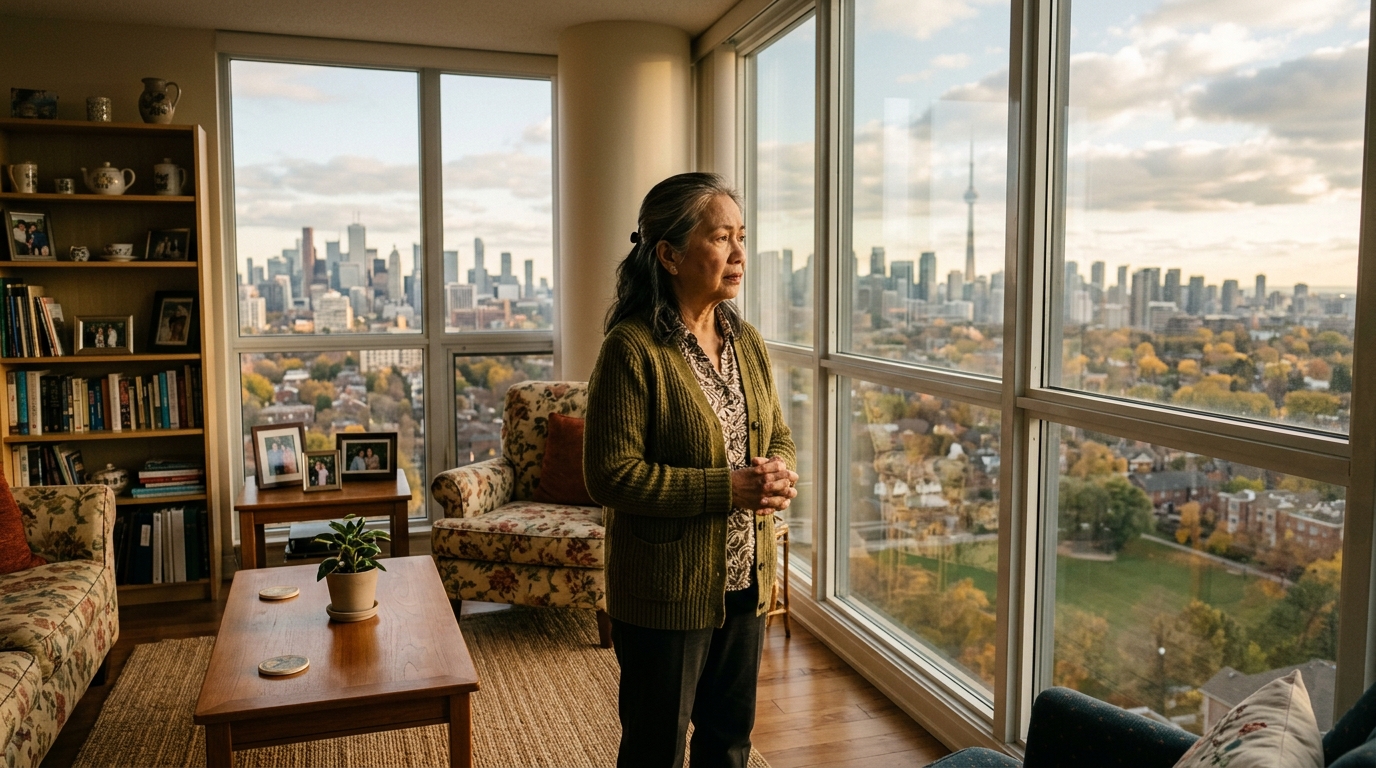
Reverse Mortgage as Condo Assessment Safety Net
A reverse mortgage accessed BEFORE a special assessment is issued provides emergency capital:
Pre-Assessment Strategy
Apply for a reverse mortgage when you first hear rumors of pending assessments (building inspections reveal roof failure, structural issues, etc.). Lenders will still approve based on home equity and age—they don't ask about pending assessments.
Once approved, maintain an available line of credit. When the assessment is issued, draw funds to cover it immediately. This prevents lien registration and keeps your credit profile clean.
Post-Assessment Strategy
If the assessment is already issued, you can still apply for a reverse mortgage—but act quickly. Lenders may be hesitant if a lien is already registered against the unit, so speed matters.
Key: A reverse mortgage covers the assessment without forcing you to liquidate retirement savings, sell the home, or take on high-interest personal debt.
Reverse Mortgage vs. Traditional Assessment Financing
| Financing Option | Can Cover $50,000 Assessment | Monthly Obligation | Credit Impact | Approval Likelihood |
|---|---|---|---|---|
| Reverse Mortgage | Yes (if home equity supports) | $0 during lifetime | No monthly payment burden | 85%+ (age 55+, sufficient equity) |
| Home Equity Line of Credit (HELOC) | Yes, but may face renewal risk | Yes, annual interest minimum | Monthly obligations; aging risk | 70% (aging homeowners may face non-renewal) |
| Personal Loan | Limited to $15,000–$40,000 | Yes, high interest (18%+) | Credit impact; expensive | Difficult for retirees on fixed income |
| Condo-Specific Assessment Financing | Yes (specialty lenders exist) | Yes, assessment-specific rates | Assessment lien adds complexity | 60% (specialty lenders, higher rates) |
| Sell/Downsize | Yes, but forces relocation | N/A | Emotional and logistical cost | 100% (but destroys aging-in-place plans) |
A reverse mortgage is the only option that combines approval likelihood, no monthly obligation, and protective equity access.
Preventing Future Assessments: Reserve Fund Advocacy
While a reverse mortgage solves the immediate crisis, prevention requires condo owner advocacy:
Request: Full reserve fund study and multi-year capital plan from your condo board
- Most Ontario condos complete studies every 3 years
- Studies project upcoming assessments
- Early visibility lets you plan
Participate: Attend condo meetings and vote on reserve fund contribution rates
- Higher annual contributions reduce emergency assessment risk
- Aging owners should advocate for stable, predictable costs over surprise assessments
Diversify: If your building has high assessment risk, consider reverse mortgage as permanent backstop
- Funds emergency capital needs
- Prevents lien registration
- Protects against forced sale
Integration With Condo Sale Planning
Many aging condo owners use reverse mortgage assessment coverage as a temporary bridge before selling:
Example timeline:
- Year 1: Special assessment issued ($50,000). Reverse mortgage covers it immediately.
- Year 2–3: Plan home sale; market home; secure buyer.
- Year 4: Sell condo. Reverse mortgage is repaid from sale proceeds. Exit with preserved equity.
This avoids forced sale under crisis conditions (when you get the worst price) and lets you sell on YOUR timeline with adequate notice to find the right buyer or transition to aging-in-place renovations.
Condo vs. Home: Reverse Mortgage Eligibility Differences
| Property Type | Reverse Mortgage Eligible? | Special Considerations | Approval Timeline |
|---|---|---|---|
| Freehold home | Yes (standard) | No special assessments; straightforward underwriting | 30–45 days |
| Condo (low-rise, <5 units) | Yes | Review condo financial statements; reserve fund concerns | 45–60 days |
| Condo (mid/high-rise, 5+ units) | Yes, but conditional | Extensive condo review; assessment risk affects rate | 60–90 days |
| Co-op housing | Yes, but specialty lenders only | Different legal structure; fewer lenders approve | 90–120 days |
For mid/high-rise condos facing reserve fund issues, lender scrutiny is higher. They may require proof that reserve fund is adequately funded or that owner has sufficient non-condo income to cover potential assessments.

Key Takeaways
- Condo assessments are increasingly common: 30% of 1980s–1990s Ontario condo buildings face insufficient reserve funding; special assessments are inevitable.
- Assessments carry legal priority: Condo corporation liens have priority over some mortgages; non-payment can trigger foreclosure or sale.
- Reverse mortgages provide no-monthly-obligation coverage: Unlike HELOCs or personal loans, reverse mortgage requires no annual interest payments, reducing financial strain.
- Timing matters: Apply BEFORE assessment is issued (if rumors circulate) or IMMEDIATELY after to access funds quickly before liens formalize.
- Reserve fund advocacy prevents future crises: Request reserve fund studies; participate in condo governance; advocate for adequate funding.
- Reverse mortgage is bridge, not permanent fix: Use it to cover immediate assessment; then plan home sale or refinancing to exit the reverse mortgage long-term.
Frequently Asked Questions
Can a condo corporation force me to pay an assessment if I have a reverse mortgage?
Yes. The reverse mortgage is a lien against your unit; the condo assessment is a separate obligation. However, a reverse mortgage provides liquidity to pay the assessment without forced sale. The assessment is still legally binding, but you have funds to satisfy it.
Will the reverse mortgage lender refuse to approve my condo because of pending assessments?
They may ask detailed questions about reserve fund status and pending capital projects. Be transparent. Many lenders approve reverse mortgages on condos with pending assessments—they just want to understand the risk and verify you have means to pay.
What if the condo corporation defaults on their loans and loses the building?
This is rare but possible. If the corporation defaults and the building is foreclosed, your condo sale would proceed, and you'd receive proceeds (after the lender's claim). Your reverse mortgage would be repaid from sale proceeds. The building foreclosure doesn't directly trigger reverse mortgage default.
Can I use reverse mortgage funds to invest in condo repair advocacy or legal challenges to assessments?
Technically yes, but this is not recommended. Reverse mortgage funds are best used for your personal needs and home modifications—not for legal battles against the condo corporation. Most assessment legal challenges fail, and the funds are better preserved for the assessment payment itself.
If I sell my condo early to avoid a pending assessment, am I liable?
No. Once you sell, the condo passes to the new owner with the assessment obligation transferred. You're released from future assessments on that unit. If the assessment hasn't been issued yet, the new owner inherits the liability.
Can a reverse mortgage cover assessments on a cottage or vacation property condo?
Yes, if the cottage/property qualifies for reverse mortgage (age 55+, sufficient equity). However, only the primary residence receives full reverse mortgage flexibility. Vacation condos may have different terms and higher rates.
Ready to Learn More?
Find out exactly how much you could unlock from your home — free and no obligation.
Related Articles
Reverse Mortgage for Retirement Community Entrance Fees: Active Adult Transitions
Fund retirement community move without forced downsizing. Ontario guide for 55+ aging in place now, transitioning later to active adult communities.
Read →Reverse Mortgage for Home Modifications After Adult Child's Psychiatric Hospitalization
Fund safe-return-home planning after mental health crisis. Ontario guide for parents supporting adult children transitioning from psychiatric care to home.
Read →Reverse Mortgage When Pension Is Reduced Mid-Retirement: Backfilling Income Gaps
Replace lost pension income after mid-career reduction. Ontario guide for retirees facing pension cuts, terminations, or conversion impacts on retirement security.
Read →