
Using a Reverse Mortgage to Pay Off a Car Loan in Retirement
Reverse mortgage pay off car loan retirement: eliminate $400-600/month car payments on fixed income. See the math comparing auto loan vs reverse mortgage costs.
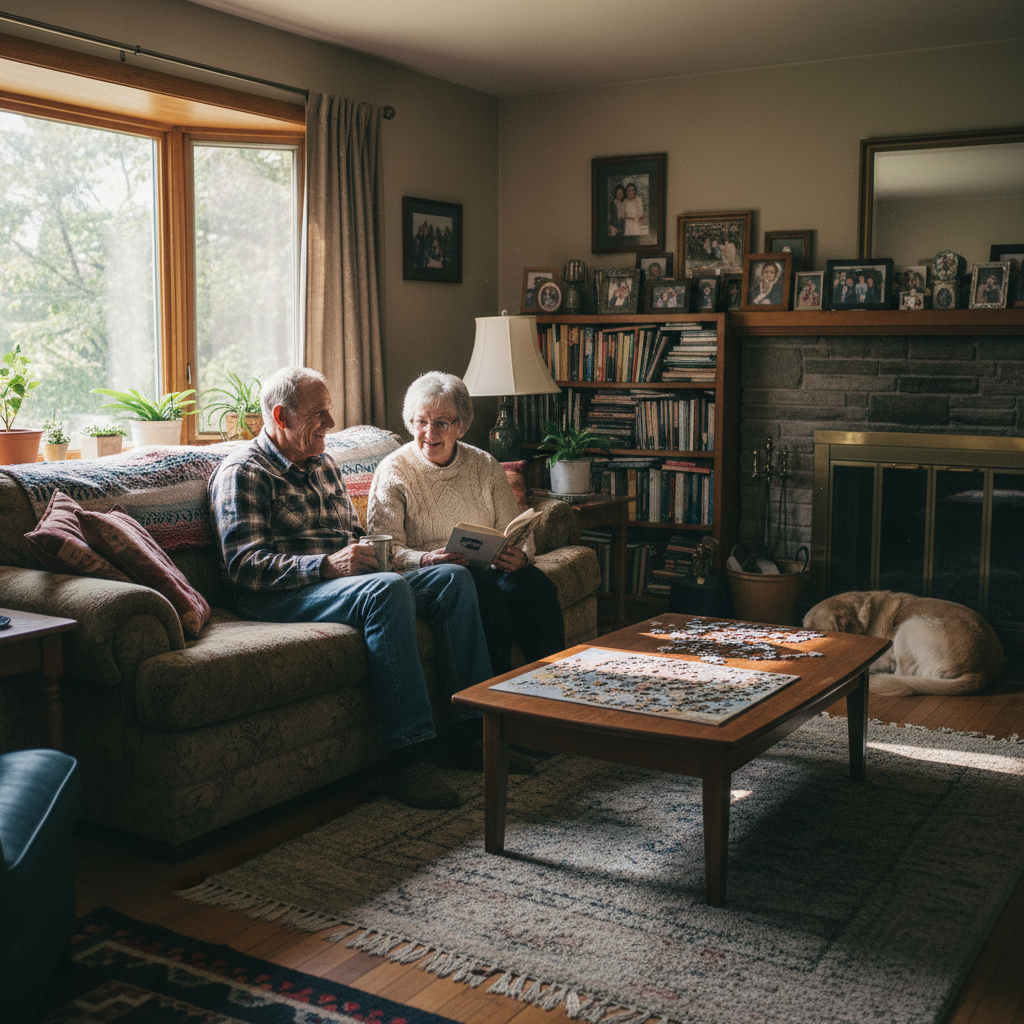
You retired two years ago, and the $540 monthly car payment that was manageable on a working salary now consumes nearly a quarter of your CPP and OAS income. The car has four years left on the loan. You need reliable transportation — especially in rural or suburban Ontario — but the monthly payment is slowly strangling your budget. This is one of the most common and least discussed financial pressures facing Ontario retirees, and a reverse mortgage offers a direct solution.
The Car Payment Squeeze on Fixed Income
The transition from employment income to retirement income is jarring for most Canadians. A car payment that represented 8% of a $75,000 salary suddenly represents 22% of a $28,000 retirement income. The payment stays the same; the income drops.
According to Statistics Canada, the average new vehicle transaction price in Canada exceeded $45,000 in 2025. Even used vehicles averaged $28,000–$35,000. With auto loan terms stretching to 72–84 months and interest rates of 6–9% for older borrowers, the monthly payment burden is substantial.
| Auto Loan Scenario | Amount Financed | Interest Rate | Term | Monthly Payment |
|---|---|---|---|---|
| New vehicle (average) | $45,000 | 7.49% | 72 months | $776 |
| New vehicle (modest) | $32,000 | 6.99% | 72 months | $548 |
| Used vehicle (3 years old) | $25,000 | 8.49% | 60 months | $512 |
| Used vehicle (5 years old) | $18,000 | 8.99% | 48 months | $447 |
For an Ontario senior receiving combined CPP and OAS of $2,200–$2,800 per month, any of these payments represents a significant portion of total income.
According to the Financial Consumer Agency of Canada (FCAC), transportation is the second-largest expense category for Canadian households after shelter, and vehicle financing costs have risen faster than inflation over the past five years.
Why Seniors Carry Car Loans Into Retirement
The assumption that retirees should be debt-free is increasingly disconnected from reality. Several factors drive car loan debt in retirement:
Late-career vehicle purchases. A 62-year-old who buys a new vehicle with a 72-month loan will be 68 before it is paid off — well into retirement for most.
Reliability needs. Older vehicles require expensive repairs. Many seniors trade up to newer, more reliable vehicles specifically because they cannot afford to be stranded — particularly those in communities without reliable public transit.
Spousal vehicle replacement. After a partner's death, the surviving spouse may need to replace a vehicle that was in the deceased's name or was the partner's primary car.
Medical transportation. Seniors with mobility challenges or who live far from medical facilities need reliable vehicles — this is a health issue, not a luxury.
The Rural and Suburban Ontario Factor
In Toronto, Hamilton, or Ottawa, a senior might reasonably consider giving up a car entirely. Public transit, ride services, and walkable neighbourhoods make car-free living possible. But for seniors in Barrie, Peterborough, Cornwall, North Bay, Sault Ste. Marie, or the hundreds of smaller Ontario communities without frequent transit, a car is not optional — it is essential infrastructure.
Grocery shopping, medical appointments, social connection, and basic independence all depend on personal transportation in these communities. Telling a 72-year-old in rural Simcoe County to "just take the bus" reflects a fundamental misunderstanding of how most Ontarians live.
The Math: Car Loan vs Reverse Mortgage

Here is the core comparison. Assume a senior owes $28,000 on a car loan at 7.49% with 48 months remaining — a monthly payment of $678.
Option A: Continue the Car Loan Payments
| Year | Remaining Balance | Payments Made (Cumulative) | Interest Paid (Cumulative) |
|---|---|---|---|
| Year 1 | $21,744 | $8,136 | $1,880 |
| Year 2 | $15,084 | $16,272 | $3,356 |
| Year 3 | $7,989 | $24,408 | $4,397 |
| Year 4 | $0 | $32,544 | $4,544 |
Total out-of-pocket over 4 years: $32,544 (including $4,544 in interest) Monthly cash flow impact: -$678/month for 48 months
Option B: Pay Off Car Loan With Reverse Mortgage
| Year | Reverse Mortgage Balance (6.54%) | Interest Accrued (Cumulative) | Monthly Cash Freed Up |
|---|---|---|---|
| Year 1 | $29,831 | $1,831 | $678/month |
| Year 2 | $31,782 | $3,782 | $678/month |
| Year 3 | $33,861 | $5,861 | $678/month |
| Year 4 | $36,076 | $8,076 | $678/month |
Total out-of-pocket over 4 years: $0 Total interest accrued (on home equity): $8,076 Monthly cash freed up: $678/month for 48 months = $32,544 retained
The Head-to-Head Comparison
| Metric | Continue Car Loan | Reverse Mortgage Payoff |
|---|---|---|
| Cash out of pocket (4 years) | $32,544 | $0 |
| Interest cost | $4,544 (paid monthly) | $8,076 (accrued on home equity) |
| Net cash retained | $0 | $32,544 |
| Additional interest cost of reverse mortgage | — | $3,532 |
| Monthly budget relief | None | $678/month |
The reverse mortgage costs $3,532 more in total interest over four years — but it returns $32,544 in cash flow to your monthly budget. For a senior on fixed income, $678 per month is the difference between financial stress and financial comfort.
Rick Sekhon frames it simply: "Would you pay $3,532 over four years to get $678 back in your pocket every single month?" For most Ontario retirees, the answer is immediate and obvious.
Real Scenario: Eliminating the Car Payment
Dennis, 69, Peterborough, Ontario
Dennis retired from a manufacturing job at 65. He bought a 2023 Ford Escape in late 2022 for $38,000, financing $32,000 at 7.29% over 72 months.
- Monthly payment: $555
- Remaining balance (March 2026): $17,800
- Months remaining: 38
- Monthly income (CPP + OAS + small RRIF draw): $2,650
- Monthly expenses (before car payment): $2,250
- Available after expenses: $400 — $155 short of the car payment
Dennis has been dipping into his RRIF beyond his planned withdrawal rate to cover the shortfall. Every extra RRIF dollar is taxable income that edges him closer to the OAS clawback threshold of $90,997 (2026). He is accelerating the depletion of his retirement savings to make a car payment.
Rick Sekhon arranges a reverse mortgage through HomeEquity Bank (CHIP):
| Detail | Amount |
|---|---|
| Home value (Peterborough) | $485,000 |
| Reverse mortgage at 37% LTV | $179,450 available |
| Amount drawn to pay off car loan | $17,800 |
| Interest rate (CHIP 5-year fixed) | 7.24% |
| Monthly payment required | $0 |
Dennis's new monthly picture:
| Item | Before | After |
|---|---|---|
| Income (CPP + OAS + planned RRIF) | $2,650 | $2,650 |
| Expenses (non-car) | $2,250 | $2,250 |
| Car payment | $555 | $0 |
| Emergency RRIF top-up needed | $155 | $0 |
| Remaining | $0 | $400 |
Dennis stops the emergency RRIF withdrawals, preserving his retirement savings and staying below the OAS clawback threshold. The $17,800 reverse mortgage balance will grow to approximately $25,300 over 5 years — but his RRIF retains $9,300+ that would have been withdrawn ($155 × 60 months), and his OAS remains intact.
Should You Pay Off the Car or Buy One With a Reverse Mortgage?
Some seniors do not have an existing car loan — they need to purchase a vehicle. Can a reverse mortgage fund the purchase directly?
Yes. There is no restriction on how reverse mortgage proceeds are used. However, the approach differs:
Paying Off an Existing Loan vs Buying Outright
| Approach | Pros | Cons |
|---|---|---|
| Pay off existing auto loan with RM | Eliminates monthly payment immediately; car already owned | Only works if you have an existing loan |
| Buy a vehicle outright with RM funds | No dealer financing needed; stronger negotiating position | Larger lump sum drawn; more interest accrual |
| Buy used vehicle with RM funds | Lower purchase price; less equity used | May need replacement sooner |
Rick Sekhon notes that buying a reliable used vehicle (2–3 years old, certified pre-owned) with reverse mortgage funds is often the most efficient approach. A $22,000 certified pre-owned vehicle avoids the steep depreciation of a new car while providing reliability for 8–10 years.
Equitable Bank and Bloom Financial both offer competitive rates for this type of lump-sum draw. The key is drawing only what you need — every dollar not drawn is a dollar not accruing interest.
The Depreciation Reality
One concern worth addressing: a car depreciates while the reverse mortgage balance grows. After 5 years, the car may be worth $8,000 while the reverse mortgage balance on a $25,000 draw has grown to $34,000. This feels like a bad trade.
But this framing misses the point. The reverse mortgage is not secured against the car — it is secured against the home, which typically appreciates. The car serves its purpose (reliable transportation for years), and the cost is borne by home equity that grows independently.
| Year | Car Value (depreciating) | Reverse Mortgage Balance (on $25,000 at 6.54%) | Home Value (at 3% appreciation on $500,000) |
|---|---|---|---|
| Year 0 | $25,000 | $25,000 | $500,000 |
| Year 3 | $14,000 | $30,250 | $546,400 |
| Year 5 | $8,000 | $34,300 | $579,600 |
| Year 10 | $2,000 | $47,000 | $671,900 |
The home equity growth ($79,600 over 5 years in this example) dwarfs the reverse mortgage interest accrual ($9,300). The car provides utility; the home provides security. They serve different purposes.
When This Strategy Does Not Make Sense
- ✗ You can comfortably afford the car payment — if the payment fits your budget without stress, continue paying it. The total interest cost is lower.
- ✗ You are planning to sell your home soon — reverse mortgage prepayment penalties within the first 3–5 years can offset the savings.
- ✗ You do not actually need a car — if public transit, ride-sharing, or family transportation meets your needs, eliminating the car entirely saves more.
- ✗ The remaining car loan is very small — for balances under $5,000, the reverse mortgage setup costs ($1,500–$3,000) may not be justified for the car loan alone.
However, if you are combining the car loan payoff with other debt consolidation — credit cards, lines of credit, or an existing mortgage — the reverse mortgage becomes significantly more efficient, as the setup costs are spread across a larger total benefit. See our guide on reverse mortgage debt consolidation in Ontario.
Leasing vs Owning in Retirement: A Note
Some retirees consider leasing as an alternative to ownership. While leasing avoids the large upfront cost, it creates a permanent monthly payment — typically $350–$500 — that continues indefinitely. For a senior on fixed income, this is the exact monthly burden a reverse mortgage eliminates.
If you currently lease and the lease is expiring, using reverse mortgage funds to purchase a reliable used vehicle outright eliminates all future monthly transportation payments (beyond insurance, gas, and maintenance). Over 5–10 years, the savings compared to continuous leasing are substantial:
| 10-Year Comparison | Continuous Leasing | Own Outright (RM Funded) |
|---|---|---|
| Monthly payment | $425 (escalating) | $0 |
| Total payments over 10 years | $51,000+ | $0 |
| Reverse mortgage interest (on $22,000) | N/A | $18,400 |
| Net cost | $51,000+ | $18,400 |
| Vehicle at end | Nothing (returned) | Owned (low value but functional) |
CMHC and OSFI data consistently show that reducing fixed monthly obligations is one of the most impactful steps retirees can take for financial stability. Eliminating a car payment — whether loan or lease — directly serves this goal.
Frequently Asked Questions
Can I use a reverse mortgage to buy a car even if I do not have an existing car loan?
Yes. Reverse mortgage proceeds can be used for any purpose, including purchasing a vehicle outright. There are no spending restrictions from HomeEquity Bank (CHIP), Equitable Bank, Bloom Financial, or Home Trust. Rick Sekhon can help you determine the right amount to draw.
Will paying off my car loan with a reverse mortgage affect my credit score?
Paying off an auto loan will show as a closed, paid-in-full account on your credit report — this is positive. The reverse mortgage itself does not appear as a traditional loan on your credit bureau report and does not negatively impact your credit score.
Is it better to pay off the car loan or keep the cash from a reverse mortgage as a reserve?
This depends on the interest rate comparison. If your car loan rate is 7–9% and the reverse mortgage rate is 6.54–7.24%, paying off the car loan produces immediate savings. If your car loan rate is below 5% (rare but possible on older promotional rates), keeping the reverse mortgage funds as a reserve and continuing the car payments may be more efficient. Rick Sekhon will model both scenarios for you.
Can I get a reverse mortgage if my car loan is my only debt?
Absolutely. There is no requirement that you carry a specific type or amount of debt to qualify for a reverse mortgage. The qualification is based on age (55+), property ownership, and home equity — not on your debt profile. Many clients use a reverse mortgage to eliminate a single car payment that is straining their retirement budget.
What if I need to replace the car again in 5 years?
If you have remaining equity available in your reverse mortgage (most clients draw far less than their maximum), you can request additional funds for a future vehicle purchase. This is called a "top-up" and does not require a full new application. Alternatively, the savings accumulated from years without a car payment may fund the next vehicle from cash.
How does FSRAO protect me in this transaction?
FSRAO (Financial Services Regulatory Authority of Ontario) regulates mortgage brokers including Rick Sekhon. All advice must be in your best interest, full disclosure of costs is mandatory, and you are required to receive independent legal advice before closing. FCAC provides additional federal-level consumer protection for dealings with federally regulated lenders like HomeEquity Bank and Equitable Bank.
Get your free Ontario Reverse Mortgage Guide →
This content is for illustrative purposes only. Rates may vary. Call Rick Sekhon for the best rates and more information.
Ready to Learn More?
Find out exactly how much you could unlock from your home — free and no obligation.
Related Articles
Reverse Mortgage to Pay Off Credit Card Debt for Ontario Seniors
Reverse mortgage credit card debt seniors Ontario: consolidate high-interest debt at lower rates. See 5-year savings comparison and debt elimination math.
Read →How to Supplement CPP and OAS with a Reverse Mortgage in Canada
Ontario retirees: learn how a reverse mortgage creates tax-free income to supplement CPP and OAS without triggering clawbacks or affecting GIS eligibility.
Read →Reverse Mortgage for Debt Consolidation in Ontario: Complete Guide
How Ontario seniors use a reverse mortgage to eliminate high-interest debt, stop monthly payments, and restore cash flow in retirement. Real numbers included.
Read →