
Reverse Mortgage vs Selling and Renting in Ontario: Full Comparison
Reverse mortgage vs selling and renting in Ontario: 10-year financial comparison, rental market challenges, and emotional factors for seniors.
"Should I sell my home and rent, or take out a reverse mortgage and stay?" It is one of the most consequential financial decisions an Ontario senior can make — and the answer is not as straightforward as many assume. Selling unlocks your full equity but commits you to a rental market that is expensive, competitive, and increasingly hostile to older tenants. A reverse mortgage lets you stay home but only accesses a portion of your equity. This guide provides a complete 10-year financial comparison, addresses the emotional realities, and helps you decide which path is right for your situation.
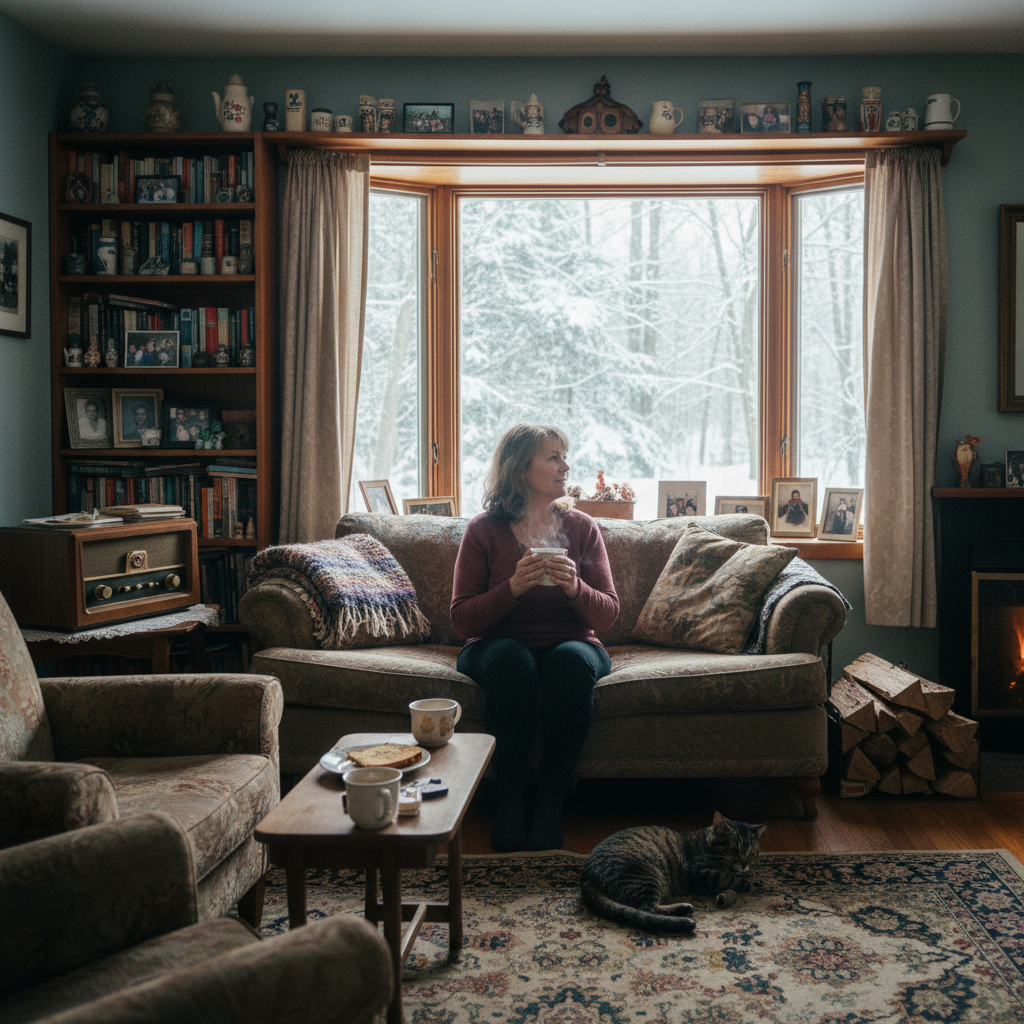
The Financial Case for Selling and Renting
When you sell your home, you receive the full market value minus transaction costs. For an Ontario senior who owns their home free and clear, this can be a substantial sum.
What You Actually Net After Selling
On an $800,000 Ontario home, here is what the sale actually produces:
| Item | Amount |
|---|---|
| Sale price | $800,000 |
| Real estate commission (4.5%) | ($36,000) |
| Legal fees (sale) | ($1,500) |
| Staging, repairs, preparation | ($5,000) |
| Moving costs | ($3,500) |
| Net proceeds from sale | $754,000 |
You walk away with approximately $754,000 in cash. This is a significant advantage of selling — you access far more equity than any reverse mortgage would provide.
However, this cash now needs to cover your housing costs for the rest of your life.
The Ontario Rental Market for Seniors in 2026
Ontario's rental market presents serious challenges for seniors. Average rents have risen dramatically over the past decade, and vacancy rates remain historically low in most urban centres.
| Ontario City | Average 1-Bedroom Rent (2026) | Average 2-Bedroom Rent (2026) | Vacancy Rate |
|---|---|---|---|
| Toronto | $2,400 | $3,100 | 1.8% |
| Ottawa | $1,800 | $2,300 | 2.1% |
| Hamilton | $1,700 | $2,200 | 2.3% |
| Kitchener-Waterloo | $1,750 | $2,250 | 2.0% |
| London | $1,550 | $1,950 | 1.9% |
| Barrie | $1,650 | $2,100 | 1.7% |
According to the Canada Mortgage and Housing Corporation (CMHC), Ontario's purpose-built rental vacancy rate was approximately 2.1% in late 2025 — well below the 3% threshold considered healthy. Seniors seeking accessible, ground-floor, or elevator-equipped units face even tighter supply.
For a senior accustomed to a 2-bedroom home, renting in most Ontario cities costs $2,000–$3,100 per month. Over 10 years, that represents $240,000–$372,000 in rent alone.
Selling and Renting: 10-Year Financial Projection
| Year | Rent ($2,500/month, 3% annual increase) | Cumulative Rent Paid | Remaining Sale Proceeds (invested at 4%) |
|---|---|---|---|
| 0 | — | $0 | $754,000 |
| 1 | $30,000 | $30,000 | $754,160 |
| 2 | $30,900 | $60,900 | $750,446 |
| 3 | $31,827 | $92,727 | $742,637 |
| 4 | $32,782 | $125,509 | $730,480 |
| 5 | $33,766 | $159,275 | $713,693 |
| 6 | $34,779 | $194,054 | $691,961 |
| 7 | $35,822 | $229,876 | $664,917 |
| 8 | $36,897 | $266,773 | $632,157 |
| 9 | $38,004 | $304,777 | $593,219 |
| 10 | $39,144 | $343,921 | $547,581 |
After 10 years of renting at $2,500/month (increasing 3% annually), you would have spent approximately $343,921 in rent and have roughly $547,581 remaining from your sale proceeds — assuming you invested the proceeds conservatively at 4% annually and drew down for rent.
This projection assumes no unexpected costs such as health expenses, family support needs, or lifestyle spending beyond rent.
The Financial Case for a Reverse Mortgage
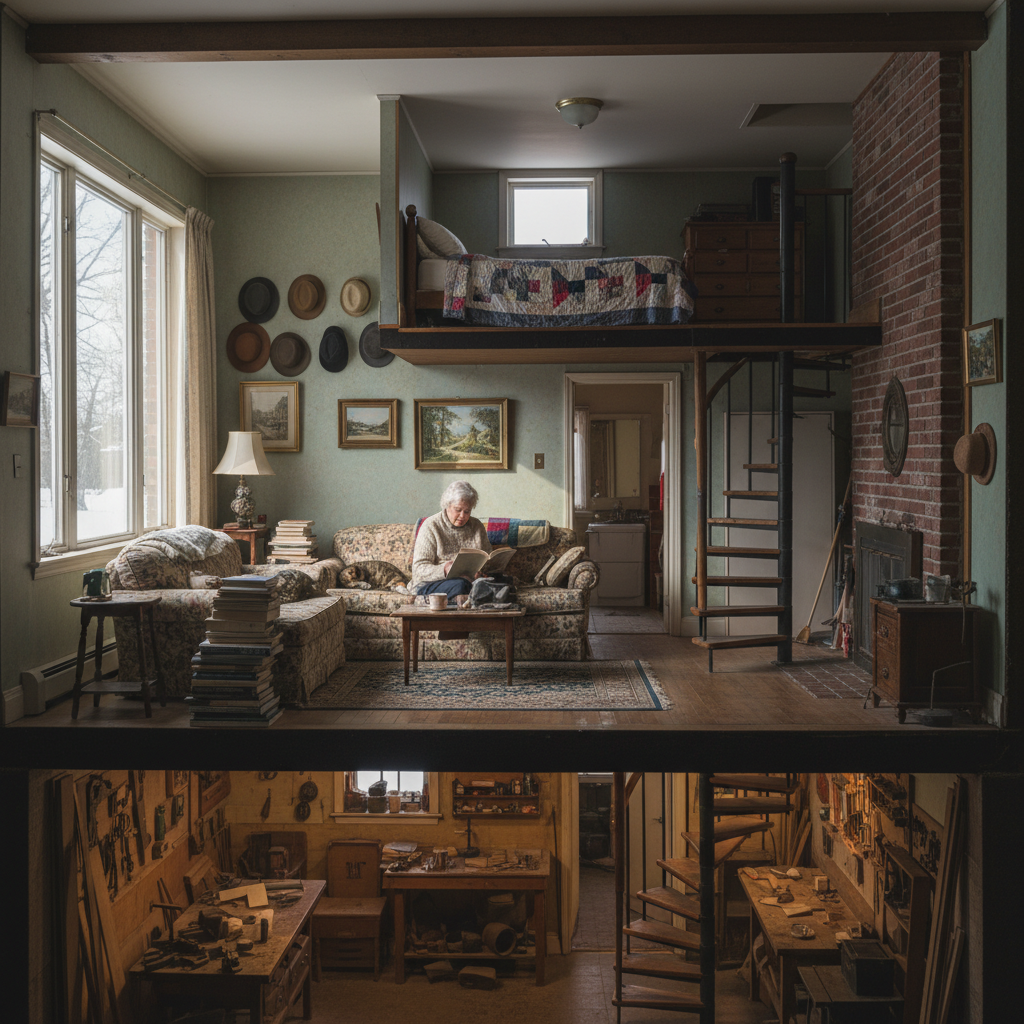
With a reverse mortgage, you stay in your home and access a portion of your equity — typically 20% to 55% depending on your age and lender. You make no monthly payments, and the loan compounds over time.
Reverse Mortgage: 10-Year Projection
Assume the same $800,000 home. A 72-year-old homeowner might qualify for approximately $280,000 through CHIP (HomeEquity Bank) or Equitable Bank.
| Year | Reverse Mortgage Balance (at 7.50%) | Home Value (2% appreciation) | Remaining Equity |
|---|---|---|---|
| 0 | $280,000 | $800,000 | $520,000 |
| 1 | $301,397 | $816,000 | $514,603 |
| 2 | $324,433 | $832,320 | $507,887 |
| 3 | $349,226 | $848,966 | $499,740 |
| 4 | $375,910 | $865,946 | $490,036 |
| 5 | $404,624 | $883,265 | $478,641 |
| 6 | $435,519 | $900,930 | $465,411 |
| 7 | $468,756 | $918,949 | $450,193 |
| 8 | $504,510 | $937,328 | $432,818 |
| 9 | $542,970 | $956,074 | $413,104 |
| 10 | $584,338 | $975,194 | $390,856 |
After 10 years, the reverse mortgage balance has grown to approximately $584,338, but the home — appreciating at a modest 2% annually — is now worth roughly $975,194. The remaining equity is approximately $390,856.
CHIP's no-negative-equity guarantee ensures you never owe more than the home is worth, providing an additional layer of protection regulated by OSFI.
10-Year Side-by-Side Comparison
| Factor | Sell and Rent | Reverse Mortgage |
|---|---|---|
| Cash accessed immediately | ~$754,000 (net after costs) | ~$280,000 |
| Monthly housing cost | $2,500+/month (rising) | $0 (property tax + insurance only) |
| Remaining wealth after 10 years | ~$547,581 (cash) | ~$390,856 (home equity) |
| Stay in your home | ✗ No | ✓ Yes |
| Exposed to rental increases | ✓ Yes (3%+ annually) | ✗ No |
| Affected by housing market | ✗ No (already sold) | ✓ Yes (equity depends on home value) |
| Effect on OAS/GIS/CPP | Investment income may affect GIS | ✗ No effect |
| Estate value | ~$547,581 (liquid) | ~$390,856 (in property) |
The selling scenario produces more total wealth after 10 years in this example — approximately $547,581 versus $390,856. However, this difference comes at the cost of leaving your home, paying rent every month, and exposing yourself to the Ontario rental market.
The Hidden Costs of Renting
The financial projection above assumes a smooth 10-year rental experience. In reality, Ontario renters face:
- Annual rent increases governed by Ontario's rent increase guideline (2.5% for 2026), but units first occupied after November 15, 2018 have no rent control — the landlord can increase by any amount
- Potential displacement if the landlord sells the property or moves in a family member (N12 eviction)
- Moving costs if forced to relocate — potentially $3,000–$5,000 each time
- Security deposits and last month's rent requirements that tie up capital
- Uncertainty that is stressful for seniors who value stability
According to CBC News reporting on Ontario rental data, the Landlord and Tenant Board received over 50,000 applications in 2024, with eviction applications making up a significant portion. Seniors are disproportionately affected by renoviction and landlord-use evictions.
The Emotional and Lifestyle Factors
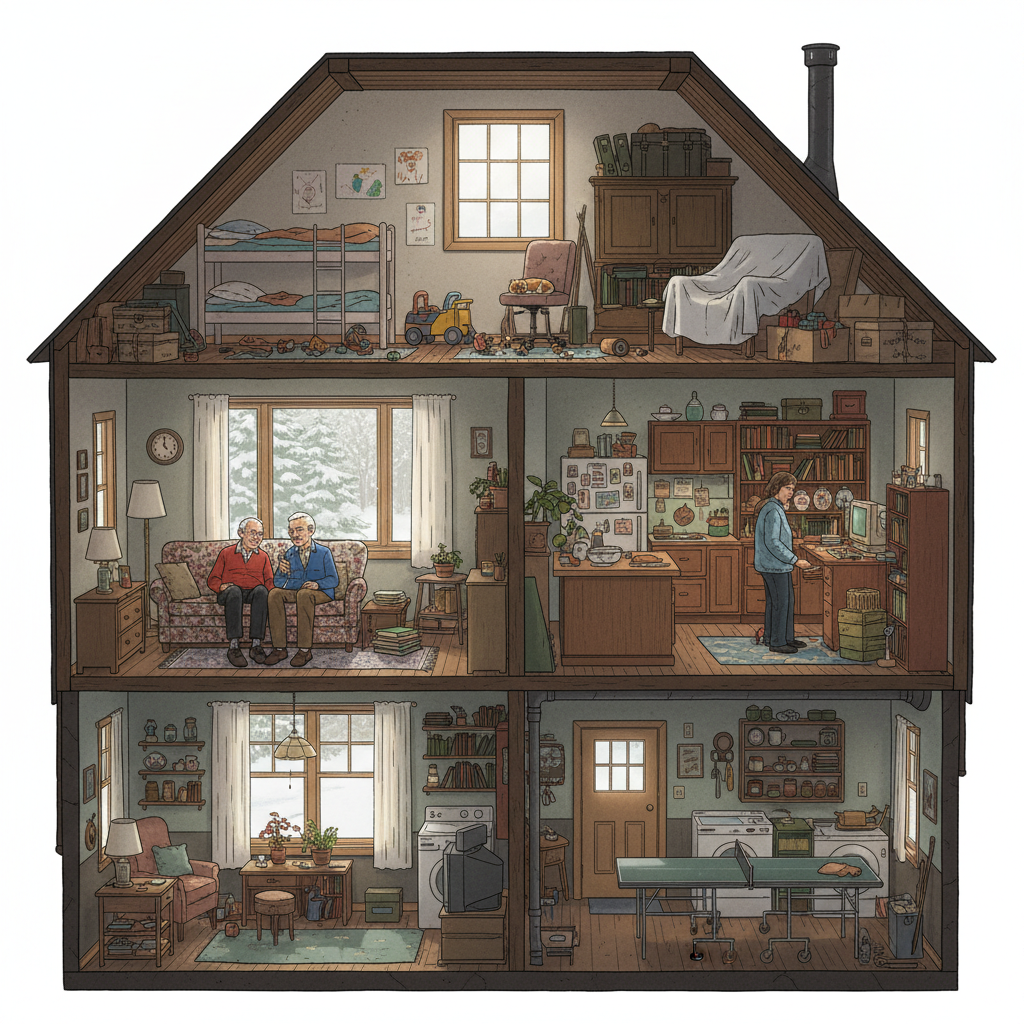
Financial projections capture only part of the picture. For many Ontario seniors, the decision involves deeply personal factors that do not appear on a spreadsheet.
Reasons to Stay (Reverse Mortgage)
- ✓ Community roots: You remain in your neighbourhood near friends, family, your church, your doctor, and familiar services
- ✓ Stability: No landlord, no risk of eviction, no lease renewals to negotiate
- ✓ Memories: Your home holds decades of family history — holidays, milestones, daily life
- ✓ Accessibility modifications: You can renovate your home for aging in place — widened doorways, grab bars, stair lifts — without landlord permission. See our reverse mortgage renovations guide
- ✓ Pet ownership: No pet restrictions or deposits
- ✓ Garden and outdoor space: Important for physical and mental health
Reasons to Sell and Rent
- ✓ Reduced maintenance burden: No more property repairs, snow removal, lawn care
- ✓ Downsized living: Less space to clean and maintain
- ✓ Full equity access: Maximum cash available for any purpose
- ✓ Location flexibility: Move closer to family, medical services, or warmer climate
- ✓ Simplified estate: Liquid assets are easier to divide among heirs
The Loneliness Factor
Research consistently shows that forced relocation in later life correlates with increased social isolation, depression, and cognitive decline. The familiar routines — walking to the local café, chatting with neighbours, attending community events — are disrupted by a move. While some seniors thrive in new environments, many struggle.
The reverse mortgage preserves the option to stay while providing needed cash. Selling eliminates that option permanently.
Government Benefit Implications
An often-overlooked difference between selling and a reverse mortgage is the impact on government income-tested benefits.
| Benefit | Effect of Selling and Investing | Effect of Reverse Mortgage |
|---|---|---|
| OAS (Old Age Security) | Investment income can trigger OAS clawback above $90,997 (2026) | ✗ No effect — loan proceeds are not income |
| GIS (Guaranteed Income Supplement) | Investment income reduces GIS dollar-for-dollar | ✗ No effect |
| CPP (Canada Pension Plan) | No direct effect | ✗ No effect |
| Ontario Trillium Benefit | May be reduced by higher net income | ✗ No effect |
| Ontario Drug Benefit | Income-tested after age 65 — higher income means higher deductible | ✗ No effect |
If you sell your home and invest the proceeds, the CRA taxes the investment income — and that income can reduce your GIS payments or trigger OAS clawback. A reverse mortgage produces no taxable income and has zero impact on government benefits.
According to Service Canada, the GIS is reduced by $1 for every $2 of income above the exemption threshold. For a senior receiving maximum GIS, even modest investment income from sale proceeds can significantly reduce monthly government payments.
For a detailed guide on this topic, see our article on OAS clawback avoidance with reverse mortgages.
What If Your Home Appreciates Significantly?
The reverse mortgage scenario becomes even more favourable if Ontario home values appreciate above the conservative 2% assumption.
| Annual Appreciation | Home Value in 10 Years | Reverse Mortgage Balance | Remaining Equity |
|---|---|---|---|
| 0% (flat) | $800,000 | $584,338 | $215,662 |
| 2% | $975,194 | $584,338 | $390,856 |
| 3% | $1,075,132 | $584,338 | $490,794 |
| 4% | $1,184,050 | $584,338 | $599,712 |
At 4% annual appreciation — which is below Ontario's long-term historical average — remaining equity after 10 years of a reverse mortgage reaches approximately $599,712, exceeding the $547,581 remaining from selling and renting. The reverse mortgage actually wins financially in this scenario while also allowing the homeowner to stay in their home.
Who Should Sell and Rent?
Selling is genuinely the better option in specific circumstances:
- You want to relocate — closer to family, to a warmer climate, or to a different community
- Your home requires major, expensive repairs that exceed what you want to invest (new roof, foundation work, complete systems replacement)
- You live alone in a large home and the maintenance is overwhelming
- You have no emotional attachment to the property and view it purely as a financial asset
- Your property is in a declining market where future appreciation is unlikely
Who Should Choose a Reverse Mortgage?
A reverse mortgage is the better option when:
- You want to stay home — full stop
- Your income is limited and monthly rent would strain your budget
- You receive GIS or are near the OAS clawback threshold and cannot afford additional taxable income
- You value stability over maximum equity access
- You want to age in place with home modifications funded by the reverse mortgage
- Your home is in a stable or growing Ontario market (GTA, Ottawa, Hamilton, Kitchener-Waterloo)
Rick Sekhon can provide a personalized analysis comparing both options based on your specific home value, income, government benefits, and retirement goals. Bloom Financial and Home Trust may offer additional product structures worth considering.
FAQ
What if I sell and rent for a few years, then buy again? This strategy is risky and expensive. You pay selling costs now ($40,000+), rental costs during the gap, and then buying costs later (land transfer tax, legal fees, inspection, moving again). The total transaction costs of selling and rebuying typically exceed $80,000–$100,000. A reverse mortgage avoids all of these costs.
Can I rent out part of my home instead of selling? Yes — and a reverse mortgage does not prevent you from renting a basement apartment or spare room. Rental income can supplement your retirement cash flow. See our guide on renting part of your home with a reverse mortgage.
What if I need to move to long-term care eventually? If you sell now and rent, you use the proceeds for rent and then long-term care. If you take a reverse mortgage now, you can stay home longer — and when you eventually move to care, the home is sold, the reverse mortgage is repaid (penalty-free), and the remaining equity funds your care. The FCAC notes that reverse mortgage penalties are waived when the borrower moves permanently to long-term care.
Is my estate better off if I sell now? Not necessarily. Selling now produces more liquid wealth today, but that wealth is eroded by rent and living expenses. The reverse mortgage preserves property ownership, which may appreciate in value. After 10 years, the estate values can be comparable — and if the home appreciates above 2% annually, the reverse mortgage leaves a larger estate.
What about rent-controlled apartments in Ontario? Units built before November 15, 2018 are subject to Ontario's annual rent increase guideline (2.5% in 2026). However, finding a rent-controlled apartment in a desirable location with suitable accessibility features is extremely difficult. Wait lists for subsidized seniors' housing in Ontario are often 5–10 years long.
How do I get started with either option? For a reverse mortgage, contact Rick Sekhon for a no-obligation assessment. For selling, consult a licensed real estate agent. Rick recommends getting a reverse mortgage quote first so you can compare both options with real numbers before making an irreversible decision.
Speak to a licensed mortgage professional. Independent legal advice is required before closing a reverse mortgage in Ontario.
Get your free Ontario Reverse Mortgage Guide →
This content is for illustrative purposes only. Rates may vary. Call Rick Sekhon for the best rates and more information.
Ready to Learn More?
Find out exactly how much you could unlock from your home — free and no obligation.
Related Articles
Reverse Mortgage vs Downsizing: Which Is Right for You?
Compare reverse mortgages and downsizing as strategies to access home equity. Explore pros, cons, and scenarios for each option.
Read →The True Cost of a Reverse Mortgage Over 10 Years in Ontario
See the true cost of a reverse mortgage over 10 years in Ontario with year-by-year tables, HELOC comparison, and downsizing cost analysis.
Read →She Almost Sold Her Home of 40 Years — A Reverse Mortgage Saved It
A composite story of an Ontario senior who found a better path than selling her family home. Real numbers, real lessons, and a guide for similar situations.
Read →