
Reverse Mortgage When Aging While Supporting Grandchildren: The Dual Role
Manage the financial stress of aging AND supporting grandchildren. Use a reverse mortgage to balance caregiving for both generations.
Are you in your 60s or 70s, managing your own aging health costs while also providing financial support to grandchildren? This is the defining financial challenge of modern grandparenthood in Ontario—being squeezed between rising health expenses for yourself and growing financial needs of grandchildren (education, activities, family support).
This article is for educational purposes only and does not constitute financial advice.
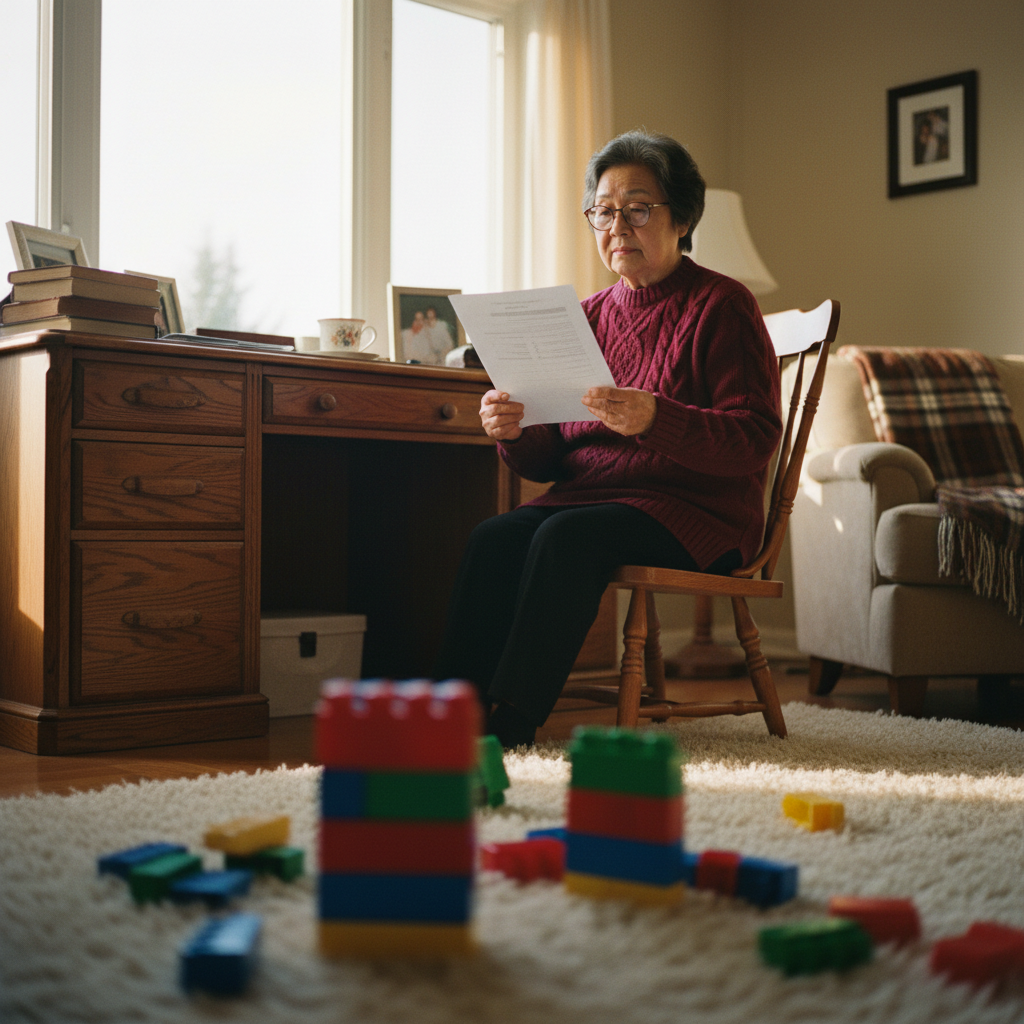
A reverse mortgage allows you to fund both responsibilities simultaneously without forcing impossible choices: cover your own medical costs OR help your grandchildren—or both, funded through your home equity, preserved for the legacy you want to leave.
The Dual-Generation Financial Squeeze
Many Ontario grandparents age 60–75 face a complex financial reality:
Your aging costs:
- Rising prescription medications ($200–$500/month)
- Hearing aids, vision care, mobility aids ($2,000–$5,000+)
- Home modifications for accessibility ($5,000–$20,000)
- Increased health services not covered by provincial insurance
- Potential long-term care costs in the future
Grandchildren's needs:
- Post-secondary education costs ($30,000–$100,000+)
- Extracurricular activities and development ($2,000–$5,000/year per child)
- Emergency family support (if adult child faces job loss)
- Technology and education tools ($500–$2,000/year)
The financial reality: You're trying to preserve savings for both, but savings are finite. Each dollar spent on your health is a dollar not available for grandchildren. Each dollar given to grandchildren reduces your health fund.
According to Statistics Canada, 1.2 million Canadian grandparents provide regular financial support to grandchildren, while simultaneously experiencing rising health costs in retirement. The average grandparent is spending $2,000–$5,000 annually on grandchildren while managing $3,000–$8,000 in out-of-pocket health expenses.
How a Reverse Mortgage Resolves the Squeeze
A reverse mortgage accesses your home equity—typically your largest asset—and converts it into funds for both needs simultaneously. Rather than choosing between your health and your grandchildren, you can fund both without depleting monthly retirement income.
Cost Scenarios: Aging Grandparents With Active Grandchildren Support
| Scenario | Annual Aging Costs | Annual Grandchild Support | Total Need | Reverse Mortgage Solution |
|---|---|---|---|---|
| One grandchild; moderate health needs | $3,000 | $3,000 | $6,000/year | $50,000–$75,000 accessed over 10 years |
| Two–three grandchildren; higher health needs | $6,000 | $8,000–$10,000 | $14,000–$16,000/year | $100,000–$150,000 with line of credit |
| Grandchildren's post-secondary funding | $3,000 | $50,000 lump sum (education) | $53,000 total | $60,000 reverse mortgage ($3K/year aging + $50K education) |
A reverse mortgage with a line of credit option is ideal for this scenario—you draw funds annually as both aging and grandchild needs arise, paying interest only on amounts drawn.

The Dual-Role Financial Management Strategy
Step 1: Separate Your Needs Into Two Budgets
Your aging budget (realistic annual cost):
- Medical and dental copays: $500–$1,500
- Prescription medications: $200–$500
- Vision and hearing care: $200–$500
- Mobility aids and equipment: $500–$1,000
- Home modifications: $1,000–$3,000/year (phased)
- Typical subtotal: $3,000–$7,000/year
Grandchildren budget (realistic annual support):
- Education: $2,000–$5,000/year per child
- Activities: $1,000–$3,000/year per child
- Occasional family support: $500–$2,000/year
- Technology/school supplies: $500–$1,000/year
- Typical subtotal: $4,000–$11,000/year per child
Step 2: Calculate Your 10–15 Year Horizon
A reverse mortgage borrowed at age 60–65 will be repaid around age 70–80 (when home is sold or you pass away). Calculate how much you realistically need over this period:
- 10 years of aging costs: $30,000–$70,000
- 10 years of grandchildren support (1–2 children): $40,000–$110,000
- Total need: $70,000–$180,000
A reverse mortgage of $100,000–$150,000 might fund this entire horizon, allowing you to focus on living rather than worrying about which need takes priority.
Step 3: Choose Your Draw Strategy
Option A: Line of Credit — Draw funds as both aging and grandchild needs arise. Interest accrues only on amounts drawn. Best for variable needs.
Option B: Scheduled Draws — Arrange to receive annual payments (e.g., $8,000/year) to cover predictable aging costs and baseline grandchild support. Simple budgeting.
Option C: Hybrid — Draw fixed amount annually ($5,000–$8,000) for known needs, plus access to emergency funds via line of credit if unexpected costs arise.
Real-World Example: Margaret & Her Two Grandchildren
Margaret (age 68) is healthy but managing Type 2 diabetes, hearing loss, and arthritis. Her two grandchildren (ages 10 and 13) are academically advanced but in public school. Her son (their father) has stable income but limited education savings.
Margaret's Situation
| Item | Annual Cost | 10-Year Total |
|---|---|---|
| Aging costs | ||
| Diabetes management | $1,200 | $12,000 |
| Hearing aids replacement | $0 (just bought) | $3,000 (replacement in 7 years) |
| Arthritis management (physio, medication) | $2,000 | $20,000 |
| Home modifications (phased) | $1,500 | $15,000 |
| Subtotal | $4,700 | $50,000 |
| Grandchildren support | ||
| Music lessons for both | $2,400 | $24,000 |
| School camps/enrichment | $1,500 | $15,000 |
| Tech (laptop for older grandchild) | $0 (one-time $2,000) | $2,000 |
| Post-secondary planning | $0 (building towards $40K) | $40,000 |
| Subtotal | $3,900 | $81,000 |
| TOTAL NEED | $8,600/year | $131,000 over 10 years |
Margaret's Reverse Mortgage Solution
Margaret obtains a reverse mortgage for $130,000 at age 68:
- Structure: Line of credit, draw as needed
- Initial draw: $5,000 for hearing aid upgrade and home ramp installation
- Annual draws: $8,000–$9,000 to cover both aging and grandchild support
- Interest cost: 7% annual; $9,100/year on average drawn balance
If Margaret draws $65,000 over the first 10 years and repays from home sale or estate at age 78+, she's paid ~$35,000 in cumulative interest—but she's funded both her health and her grandchildren's opportunities without stress or difficult choices.
Addressing Family Expectations
When you're supporting both generations, clear communication prevents resentment:
With adult children (parents of the grandchildren):
- "I'm helping fund the grandchildren's education and enrichment. This is a gift, not a loan. It reduces my inheritance, so all siblings should understand."
- "My health costs come first—if I can't afford my medications and care, I can't help you."
- "I have a budget for grandchild support. Beyond that, we need to plan together."
With grandchildren:
- "I'm helping with education and activities because I love you. This is my gift."
- "I can't fund everything, but I prioritize education and health."
With other adult children (not the grandchildren's parents):
- "The reverse mortgage funds my aging needs AND helps with the grandchildren's education. This reduces what each of you inherits. I'm being transparent about this choice."
Clear communication prevents the bitterness that often erupts when siblings discover one child received more grandparent support than another.
Frequently Asked Questions
If I'm supporting grandchildren financially, does that reduce my government benefits (OAS, GIS)?
No. Reverse mortgage proceeds are not counted as income. Gifts to grandchildren are not reported as income. Your government benefits are unaffected.
What if my financial situation changes—can I adjust how much I'm supporting grandchildren?
Yes. A line of credit structure allows you to pause draws or reduce them if circumstances change. Unlike a fixed monthly obligation, a reverse mortgage gives you flexibility to scale support up or down based on changing needs.
If I die before the reverse mortgage is repaid, who owes the balance—my estate or my grandchildren?
Your estate is responsible. The reverse mortgage is your debt, secured against your home. When you pass, the home is typically sold and proceeds go first to repay the reverse mortgage, then to your heirs.
Can I make my grandchildren part of the reverse mortgage conversation, or should I keep it private?
That's your choice. Some grandparents involve grandchildren in conversations ("Grandma is using home equity to help with your education"), which creates transparency. Others keep it private between themselves and their adult children. Either approach is valid—consistency is what matters.
If I'm supporting my grandchildren's education, should I use a RESP instead of a reverse mortgage?
Both can work together. RESPs capture government grants (best use of those funds). A reverse mortgage can fund the difference between RESP contributions and the actual post-secondary cost. Many families use both strategies.
Taking Action: Next Steps
- Calculate your realistic aging costs for the next 10–15 years. Be honest; include medical, mobility, home modifications.
- Estimate grandchild support needs. Talk to your adult children about their expectations for education funding.
- Determine your funding gap. What's the difference between your projected needs and your monthly income/savings?
- Get your home appraised. Determine your borrowing capacity for a reverse mortgage.
- Consult a licensed mortgage professional. Contact Rick Sekhon Reverse Mortgages to discuss line of credit options and annual draw structures.
- Have family conversations. Discuss openly with adult children about your plans for both your health and grandchild support.
Key Takeaways
| Point | Details |
|---|---|
| Dual-role squeeze | Grandparents aging 60–75 face rising health costs AND grandchildren's education/activities needs simultaneously. |
| Typical annual need | $8,000–$16,000/year for both aging and grandchild support (1–2 children). |
| 10-year total | $80,000–$160,000 over a typical grandparenting timeline. |
| Reverse mortgage advantage | No monthly payments; line of credit flexibility; funds both priorities without forcing choices. |
| Interest cost | 6–8% annually on drawn amounts; manageable if repaid within 10–15 years. |
| Communication benefit | Transparency with adult children and grandchildren prevents resentment and family conflict. |
| Inheritance impact | Reduces home equity available for heirs; discuss openly with all adult children. |
The Bottom Line
The dual role of aging grandparent and active grandchild supporter is one of modern retirement's most challenging financial situations. A reverse mortgage transforms this from a forced choice (my health or their education) into a manageable dual strategy where both needs are funded from your home equity.
When structured with clear family communication and realistic planning, it's a powerful way to invest in both your health and your grandchildren's future—leaving a legacy of support that extends across generations.
Speak to a licensed mortgage professional. Independent legal advice is required before closing a reverse mortgage in Ontario.
Get your free Ontario Reverse Mortgage Guide →
This content is for illustrative purposes only. Rates may vary. Call Rick Sekhon for the best rates and more information.
Ready to Learn More?
Find out exactly how much you could unlock from your home — free and no obligation.
Related Articles
Reverse Mortgage for the Aging Caregiver Parent: Balancing Multi-Generational Needs
Support your aging parents while helping adult children. Navigate multi-generational caregiving with financial strategy using a reverse mortgage.
Read →Reverse Mortgage for Grandparents Raising Grandchildren in Ontario
Ontario grandparents raising grandchildren can use a reverse mortgage to fund kinship care costs, maintain stability, and stay in the family home without monthly payments.
Read →Reverse Mortgage for DEI Consulting Practice: Launching Diversity, Equity, and Inclusion Consulting in Retirement
Start a diversity and inclusion consulting practice. Help corporations and nonprofits build equitable cultures; reverse mortgage funds training, business setup, and market entry.
Read →