
Reverse Mortgage for Converting Your Home Into Multigenerational Intentional Living Community
Fund extensive renovations to convert your Ontario home into intentional multigenerational living space where you age in community with family and chosen relatives.
What if your home could become a true multigenerational living community where you age surrounded by family, chosen relatives, and intentional bonds? A reverse mortgage can fund comprehensive renovations transforming your house into a thoughtfully designed cohousing or intentional community space—reducing isolation, increasing affordable housing options for multiple generations, and enabling aging in place with built-in support.
Traditional aging alone, even with adult children nearby, creates isolation risk. Intentional multigenerational living—where space, resources, and daily life are deliberately structured for community—offers profound alternatives. A reverse mortgage funds the renovations required to welcome multiple generations and create daily interaction, shared meals, collaborative caregiving, and purpose-driven aging.
Understanding Intentional Multigenerational Living
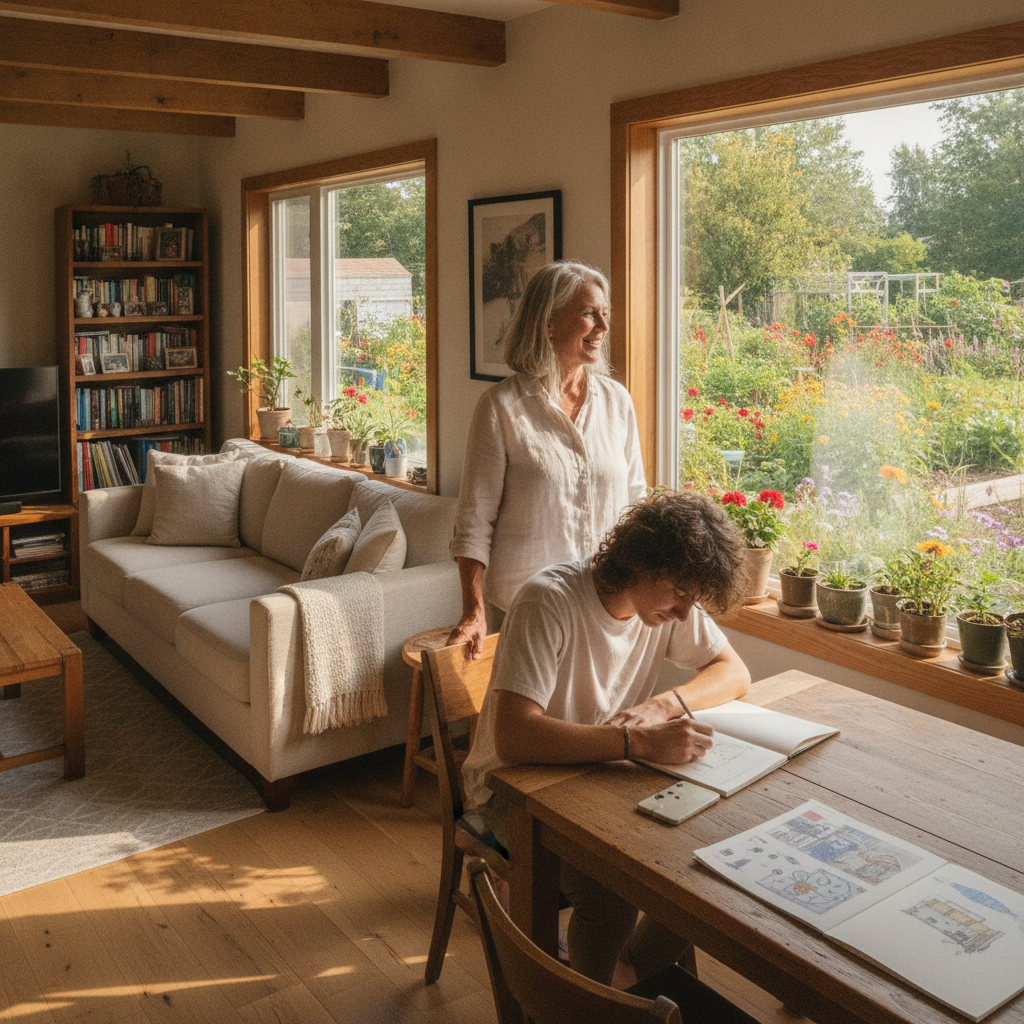
Intentional multigenerational living deliberately structures homes, finances, and daily life to support multiple generations or unrelated households living together with shared values and coordinated support. Unlike accidental cohabitation (adult child moved back due to job loss), intentional community is planned, agreed upon, and designed for long-term sustainability.
Models include:
- Granny suites: Secondary dwelling units (in-law suites) on primary property, offering independence while enabling quick access
- Shared household with multiple suites: 3–5 separate living spaces (adult children, grandchildren, aging parents, chosen family) in one large home, with shared kitchen, dining, and living areas
- Cohousing adjacency: Multiple cottages or units on one property clustered around shared common house for meals, events, caregiving
- Blended boomer houses: 3–8 unrelated seniors pooling resources to age together in intentional community
According to the Canadian Network for Intentional Communities, 15%+ of Canadian households are exploring multigenerational or cohousing models. Ontario leads in demand, especially in Toronto, Ottawa, and regional centers.
Funding Home Conversion for Intentional Living
Converting a standard home into intentional community space requires substantial renovation. A reverse mortgage provides the capital for structural and functional changes:
Structural Modifications ($25,000–$60,000)
| Modification | Cost Range | Purpose |
|---|---|---|
| Add secondary suite/granny flat (1-bed, 1-bath) | $30,000–$60,000 | Independent living space for aging parent or adult child family |
| Create split-level living (multiple entrances, separate kitchenettes) | $15,000–$35,000 | Enable quasi-independent suites while sharing core home |
| Build accessory dwelling unit (ADU) on property | $40,000–$100,000 | Cottage or separate unit for additional family/caregiver |
| Reconfigure open-concept planning for semi-private zones | $5,000–$15,000 | Create defined community areas and private retreat spaces |
| Soundproofing and privacy barriers | $3,000–$8,000 | Reduce noise between multi-unit households |
| Total structural | $25,000–$60,000 | Basic conversion |
Accessibility and Safety Upgrades ($8,000–$20,000)
- Universal design features ($5,000–$12,000): Zero-step entries, wide doorways, accessible bathrooms with multiple grab bars, roll-under sinks
- Aging-in-place bathroom renovations ($4,000–$8,000): Curbless showers, heated toilet seats, accessible lighting
- Mobility pathways ($2,000–$5,000): Ramping, handrails, accessible outdoor spaces
Common Space Development ($5,000–$20,000)
To function as community, intentional households need shared spaces:
- Shared dining area/commercial kitchen upgrade ($3,000–$10,000): Large table seating 8–12, expanded kitchen for communal meal preparation
- Common living room renovation ($2,000–$5,000): Comfortable gathering space for family events, caregiving coordination meetings
- Outdoor gathering space ($2,000–$8,000): Accessible patio, garden areas, seating clusters
- Workspace for coordination ($1,000–$3,000): Office or desk area for scheduling, medical records, financial management
Total Home Conversion Budget
| Level of Conversion | Structural | Accessibility | Common Space | Total Cost |
|---|---|---|---|---|
| Basic (one secondary suite) | $30,000–$45,000 | $5,000–$10,000 | $3,000–$8,000 | $38,000–$63,000 |
| Moderate (dual suites, reconfigured) | $45,000–$60,000 | $8,000–$15,000 | $5,000–$15,000 | $58,000–$90,000 |
| Comprehensive (cohousing-style) | $60,000–$100,000+ | $15,000–$20,000 | $10,000–$20,000 | $85,000–$140,000+ |
A reverse mortgage typically covers $40,000–$100,000+ depending on home equity, age, and location—sufficient for substantial intentional community conversion.
Financial and Social Benefits of Intentional Community Living
Reduced Housing Costs for All Generations
When multiple households share one property:
- Aging parent: Reduced housing costs through shared utilities, maintenance, property taxes (50–70% savings vs. independent housing)
- Adult children: Affordable housing access in expensive Ontario markets
- Grandchildren: Stable, multigenerational housing improving childhood outcomes
- Caregivers: Free or reduced housing in exchange for caregiving support
Financial impact: A household sharing a converted home might reduce housing costs 40–50%, freeing $8,000–$15,000 annually for aging parent care, adult child education, or household improvements.
Caregiving Infrastructure Embedded in Daily Life
Intentional community enables caregiving without institutional settings:
- Visible monitoring: Multiple household members notice changes in aging parent's mobility, appetite, mood
- Shared meal preparation: Ensures nutrition without formal meal delivery services
- Distributed caregiving: Adult children, partners, older grandchildren share caregiving responsibility
- Emergency response: Others present if falls, medical crises, or behavioral changes occur
- Medication and appointment coordination: Shared calendars and reminders reduce missed appointments
Impact: Research shows community-based caregiving reduces institutional care moves by 30–40%, saving $20,000–$50,000 annually in avoided long-term care costs.
Social Connection and Purpose Prevention
Isolation is a major predictor of poor aging outcomes. Intentional community provides:
- Daily interaction: Built-in social contact reduces depression, cognitive decline
- Shared meals: Creates ritual and connection; improves nutrition
- Collective purpose: Everyone contributes to household functioning; aging parent remains valued
- Intergenerational learning: Grandchildren, adult children, aging parents exchange knowledge and skills
- Caregiving reciprocity: Aging parent mentors younger generations; younger ones provide physical care
According to a 2024 Canadian National Seniors Council report, intentional multigenerational households report 40% lower depression rates, 25% lower cognitive decline markers, and 60% higher life satisfaction compared to age-isolated seniors.
Navigating Legal, Financial, and Relational Complexities
Legal Structures and Property Ownership
Before renovating, clarify legal arrangements:
- Shared ownership: Multiple household members own property together (creates inheritance complexity)
- Life tenancy: Aging parent retains primary ownership; others have legal "right to occupy" only
- Cohousing association: Legal entity (nonprofit or cooperative) owns property; residents own shares or have occupancy agreements
- Rental arrangements: Adult children pay modest rent to aging parent
A reverse mortgage doesn't conflict with any model but requires legal clarity. Consult a lawyer ($1,000–$2,500) to document arrangements. A reverse mortgage can fund this legal setup.
Financial Arrangements and Fairness
Intentional living requires transparent financial agreements:
- Shared property tax, utilities, maintenance costs: How are they divided?
- Caregiver compensation: If adult child provides primary caregiving, how is it valued?
- Estate implications: Does financial contribution affect inheritance?
- Rent or occupancy fees: What do younger generations pay?
Clear agreements prevent resentment. A reverse mortgage can fund a professional family mediator ($2,000–$5,000) to help establish fair, documented agreements.
Municipal Zoning and Legal Permissions
Ontario municipalities have different zoning rules for secondary suites, ADUs, and cohousing:
- Secondary suites: Many Ontario municipalities now permit one granny flat by right; some require approvals
- Detached ADUs: Increasingly permitted in Toronto, Ottawa, other urban centers; restricted in some communities
- Home office/business use: Community spaces might trigger home business restrictions
Before renovating, consult municipal zoning ($200–$500 fee) and obtain necessary permits ($500–$2,000). A reverse mortgage can cover these costs.
Key Takeaways
- Intentional multigenerational living reduces isolation and caregiving burden. Structured community enables aging in place with built-in support, reducing institutional care moves by 30–40%.
- Home conversion requires $40,000–$100,000+ in renovation. A reverse mortgage funds secondary suites, accessibility upgrades, and common space development enabling true community living.
- Multiple generations benefit financially. Shared housing reduces costs 40–50% for all residents while creating affordable housing options in expensive Ontario markets.
- Legal clarity is essential. Property ownership, caregiver compensation, and financial arrangements must be documented. A reverse mortgage can fund legal consultation.
- Caregiving becomes reciprocal and distributed. Rather than one caregiver burning out, multiple household members share responsibility; aging parent remains valued and connected.
- Multigenerational homes increase property value and resilience. Whether you age in place or eventually downsize, the renovated property appeals to families and commands premium pricing.
Frequently Asked Questions
What if one household member wants to leave after renovations are complete?
Clear legal agreements (funded by reverse mortgage + lawyer consultation) protect all parties. Written occupancy agreements specify notice periods, buyout options, and succession planning. Some arrangements allow departing members to be replaced by others; some dissolve the shared household. Legal documentation prevents disputes and enables graceful transitions.
How do I handle inheritance if multiple generations have contributed to the home?
This requires professional legal guidance. Options include: documenting contributions as loans (repaid before inheritance), treating contributions as gifts (reducing inheritance expectations), or modifying wills to reflect shared investment. A reverse mortgage can fund the $1,000–$2,500 legal consultation needed to structure this fairly.
What if I need to downsize or move to a care facility later?
The renovated home with multiple suites typically commands premium pricing on resale, often 15–25% above comparable standard homes. Adult children might purchase your equity, or the home might transfer to a new multigenerational family. A reverse mortgage simply becomes a debt against the estate, paid from sale proceeds.
Can I have a true cohousing arrangement (completely separate cottages) on a standard residential lot?
Possible, but zoning-dependent. Many Ontario municipalities now permit secondary suites by-right and increasingly permit detached ADUs. Consult local zoning before planning. Some rural properties support multiple buildings; urban lots might only allow secondary suites within the primary home.
How do I set up fair financial arrangements and ensure transparency?
Professional family mediators ($2,000–$5,000) help establish clear agreements about costs, compensation, and decision-making. Written agreements prevent resentment and enable smooth transitions. A reverse mortgage can fund this mediation—one of the best investments for long-term household success.
What happens to caregiving if an adult child becomes unable to help?
Intentional community distributes responsibility, reducing dependency on any single person. If one household member becomes ill or leaves, others step in. Some arrangements reserve funds (from household budget or reverse mortgage surplus) for paid care if family caregiving becomes insufficient.
Age in Community, Not Isolation
The traditional model of aging alone or moving to institutions misses what humans need most: connection, purpose, reciprocity. Intentional multigenerational living—funded through a reverse mortgage—creates homes where aging happens in relationship, where caregiving is shared, where isolation is structurally impossible.
To explore reverse mortgage options for home renovation and multigenerational community conversion, contact Rick Sekhon Reverse Mortgages or consult FSRAO (Financial Services Regulatory Authority of Ontario). Organizations like the Canadian Network for Intentional Communities and local cohousing associations provide design guidance and community connection.
Your converted home becomes a model for aging well—together.
Ready to Learn More?
Find out exactly how much you could unlock from your home — free and no obligation.
Related Articles
Reverse Mortgage for DEI Consulting Practice: Launching Diversity, Equity, and Inclusion Consulting in Retirement
Start a diversity and inclusion consulting practice. Help corporations and nonprofits build equitable cultures; reverse mortgage funds training, business setup, and market entry.
Read →Reverse Mortgage for Residential Sustainability Auditing Practice: Certifying Aging in Place
Launch a professional home energy and sustainability auditing business. Help Ontario homeowners certify efficiency; reverse mortgage funds training, tools, and market entry.
Read →Reverse Mortgage for Archival and Digital Preservation Consulting: Preserving Institutional History and Heritage
Launch archival consulting practice preserving records for institutions. Help libraries, archives, nonprofits; reverse mortgage funds training, tools, and market entry.
Read →