
Reverse Mortgage for Adult Child Becoming a Stay-at-Home Parent: Income Sacrifice Support
Guide to using a reverse mortgage to support an adult child who leaves the workforce to become a stay-at-home parent. Strategic income replacement for caregiving choices.
What if your adult child decides to step away from their career to raise children full-time—and you want to help bridge the income gap? Many Ontario parents face this decision: their adult child has chosen the deeply rewarding but financially demanding path of stay-at-home parenting. A reverse mortgage can be a powerful strategy to replace lost household income during this critical life phase.
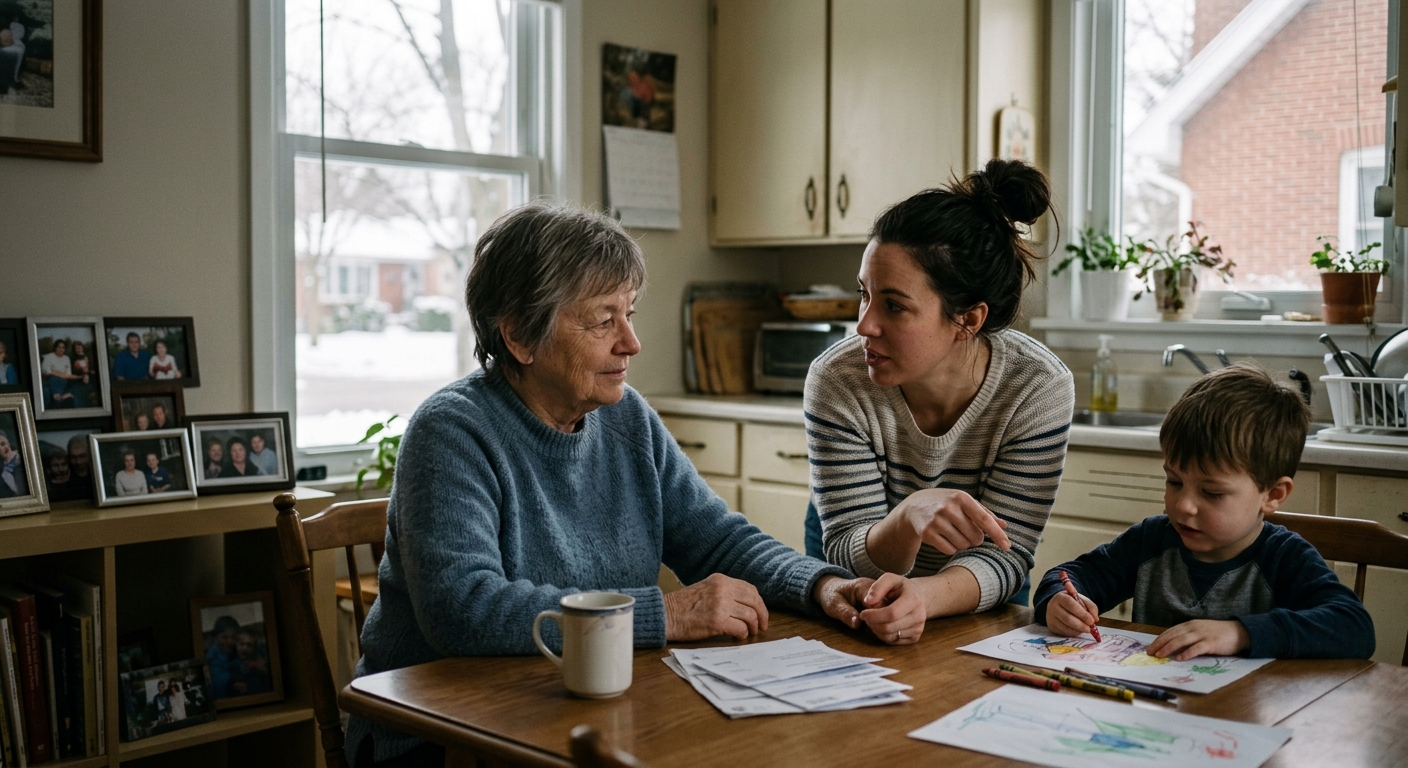
When adult children transition to stay-at-home parenting, they often sacrifice significant income—often $40,000 to $80,000+ annually depending on their previous career. A reverse mortgage allows you to convert your home equity into funds that can support this family choice, whether through monthly contributions to your child's household, helping with mortgage payments, or covering childcare-related expenses they thought they'd save by staying home.
Understanding the Stay-at-Home Parent Income Gap in Ontario
What is the financial impact of one parent leaving the workforce? In Ontario, a typical professional household loses $400,000 to $800,000 in cumulative income over a decade when one parent becomes a stay-at-home caregiver. This isn't just salary—it includes lost CPP contributions, missed pension growth, and reduced household buying power.
According to Statistics Canada, households with one stay-at-home parent are more vulnerable to financial stress, particularly around education costs, home maintenance, and emergency expenses. A reverse mortgage allows you, as the aging parent, to share your home equity strategically while your child focuses on raising the next generation.
This is distinct from other forms of support. Instead of making irregular lump-sum gifts, a reverse mortgage can provide structured, predictable income that your adult child can count on month after month—turning your home equity into a genuine, long-term family safety net.
How a Reverse Mortgage Supports Stay-at-Home Parenting
Monthly Support Structure
A reverse mortgage from CHIP, Equitable Bank, or HomeEquity Bank can be structured to provide consistent monthly payments. Rather than depleting your own retirement income, you're accessing equity you've built over decades. This allows you to:
- Contribute $1,000–$3,000 monthly to your child's household (typical range for Ontario)
- Help cover the "hidden costs" of stay-at-home parenting (education activities, childcare co-op memberships, etc.)
- Ensure your child isn't forced back to work prematurely due to financial stress
- Build a multi-generational legacy of financial support
Financial Comparison: Stay-at-Home vs. Two-Income Household
| Scenario | Gross Household Income | Childcare/Related Costs | Net Income After Tax | Year 1 Gap |
|---|---|---|---|---|
| Both parents working (Ontario average) | $140,000 | $18,000/year | $89,000 | — |
| One parent stays home | $70,000 (one income) | $2,000/year | $53,000 | $36,000 |
| Same as above + parent provides $2,000/month support | $70,000 + $24,000 via RM | $2,000/year | $80,000 | $9,000 |
Figures based on 2026 Ontario tax rates. Actual costs vary by family structure and location.
According to the Financial Consumer Agency of Canada (FCAC), many multigenerational households benefit from structured equity-sharing arrangements. A reverse mortgage formalizes this in a way that protects both generations—you maintain ownership of your home while your child gains financial stability.
Structuring Your Reverse Mortgage for This Purpose
Option 1: Monthly Draws
With a line of credit reverse mortgage (offered by Equitable Bank and HomeEquity Bank), you can draw funds monthly as needed. This provides flexibility—you draw only what you need, interest only accrues on amounts borrowed, and you retain unused equity for emergencies.
Typical structure:
- Access $150,000–$300,000 in home equity
- Draw $2,000–$2,500/month for 5–7 years
- Keep remaining equity available for future needs (home modifications, health emergencies, etc.)
Option 2: Lump-Sum with Structured Gifting
With CHIP Reverse Mortgage or Home Trust EquityAccess, you can take a lump sum and make regular gifts to your child. This is tax-efficient in Canada—gifts to adult children are not considered income for the recipient and don't affect benefits like CPP, OAS, or GIS (if your child is young).
Why This Approach is Different from Other Support
| Approach | Sustainability | Tax Efficiency | Retirement Impact | Estate Impact |
|---|---|---|---|---|
| Annual monetary gifts from retirement income | Limited; depends on CPP/pension | Neutral (already taxed) | Reduces spending power yearly | None |
| Co-borrowing on child's mortgage | Risky; affects your credit | Neutral | Restricts your own borrowing | Problematic if child defaults |
| Reverse mortgage to fund support | Sustainable; equity-based | Tax-free draws | Maintains retirement spending | Manageable; RM repaid at sale |
The reverse mortgage approach is distinct because you're not sacrificing your retirement income—you're converting a passive asset (home equity) into active support. Your pension, CPP, and OAS remain intact for your own needs.
Tax and Benefit Implications in Ontario
One of the cleanest advantages of a reverse mortgage for this purpose: the funds are loan proceeds, not income. This means:
- Your gift to your adult child is not taxable to you (loan, not gift for tax purposes)
- Your child's receipt of funds does not create income tax liability
- Your OAS and GIS eligibility are not affected (funds are not assessed as income)
- Your CPP continues uninterrupted
- OSFI guidelines confirm: reverse mortgage proceeds are never considered income
According to the CRA (Canada Revenue Agency), loan advances from a reverse mortgage are not income and therefore do not trigger any reporting requirements for gift taxation or benefit clawback.
Practical Steps to Set Up Your Reverse Mortgage
1. Assess Your Home Equity (Months 1–2)
- Get a professional home appraisal (required by all lenders)
- Determine your maximum borrowing capacity
- Current Ontario lending guidelines: 20–55% of home value, depending on age (typically at least $200,000–$400,000 available for most homeowners)
2. Compare Lenders and Products (Weeks 3–4)
| Lender | Monthly Payment Option | Line of Credit Option | Interest Rate (2026 avg) | Closing Costs |
|---|---|---|---|---|
| CHIP | Yes (fixed draws) | Limited | 6.2% | $2,000–$3,500 |
| HomeEquity Bank | Yes (flexible draws) | Yes | 6.1% | $2,000–$3,200 |
| Equitable Bank | Yes (flexible) | Yes | 5.95% | $2,500–$4,000 |
| Bloom Financial | Yes (fixed) | No | 6.35% | $2,200–$3,800 |
Rates and fees subject to change; consult current lender quotes for 2026 rates.
3. Consult with Rick Sekhon
Speak with Rick Sekhon, a licensed reverse mortgage specialist in Ontario, to understand which product aligns with your family's goals. A broker can help you compare the 4 major lenders and find the lowest overall costs.
4. Gather Documentation (Weeks 5–6)
- Home appraisal (lender-ordered, $400–$600)
- Current mortgage statement (if any)
- Property tax assessment (MPAC records)
- Proof of age and Canadian citizenship
5. Independent Legal Advice (Week 7)
All Canadian reverse mortgages require independent legal advice before closing. Your lawyer will review the loan terms, explain the implications, and ensure you understand the product. This typically costs $800–$1,200 in Ontario and is mandatory for consumer protection.
6. Closing and Funding (Week 8)
Once approved, closing typically takes 7–10 business days. Funds arrive in your account, and you can begin supporting your adult child immediately.
Key Takeaways
✓ Reverse mortgages allow you to convert home equity into ongoing income support for adult children in caregiving roles
✓ Monthly payment options (from CHIP, HomeEquity Bank, Equitable Bank) provide predictable support for stay-at-home parents
✓ Reverse mortgage proceeds are not taxable income and don't affect your OAS, GIS, or CPP eligibility
✓ This approach sustains your retirement spending while helping your child—unlike making gifts from your pension
✓ Ontario homeowners 55+ typically qualify without credit checks or income requirements
✓ Total costs (rates + fees) average 6.0–6.4% annually, with closing costs $2,000–$4,000
Frequently Asked Questions
Can my adult child access these funds directly from the reverse mortgage?
No. You must be the borrower on the reverse mortgage. The funds come to you, and you decide how to distribute them to your child. This protects both generations and keeps the arrangement flexible. Your child cannot be a co-borrower on a reverse mortgage, as the product is designed for seniors 55+.
What happens to my reverse mortgage when I want to downsize or move?
The reverse mortgage is due when you sell your home or permanently move. The proceeds from the sale pay off the loan balance, and any remaining equity goes to you or your estate. If your home has appreciated, your equity has grown even as you've been drawing funds.
Does the money I give my child affect their government benefits?
Not typically. Gifts to adult children are not considered income for CPP, EI, or most provincial benefits. However, if your child receives means-tested benefits (like GIS if they're retired, or ODSP if they have a disability), you should verify with the specific program, as some have inheritance or asset rules.
Can I change the amount of support if my circumstances change?
Yes. With a line of credit reverse mortgage, you control how much you draw each month. If you face health issues or need funds for your own care, you can reduce or stop support to your child and preserve your home equity.
Will the reverse mortgage affect my ability to leave an inheritance?
Only partially. As you draw funds and interest accumulates, the loan balance grows—this reduces your estate. However, the "No Negative Equity Guarantee" ensures your estate is never liable for more than your home's value. Any remaining equity after the loan is paid off passes to your heirs.
What if my adult child's financial situation improves later?
The loan remains your obligation, but you can choose to reduce future draws or redirect funds to other goals (home modifications, travel, etc.). The flexibility is yours—you're not locked into a fixed payment to your child.
Next Steps
Understanding how to structure multigenerational support is crucial for your family's financial security. If you're a caregiver-focused family where one generation is making sacrifices, a reverse mortgage can bridge that gap ethically and sustainably.
The key is planning early—before your adult child becomes financially strained—and choosing the right product and lender. Contact Rick Sekhon Reverse Mortgages for a no-obligation consultation to explore your options.
For more information on how reverse mortgages work in Ontario, visit our guides on aging in place → and living legacy strategies →.
Ready to Learn More?
Find out exactly how much you could unlock from your home — free and no obligation.
Related Articles
Living Legacy: Gift Home Equity to Adult Children While You're Alive
How Ontario seniors can gift home equity to adult children during retirement using a reverse mortgage. Includes tax strategies and family planning considerations.
Read →Reverse Mortgage for DEI Consulting Practice: Launching Diversity, Equity, and Inclusion Consulting in Retirement
Start a diversity and inclusion consulting practice. Help corporations and nonprofits build equitable cultures; reverse mortgage funds training, business setup, and market entry.
Read →Reverse Mortgage for Residential Sustainability Auditing Practice: Certifying Aging in Place
Launch a professional home energy and sustainability auditing business. Help Ontario homeowners certify efficiency; reverse mortgage funds training, tools, and market entry.
Read →