
Reverse Mortgage for Home Modifications When Adult Child Has ME/CFS: Energy-Limited Living Solutions
Fund accessible home modifications for adult child with Myalgic Encephalomyelitis (ME/CFS) using a reverse mortgage. Ontario energy-limiting disability support.
Your adult child has been diagnosed with Myalgic Encephalomyelitis (ME/CFS)—a devastating neurological illness that leaves them unable to manage stairs, bathrooms, and the physical layout of a normal home. Unlike visible disabilities, ME/CFS causes invisible but severe energy-limiting symptoms: post-exertional malaise (getting worse after minimal activity), cognitive fog, and orthostatic intolerance. Your home isn't designed for someone who can barely walk 50 meters per day. A reverse mortgage can fund the accessibility modifications your child desperately needs without forcing a family relocation or bankruptcy.
What Is ME/CFS and Why Home Modifications Matter
Myalgic Encephalomyelitis/Chronic Fatigue Syndrome (ME/CFS) is a serious neurological disease. The Canadian clinical definition recognizes that ME/CFS causes profound fatigue unrelieved by rest, post-exertional malaise (worsening after minimal activity), sleep dysfunction, and cognitive impairment. Unlike simple tiredness, ME/CFS patients often lose 50–75% of their pre-illness functioning.
Many ME/CFS patients become housebound. Your adult child may:
- Cannot climb stairs (post-exertional malaise makes them worse for days)
- Struggle with bathroom access (balance issues, inability to stand long)
- Have severe light and sound sensitivities (bedroom requires blackout and soundproofing)
- Need environmental controls (temperature, humidity) to manage symptoms
- Require low-EMF living spaces (some patients report electromagnetic sensitivity)
According to the ME/CFS Society of Canada, approximately 40% of ME/CFS patients are housebound or bedbound, yet most homes aren't adapted for this level of disability. A reverse mortgage can fund modifications that keep your child safe and stable.

Critical Home Modifications for ME/CFS Patients
Unlike aging-in-place modifications (which assume gradual decline), ME/CFS accessibility needs are often immediate and severe:
| Modification Type | Purpose for ME/CFS | Typical Cost | Reverse Mortgage Coverage |
|---|---|---|---|
| Ground-floor bedroom conversion | Eliminates stair climbing, reduces activity burden | $3,000–$8,000 | Yes |
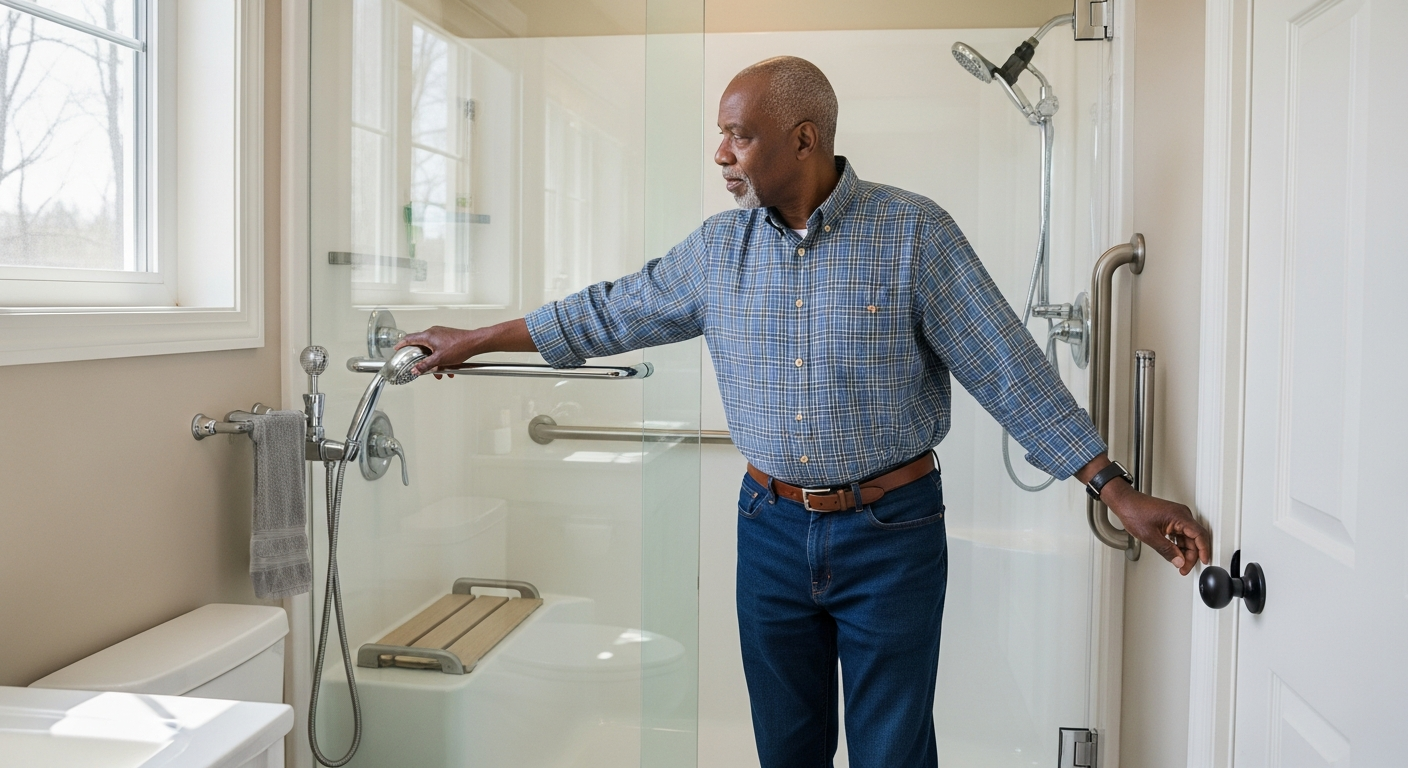
| Accessible bathroom with walk-in shower (no tub) | Reduces balance/standing strain; safety | $5,000–$15,000 | Yes |
| Kitchen access modifications (lowered counters, mobility aids) | Reduces cooking-related post-exertional issues | $2,000–$6,000 | Yes |
| Blackout/soundproof bedroom renovation | Reduces light/sound trigger symptoms | $4,000–$12,000 | Yes |
| HVAC air filtration system + humidity control | Manages environmental triggers | $3,000–$8,000 | Yes |
| Accessible primary living space layout (no furniture rearrangement barrier) | Ensures safe, predictable movement | $5,000–$20,000 | Partial |
| Motorized reclining bed with adjustable base | Manages orthostatic symptoms and sleep dysfunction | $2,000–$5,000 | Yes, if home renovation component |
Total typical renovation: $24,000–$74,000+
A reverse mortgage accessed now prevents worsening disability later. Many ME/CFS patients who delay accessibility modifications experience disease progression accelerated by the stress and exertion of living in an inaccessible home.
Line of Credit vs Lump Sum for ME/CFS Home Projects
ME/CFS accessibility needs evolve unpredictably. Your child may start with a ground-floor bedroom conversion, but after 6 months, discover they need additional modifications (soundproofing, HVAC upgrades). A reverse mortgage line of credit is ideal for ME/CFS because:
- You're not committed to a fixed total cost upfront
- You can phase renovations (bedroom first, bathroom next)
- You only pay interest on funds actually withdrawn
CHIP and Equitable Bank both offer accessible lines of credit (up to 55% of home value) that let you draw as ME/CFS needs evolve.
Coordinating Reverse Mortgage with ME/CFS Disability Benefits
A crucial mistake: improperly structured reverse mortgage proceeds can affect your adult child's eligibility for disability tax credits or provincial disability support. Before borrowing, ensure:
1. Keep Reverse Mortgage Proceeds in Your Name
Don't gift reverse mortgage proceeds directly to your adult child as an "asset" held in their name. Instead, use the funds to pay renovation contractors directly (or reimburse yourself as the homeowner). This preserves your child's:
- Registered Disability Savings Plan (RDSP) eligibility (has strict asset limits: $200,000 in liquid assets)
- CPP Disability (CPP-D) benefits (income/asset tests apply in some provinces)
- Ontario Disability Tax Credit (DTC) carryover to RDSP contributions
According to FSRAO (Financial Services Regulatory Authority of Ontario), assets held in a disabled adult child's name can disqualify them from need-based programs. The reverse mortgage is YOUR debt on YOUR home; your child doesn't "own" the proceeds.
2. Document Home Modifications as Accessibility Upgrades
Your adult child may claim the cost of qualifying home modifications under their Disability Tax Credit (DTC). To maximize this:
- Keep contractor invoices labeled "accessibility renovation for disability accommodation"
- File the Disability Tax Credit form (CRA Form T2201) with medical documentation from their ME/CFS specialist
- Claim cumulative accessibility costs (may be carried forward multiple years)
3. Coordinate with Provincial Disability Supports
Some provinces offer grants for accessibility modifications for disabled adults:
- Ontario Accessibility Grant (limited; check current availability)
- Ontario Student Assistance Program (OSAP) accessibility grants (if your child was/is a student)
- Health Care Access Fund (some home modifications may qualify)
Pursue these before using reverse mortgage, as they're non-repayable. A reverse mortgage fills the gap.
Real Ontario Case: The ME/CFS Bedroom Conversion
James, 62, London, Ontario
- Home value: $450,000
- Adult son: Diagnosed with ME/CFS at age 26; now bedbound/housebound
- Current problem: Son lives upstairs; cannot climb stairs safely anymore
The Problem: James's son's condition has worsened. Climbing stairs triggers 3–7 days of post-exertional malaise (severe worsening of symptoms). A ground-floor bedroom is essential, but James is living on his CPP ($28,000/year) and part-time work. Converting the dining room to an accessible bedroom would cost $12,000. James can't afford it without draining savings or forcing his son into a care facility.
The Reverse Mortgage Solution: James obtains a $60,000 reverse mortgage line of credit with Bloom Financial. He:
- Draws $12,000 immediately to convert dining room to ground-floor bedroom (with accessible bathroom nearby).
- Son moves downstairs; post-exertional malaise episodes drop from 2–3 per month to near-zero.
- Remaining $48,000 stays reserved for future ME/CFS needs (HVAC upgrades for air quality, sound-proofing, etc.).
- James's interest on borrowed $12,000 is approximately $600–$900 per year (manageable on his income).
- James stays in his home, his son gets the accessibility he needs, and the family avoids institutional care.
Outcome: Son's health stabilizes; James maintains independence and peace of mind.
Reverse Mortgage Lender Comparison for Energy-Limiting Disabilities
Lenders' flexibility for ME/CFS accessibility varies:
| Lender | LOC Available | Medical Review Required | Renovation Scope Flexibility | Ontario Support |
|---|---|---|---|---|
| CHIP | Yes | Minimal | High | Excellent |
| Equitable Bank | Yes | Minimal | High | Excellent |
| Bloom Financial | Yes | Minimal | High | Very Good |
| Home Trust | Limited | Yes | Moderate | Good |
CHIP and Equitable Bank don't require detailed medical justification for accessibility renovations, making the application faster for families already stretched by caregiving demands.
Key Takeaways
- ME/CFS is a neurological illness requiring immediate, substantial home modifications—not gradual aging-in-place updates.
- A reverse mortgage line of credit funds accessibility evolving with your child's disease progression.
- Ground-floor bedrooms, accessible bathrooms, and environmental controls ($24,000–$74,000) are typical needs.
- Keep reverse mortgage proceeds in your name to protect your child's RDSP, CPP-D, and disability tax credit eligibility.
- CHIP and Equitable Bank offer faster, more flexible lines of credit for ME/CFS accessibility projects.
- Claim home accessibility costs under your adult child's Disability Tax Credit to maximize tax recovery.
Frequently Asked Questions
Can my adult child with ME/CFS claim the home modification costs on their disability tax credit even if I pay for them?
Yes, if they have a valid CRA Disability Tax Credit (Form T2201). The modifications must be directly related to their disability and documented with contractor invoices. The costs are claimed by your child, not you, as the primary beneficiary. Consult a disability tax accountant to ensure proper filing.
Will a reverse mortgage disqualify my child from registering for an RDSP (Registered Disability Savings Plan)?
No, as long as the reverse mortgage is in your name (not your child's asset). The RDSP has a $200,000 liquid asset limit for your child's assets—not yours. A reverse mortgage on your home doesn't count against this limit, so RDSP eligibility is unaffected.
What if my adult child's ME/CFS improves and they move out? Can I sell the home without penalty?
Yes. Reverse mortgages are due when the last borrower leaves the home permanently, sells the home, or passes away. If your child recovers or relocates, you can sell the home, repay the reverse mortgage from proceeds, and keep any remaining equity. No penalty applies for selling.
Does ME/CFS qualify for the Disability Tax Credit (DTC) automatically?
No. The DTC requires medical certification from a physician or specialist confirming that your child has a severe and prolonged (lasting at least 12 months) impairment in any of several functional areas (walking, feeding, dressing, perceiving, speaking, etc.). Many ME/CFS patients do qualify, but documentation from their ME/CFS specialist is essential. File CRA Form T2201.
Are ME/CFS home modifications covered by provincial disability programs or grants?
Coverage varies by province and is often limited. Ontario has limited grant availability for accessibility modifications. Check with your provincial disability services office. Most families rely on a combination of partial grants, reverse mortgages, and personal savings.
Can I use reverse mortgage proceeds to hire a full-time home care attendant for my ME/CFS adult child?
Yes, reverse mortgage funds can cover home care aide costs, but consult a tax professional. If the care is considered medical/nursing, your child may claim costs under medical expense tax credits (CRA). If personal support, other tax implications apply. Coordinate carefully.
Ready to Learn More?
Find out exactly how much you could unlock from your home — free and no obligation.
Related Articles
Reverse Mortgage to Stabilize Family Income: When Your Adult Child Works Precarious Gig
Support adult child in gig economy with reverse mortgage financial backstop. Stabilize family income when employment is unpredictable.
Read →Reverse Mortgage to Fund Your Own Mentorship Practice: Teaching the Next Generation
Launch a mentorship or coaching practice in retirement using home equity. Build income while teaching young leaders with a reverse mortgage.
Read →Reverse Mortgage When Your Home Has Never Been Registered as Principal Residence
Reverse mortgage options for homes without principal residence exemption registration. Legal strategies for Ontario homeowners.
Read →