
Reverse Mortgage for Supporting Adult Child's Employer-Funded Relocation to Ontario
Bridge funding for adult child's career move to Ontario. Reverse mortgage strategy for relocation costs and supporting family transition.
What if your adult child receives an amazing job offer in Ontario—but the relocation costs exceed what their employer covers? Employer relocations are attractive for ambitious professionals: career advancement, salary increase, fresh start. But employer relocation packages rarely cover everything: bridge housing, school transition costs, spousal job search assistance, and temporary living arrangements while finding permanent housing. A reverse mortgage allows you to close this financial gap, supporting your child's career move without requiring them to take on personal debt or delay their opportunity.
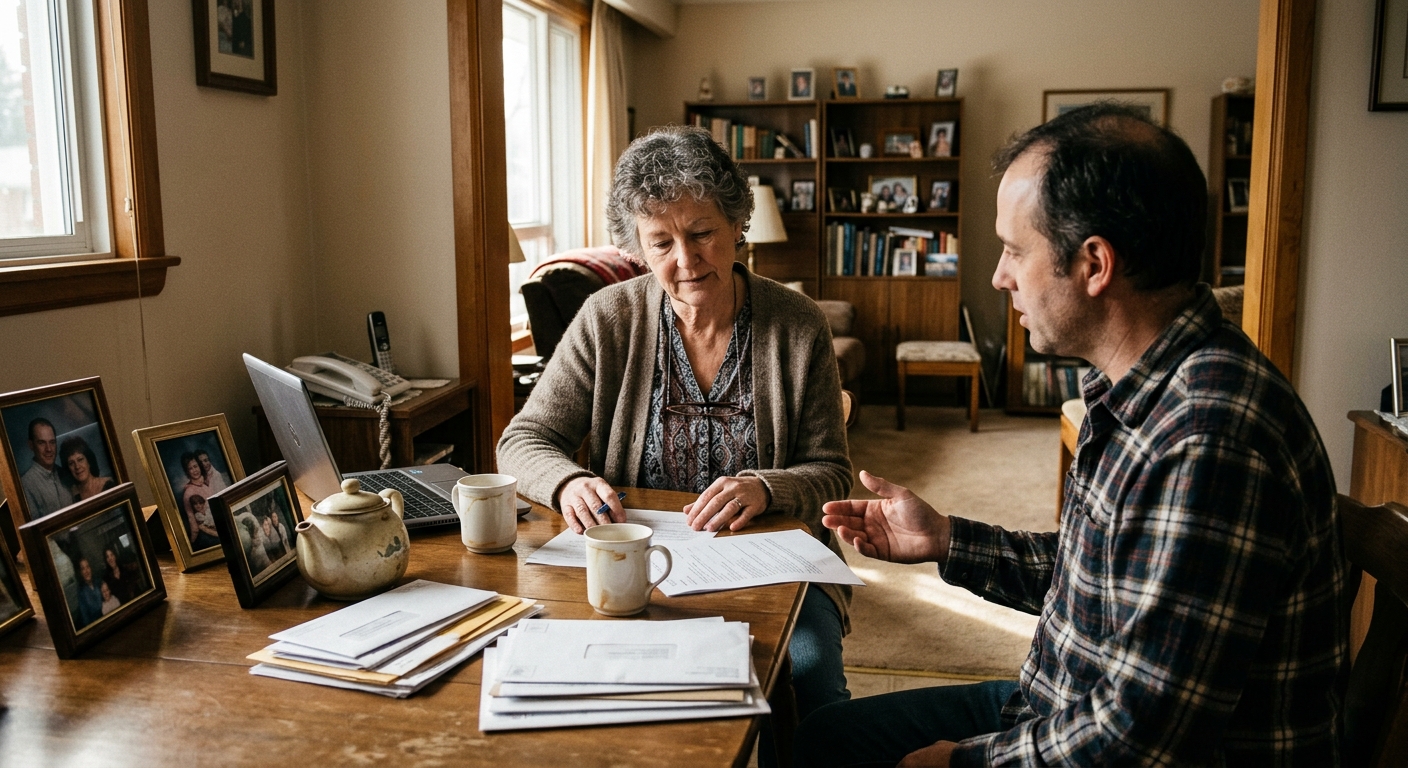
When adult children relocate for career opportunities, aging parents often step in financially—but traditionally do so by depleting retirement savings or redirecting pension income. A reverse mortgage reframes this support: you're converting home equity into opportunity capital that launches your child's next career chapter. This approach preserves your retirement income while enabling the family expansion you want to support.
The Real Cost of Employer Relocation to Ontario
What does an employer relocation package actually cover—and what's left to families? Most Canadian employer relocation packages are surprisingly limited:
Typical Employer Relocation Package (Toronto)
| Component | Usually Covered? | Amount |
|---|---|---|
| Moving and transportation | Often | $3,000–$8,000 |
| Temporary housing (30–90 days) | Often | $3,000–$8,000 |
| Realtor fees for home sale (origin) | Sometimes | 50% of fees (~$5,000) |
| Spousal career counseling | Rarely | $1,000–$3,000 |
| Bridge financing/gap financing | Rarely | — |
| School search/transition | Rarely | $500–$1,500 |
| Home inspection, appraisal, legal (destination) | Rarely | $2,000–$4,000 |
| Typical package total | — | $13,500–$25,000 |
What's NOT covered (employee/family responsibility):
- Bridge housing gap (if current home doesn't sell on time): $3,000–$8,000/month × 3–6 months = $9,000–$48,000
- Temporary rental while house-hunting: $2,000–$4,000/month × 2–4 months = $4,000–$16,000
- Spousal job search months (lost income while relocating, interviewing): $5,000–$20,000
- School tuition (private school transition): $3,000–$8,000
- Deposit and closing costs (if purchasing new home before old one sells): $15,000–$30,000
- Home modifications (if moving from accessible housing to inaccessible): $3,000–$15,000
Total shortfall: $39,000–$137,000+ not covered by employer package.
According to Statistics Canada, the average Ontario employer relocation package leaves families with a $35,000–$50,000 funding gap.
How a Reverse Mortgage Bridges the Relocation Gap
When your adult child receives an employer relocation offer to Ontario, a reverse mortgage can:
1. Fund Bridge Housing and Temporary Costs
Scenario:
- Your child's current home takes 4 months to sell (market-dependent)
- Temporary housing in Ontario: $3,500/month × 4 = $14,000
- Employer temporary housing covers only 60 days: $7,000
- Gap: $7,000
- Plus moving costs not fully covered: $2,000
- Total temporary costs shortfall: $9,000–$15,000
A reverse mortgage draw covers this temporary gap, allowing your child to relocate without financial panic while their original home sells.
2. Enable Purchase Before Original Home Sells
Major advantage for adult children:
- Most families can't purchase a new Ontario home until their old home sells (down payment contingency)
- But competitive Toronto real estate market means homes sell within days
- Your adult child loses bidding wars while waiting for their home sale to close
Reverse mortgage solution:
- You provide a "bridge gift" ($30,000–$50,000 via reverse mortgage)
- This gift covers down payment gap, allowing your child to purchase immediately
- When original home sells, they repay you (or your reverse mortgage is paid from inheritance if you pass)
- Child captures the Ontario home at the right price, in the right neighborhood
| Scenario | Outcome without Bridge | Outcome with Reverse Mortgage Bridge |
|---|---|---|
| Ontario home appears; must be bid on immediately | Child loses bidding war; delays purchase months | Child wins bid; purchases optimally-timed |
| Carrying costs (two mortgages, temporary rent) | Accumulate quickly; stress increases | Minimized; clean transition |
| Financial position | Depleted savings; stress | Preserved savings; supported transition |
| Relationship dynamic | Adult child feels burdened | Adult child feels supported |
3. Support Spousal Career Transition
Hidden cost of relocation: When a dual-career couple relocates, the trailing spouse (often female) often experiences career disruption. They may:
- Need 2–4 months to find new employment
- Take entry-level position to break into local market (salary cut)
- Require professional career coaching to navigate local job market ($2,000–$5,000)
- Experience lost income ($8,000–$25,000+)
A reverse mortgage allows you to fund this transition, offsetting the trailing spouse's income gap and enabling both adults to make strategic career moves rather than desperate ones.
According to Statistics Canada, relocating trailing spouses average $12,000–$18,000 in lost income during the first year after moving. Aging parent financial support significantly reduces this burden and improves relationship stability.
Reverse Mortgage Structure for Relocation Support
Timeline and Draw Strategy
Month 1: Job Offer Accepted
- Your child informs you of relocation opportunity
- You contact Rick Sekhon for reverse mortgage pre-qualification
- Qualification typically completes within 3–7 days
- You know what support is available
Month 2: Child Relocates
- Moving and temporary housing begin
- You draw $15,000–$25,000 from reverse mortgage for initial costs
- Your child begins new job immediately
- Employer relocation package processes (may be delayed 30–90 days)
Months 3–4: Bridge Housing Period
- Your child's original home is on the market
- You draw additional $5,000–$10,000 if needed for extended temporary housing
- Your child searches for permanent Ontario home
Month 5+: Stabilization
- Original home sells (down payment for new Ontario home)
- Your child purchases Ontario home using their funds
- Reverse mortgage balance remains; you retain unused equity
Funding Amount Calculation
| Family Situation | Likely Relocation Shortfall | Reverse Mortgage Draw Recommended |
|---|---|---|
| Single adult child relocating alone | $15,000–$25,000 | $20,000–$30,000 |
| Married couple, one trailing spouse job search | $30,000–$50,000 | $35,000–$55,000 |
| Family with school-age children, multiple transitions | $40,000–$60,000 | $45,000–$65,000 |
Most Ontario homeowners age 65+ can access $100,000–$300,000+ in reverse mortgage equity via lenders like Equitable Bank, HomeEquity Bank, CHIP, or Bloom Financial. A $30,000–$50,000 draw for relocation support is entirely feasible while retaining substantial remaining equity for aging-in-place or emergency needs.
Tax and Benefit Implications
Good news: Reverse mortgage funding for your adult child's relocation has minimal tax impact:
- Reverse mortgage draws are not taxable income to you
- Gifts to your adult child are not taxable income to them (gifts, not income)
- Your OAS and GIS eligibility are unaffected (funds are not income)
- Your CPP continues without interruption
According to the CRA, gifts from parents to adult children are never considered income for either party. This remains true whether funds come from savings, investment accounts, or reverse mortgage draws.
Key Takeaways
✓ Typical employer relocation packages leave $35,000–$50,000 funding gaps for Ontario moves
✓ Bridge housing, temporary costs, and spousal job search represent largest uncovered expenses
✓ Reverse mortgage enables early home purchase before original home sells (competitive advantage)
✓ Supporting relocation preserves adult child's financial stability and relationship strength
✓ Reverse mortgage draws are tax-free and don't affect OAS, GIS, or CPP
✓ Most Ontario homeowners 55+ can access $30,000–$55,000 for relocation support while retaining substantial remaining equity
Frequently Asked Questions
If I gift money to my adult child for relocation, do I lose control over how it's spent?
Yes, once gifted, the money is theirs to use as they see fit. To maintain control, you could alternatively offer a short-term loan (documented informally or formally) that they repay once settled. Discuss terms clearly upfront to avoid family misunderstandings.
Can the reverse mortgage funds be used specifically for purchasing a down payment?
Yes. Reverse mortgage proceeds can be used for any legitimate purpose, including down payment gifts to adult children. The lender won't restrict how you use the funds—only that you're using them responsibly as the homeowner. A gift for down payment is a perfectly legitimate use.
What if my adult child's job in Ontario doesn't work out and they want to move again?
This risk exists, but it's theirs to manage. You've provided bridge support for the opportunity; if it doesn't work out, your reverse mortgage remains your obligation (it doesn't disappear if their job fails). Discuss this risk before providing funds—make clear this is a one-time opportunity support, not ongoing relocation subsidies.
Should I expect repayment of the relocation funds?
This is a family decision. Some parents structure it as a gift; others as an informal loan with flexible repayment. Discuss and document your expectations clearly to avoid future conflict. If structured as a loan, you can decide whether repayment applies or whether it's forgiven upon your death (treated as inheritance).
If I provide relocation funds and then need to move to long-term care, how is this handled?
The reverse mortgage is repaid from your home sale proceeds. The gift you gave your adult child is separate—it remains their asset. If you later need long-term care, your adult child isn't obligated to repay the gift you gave them. Plan accordingly by ensuring remaining reverse mortgage equity is sufficient for your own aging-in-place or care needs.
Can my adult child co-sign the reverse mortgage to increase available funds?
No. Reverse mortgages are designed for borrowers 55+. If your adult child is younger, they cannot be a co-borrower. However, if your spouse is 55+, both of you can be on the loan together, which may increase available equity slightly.
Next Steps
If your adult child has received or is considering an employer relocation offer to Ontario:
- Calculate the funding gap — Determine what their relocation package covers vs. true costs
- Speak with Rick Sekhon — Get a reverse mortgage pre-qualification to understand available support
- Model different scenarios — Gift amount, timing, family financial expectations
- Discuss family terms — Clarify whether this is a gift or loan, and your expectations
- Execute quickly — Once opportunity is real, move fast to secure reverse mortgage pre-approval
Your adult child's career opportunity is also your family's opportunity. A reverse mortgage allows you to support that opportunity authentically.
For more on supporting adult children, explore our living legacy guide → and adult child support strategies →.
Ready to Learn More?
Find out exactly how much you could unlock from your home — free and no obligation.
Related Articles
Reverse Mortgage When Your Adult Child Is Between Jobs: Career Transition Gap Funding
Support your adult child during planned career transitions. Fund income gaps between jobs without them taking on personal debt.
Read →Reverse Mortgage When Adult Child Needs to Relocate for Career Opportunity: Supporting Geographic Career Moves
Help your adult child relocate for a major career opportunity with a reverse mortgage. Fund moving costs, deposits, and settlement in Ontario.
Read →Living Legacy: Gift Home Equity to Adult Children While You're Alive
How Ontario seniors can gift home equity to adult children during retirement using a reverse mortgage. Includes tax strategies and family planning considerations.
Read →