
Reverse Mortgage for Accessible Laundry and Household Management Spaces: Maintaining Home Independence
Fund laundry room modifications with a reverse mortgage—accessible design ensures independent household management as mobility and strength change with age in Ontario.
As arthritis, vision decline, and mobility limitations develop, washing and managing clothes becomes harder—but it's rarely discussed in aging-in-place planning. Most homeowners think about bathrooms and kitchens but overlook the laundry space, which becomes a hidden barrier to independence. A reverse mortgage can fund accessible laundry room design that lets you manage this essential task for decades to come.
Why Accessible Laundry Matters: The Overlooked Independence
Managing your own laundry isn't trivial. It's essential to:
- Maintain dignity: Wearing clean clothes of your choice, on your schedule
- Preserve independence: Not relying on adult children or paid caregivers for basic clothing care
- Sustain health: Clean clothes and bedding prevent skin infections and respiratory issues
- Stay engaged: Household management keeps you mentally active and connected to your living space
Yet traditional laundry setups become dangerous and impossible as you age.
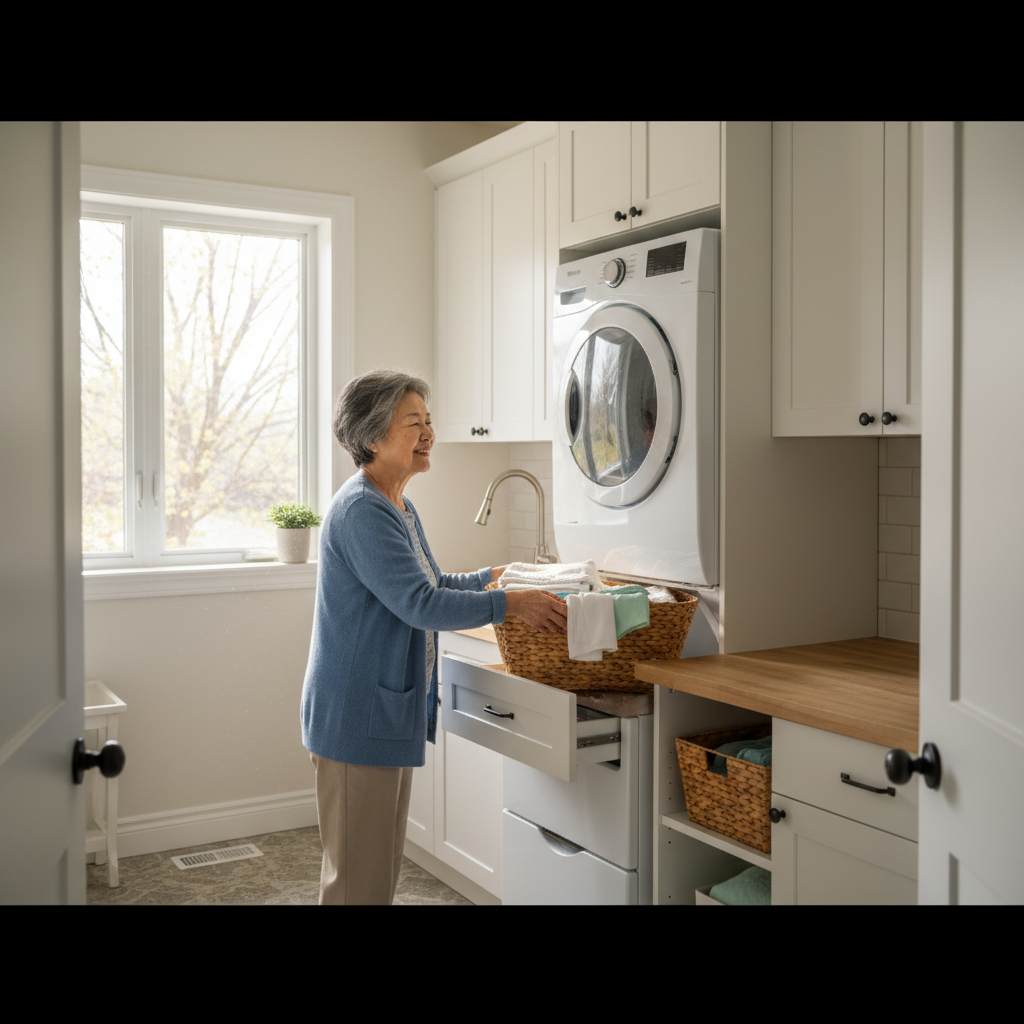
According to Statistics Canada, falls in laundry rooms (stumbling over baskets, slipping on wet floors, reaching overhead) are among the top 10 causes of senior injury in home environments. Many are preventable with proper design.
A reverse mortgage funds laundry room modifications that preserve your independence and dignity well into advanced age.
Common Laundry Room Barriers for Aging Adults
As you age, laundry becomes harder in specific, predictable ways:
| Barrier | Age of Onset | Challenge | Accessible Solution |
|---|---|---|---|
| Bending to front-load washer/dryer | 65–75 | Back pain, difficulty loading/unloading | Elevated washer/dryer on pedestals (12"–18" higher) |
| Reaching top-load machines | 65–75 | Shoulder strain, can't reach bottom of tub | Front-load only, or lifts to access top-loaders |
| Carrying heavy wet laundry | 60–75 | Risk of dropping, pulling muscles | Rolling cart system; lighter batch sizes |
| Managing multiple baskets | 65+ | Tripping hazard; coordination challenges | Organized rolling storage; minimize multi-basking |
| Wet floor slipping | 60+ | Reduced balance and proprioception | Non-slip flooring; drainage systems to prevent puddles |
| Operating controls (dials, buttons) | 60–70+ | Arthritis; difficulty turning knobs | Large buttons; touchscreen controls; simplified cycles |
| Accessing overhead shelving | 65–75 | Can't reach supplies safely | Lower shelving (36–48" max height); pull-down systems |
| Lighting quality | 60–70+ | Vision decline makes sorting difficult | Bright task lighting; color-coordinated organization |
| Hot surface burns | 65+ | Reduced sensitivity; longer healing | Cool-touch surfaces; clear hot/cold indicators |
| Folding and ironing stations | 70+ | Standing for long periods causes pain; reaching over counter | Seated folding area; adjustable-height ironing station |
These barriers accumulate. By age 75–80, doing laundry feels impossible without modifications.

What Accessible Laundry Room Modifications Cost
Accessible laundry modifications range from modest ($4,000–$8,000) to comprehensive ($15,000–$25,000+):
Budget Option: Elevation + Safety Only ($4,000–$8,000)
- Pedestals to elevate washer/dryer 12"–18": $800–$1,200
- Non-slip flooring (high-traffic area): $1,500–$2,500
- Grab bar near washer/dryer: $300–$500
- Better lighting (LED strips, task lights): $800–$1,200
- Rolling utility cart for laundry transport: $200–$400
- Accessible storage (lower shelving): $800–$1,200
Best for: Small laundry room; machines are already decent quality
Mid-Range Option: Equipment + Accessibility ($8,000–$15,000)
- All of budget option: $4,000–$8,000
- New front-load washer and dryer (if old machines aren't accessible): $2,000–$3,500
- Washer/dryer pedestals and installation: $1,200–$2,000
- Complete flooring upgrade to non-slip throughout: $2,000–$3,500
- Electrical upgrade for new machines: $500–$1,000
Best for: Older machines that can't be elevated; full room refresh
Comprehensive Option: Full Accessible Laundry Suite ($15,000–$25,000+)
- All mid-range modifications: $8,000–$15,000
- High-end front-load washer/dryer with accessibility features: $2,500–$4,000
- Folding and ironing station (custom-built, height-adjustable): $3,000–$5,000
- Complete room redesign (layout, storage, lighting): $2,000–$3,000
- Premium flooring, finishes, and installation: $2,000–$3,000
Best for: Dedicated laundry room; large space; planning long-term use (15–20+ years); luxury design
Reverse Mortgage as Your Laundry Room Funding Tool
A reverse mortgage is ideal for laundry room modifications because:
- Modest cost relative to total RM capacity: Most laundry projects cost $8,000–$15,000. For a $200,000+ reverse mortgage available, this is 5–8% of your capacity.
- Preserves emergency reserves: You fund laundry from RM without depleting savings needed for health crises.
- No monthly payments: All renovation funding goes to work, not debt service.
- Flexible timing: Can do laundry modifications now and preserve RM for future needs (aging parent care, medical expenses, etc.)
Example:
- Home value: $500,000; Age: 70
- Reverse mortgage available: ~$200,000
- Laundry room project: $12,000
- Draw percentage: 6% of available equity
- Remaining capacity: $188,000 for future needs
Designing Your Accessible Laundry Room: Key Elements
Universal design principles create laundry spaces that work for everyone:
1. Washer and Dryer Placement
- Front-load is ideal: Doors open at 28"–32" height—easier to load/unload than top-loaders
- Elevated on pedestals: Raises machine opening to 40"–48" height; minimal bending required
- Side-by-side placement: Reduces walking between machines
- Clearance space: At least 24" in front for wheelchair access (if needed)
2. Storage and Organization
- Lower shelving (36"–48" max height): Everything reachable without step stool
- Pull-down shelving: Supplies at eye level that pull down when needed
- Clear labeling: Large, high-contrast labels for detergent, fabric softener, etc.
- Rolling carts: For laundry transport instead of carrying baskets
3. Flooring and Safety
- Non-slip tile or rubber: Prevents slipping on wet surfaces
- Adequate drainage: Slope toward drain or sump pump to prevent puddles
- Seamless transitions: No tripping hazards at doorways or between flooring types
- Grab bars: Mounted securely near washer/dryer if balance is uncertain
4. Lighting
- Bright ambient lighting: Minimum 200 foot-candles throughout room
- Task lighting: Over sorting and folding areas
- No shadows: Fixtures positioned to eliminate dark spots
- Color-correct lighting: Helps distinguish similar colors (navy vs. black)
5. Climate Control
- Ventilation: Dryer exhaust and humidity managed; prevents mold
- Temperature: Kept comfortable for standing and light work
- Humidity control: Dehumidifier if basement laundry room is damp
6. Folding and Ironing
- Folding table at seated height: 28"–30" allows work while seated
- Ironing station: Drop-down or built-in; adjustable height ideal
- Seating nearby: Allow rest breaks during laundry tasks
- Adequate workspace: Minimum 3' × 4' folding surface
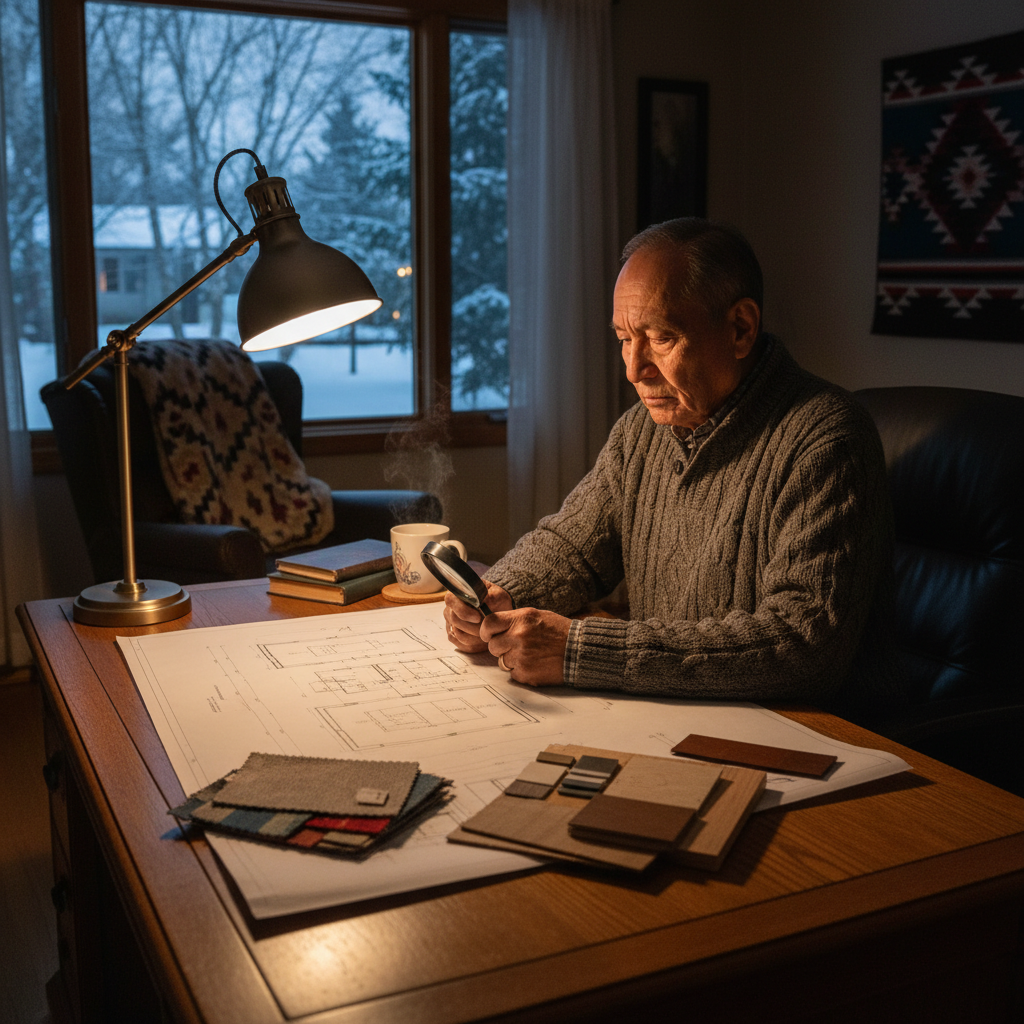
Alternative Layouts: If Standard Laundry Room Isn't Accessible
If you don't have a dedicated laundry room—or if it's in a hard-to-reach location—consider alternatives:
| Alternative | Setup Cost | Benefits | Challenges |
|---|---|---|---|
| Main floor laundry | $8,000–$20,000 (if building new location) | No stairs; fully accessible | Requires renovations; space may be limited |
| Laundry closet | $3,000–$6,000 (compact w/d stacked) | Reduces traveling; central location | Small machines; limited storage |
| Bedroom or accessible space | $5,000–$12,000 | Convenient; minimal mobility demands | May not be ideal ventilation; noise |
| Home-based delivery service | $150–$300/month (outsourced) | No physical work required | Ongoing cost; less independence; less control |
Strategy: If stairs to laundry room are unavoidable, a stair lift or main-floor laundry relocation funded by your reverse mortgage may be worth the investment for long-term independence.
Government Support and Tax Benefits
Ontario offers limited but meaningful support for laundry accessibility:
| Support | Amount | Eligibility |
|---|---|---|
| Home Accessibility Tax Credit (Federal) | Up to $20,000 eligible costs claimed annually | Ages 65+ or caregivers for seniors |
| Ontario AoO (Accessibility of Ontarians with Disabilities Act) Tax Credit | 15% of eligible costs (up to $20,000/year in credits) | Permanent disability (mobility counts) |
| Registered Disability Savings Plan (RDSP) funding | Can allocate RDSP to accessibility modifications | Must have approved disability |
| Property tax reduction (some municipalities) | 5–15% property tax reduction for accessibility | Varies by city; check local bylaws |
Strategy: Combine your reverse mortgage with tax credits. A $12,000 laundry project that qualifies for 15% tax credit ($1,800) reduces your net cost to $10,200.
Frequently Asked Questions
How long will accessible laundry equipment last?
Quality front-load washers and dryers last 12–15 years. Pedestals and modifications last 20+ years if maintained. A well-designed laundry room pays dividends over 15–20+ years of aging in place.
Can I retrofit my existing washer and dryer with pedestals?
Yes. Most pedestals ($400–$800 each) fit under existing machines. However, if your machines are 15+ years old, replacement with new machines (with built-in accessibility features) may be smarter.
What if I don't have a dedicated laundry room?
Relocating laundry to a more accessible space (main floor, bedroom, closet) is possible but costlier ($8,000–$20,000+). Consider your layout and mobility trajectory before deciding.
Is washer/dryer maintenance harder as I age?
Yes—but modern machines are simpler. Front-load machines have self-cleaning cycles. Avoid older top-loaders with complex mechanical controls. Choose machines with large, clear digital displays.
Can I use my reverse mortgage for ongoing laundry service instead of modifications?
Yes, but ongoing cost ($100–$200/month) compounds over time. $150/month × 20 years = $36,000. A $12,000 one-time modification is typically better economics.
What if I move to a nursing home later?
Laundry room modifications remain with your home (part of its value if you sell). They've enabled 10–20 years of independent living. That's worth the investment.
Moving Forward: Maintaining Laundry Independence
Your ability to manage your own laundry—to keep clothes and bedding clean on your schedule—is a cornerstone of independent living. A reverse mortgage can fund the modifications that preserve this independence.
- Assess your current laundry situation: What's difficult? What prevents you from managing alone?
- Consult a universal design specialist: They can recommend specific modifications for your space
- Get quotes: 2–3 contractors familiar with accessible laundry design
- Speak with Rick Sekhon Reverse Mortgages to confirm available capital
- Plan the modification: Prioritize elevation and safety first; add luxury (new machines, folding station) as budget allows
- Complete the renovation: Enjoy 15–20+ years of independent household management
Managing your own laundry keeps you independent, engaged, and dignified. A reverse mortgage makes that possible.
Learn about aging in place home modifications →
Explore full home accessibility planning →
Understand funding home renovations →
Ready to Learn More?
Find out exactly how much you could unlock from your home — free and no obligation.
Related Articles
Reverse Mortgage for Accessible Bedroom Design: Sleep and Comfort in Aging
How Ontario seniors can use a reverse mortgage to redesign bedrooms for accessibility, comfort, and quality sleep that supports health and independence in aging.
Read →Reverse Mortgage for Home Renovations: Aging in Place Guide for Ontario Seniors
Learn how to use a reverse mortgage to fund home renovations and modifications that let you age in place safely and comfortably in your Ontario home. Includes cost examples and step-by-step process.
Read →Aging in Place with a Reverse Mortgage: Home Modification Guide
How Ontario seniors can fund aging-in-place home modifications with a reverse mortgage — costs, top modifications, grants, and a complete planning guide.
Read →