
Stacking Accessibility Grants With Reverse Mortgage Equity: Maximizing Your Home Modification Funding
Combine Ontario accessibility grants with reverse mortgage to fund home modifications. Strategic grant stacking reduces personal equity costs.
You need $35,000 in home modifications to age in place: a bathroom renovation, walk-in shower, ramp, and stair lift. Ontario offers multiple accessibility grants—some covering 50–100% of costs—but navigating overlapping programs to maximize free funding while minimizing your out-of-pocket costs requires strategy.
A reverse mortgage, combined with grants, can eliminate personal out-of-pocket costs entirely. Here's how.
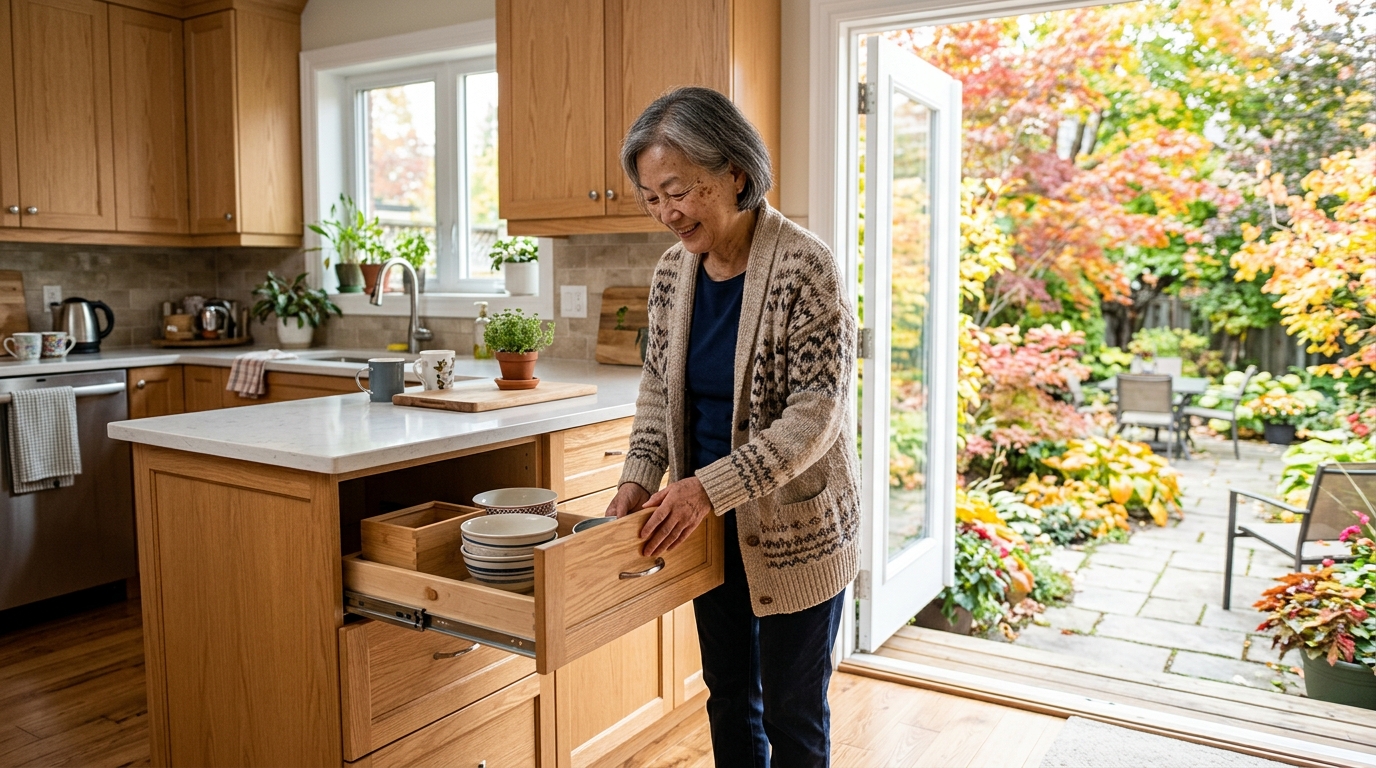
Ontario's Accessible Home Modification Grants (2026)
Ontario seniors and homeowners with disabilities can access multiple grant programs. The key is applying to them strategically, in sequence, to maximize coverage before using personal funds.
| Program | Eligibility | Coverage | Typical Grants |
|---|---|---|---|
| AODA Ontario Accessibility Tax Credit (AoO) | Ontario residents 18+; home modifications for disability | 15% of eligible costs up to $15,000 limit | $2,250–$3,750 annually |
| Canada Disability Savings Plan (RDSP) | Registered Disability Savings Plan holders | Varies; matched government grants | $1,500–$2,500 annually for approved renovations |
| Residential Rehabilitation Assistance Program (RRAP) | Low-to-moderate income homeowners | Up to 100% of eligible repairs (max $32,000) | Full funding if income-qualified |
| Energy Efficiency Retrofit Incentive | Ontario homes needing efficiency upgrades | Covers 50–80% of HVAC, windows, insulation | $5,000–$15,000 combined with accessibility |
| Accessibility Modifications through Workplace Insurance | Workers' compensation claimants | 100% of approved modifications | $2,000–$10,000 if injury-related |
Critical insight: Most people access one grant and pay the rest personally. Strategic homeowners layer multiple programs to access $15,000–$25,000 in grants before touching personal funds.
Strategic Grant Stacking: Order Matters
Grants have different eligibility criteria and timing. Apply in this sequence:
Step 1: Disability Tax Credit (DTC) & RDSP (if applicable)
If you have a diagnosed disability, apply for:
- Disability Tax Credit (CRA) — tax credit your accountant can use to reduce tax liability
- Registered Disability Savings Plan — allows tax-sheltered savings and matching government grants ($1,500–$2,500/year if contributed)
Timeline: 3–6 months for DTC approval; 4 weeks for RDSP setup.
Benefit: Unlocks subsequent programs; tax credits can be carried forward.
Step 2: AODA Accessibility Tax Credit
Once you have DTC approval (or independently if you have certified disability):
- Hire an occupational therapist or certified aging-in-place specialist to assess your home ($300–$800)
- Have them document which modifications are medically necessary (bathroom grab bars, walk-in shower, ramp, etc.)
- File tax credit claim with CRA
Timeline: 4–8 weeks; credit appears on next tax return.
Benefit: 15% refund of eligible costs, up to $15,000/year in claims.
Step 3: RRAP (Residential Rehabilitation Assistance Program)
This is a federal program—slower but potentially full-funding.
Eligibility:
- Own and occupy the home
- Income below $68,000/year (2026 threshold)
- Home needs "essential repairs" (accessibility qualifies)
Coverage: Up to 100% of eligible costs; maximum loan of $32,000.
Timeline: 8–12 weeks; funds dispersed after work completion.
Step 4: Energy Efficiency Programs (Combined With Accessibility)
Ontario's Green Energy programs often overlap with accessibility:
- Furnace/HVAC replacement: Can be bundled with air quality upgrades accessible for arthritis/asthma
- Window replacement: Improves accessibility (better lighting for low-vision aging) + efficiency
- Insulation: Thermal comfort for aging homeowners
These programs often cover 40–60% of combined accessibility + efficiency projects.

Real-World Example: $35,000 Project, $0 Out-of-Pocket
Jennifer, 72, in Windsor, Ontario, needed:
- Bathroom renovation with walk-in shower: $18,000
- Ramp and entrance modifications: $5,000
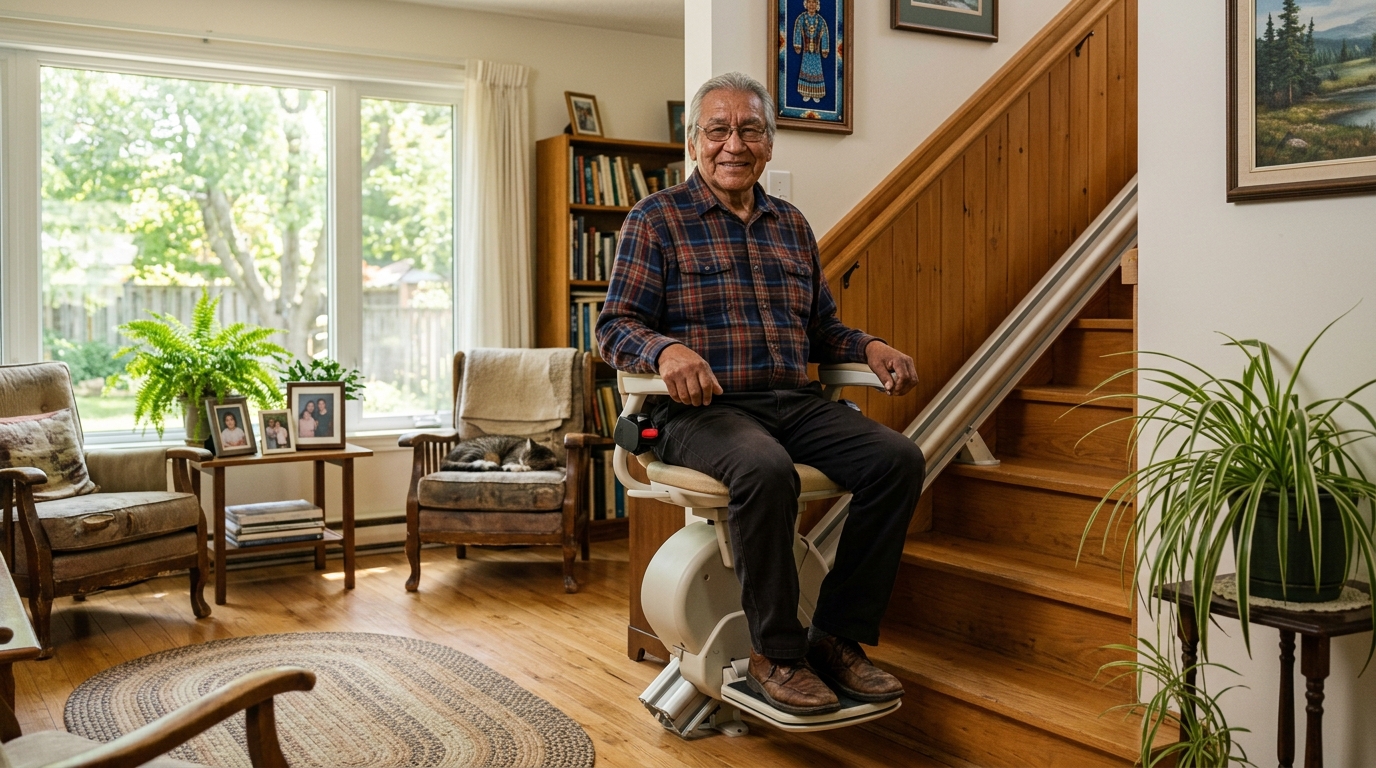
- Stair lift: $8,000
- HVAC replacement (accessibility + efficiency): $12,000
- Total project: $43,000
Jennifer strategically applied to grants:
-
AODA Tax Credit: Hired OT to assess; claimed $32,000 in modifications as disability-related. Got $3,750 tax credit (claimed over 2 years).
-
RRAP Program: Applied; income-qualified. Received $25,000 grant (not loan) for bathroom + ramp + efficiency work.
-
Energy Rebate Program: HVAC replacement; received $3,200 rebate for high-efficiency unit.
-
Workplace Insurance (WSIB): Jennifer had a previous work-related injury; WSIB approved stair lift ($8,000) as injury-related accommodation.
-
Reverse Mortgage: Remaining cost = $43,000 – ($3,750 + $25,000 + $3,200 + $8,000) = $3,050. Jennifer accessed a small reverse mortgage line of credit for final costs.
Result: $43,000 project funded by $40,950 in grants + $3,050 in personal RM funds. Jennifer paid approximately 7% out-of-pocket instead of 100%.
Timing Strategy: When to Access Reverse Mortgage
DON'T access reverse mortgage until grants are exhausted:
- Month 1–3: Apply to all grant programs simultaneously (they don't conflict)
- Month 4–6: Complete grant assessments and approvals
- Month 6–8: Execute renovations funded by grants
- Month 8–9: Access reverse mortgage for any remaining costs
This approach minimizes reverse mortgage borrowing because you're using free money first.
| Scenario | All From RM | With Grant Stacking | Savings |
|---|---|---|---|
| $25,000 accessibility project | $25,000 RM borrowed | $15,000 grants + $10,000 RM | $15,000 (no interest on grant portion) |
| $40,000 project | $40,000 RM | $25,000 grants + $15,000 RM | $25,000 over 10 years = $13,750 in interest saved |
| $50,000 project | $50,000 RM | $35,000 grants + $15,000 RM | $35,000 + $19,250 interest savings |
Coordination: Don't Leave Money on the Table
Common mistakes:
-
Applying to only one grant: Most people claim AODA tax credit and stop. They miss RRAP (which doesn't require repayment) and energy programs.
-
Delaying grant applications while accessing reverse mortgage: You borrow at 5.5%, when you could have received free money first.
-
Not documenting disability or occupational therapy assessment: Without formal assessment, you can't claim AODA credit or RRAP. The $300–$800 assessment fee is recouped in grant money within weeks.
-
Bundling unrelated work: Grants are strict about what qualifies as "accessibility" vs. cosmetic. Shower tile color doesn't qualify; grab bars do. Work with contractors experienced in grant-funded accessibility.
According to FCAC, seniors leave $8,000–$15,000 in unclaimed grants annually by not understanding stacking strategy.
Key Takeaways
- Ontario offers 5–7 overlapping accessibility grants covering 40–100% of home modification costs
- Grant stacking (layering multiple programs) can reduce personal out-of-pocket costs by 50–80%
- Order matters: Apply to grant programs first (DTC → AODA → RRAP → energy programs) before accessing reverse mortgage
- Formal assessments (occupational therapist, certified aging-in-place consultant) unlock grants but cost only $300–$800
- Reverse mortgage becomes the gap-filler, covering 10–30% of costs after grants are exhausted
- Tax credits from AODA can be carried forward; don't leave them unclaimed
- Rick Sekhon Reverse Mortgages can coordinate with contractors to ensure grant-eligible work is properly documented
Frequently Asked Questions
If I apply for grants, do I have to disclose the reverse mortgage?
No. Grant applications ask about income and home ownership, not existing mortgages. However, if a grant program (like RRAP) provides funds, it becomes a lien against your home—meaning your reverse mortgage and RRAP are both registered. This doesn't prevent either from being approved; it's routine.
Can I use grant money to pay down an existing reverse mortgage?
Yes. Grant money is yours to use however you wish. Many people strategically apply for grants, receive funding, and immediately use it to reduce reverse mortgage balance—effectively getting free equity reduction.
What if I don't qualify for any grants based on income?
Income-based grants (like RRAP) have cutoffs. If you're above the threshold, focus on:
- AODA Tax Credit (no income limit)
- Energy programs (no income limit)
- RDSP (if you have DTC)
These can still offset 30–50% of costs.
Are there grants for renters, or only homeowners?
Most accessibility grants require you to own the home. Renters have limited options; discuss with your landlord about modifications or consider assistance through disability services organizations. Reverse mortgage is unavailable for renters (you need to own).
How long does grant stacking take?
3–9 months from application to full funding. However, you can start renovation work as grants are approved sequentially, rather than waiting for all to complete. Most contractors accept staged payment as grants arrive.
Do grants reduce what I can borrow with a reverse mortgage?
No. Reverse mortgage eligibility is based on home equity, not other funding sources. Receiving $20,000 in grants doesn't reduce your RM borrowing capacity. It just means you borrow less because you have free money.
Accessibility modifications don't have to be purely out-of-pocket. Layering Ontario grants strategically with reverse mortgage equity means your aging-in-place home can be funded efficiently—mostly through grants, minimally from personal borrowing.
Ready to maximize your accessibility grants? Contact Rick Sekhon Reverse Mortgages to coordinate grant applications with reverse mortgage planning.
Ready to Learn More?
Find out exactly how much you could unlock from your home — free and no obligation.
Related Articles
Reverse Mortgage for Aging in Place With Fibromyalgia: Home Modifications for Invisible Illness
Fund home modifications for aging with fibromyalgia. Reverse mortgage enables accessible design for pain management, energy conservation, and quality of life.
Read →Reverse Mortgage for Accessible Community Kitchen: Culinary Training and Aging in Place
Convert your home kitchen into an accessible commercial culinary training space. Reverse mortgage funds renovation while creating community impact.
Read →Reverse Mortgage When You Previously Gifted Home Down Payment to Adult Child: Reclaiming Equity for Aging in Place
Reverse mortgage strategy when aging in place after gifting down payment to adult child. Recover equity for home modifications and care.
Read →