
Reverse Mortgage for Accessibility Equipment: Leasing vs Buying Strategy
Decide whether to lease or buy accessibility equipment using reverse mortgage funds. Master the capital strategy for aging in place in Ontario.
Should you buy or lease accessibility equipment when using a reverse mortgage? For aging-in-place seniors, this choice has massive financial implications. A motorized wheelchair costs $10,000–$40,000 to buy but $400–$600/month to lease. A stair lift costs $6,000–$10,000 to buy, $200–$300/month to rent. Over a 5-year aging period, the decision between capital purchase and operational lease can mean $15,000–$50,000 difference. A reverse mortgage lets you structure either approach—but choosing wisely saves thousands and maintains flexibility as your health changes.
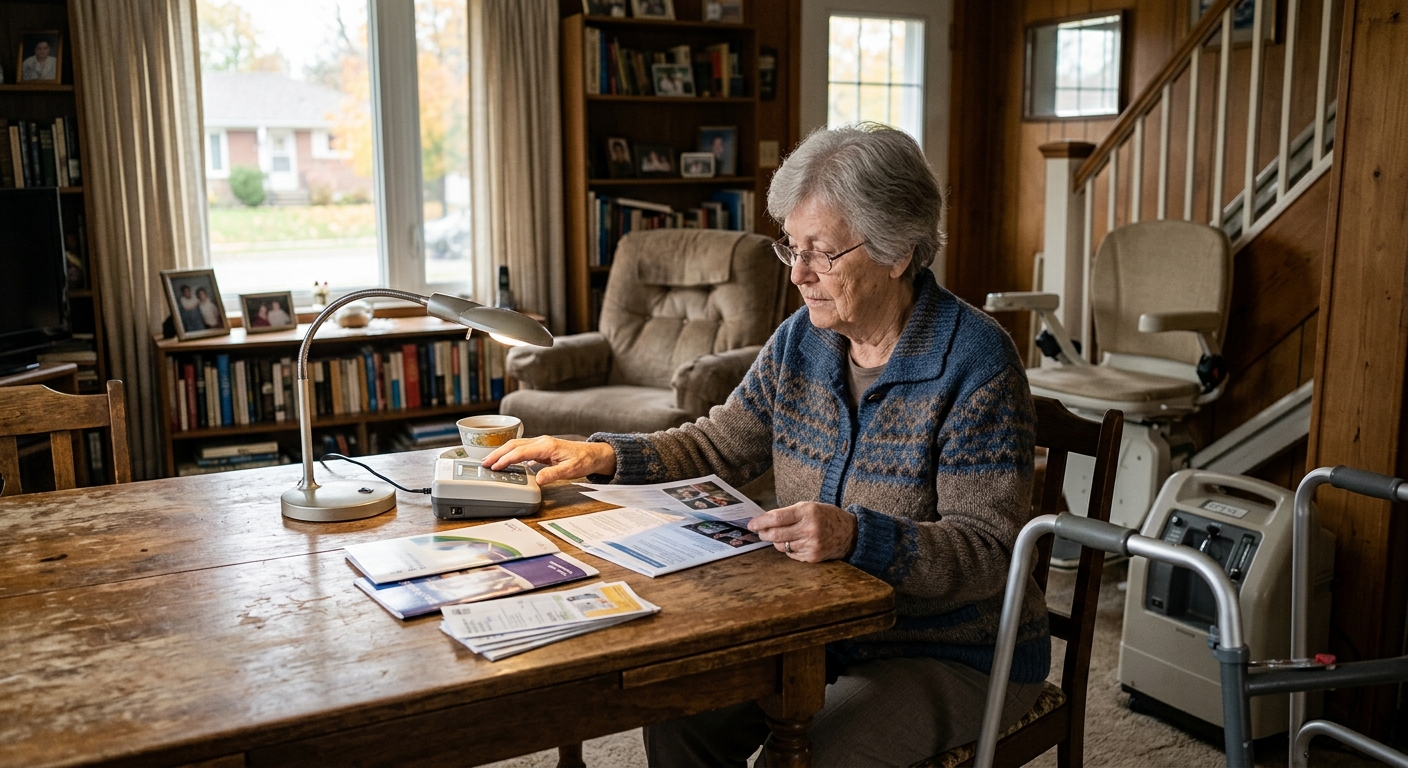
The Accessibility Equipment Cost Explosion
Most aging-in-place seniors need multiple pieces of accessibility equipment, and costs mount quickly:
| Equipment Type | Buy Cost | Monthly Lease | 5-Year Total Cost (Lease) | Buy vs Lease Verdict |
|---|---|---|---|---|
| Motorized wheelchair | $15,000–$40,000 | $400–$600 | $24,000–$36,000 | Buy if keeping 5+ years |
| Stair lift | $6,000–$10,000 | $200–$300 | $12,000–$18,000 | Buy if keeping 3+ years |
| Hospital bed (electric) | $3,000–$8,000 | $150–$250 | $9,000–$15,000 | Buy if mobility permanent |
| Lift chair (recline/stand assist) | $1,500–$4,000 | $100–$200 | $6,000–$12,000 | Buy if mobility stable |
| Toilet seat riser + grab bars | $500–$1,500 | Rarely leased | $500–$1,500 | Always buy (cheap) |
| Ceiling-mounted lift system | $5,000–$15,000 | $300–$500 | $18,000–$30,000 | Buy if caregiver support plan |
| Typical full aging-in-place setup | $31,000–$78,000 | $1,150–$1,850/mo | $69,000–$111,000 | Critical decision |
For many retirees, this equipment list represents 25–50% of their total retirement home modification budget. The buy-vs-lease decision is one of the highest-impact financial choices in aging-in-place planning.
Why the buy-vs-lease choice matters
This isn't just about equipment. It's about:
- Capital preservation: Buying depletes your reverse mortgage liquidity; leasing preserves capital for other needs
- Health flexibility: Leasing lets you return equipment if your health improves or decline accelerates (buying locks you in)
- Tax implications: Buying may qualify for accessibility tax credits (depending on equipment); leasing expenses don't
- Caregiver burden: Ownership means you maintain, repair, insure equipment; leasing transfers this burden to the lessor
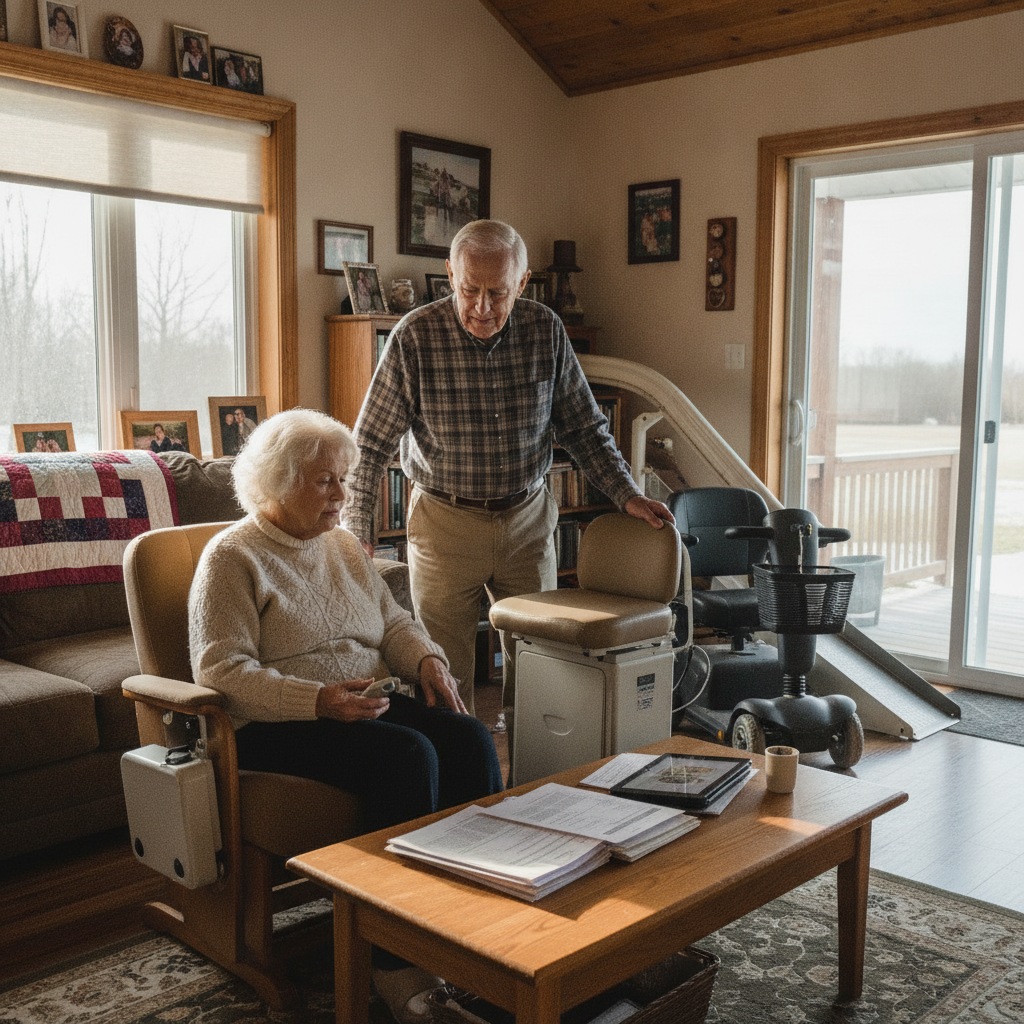
Buy vs Lease Decision Framework
The optimal strategy depends on three factors: equipment permanence, mobility prognosis, and financial situation.
Factor 1: How permanent is your need?
| Equipment Need | Permanence | Recommended Strategy |
|---|---|---|
| Mobility declining (arthritis, COPD, heart disease) | Likely permanent (5+ years) | BUY most equipment |
| Recent stroke/illness (recovery uncertain) | 1–2 years uncertain | LEASE initially, buy if permanent after 12 months |
| Advanced neurological disease (progressive decline) | Rapidly changing (need different equipment as condition worsens) | LEASE everything (flexibility critical) |
| Joint replacement recovery or temporary mobility loss | 3–6 months | LEASE during recovery, return after |
| Caregiver support role (helping aging parent) | 2–5 years | LEASE until role changes |
Factor 2: Is your mobility prognosis improving, stable, or declining?
| Prognosis | 5-Year Outlook | Buy Recommendation | Lease Recommendation |
|---|---|---|---|
| Improving (post-surgery recovery, rehab) | Return to independence | BUY sparingly (temporary); lease most | Lease 80% of equipment; buy only essentials |
| Stable (chronic condition, managed well) | Same mobility level | BUY core equipment; lease specialty items | Lease 50% (flexibility); buy 50% (essentials) |
| Declining (progressive disease, advanced age) | More equipment needed; current equipment may become unusable | BUY with caution; plan for future equipment changes | Lease 80%+ (changing needs); buy only fixed infrastructure |
Factor 3: Does your reverse mortgage favor capital preservation or flexibility?
| RM Strategy | Best Approach |
|---|---|
| Lump sum (take all capital upfront): Limited ongoing access | BUY core equipment immediately; lease specialty items (stretches lump sum across 5+ years) |
| Line of credit (draw as needed): Maximum flexibility | LEASE most equipment; buy only essentials; use ongoing RM draws for lease payments |
| Monthly income draws: Predictable cash flow | Lease equipment (match lease payments to monthly draw amount) |
Real-world example: Two different aging-in-place paths
Scenario A: Margaret (stable mobility, long prognosis)
Margaret, 72, has moderate arthritis and COPD, stable on current medication. Her prognosis: 12–15 more years of independent living. She accesses a $150,000 reverse mortgage lump sum.
Margaret's equipment needs:
- Motorized wheelchair (permanence: 10+ years; prognosis: stable)
- Stair lift (permanence: 10+ years; prognosis: stable)
- Hospital bed (permanence: 5+ years; prognosis: stable)
- Ceiling-mounted lift (permanence: 15+ years; prognosis: long-term)
Margaret's strategy: BUY most equipment
- Buy motorized wheelchair: $25,000
- Buy stair lift: $8,000
- Buy hospital bed: $5,000
- Buy ceiling-mounted lift: $12,000
- Total capital: $50,000
- Remaining RM reserves: $100,000 for other aging-in-place modifications, future healthcare, emergencies
Margaret's outcome: Equipment is depreciated, fully owned, and requires no ongoing lease payments. Her monthly cash flow is unencumbered. If her mobility remains stable (likely), the equipment lasts 10+ years, making the buy cost far cheaper than leasing (5-year lease cost = $75,000; Margaret's total cost = $50,000).
Scenario B: James (declining mobility, progressive disease)
James, 68, has early-stage ALS (amyotrophic lateral sclerosis), a progressive neurodegenerative disease. His mobility is declining rapidly; he'll need different equipment in 6 months, 18 months, 3 years as the disease progresses. He accesses a $180,000 reverse mortgage line of credit.
James's equipment needs (changing):
- Year 1: Stair lift, mobility assist chair, grab bars
- Year 2: Motorized wheelchair (new model for advanced weakness)
- Year 3: Ceiling-mounted lift system, specialized hospital bed
- Year 4+: Specialized end-of-life care equipment (as needed)
James's strategy: LEASE most equipment
- Lease stair lift (can remove when bedridden): $250/month × 36 months = $9,000
- Lease lift chair (swap for wheelchair mid-journey): $150/month × 24 months = $3,600
- Lease motorized wheelchair (replace with specialized model as needed): $500/month × 24 months = $12,000
- Lease ceiling-mounted lift system: $400/month × 36 months = $14,400
- Total 3-year lease cost: $39,000
James's outcome: Equipment changes as disease progresses without capital loss from outdated purchases. Lessor handles maintenance, repair, updates (critical with ALS). Reverse mortgage LOC draws fund lease payments as they occur. No upfront capital depletion. If James's needs shift (shorter or longer timeline), lease flexibility accommodates. Total cost is higher than buying ($39,000 vs $50,000 if bought), but flexibility justifies the $11,000 premium given his uncertain, progressive prognosis.
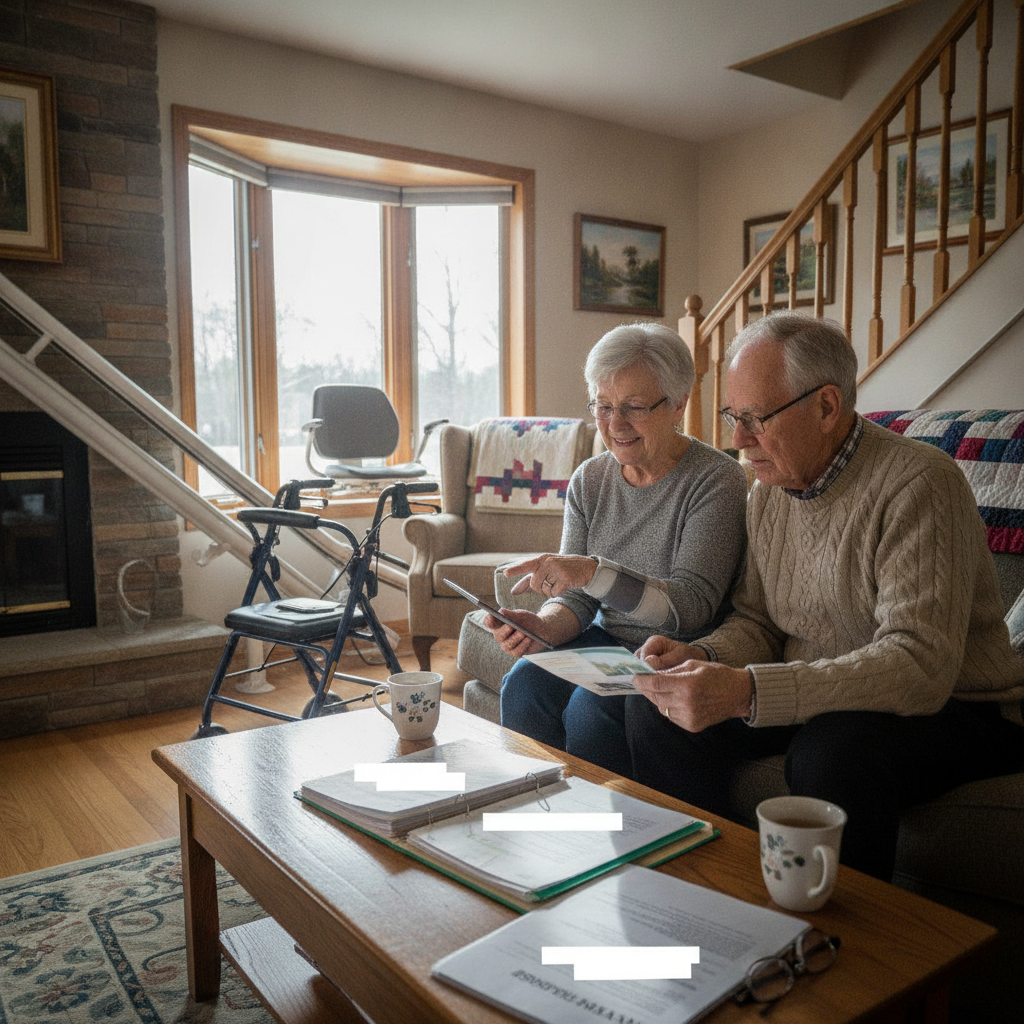
Tax & Accessibility Credit Considerations
Accessibility equipment may qualify for tax credits, which favors buying in some cases:
Ontario Accessibility Tax Credit
If you buy accessibility equipment, you may claim Disability Tax Credit (DTC) or Caregiver Amount:
| Credit | Equipment Qualification | Tax Benefit |
|---|---|---|
| Disability Tax Credit (DTC) | Motorized wheelchairs, stair lifts, hospital beds (if prescribed by physician) | ~$2,500–$5,000 annual non-refundable credit (reduces income tax) |
| Caregiver Amount | Accessibility equipment supporting family caregiver | ~$2,400 annual non-refundable credit |
| Medical Expense Credit | Lease payments for mobility equipment | Some provinces allow lease payments as medical expenses |
Important: Leasing equipment typically does not qualify for DTC or Caregiver credits. The credits apply to purchased equipment owned by the senior.
CRA guidance on accessibility equipment
According to the CRA, purchased accessibility equipment may be claimed as:
- Disability Tax Credit (if device is prescribed or necessary for mobility)
- Medical expenses (certain items can be deducted if you itemize)
Reverse mortgage funds used to buy qualifying equipment don't trigger any tax complications. Proceeds are tax-free (loan, not income), so buying equipment with RM proceeds is tax-neutral.
Reverse Mortgage Optimization: The Hybrid Approach
Smart aging-in-place seniors use a hybrid buy/lease strategy to optimize both capital and flexibility:
| Equipment Category | Strategy | Rationale |
|---|---|---|
| Fixed, permanent modifications (grab bars, raised toilet seat, threshold ramps) | BUY | Cheap, permanent, owned for life; no lease available |
| Core mobility equipment (stair lift, primary wheelchair, hospital bed) | BUY | High daily use; leasing = $12,000–$36,000 over 5 years |
| Specialized/temporary equipment (specialized lift chair, shower chairs, commodes) | LEASE | May only use for 1–2 years; leasing avoids capital lock-up |
| Caregiver support tools (ceiling-mounted lifts, patient lifting slings) | BUY | Caregiver daily tool; long-term cost savings if caregiver is stable |
| Backup/redundancy equipment (extra commode, backup walker) | LEASE | Only needed if primary fails; leasing spreads cost |
Hybrid example for Margaret's $150,000 RM:
- Buy ($50,000): Motorized wheelchair, stair lift, hospital bed, grab bars, ramps
- Lease ($300/month × 60 months = $18,000): Specialized equipment, temporary items, backup devices
- Reserve ($82,000): Future modifications, healthcare, emergencies, lifestyle enhancements
This hybrid approach balances capital preservation with flexibility.
Key Takeaways
✓ Accessibility equipment for aging in place costs $31,000–$78,000 total, with buy-vs-lease decisions creating $15,000–$50,000 cost differences
✓ Buy equipment if your mobility needs are stable and permanent (arthritis, COPD, stable chronic conditions); buying saves $15,000–$40,000 over 5+ years
✓ Lease equipment if your mobility is declining or uncertain (progressive disease, post-recovery rehab); leasing provides flexibility as health changes
✓ Reverse mortgage line of credit (not lump sum) is ideal for lease payments, providing ongoing funding as equipment changes
✓ Purchasing equipment may qualify for Disability Tax Credit ($2,500–$5,000 annual), while leasing typically does not qualify (favors buying for tax purposes)
✓ Hybrid approach optimizes costs: Buy permanent core equipment, lease specialized/temporary items, reserve reverse mortgage funds for other aging-in-place needs
Frequently Asked Questions
Can I lease through a reverse mortgage, or do I need to use ongoing income?
Either works. If you have a reverse mortgage line of credit, you can draw monthly funds to cover lease payments. Alternatively, lease payments come from your regular retirement income (CPP, OAS, pension). Many seniors combine both: draw some reverse mortgage funds ($200–$400/month) + pay some from CPP ($200–$300/month), so lease doesn't fully deplete retirement cash flow.
What if I buy equipment and my health improves (I don't need it)?
You can sell used equipment, though resale value is typically 30–50% of original cost. This is a risk of buying. If you're uncertain (e.g., post-stroke recovery, rehabilitation uncertain), leasing is safer because you return the equipment without loss. Insurance on purchased equipment may also cover some loss if health improves unexpectedly.
Does leasing equipment affect my CPP, OAS, or disability benefits?
No. Lease payments are operational expenses, not income or assets. They don't trigger any government benefit impacts. Reverse mortgage funds (if used to pay lease costs) are loan proceeds, also non-income. According to the CRA, leasing mobility equipment has no benefit impact.
Can my adult child or caregiver be listed on the lease or purchase agreement?
Yes, for practical reasons. If your caregiver is involved in equipment setup/maintenance, they may be the lease contact. However, ownership (for tax credit purposes) must be in your name as the senior. Consult your lease company and tax advisor on structure.
What if I lease equipment and then need different equipment mid-lease?
Most equipment lease companies allow mid-lease returns with early termination fees (typically 10–20% of remaining lease value). It's more flexible than buying but costs more upfront. Factor this into your decision: if you expect equipment changes, leasing with potential early termination is cheaper than buying and selling equipment multiple times.
Are reverse mortgage funds adequate to cover the equipment I actually need?
For most seniors, yes. A typical reverse mortgage of $100,000–$200,000 covers both accessibility equipment AND other aging-in-place needs (home renovations, caregiver support, healthcare). If you're uncertain, consult Rick Sekhon Reverse Mortgages to understand how much you can borrow and strategize the allocation between equipment (buy vs lease), renovations, and other aging-in-place priorities.
Ready to optimize your accessibility equipment strategy? Get your free Ontario Reverse Mortgage Guide →
Ready to Learn More?
Find out exactly how much you could unlock from your home — free and no obligation.
Related Articles
Reverse Mortgage for Mobility Equipment: Funding Walkers, Lifts, and Essential Accessibility Aids
Fund essential mobility equipment and accessibility aids to stay independent at home. Wheelchair lifts, walkers, grab bars, and medical equipment for Ontario seniors.
Read →Reverse Mortgage for Accessibility Professional Assessment
Fund home accessibility evaluations and professional assessments before renovations. Ontario guide for seniors planning aging-in-place modifications.
Read →Aging in Place with a Reverse Mortgage: Home Modification Guide
How Ontario seniors can fund aging-in-place home modifications with a reverse mortgage — costs, top modifications, grants, and a complete planning guide.
Read →