
Reverse Mortgage for Home-Based Writing Retreat and Workshop Center: Hosting Writers and Creatives
Host writers, authors, and creatives at your home for retreats and workshops. Reverse mortgage funds guest accommodations and retreat infrastructure.
Writers, poets, and creatives desperately need retreat spaces—quiet, inspiring places to focus for days or weeks on their craft. If your Ontario home has multiple bedrooms, a natural setting, or character, you can host writing retreats charging $1,500–$3,500 per writer per week. A multi-week retreat hosting 3–4 writers generates $4,500–$14,000 revenue per week. A reverse mortgage funds guest amenities, retreat infrastructure, and marketing while your retreat fees build substantial seasonal income aligned with creative seasons (fall and winter writing sprints).
The Exploding Demand for Writing Retreats in Ontario and Canada
The publishing and creative industries are booming. Writers face a challenge: Writing requires focus, and home distractions (family, jobs, social obligations) prevent deep creative work. Writing retreat centers are selling out 6–12 months in advance at premium prices.
Why writers choose retreats:
- Focus and productivity: Away from home distractions, writers complete manuscripts 3–5x faster
- Community and support: Retreats create peer networks with other writers
- Accountability and structure: Group writing sessions and feedback drive completion
- Inspiration and environment: Retreat centers offer natural settings, writing communities, and creative energy
- Professional development: Many retreats include craft workshops, publishing guidance, and mentorship
Writing retreat pricing: $1,500–$3,500 per person per week is standard in Ontario. Premium retreats (with master classes, publishing experts) command $3,000–$5,000+.
An Ontario home-based retreat hosting 3 writers weekly at $2,000/person/week generates $6,000 weekly or $312,000 annually (if running 52 weeks). Most home-based retreats operate 20–32 weeks annually (avoiding winter weather, operating seasonally), generating $120,000–$200,000 annually.
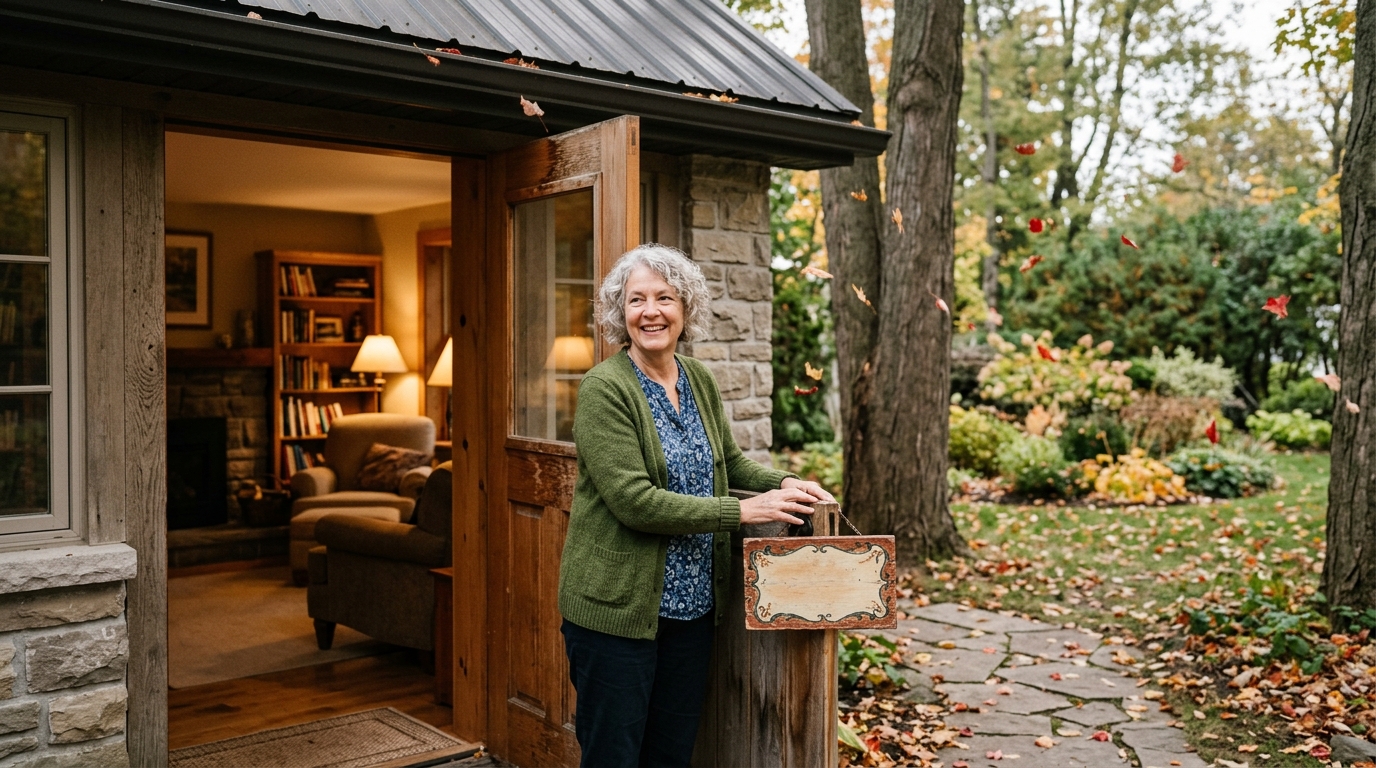
Home Retreat Center Startup Costs in Ontario
Converting your home into a writing retreat center requires guest amenities and retreat infrastructure:
| Expense Category | Cost Range (Ontario) | Details |
|---|---|---|
| Guest bedroom renovations and furnishings | $5,000–$15,000 | Comfortable, inspiring guest rooms; linens, décor |
| Shared living space (kitchen, dining, sitting areas) | $3,000–$8,000 | Retreat gathering spaces, shared facilities |
| Writing studio or quiet workspace setup | $2,000–$5,000 | Individual desk spaces, natural lighting |
| Retreat infrastructure (WiFi, heating, technology) | $2,000–$5,000 | Reliable internet, backup power, climate control |
| Kitchen and meals (initial setup) | $2,000–$4,000 | Equipment for meal preparation, dietary accommodation |
| Business setup (licensing, insurance, marketing) | $3,000–$6,000 | Hospitality license, liability insurance, website, branding |
| Initial marketing and retreat promotion | $2,000–$5,000 | Writer community outreach, website, directories |
| Total Startup Investment | $19,000–$48,000 | Typical Ontario home writing retreat center |
A reverse mortgage of $30,000–$50,000 fully funds the conversion and launch.
Revenue Model and Profitability
A modest home-based writing retreat center can generate substantial revenue:
| Operating Model | Guest Capacity | Weeks Operating | Revenue per Week | Annual Revenue |
|---|---|---|---|---|
| 2-guest retreat (weekends) | 2 writers | 40 weeks | $4,000–$6,000 | $160,000–$240,000 |
| 3-guest retreat (full week) | 3 writers | 30 weeks | $6,000–$9,000 | $180,000–$270,000 |
| 4-guest retreat (mixed seasons) | 4 writers | 20 weeks | $8,000–$12,000 | $160,000–$240,000 |
| Typical home retreat revenue (net after expenses) | 2–4 guests | 20–30 weeks | $4,000–$10,000 | $80,000–$200,000 |
Operating costs (utilities, meals, maintenance) typically consume 30–40% of gross revenue. A retreat generating $150,000 annually in revenue yields $90,000–$105,000 net income after expenses.
Most home-based retreats operate seasonally (fall writing sprints, winter workshops, spring renewals) rather than year-round, making seasonal revenue timing important for cash flow.
How Reverse Mortgage Funds Your Writing Retreat
A reverse mortgage provides three advantages:
1. Guest amenity investment without debt burden. Quality guest accommodations ($5,000–$15,000) are essential for premium retreat pricing. Reverse mortgage funds this upfront investment; retreat fees cover ongoing operating costs.
2. Kitchen and meal infrastructure. Writers expect quality meals (one of retreat's key benefits). A well-equipped kitchen ($2,000–$4,000) is essential. A reverse mortgage funds this infrastructure.
3. Marketing and writer community outreach. Your first retreats depend on reaching writers. Initial marketing ($2,000–$5,000) to writing communities, workshops, MFA programs, and literary organizations is critical. A reverse mortgage funds this outreach.
HomeEquity Bank and CHIP both support hospitality and retreat business ventures with flexible reverse mortgage structures.

According to data from Writing Communities Canada and the Authors Guild, "Writers attending retreats increase manuscript completion by 65% and report 80% higher satisfaction with their creative practice. Writing retreat demand exceeds supply—most retreat centers have 6+ month waiting lists."
Real Scenario: Eleanor's Writing Retreat Center
Eleanor, a retired university English professor with 35 years teaching writing, had $480,000 home equity. Her 4-bedroom cottage in rural Ontario had natural beauty and peace—perfect for a writing retreat center.
Reverse mortgage: $40,000 (line of credit, 5.2% rate) Used for:
- Guest bedroom renovations and furnishings ($8,000)
- Kitchen equipment and dining setup ($3,500)
- Writing studio workspace ($3,000)
- WiFi, heating, backup power ($2,000)
- Business licensing, insurance, liability ($4,500)
- Website, branding, writer community outreach ($4,000)
- Initial marketing and outreach ($5,000)
- Working capital reserve ($6,000)
First-year results:
- Spring retreat sessions (4 weeks): 2 writers/week at $2,000/person = $16,000
- Summer (limited, personal time): 1 event = $6,000
- Fall sprint (8 weeks): 3 writers/week at $2,000/person = $48,000
- Winter workshops (4 weeks): 3-4 writers/week = $28,000
Total year-one revenue: $98,000 Operating expenses (utilities, meals, maintenance): $32,000 Net year-one income: $66,000
By year two, Eleanor had demand exceeding capacity. She hosted 30+ writers annually, generated $140,000+ revenue, and repaid $30,000 of reverse mortgage principal. Her retreat center became fully booked 6 months in advance.
Building Your Writing Retreat Center: Core Offerings
Model 1: Open Retreat Sessions (Drop-In Style)
- Writers book week-long or weekend slots in shared retreat house
- Guest mix (each writer working on different projects, sharing meals/community)
- Pricing: $1,500–$2,500 per person per week
- Capacity: 3–4 writers simultaneously
- Benefits: Lower marketing cost; repeatable model; strong community
Model 2: Themed Retreats (Fiction, Poetry, Memoir, Screenwriting)
- Each retreat focuses on specific genre with guest instructor/feedback facilitator
- Participants share genre interest; feedback and craft workshops included
- Pricing: $2,000–$3,500 per person per week (higher due to instruction)
- Capacity: 4–6 writers
- Benefits: Higher pricing; attracts committed writers; strong retention
Model 3: Master Class Retreats (With Published Author Mentors)
- Guest published author teaches craft, provides manuscript feedback
- Smaller group (3–4 writers) for personalized attention
- Pricing: $3,000–$5,000 per person per week
- Capacity: 3–4 writers
- Benefits: Premium pricing; strong reputation; waitlists
Model 4: Hybrid (Combination of above, scheduled seasonally)
- Spring: Themed retreats; Summer: Open sessions; Fall: Master classes; Winter: Workshops
- Keeps your retreat center relevant year-round with varied programming
- Mixed revenue: $1,500–$3,500 pricing; attracts different writer profiles
- Benefits: Maximizes utilization and revenue; prevents burnout
Finding and Marketing to Writers
Writing retreats attract writers through:
| Channel | Writer Profile | Access Method |
|---|---|---|
| MFA programs (universities, colleges) | Graduate writing students | Contact program directors; offer alumni retreats |
| Writing associations (Canadian Authors, local writing groups) | Published and emerging writers | Member listings, sponsored events |
| Literary magazines and journals | Published writers | Advertising, partnerships |
| Social media (Facebook writing communities, Twitter #WritersOfCanada) | Indie and self-published writers | Organic community engagement, paid ads |
| Goodreads groups and author communities | Genre-specific writers | Targeted advertising, community participation |
| Publishing houses and literary agents | Client lists of authors | Partnership with publishing professionals |
| Word-of-mouth from alumni writers | Best source after first retreats | Referral bonuses, testimonials |
Most successful retreat centers achieve 60%+ bookings from word-of-mouth after year one. Your first retreats are critical for building reputation and testimonials.
Tax and Operational Considerations
Operating a retreat center requires:
- Business registration and business license
- HST/GST registration required once revenue exceeds $30,000
- Hospitality liability insurance ($2,000–$4,000 annually)
- Meal preparation licensing (health department requirements for serving guests)
- Property and casualty insurance for guest-occupied spaces
- Quarterly tax installments on self-employment income
- Food, utilities, and maintenance deductions
- Capital cost allowance on renovation and improvement investments
Working with an accountant familiar with hospitality businesses is valuable. A reverse mortgage can fund professional business setup ($2,000–$4,000 first year).

Key Takeaways
- Writing retreat demand is high and growing: Writers need focused retreat spaces; demand exceeds supply in Ontario.
- Home-based retreats are profitable: 3–4 writers at $2,000/person/week generates $6,000–$8,000 weekly revenue.
- Startup investment is modest: $30,000–$50,000 reverse mortgage funds guest amenities and retreat infrastructure.
- Seasonal operations reduce burnout: Running 20–30 weeks annually (seasonal focus) generates $80,000–$200,000 revenue.
- Reputation and word-of-mouth drive growth: After first year, most bookings come from alumni writer referrals.
- Multiple revenue models exist: From open sessions ($1,500–$2,500/week) to master classes ($3,000–$5,000/week).
Frequently Asked Questions
Do I need to be a published writer to host writing retreats?
Not required, but teaching writing experience helps. Your background as a teacher, editor, publisher, or writing community member is sufficient. Credibility comes from creating a quality retreat experience, not from your own publications. A reverse mortgage can fund hiring guest instructors (published authors) if you want to add teaching credibility. Many successful retreat hosts are retired English professors, editors, or published authors—but not all.
How do I handle meals and dietary restrictions?
Plan ahead with intake forms and menu flexibility. Ask guest writers about dietary restrictions, allergies, and preferences during booking. Simple meals (locally sourced, quality ingredients) are more important than complexity. Many retreat hosts (especially those with teaching or hospitality background) excel at meal planning. A reverse mortgage funds kitchen equipment ($2,000–$4,000) and initial food costs until retreat fees cover ongoing expenses.
Can I run retreat sessions year-round in Ontario, or should I focus on seasonal operation?
Both are viable; seasonal operation is more sustainable. Year-round operation requires consistent marketing and heating costs, reducing profit margins. Seasonal operation (fall writing sprints, winter workshops, spring renewals) aligns with writer productivity cycles and reduces your operational burden. Most home-based retreat centers operate 20–32 weeks annually, generating strong revenue while maintaining work-life balance. You decide based on your preferences and energy.
What if I have very limited guest space?
Start small and grow. A single guest bedroom can host 1 writer per week, generating $1,500–$2,500 weekly revenue during operating season. As your reputation grows and demand increases, expand to additional rooms or consider longer retreats (month-long sessions) rather than weekly turnover. A reverse mortgage funds expansion if you decide to scale. Many successful retreat hosts started with single-guest capacity and expanded as demand warranted.
Will retreat center income affect my government benefits?
Yes, self-employment income above threshold triggers OAS clawback. Structure your retreat center to manage income timing and tax optimization. An accountant can design your business to optimize benefits while maximizing net income. A reverse mortgage can fund professional tax planning ($2,000–$3,000 first year) to ensure you keep government benefits while building retreat business.
How do I establish liability if a guest has an incident at my retreat?
Comprehensive insurance is essential. Host an event where writers work independently (not your responsibility for safety), but maintain guest premises with proper maintenance, heating, lighting. Hospitality liability insurance ($2,000–$4,000 annually) covers guest injury. Clear guest agreements (terms of service) establish expectations. Rick Sekhon Reverse Mortgages can recommend insurance consultants ($500–$1,000) specializing in hospitality to ensure proper coverage.
Ready to Learn More?
Find out exactly how much you could unlock from your home — free and no obligation.
Related Articles
Reverse Mortgage for DEI Consulting Practice: Launching Diversity, Equity, and Inclusion Consulting in Retirement
Start a diversity and inclusion consulting practice. Help corporations and nonprofits build equitable cultures; reverse mortgage funds training, business setup, and market entry.
Read →Reverse Mortgage for Residential Sustainability Auditing Practice: Certifying Aging in Place
Launch a professional home energy and sustainability auditing business. Help Ontario homeowners certify efficiency; reverse mortgage funds training, tools, and market entry.
Read →Reverse Mortgage for Archival and Digital Preservation Consulting: Preserving Institutional History and Heritage
Launch archival consulting practice preserving records for institutions. Help libraries, archives, nonprofits; reverse mortgage funds training, tools, and market entry.
Read →