
Reverse Mortgage for Home Co-Working Hub: Renting Workspace to Remote Workers in Ontario
Convert spare rooms into dedicated co-working space. Rent to remote workers $400-$800/month per desk; reverse mortgage funds renovation and working capital.
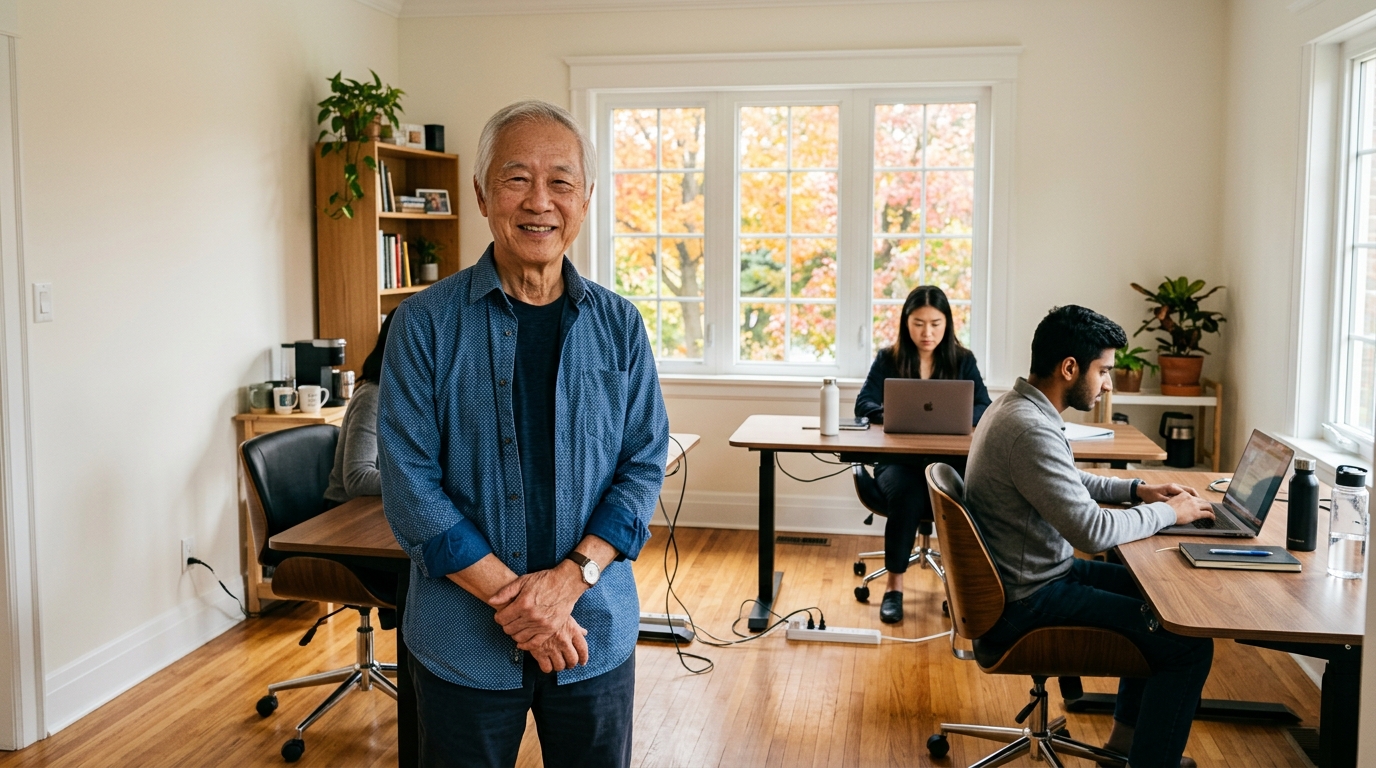
Millions of Ontario remote workers need office space—and they'll pay $400–$800 monthly for a quiet, professional workspace. If your home has spare bedrooms, a large living room, or basement space, a micro co-working hub can generate $2,400–$4,800 monthly passive income. A reverse mortgage funds the renovation (soundproofing, desks, WiFi infrastructure, seating), permits, and insurance while your rental income builds a new revenue stream. This is aging in place that pays for itself.
Why Remote Workers Need Home Co-Working Spaces
Since 2020, remote work has become permanent. Ontario workers face a challenge: working from home in apartments or small homes creates distractions, isolation, and productivity loss. Many now seek:
- Dedicated office space outside their home (mental separation between work and life)
- Professional environment for video calls (not visible from home)
- Social interaction with other remote workers
- Reliable WiFi and backup power for critical work
- Affordable cost compared to traditional offices ($200–$400/month vs $500–$1,500 in commercial space)
Home-based co-working addresses all these needs. A remote worker renting a dedicated desk from your home co-working hub gets:
- Quiet, professional workspace
- High-speed dedicated internet
- Furniture and basic equipment
- Social interaction with other remote workers
- Cost savings vs. commercial offices
- Flexibility (month-to-month, no long-term commitment)
Market rate for home-based co-working desks in Ontario: $400–$800 monthly. Larger suburban homes can support 4–6 desks, generating $1,600–$4,800 monthly.
Renovation and Startup Costs for a Home Co-Working Hub
Converting spare rooms into rental workspace requires renovation and equipment investment.
| Expense Category | Cost Range (Ontario) | Details |
|---|---|---|
| Soundproofing materials (insulation, acoustic panels) | $2,000–$5,000 | Per 300–400 sq ft space; reduces distractions |
| Desk, office chairs, filing (per workstation) | $800–$1,500 x desks | Quality furniture for professional appearance |
| WiFi and IT infrastructure | $1,500–$3,000 | Dedicated router, backup internet, network setup |
| Lighting and climate control | $1,000–$2,500 | Professional lighting, air quality management |
| Signage, entry systems, lockers | $1,000–$2,000 | Professional appearance, security |
| Renovations (paint, flooring, layout) | $2,000–$8,000 | Varies by current condition |
| Insurance and permits | $1,000–$2,000 | Home business liability, zoning permits |
| Initial marketing and leasing | $1,000–$2,000 | Website, local advertising, lease templates |
| Total Startup Investment (4-desk space) | $11,300–$28,000 | Typical Ontario residential co-working hub |
A reverse mortgage of $20,000–$35,000 fully funds the co-working conversion, leaving reserves for working capital and maintenance.
Revenue Model and Profitability
A 4-desk home co-working hub can generate significant monthly income:
| Workspace Configuration | Monthly Rent per Desk | Occupancy Rate | Monthly Revenue | Annual Revenue |
|---|---|---|---|---|
| 2-desk (small spare room) | $450 | 90% | $810 | $9,720 |
| 4-desk (master bedroom + guest room) | $500 | 85% | $1,700 | $20,400 |
| 6-desk (large basement conversion) | $450 | 80% | $2,160 | $25,920 |
| Revenue typical after year 2 | $450–$550 | 80–85% | $1,440–$2,640/month | $17,280–$31,680/year |
Most home co-working hubs reach 80%+ occupancy within 6–12 months. At full occupancy, a 4-desk space generates $20,000–$24,000+ annually in gross rental income. After operating expenses (utilities, WiFi, maintenance, insurance), net income is $12,000–$18,000 annually—easily covering reverse mortgage interest while providing passive income.
How Reverse Mortgage Funds Your Co-Working Hub
A reverse mortgage provides three advantages:
1. No mortgage payments required. Unlike traditional financing, reverse mortgages have no monthly payment obligation. Your $2,000/month co-working rental income is entirely yours to keep; reverse mortgage interest simply accrues against your growing home equity.
2. Flexible fund access. A line of credit option lets you draw renovation funds as needed, only paying interest on amounts accessed. You might access $8,000 for soundproofing, then later access $5,000 for additional equipment.
3. Income covers interest cost. Monthly co-working rental income ($1,400–$2,640) easily exceeds reverse mortgage interest ($350–$600/month on typical loan), meaning your business is interest-neutral or profitable from inception.
HomeEquity Bank and Equitable Bank both offer lines of credit structures perfect for income-generating home conversions like co-working hubs.

Finding and Attracting Remote Worker Tenants
Home co-working spaces attract tenants through:
| Marketing Channel | Cost | Effectiveness | Target Tenant |
|---|---|---|---|
| Local Facebook groups (remote workers, entrepreneurs) | Free | High; organic community engagement | Serious, committed remote workers |
| Google Local Services/Maps | $500–$1,500/month | High; search intent match | Active job seekers |
| LinkedIn and professional networks | Free–$500/month | Medium-high; professional audience | Corporate remote workers |
| Nextdoor and neighborhood apps | Free | Medium; local reach | Nearby remote workers |
| Real estate platforms (co-working sections) | $100–$300/month | Medium; specialized audience | Co-working-aware workers |
| Referrals from current tenants | Free | Very high; lowest churn | Vetted, similar profiles |
Most successful home co-working hubs fill through a mix of Google Local search (for initial tenants) and referrals from existing renters. By month 4–6, referrals typically become your primary source.
Real Scenario: Margaret's Home Co-Working Hub Income
Margaret, a retired corporate office manager with 28 years managing shared workspaces, had $480,000 home equity. Her 4-bedroom home had two spare bedrooms and unused basement space.
Reverse mortgage: $28,000 (line of credit, 5.3% rate) Converted:
- Guest bedroom → 2-desk professional workspace ($6,500)
- Basement → 4-desk professional workspace with soundproofing ($15,000)
- IT infrastructure and WiFi upgrade ($3,000)
- Furniture, lighting, signage, insurance ($3,500)
Revenue ramp:
- Month 1-2: 2 desks rented ($900/month)
- Month 3-4: 4 desks rented ($2,000/month)
- Month 5+: 5 desks at capacity ($2,500/month)
Within 12 months, Margaret's co-working hub generated $24,000 in rental income. Operating costs (utilities, WiFi, maintenance, insurance) totaled $6,000 annually, leaving $18,000 net. Her reverse mortgage interest at 5.3% on $28,000 cost $1,484 annually, meaning her co-working business generated $16,500 profit in year one—fully covering the reverse mortgage cost while providing genuine passive income.
By year three, her co-working hub operates at stable capacity with a waitlist. She repaid $15,000 of principal through excess income and now generates $15,000+ annual net profit.
Operational and Legal Considerations
Running a home co-working hub requires attention to:
- Zoning permits: Confirm your municipality allows home-based business (most do). A reverse mortgage can fund permit costs ($500–$2,000).
- Insurance: Standard homeowner policies exclude business use. Commercial liability insurance ($1,000–$2,000 annually) is essential.
- Lease agreements: Professional month-to-month leases protect both parties. Templates available through legal services ($200–$500).
- Tax reporting: Rental income is self-employment income requiring quarterly tax installments and GST/HST registration once revenue exceeds $30,000.
- Utilities and WiFi: You pay utilities; tenants may split or you include in rent. Dedicated high-speed internet ($150–$200/month) is essential for remote workers.
An accountant familiar with rental properties can optimize your tax structure. A reverse mortgage can fund professional setup ($1,500–$3,000) to ensure compliance.

According to FCAC guidance on income-generating property conversions: "Home-based rental spaces (including co-working hubs) are legal, tax-compliant ways for homeowners to generate retirement income through home equity access." Proper structure and documentation are essential.
Key Takeaways
- Remote worker demand for affordable workspace is high: $400–$800 monthly per desk reflects strong market demand across Ontario.
- Home co-working startup is modest: $20,000–$35,000 reverse mortgage funds complete renovation, equipment, and launch.
- Occupancy ramps quickly: Most hubs reach 80%+ occupancy within 6–12 months through Google Local and referrals.
- Revenue is substantial and passive: 4-desk hub generates $18,000–$24,000 annually gross; $12,000–$18,000 net after expenses.
- Reverse mortgage interest is easily covered: Monthly rental income ($1,400–$2,640) exceeds reverse mortgage interest ($350–$600/month), making your business interest-neutral from inception.
- Lenders like HomeEquity Bank and Equitable Bank support income-generating home conversions with flexible line of credit structures.
Frequently Asked Questions
Do I need experience running an office or co-working space?
Not required, but property management experience helps. Most home co-working hub operators are simply homeowners renting out spare space—tenant screening, lease management, and basic maintenance are straightforward. If you have property management, office management, or real estate background, you'll excel. Online resources and business consultants can guide new operators ($500–$2,000 setup consulting). A reverse mortgage can fund professional launch consulting.
What if I only have one spare bedroom—can I still operate a hub?
Yes, absolutely. A single 2-desk workspace generates $900–$1,000 monthly—meaningful income for a single room. Many Ontario seniors start with 2–3 desks in one spare room, then expand to additional space if demand warrants. A reverse mortgage can fund single-room startup ($8,000–$12,000) and later expansion.
How do I handle taxes on co-working rental income?
Rental income is self-employment income requiring quarterly tax installments and GST/HST once revenue exceeds $30,000. You can deduct operating expenses (utilities, WiFi, maintenance, insurance) but not mortgage interest (reverse mortgage interest is generally not deductible for rental purposes). Work with an accountant familiar with rental properties. A reverse mortgage can fund professional tax setup ($2,000–$3,000 first year).
Will co-working income affect my government benefits?
Yes, self-employment income above threshold triggers OAS clawback and may affect asset-based benefits. Tax and benefits planning is essential. An accountant can structure your rental business to optimize income timing. A reverse mortgage can fund professional benefits planning ($2,000–$3,000 first year) to ensure you keep government benefits while maximizing net rental income.
What if tenants damage the workspace or don't pay rent?
Professional lease agreements, deposits, and tenant screening protect you. Standard rental leases require damage deposits ($500–$1,000 per desk) held as security. Most remote workers are responsible professionals—turnover is typically 6–12 months with high satisfaction. Legal lease templates and tenant background checks ($50–$150 per applicant) minimize risk. Rick Sekhon Reverse Mortgages can connect you with property management consultants ($1,000–$2,000 setup) who specialize in small rental operations.
Can I operate co-working at full capacity year-round in Ontario?
Yes, remote work is year-round and growing. Winter might see slightly lower occupancy as some workers travel, but most remote workers need office space consistently. A reverse mortgage funds reliable heating/cooling ($2,000–$4,000) and winterization to ensure comfort in Ontario's climate, supporting 80%+ occupancy year-round.
Ready to Learn More?
Find out exactly how much you could unlock from your home — free and no obligation.
Related Articles
Reverse Mortgage for DEI Consulting Practice: Launching Diversity, Equity, and Inclusion Consulting in Retirement
Start a diversity and inclusion consulting practice. Help corporations and nonprofits build equitable cultures; reverse mortgage funds training, business setup, and market entry.
Read →Reverse Mortgage for Residential Sustainability Auditing Practice: Certifying Aging in Place
Launch a professional home energy and sustainability auditing business. Help Ontario homeowners certify efficiency; reverse mortgage funds training, tools, and market entry.
Read →Reverse Mortgage for Archival and Digital Preservation Consulting: Preserving Institutional History and Heritage
Launch archival consulting practice preserving records for institutions. Help libraries, archives, nonprofits; reverse mortgage funds training, tools, and market entry.
Read →