
Reverse Mortgage for Home-Based Music Therapy Practice: Supporting Adult Child's Healthcare Career
Fund your adult child's music therapy practice startup at home. Support an emerging healthcare career with reverse mortgage capital in Ontario.
How can you help your adult child launch a music therapy practice when startup costs and licensing requirements create barriers to entry? Music therapy is one of Canada's fastest-growing healthcare careers, offering meaningful work and strong earning potential. Yet starting a practice—whether in-home, clinic-based, or hybrid—requires credentials, equipment, insurance, and marketing costs that recent graduates often can't afford. A reverse mortgage can fund your adult child's music therapy practice startup, allowing them to establish a growing client base, build their career, and eventually support themselves independently while you create a lasting legacy of healing in your community.
This guide explores how reverse mortgages support launching a music therapy practice as a Living Legacy for your adult child.
The Emerging Market for Music Therapy in Ontario
Music therapy is one of Canada's fastest-growing allied health professions. According to Employment and Social Development Canada (ESDC), music therapist positions are expected to grow 12% annually through 2030—significantly faster than average job growth.
Why the Growth?
- Aging population (seniors in long-term care) driving demand for therapeutic services
- Mental health crisis creating demand for alternative treatments
- Recognition that music therapy is evidence-based and ODSP/private insurance often covers it
- Healthcare system expansion incorporating music therapy into hospitals, clinics, and community programs
Market Opportunity
- Music therapists in Ontario earn $45,000–$80,000 as employees
- Self-employed music therapists can earn $60,000–$120,000+ depending on caseload
- Insurance reimbursement is increasing (private health plans, ODSP)
- Aging parent population (95,000+ seniors in Ontario long-term care) needs therapeutic services

Costs to Launch a Music Therapy Practice
Music Therapy Credentials (Assuming Your Child Already Has Them) If your child has completed a Bachelor of Music Therapy:
- Music therapy certification exam (Canadian Music Therapy Association): $500–$1,000
- Professional liability insurance (must-have for practice): $800–$2,000/year
- Professional association membership (CMTA): $200–$400/year
Home-Based Practice Setup
- Music therapy-grade instruments (adapted piano, guitar, percussion, soundscapes): $5,000–$15,000
- Home office renovation (acoustic treatment, therapeutic space design): $2,000–$8,000
- Therapy software (session notes, client management): $500–$1,500/year
- Marketing and website: $1,000–$3,000
- Business license and registration (Ontario): $200–$500
Total First-Year Startup: $10,000–$31,000
Year 2+ Operating Costs
- Liability insurance renewal: $800–$2,000
- Professional association: $200–$400
- Continuing education and credentials: $500–$2,000
- Marketing (ongoing): $500–$1,500/year
- Technology/software renewal: $500–$1,500/year
- Annual operating: $2,500–$7,400
| Startup Cost | Home-Based Practice | Clinic-Rented Space | Hybrid Model |
|---|---|---|---|
| Instruments and equipment | $5,000–$15,000 | $2,000–$5,000 (lighter) | $7,000–$12,000 |
| Space renovation/setup | $2,000–$8,000 | $1,000–$3,000 (shared) | $3,000–$7,000 |
| Licensing and insurance | $1,500–$3,500 | $1,500–$3,500 | $1,500–$3,500 |
| Marketing | $1,000–$3,000 | $1,500–$4,000 | $2,000–$4,000 |
| Technology/software | $500–$1,500 | $500–$1,500 | $500–$1,500 |
| Total startup | $10,000–$31,000 | $6,500–$17,500 | $14,000–$28,000 |
Revenue Potential: Building a Client Base
Home-Based Practice Client Growth
- Month 1–3: 2–3 clients/week (building through referrals): $1,000–$1,500/month
- Month 4–6: 5–7 clients/week: $2,500–$3,500/month
- Month 12: 10–15 clients/week (established): $5,000–$7,500/month
- Year 2: 15–20 clients/week: $7,000–$10,000/month
- Year 3: 20+ clients/week (saturated home practice): $8,000–$12,000/month
Fee Structure (typical in Ontario)
- Individual music therapy session: $75–$150
- Sliding scale (low-income clients/ODSP): $50–$75
- Group therapy (seniors in care, psychiatric wards): $300–$600/session for multiple clients
- Corporate wellness contracts: $500–$2,000 per program
| Year | Monthly Revenue | Annual Revenue | Net Income (after operating costs) |
|---|---|---|---|
| Year 1 (ramping up) | $1,500–$3,500 | $18,000–$42,000 | $8,000–$15,000 (after $2,500–$7,400 operating) |
| Year 2 (established) | $5,000–$7,500 | $60,000–$90,000 | $48,000–$75,000 |
| Year 3+ (optimized) | $8,000–$12,000 | $96,000–$144,000 | $78,000–$125,000 |
Real Ontario Scenarios: Supporting Music Therapy Practice Startup
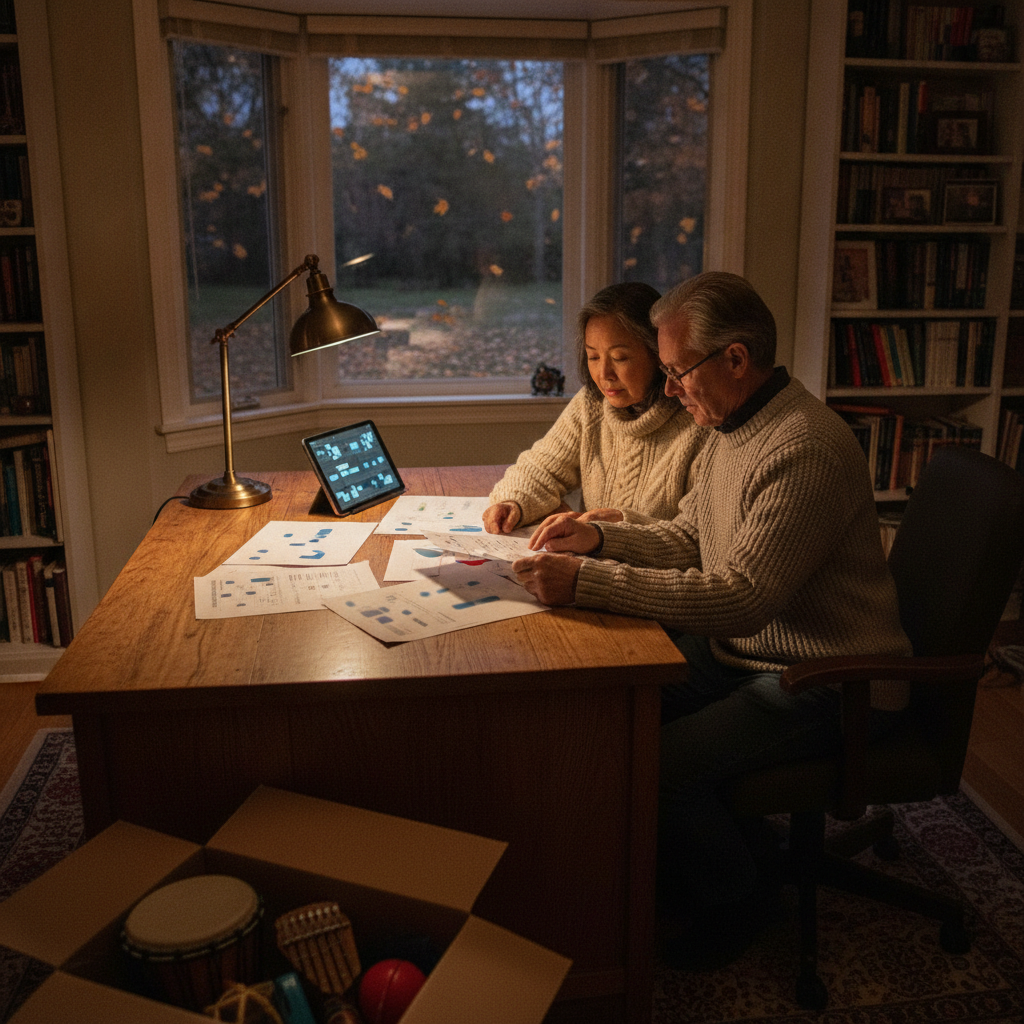
Scenario 1: Newly Certified Music Therapist Can't Afford Home Setup Your adult child just completed their Bachelor of Music Therapy and certification exam. They're passionate about working with seniors in long-term care and want to launch a home-based practice in your community. They have zero capital and are living with you temporarily to save. Equipment, space renovation, insurance, and first-month marketing will cost $18,000. They can't get a traditional business loan without income history.
Without support: Your child postpones starting their practice and takes a job as a music teacher ($35,000/year) while researching grants and slowly saving. Two years pass before they launch their practice. They miss two years of building a client base and earning music therapy income.
With reverse mortgage support: You provide $20,000 to set up your home or a studio space, purchase therapy instruments, and cover first-year insurance and marketing. Your child launches immediately, starts seeing clients in month 2, and builds to 12–15 clients/week by month 12. Year 1 net income: $15,000. Year 2: $50,000+. They've repaid your trust and built a sustainable practice.
Scenario 2: Career-Transition Adult Child (Non-Music Background) Pursuing Music Therapy Your adult child worked in corporate marketing for 8 years and decided to change careers entirely. They completed a Bachelor of Music Therapy at age 32. They have some savings but not enough for practice startup (they used savings for tuition). They're confident they'll succeed in music therapy but need initial capital to get started.
With reverse mortgage support: You provide $15,000 to launch their home-based practice. Their marketing background is an asset—they know how to build a brand and reach clients. They launch aggressively in month 1, establish partnerships with long-term care facilities by month 4, and reach 15+ clients/week by month 8. By year 2, they're earning $60,000+ annually and building retirement savings.
Scenario 3: Multi-Child Support: Music Therapy + Another Career You have two adult children—one launching a music therapy practice (needs $18,000) and one in graduate school (needs $10,000 for tuition gap). You want to support both fairly.
With reverse mortgage support: You access $30,000 and allocate: $18,000 for music therapy practice setup, $10,000 for education, $2,000 reserved. The music therapy child's practice becomes income-generating and sustainable within 12 months. The graduate student completes their degree and enters the job market debt-light. Both benefit from parental support proportional to their needs.
Strategic Reverse Mortgage Approach for Music Therapy Practice
Phase 1: Validate Credentials and Market Demand Before accessing a reverse mortgage:
- Ensure your child has completed their music therapy degree and certification
- Research local long-term care facilities, psychiatric wards, and private clinics
- Survey potential clients (seniors, mental health patients, corporate wellness contacts)
- Identify partnerships and referral sources
Phase 2: Determine Practice Model
- Home-based: Lower startup ($10,000–$20,000), limited capacity (15–20 clients/week max), lower overhead
- Clinic space: Higher startup ($20,000–$40,000), more capacity, professional visibility
- Hybrid: Home practice + periodic clinic space for groups/specialized work
Your child's preference matters—some practitioners thrive with home-based intimacy; others need professional clinic visibility.
Phase 3: Access Reverse Mortgage Strategically
- Borrow specifically for startup: instruments, space, insurance, marketing
- Use phased draws: Month 1 ($5,000 for instruments), Month 2 ($3,000 for renovation), Month 3 ($2,000 for marketing), etc.
- Preserve home equity for other needs
- Plan for repayment: realistic expectation is practice becomes self-sustaining by Year 2
Phase 4: Launch and Scale
- Month 1–2: Set up space, get instruments, insurance, and website live
- Month 2–4: Secure first clients through referrals, partnerships, and direct outreach
- Month 4–12: Build client base to 8–15 clients/week
- Month 12+: Practice is self-sustaining and generates income exceeding operating costs
Key Success Factors
- Clear Business Plan: Your child should have a written plan for client acquisition, pricing, and growth
- Referral Partnerships: Secure relationships with long-term care, mental health clinics, or corporate wellness programs before launch
- Professional Credibility: Full certification and liability insurance are non-negotiable
- Market Understanding: Know your local market—which client types (seniors, mental health, corporate) are most viable?
Advantages of Home-Based Music Therapy Practice
For Your Adult Child
- Low overhead (no clinic rent)
- Flexible scheduling
- Therapeutic environment (your home can be beautifully designed for music therapy)
- Direct client relationships (no administrative bureaucracy)
- Growing income within 12–24 months
For You (The Parent)
- Meaningful support of meaningful work
- Practice generates income to support adult child's independence
- Home becomes a hub of healing (seniors, mental health clients benefit)
- Legacy of healthcare access in your community
For Your Community
- Underserved populations (seniors, low-income clients) get access to music therapy
- Local healthcare capacity increases
- Your home becomes a healing space
Insurance, Liability, and Professional Requirements
Your adult child must maintain:
Professional Liability Insurance ($800–$2,000/year)
- Protects against claims of negligence or harm
- Required by CMTA (Canadian Music Therapy Association)
- Typically covers in-home practice and clinic work
Certification (CMTA)
- Music Therapist Credential (MTC) requires Bachelor's degree + 1,000+ supervised hours (often completed during degree)
- Annual membership maintains credential and liability insurance eligibility
Home-Based Business Considerations
- Business liability insurance (property + liability): $500–$1,500/year
- Home insurance amendment (business use): may increase premium $10–$50/month
- Zoning: Confirm home-based practice is permitted (most residential areas allow health practice)
Tax and Business Planning
Work with an accountant:
Business Income
- Music therapy service revenue is taxable business income
- Can register as sole proprietorship or incorporate (based on revenue)
- Expenses (insurance, equipment, supplies, marketing, professional development) are deductible
Reverse Mortgage Relationship
- Loan proceeds are tax-free (not income)
- No requirement to repay from practice income (loan is against home)
- Interest compounds and is deductible when repaid (on sale or death)
- Document the arrangement: gift vs. loan to your child (affects their tax situation)
Sustainability Plan
- By Year 2, practice should generate enough revenue to cover its own operating costs
- By Year 3, practice generates discretionary income for your child
- Build a 6–12 month emergency fund as practice matures
Conversation Starters With Your Family
To Your Adult Child: "I want to fund your music therapy practice startup so you can launch without debt. This is an investment in meaningful work and your financial independence."
To Other Adult Children: "I'm supporting your sibling's practice launch because it's a one-time startup cost. You'll each receive equivalent support for your career launches."
To Your Spouse: "Our home's equity can launch a healing practice that serves our community while supporting our adult child. That feels like a meaningful use of our asset."
Key Takeaways
- Music therapy is one of Canada's fastest-growing healthcare careers with 12% annual job growth and earning potential of $60,000–$120,000+ for self-employed practitioners.
- Launching a home-based music therapy practice costs $10,000–$31,000 in startup (instruments, space, insurance, marketing), with revenue becoming self-sustaining by Year 2.
- A reverse mortgage provides tax-free, flexible capital for startup costs without monthly payments, ideal for launching a healthcare practice.
- Home-based music therapy practices can scale to 15–20 clients per week, generating $7,000–$12,000/month by Year 3.
- According to ESDC, allied health careers like music therapy are among the fastest-growing professions in Canada, making this a strategic investment in adult child's career.
- Music therapy addresses Canada's mental health crisis and aging population's therapeutic needs—your support creates community impact alongside family support.
Frequently Asked Questions
How much can I borrow to help my adult child start a music therapy practice?
Homeowners aged 55 and older can access 15–59% of home value depending on age and location. If your home is worth $500,000, you might borrow $75,000–$295,000. For a music therapy practice startup, you'd need $10,000–$30,000. A broker like Rick Sekhon can provide precise estimates for your home and borrowing needs.
Will reverse mortgage proceeds affect my retirement income or my child's financial aid?
No. Reverse mortgage proceeds are loan advances, not income, so they don't affect your OAS, GIS, CPP, or your child's eligibility for any government benefits or student financial aid.
What if my adult child's practice doesn't become profitable?
Reverse mortgages require no monthly payments, so you're not under pressure to generate immediate income from the practice. However, a well-planned music therapy practice in a growing market typically becomes self-sustaining within 12–24 months. If your child's practice doesn't succeed, the home is still your primary asset, and the reverse mortgage is repaid from its sale.
How do I structure this—is it a gift or loan to my child?
This is a personal decision. Many parents gift the startup capital as a one-time investment in their adult child's career independence. Some structure it as a loan with written terms. Work with an accountant to clarify your intent and ensure it's documented (for your will and your child's tax records).
Can my adult child take over my home-based music therapy practice when I'm ready to retire?
Yes. If the practice is established and generating a client base, your adult child can inherit or purchase the practice, client list, and goodwill. Document this in your will or create a business succession plan so the transition is clear.
Should my adult child have a business license or operate as a sole proprietor?
Once revenue exceeds $30,000 annually, your child should register for HST and typically operates as a sole proprietor (simplest structure). Work with an accountant to determine the best business structure for tax efficiency.
Moving Forward
Music therapy is meaningful work that heals. Your adult child's passion for this career deserves support. A reverse mortgage can fund their practice startup—allowing them to build a sustainable business, serve underserved populations, and achieve financial independence within years.
Ready to explore reverse mortgage support for your adult child's music therapy practice? Consult with a broker like Rick Sekhon who specializes in family business support. Help your child transform a passion for healing into a thriving, independent practice.
Your home's equity can launch a career of impact. That's the Living Legacy you create.
Ready to Learn More?
Find out exactly how much you could unlock from your home — free and no obligation.
Related Articles
Cognitive Assessment Before Reverse Mortgage: Protecting Yourself From Exploitation
Proactive mental capacity testing before getting a reverse mortgage. Protect yourself from financial exploitation and ensure sound decision-making in Ontario, especially if you're aging.
Read →Reverse Mortgage for First-Time Homebuyers at 70+: Finally Own Your Home in Retirement
Late-life first-time homeownership with a reverse mortgage. Buy a home without mortgage payments while preserving your fixed income.
Read →Reverse Mortgage for Adult Child Facing Criminal Defense Costs: Protecting Your Retirement
When adult child faces criminal charges, reverse mortgage provides funds for legal defense without depleting retirement savings.
Read →