
Maintaining Accessible Properties in Two Locations: City Home and Cottage for Seasonal Aging in Ontario
How to maintain and fund accessibility upgrades for two homes—primary residence and cottage—as you age in place seasonally in Ontario.
Many Ontario retirees live part-year in the city (autumn, winter, spring) and escape to their cottage country property for summers. As mobility and health change with age, maintaining both homes for accessibility becomes essential—and expensive. A reverse mortgage on your primary residence can fund the modifications, equipment, and maintenance that allow you to age in place across two seasonal locations, preserving the lifestyle and legacy you've built.
This guide explores how to fund dual-property aging-in-place accessibility in Ontario.
The Dual-Property Aging Paradox
Many successful Ontario retirees have:
- A primary residence in Toronto, Ottawa, or another major city
- A cottage, cabin, or secondary property in Muskoka, the 1000 Islands, Kawartha Lakes, or rural Ontario
This seasonal rhythm feels like the ideal retirement. But as age brings mobility challenges, accessibility concerns multiply:
- City Home: Stairs, narrow bathrooms, kitchen height issues
- Cottage: Often rustic without full accessibility, distance from medical services, dirt roads
- Switching Between: Moving twice yearly with mobility limitations is physically challenging
Without accessibility planning, you eventually choose one location or stop using the cottage entirely. With reverse mortgage-funded modifications, you maintain both.
Accessibility Challenges in Cottage Country
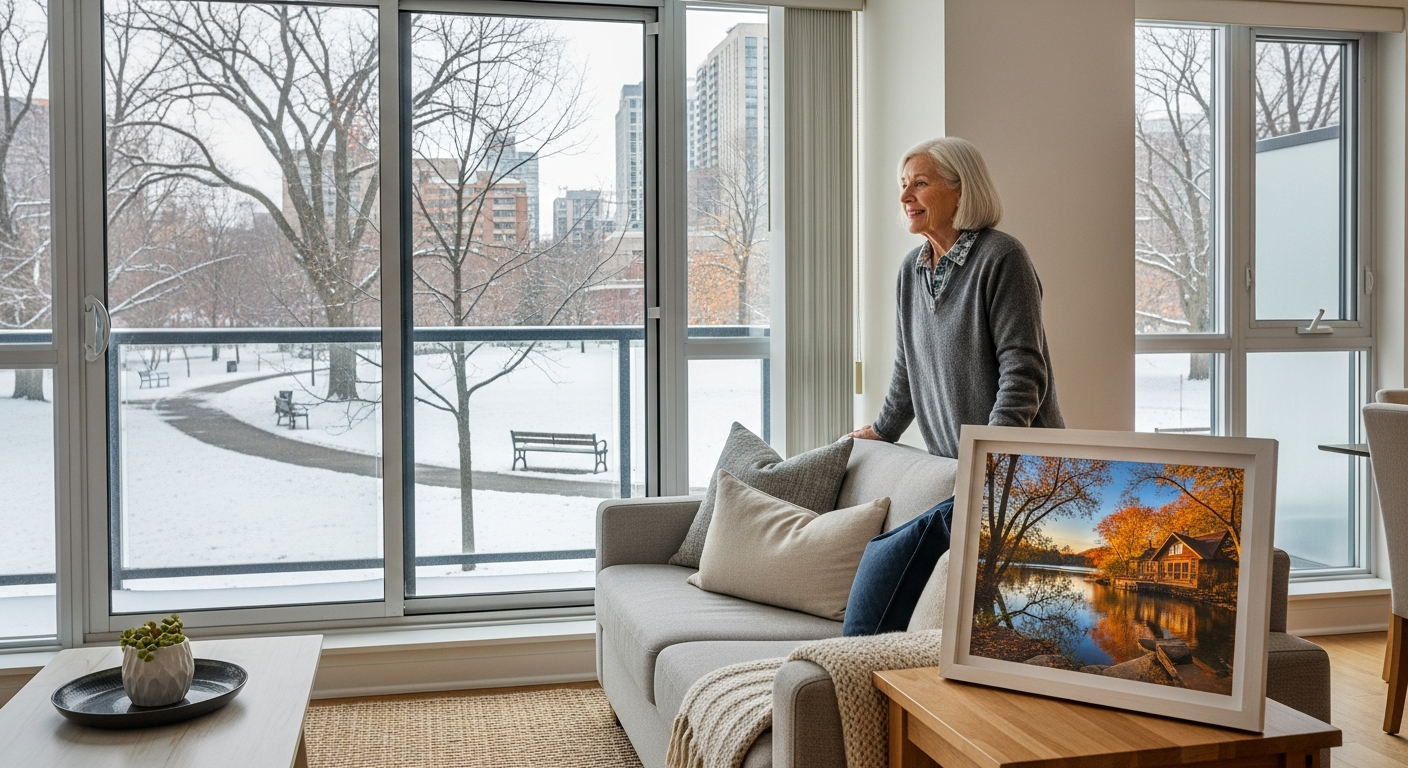
Cottage properties present unique aging-in-place barriers:
Structural Issues
- Built on uneven terrain, requiring ramps or step-ups
- Steep stairs to access main living areas
- Small bathrooms designed for occasional use, not daily accessibility
- Narrow doorways unsuitable for walkers or wheelchairs
- Uneven decking or natural stone floors
Infrastructure Limitations
- Rural roads to accessing homes are unpaved (difficult for mobility devices)
- Limited medical services (nearest hospital may be 30+ minutes away)
- Volunteer fire services (response time is longer)
- Septic systems (require different plumbing for accessibility)
- No walkable community (you need a car)
Seasonal Complications
- Winter accessibility (snow, ice, heating for medical equipment)
- Extended periods away from city-based doctors
- Difficulty managing multiple properties during transitions
- Higher maintenance costs for seasonal properties
Funding Dual-Property Accessibility: The Cost Reality
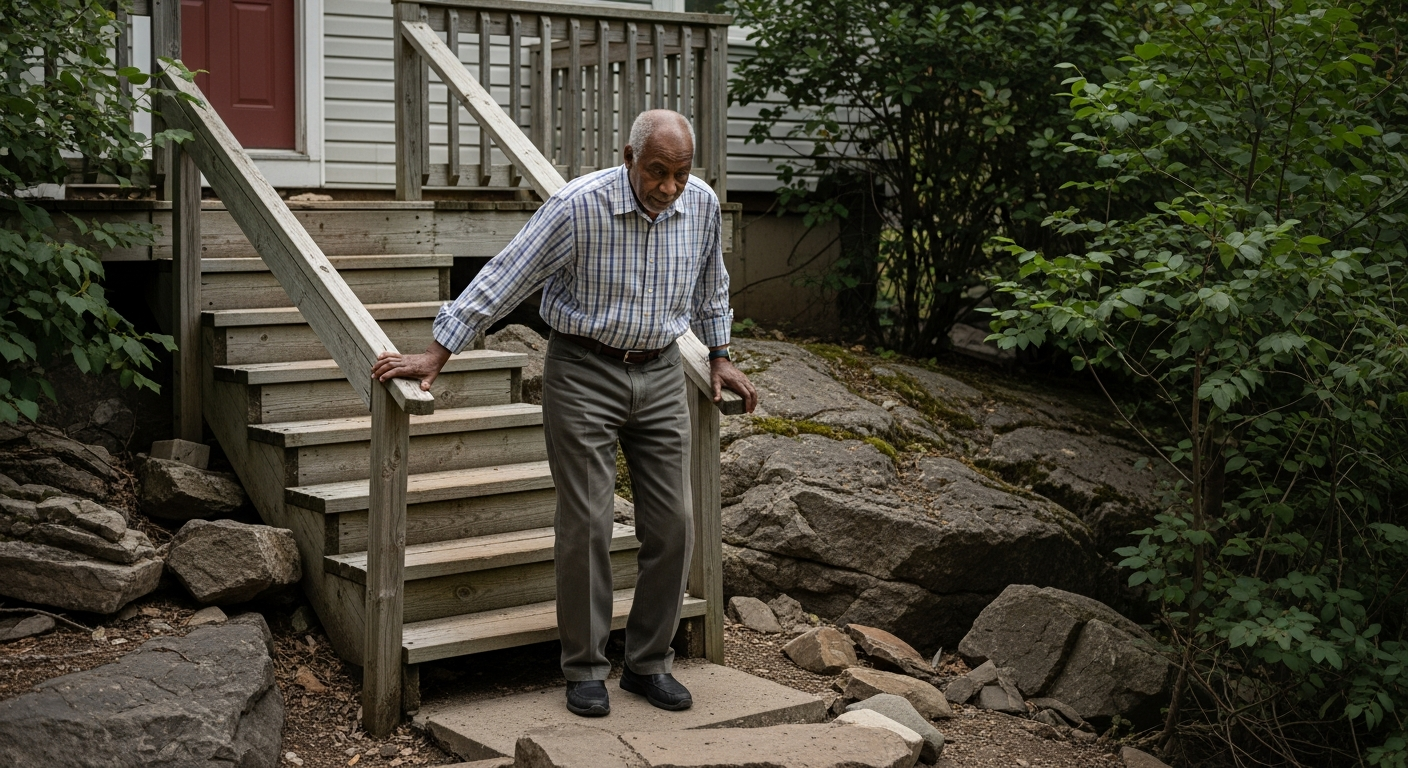
City Home Accessibility ($15,000–$30,000)
- Main floor bathroom renovation: $10,000–$20,000 (walk-in shower, grab bars, accessible toilet)
- Stair lift or ramp access: $3,000–$10,000
- Widened doorways and hallway modifications: $2,000–$5,000
- Kitchen modifications for seated accessibility: $3,000–$8,000
- Smart home technology (lighting, temperature, security): $2,000–$4,000
Cottage Accessibility ($20,000–$45,000)
- Deck and ramp access to main entrance: $5,000–$12,000
- Bathroom renovation (limited space constraint): $8,000–$15,000
- Stair lift for loft or upper level: $3,000–$8,000
- Flooring and structure leveling: $3,000–$8,000
- Driveway accessibility (paving rough sections): $4,000–$10,000
- Equipment storage and bedroom accessibility: $2,000–$5,000
Medical Support Equipment ($5,000–$15,000)
- Accessible bed with adjustability: $2,000–$4,000 for each location
- Bathroom safety equipment (shower chair, toilet lifts): $1,000–$2,000 each location
- Mobility aids (walkers, grab bars): $500–$1,500 each location
- Oxygen and medical equipment storage: $500–$1,000 each location
Total for Dual-Property Accessibility: $40,000–$90,000
With a reverse mortgage in Ontario on a $800,000 primary home, you can access $320,000–$440,000. Investing $50,000–$70,000 in dual-property accessibility is entirely manageable and frees up capital for other retirement needs.
| Accessibility Category | Estimated Cost Range |
|---|---|
| City Home Accessibility | $15,000–$30,000 |
| Cottage Accessibility | $20,000–$45,000 |
| Medical Support Equipment (both locations) | $5,000–$15,000 |
| Total Dual-Property Accessibility | $40,000–$90,000 |
Strategic Phasing: City First, Then Cottage
Rather than renovating both simultaneously, phase the work:
Phase 1: City Home (Year 1) — $15,000–$25,000 Prioritize your primary residence where you spend 60–70% of the year. This phase includes:
- Main floor bedroom (if accessible; otherwise master bathroom accessibility)
- Primary bathroom renovation
- Entrance ramps or stair lifts
- Kitchen modifications if you still cook regularly
Once the city home is accessible, you maintain baseline independence for most of the year.
Phase 2: Cottage Accessibility (Year 2) — $20,000–$35,000 With the city home sorted, tackle the cottage. Focus on:
- Deck/ramp access
- Main bathroom renovation
- Sleeping area accessibility (often upstairs in cottages; stair lift or bedroom relocation)
- Essential outdoor access (driveway, pathways)
Phase 3: Support Equipment and Fine-Tuning (Year 3) — $5,000–$10,000 Add mobility equipment, smart home upgrades, seasonal modifications (winter-specific accessibility).
Ontario-Specific Regional Considerations
Greater Toronto Area/Toronto
- City homes often have basements/multiple levels; stair lifts are common
- Cottages in Muskoka are typically 2+ hours away; consider telehealth for medical care
- Winter accessibility is critical (snow, ice management)
Ottawa Region
- Cottage country in the 1000 Islands or Kawartha Lakes is 1.5–3 hours away
- Winters are particularly severe; plan for heating, snow removal, backup power
- Consider year-round water access (wells vs. municipal water)
Central Ontario (Hamilton, Kitchener, Guelph)
- Easier cottage access (many within 1–2 hours)
- Cottage properties often on water (lake accessibility considerations for mobility challenges)
- Smaller rural hospitals may have limited specialist services
Phased Reverse Mortgage Strategy for Dual Properties
Structure your reverse mortgage to support the phasing:
Option 1: Lump Sum at Closing
- Access $50,000–$70,000 upfront
- Fund city renovations immediately
- Reserve funds for cottage phase 2 and ongoing maintenance
Option 2: Line of Credit (RLOC) Model
- Establish a $100,000 reverse mortgage line of credit
- Draw $20,000–$25,000 Year 1 for city home
- Draw $25,000–$30,000 Year 2 for cottage
- Retain flexibility for unexpected costs or equipment needs
Option 3: Hybrid Approach
- Take $30,000 lump sum immediately for city home
- Keep additional reverse mortgage capacity as a line of credit for future phases
| Funding Option | Year 1 Access | Year 2 Access | Flexibility |
|---|---|---|---|
| Lump Sum at Closing | $50,000–$70,000 | $0 (already drawn) | Low |
| Reverse Mortgage Line of Credit | $20,000–$25,000 | $25,000–$30,000 | High |
| Hybrid Approach | $30,000 | As needed | Medium |
Managing Two Properties Financially
Consider appointing or designating:
For City Home
- Adult child or family member who can manage contractor relationships during renovations
- Regular inspector to monitor modifications (ensure safety, functionality)
For Cottage
- Trusted contact for seasonal opening/closing
- Local contractor familiar with cottage country renovation challenges
- Snow removal and winter maintenance coordination
Estate Planning
- Document which property is your principal residence (affects capital gains tax if you eventually sell)
- Clarify in your will how both properties are handled
- Note accessibility modifications in estate documents (helps executor understand property value and condition)
The Lifestyle Continuity Benefit
Maintaining dual-property accessibility preserves:
- Seasonal rhythm: You continue your cherished pattern of winter/city and summer/cottage without forced relocation
- Family gatherings: The cottage remains a family destination for adult children and grandchildren
- Community connection: You stay integrated in both communities (city friendships, cottage neighbors)
- Independence: You're aging in place across two beloved homes, not choosing one at the expense of the other
Tax and Insurance Considerations
Work with an accountant and insurance agent:
Principal Residence Exemption
- Typically only one property qualifies for capital gains tax exemption
- Document which property is your principal residence for CRA
- Cottage might be subject to capital gains tax on future sale (plan accordingly)
Property Taxes
- Some Ontario municipalities offer property tax deferrals for seniors (check if both properties qualify)
- Dual properties increase property tax obligations
Home Insurance
- Accessibility modifications generally don't increase insurance costs (safety features often reduce risk)
- Verify coverage for both properties; ensure adequate limits
Reverse Mortgage on Primary Residence
- Reverse mortgage is on your primary residence (city home)
- Cottage is not encumbered; you can sell, gift, or transfer it separately
- This provides flexibility for future planning (gifting cottage to adult children, etc.)
When Healthcare Changes the Equation
As age advances, medical needs may shift:
- If mobility becomes severe, seasonal transition becomes harder
- Long-term care or assisted living may become necessary
- You might eventually choose the city home year-round (closer to medical services)
A reverse mortgage that funded both properties' accessibility still provides value: the city home remains highly accessible; the cottage becomes a resource for family gatherings even if you're not staying there seasonally.
Key Takeaways
- Funding accessibility upgrades for both a city home and a cottage typically costs $40,000–$90,000 combined in Ontario.
- On an $800,000 primary residence, homeowners can generally access $320,000–$440,000 through a reverse mortgage (15-59% of appraised value), making dual-property upgrades manageable.
- Phasing renovations over two to three years — city home first, then cottage — spreads costs and lets you prioritize the property where you spend the most time.
- A reverse mortgage line of credit offers more flexibility than a lump sum for homeowners phasing work across multiple years and properties.
- The reverse mortgage is registered only against your primary residence; your cottage remains unencumbered and can be sold, gifted, or transferred separately.
- Only one property can typically claim the Principal Residence Exemption from capital gains tax, so it's important to document which home holds that designation with the CRA.
Frequently Asked Questions
Can a reverse mortgage be secured against my cottage instead of my primary residence?
Most Canadian reverse mortgage lenders require the property to be your primary residence, meaning the home you live in for the majority of the year. Seasonal or recreational properties like cottages generally do not qualify on their own, which is why this strategy uses the primary residence to fund accessibility work at both locations.
How much can I borrow against my primary residence for accessibility renovations?
Canadian reverse mortgages typically allow homeowners aged 55 and older to borrow 15-59% of their home's appraised value, depending on age, property location, and lender. On a $800,000 home, that generally translates to $320,000–$440,000 in available funds, well above the $40,000-$90,000 typically needed for dual-property accessibility upgrades.
Do I need to make monthly payments on the reverse mortgage while funding these renovations?
No. Reverse mortgages do not require monthly payments. The loan, plus accumulated interest, becomes due only when you sell the home, pass away, or permanently move out, which makes it a practical way to fund renovations without adding to monthly cash flow pressure.
Will renovating my cottage for accessibility increase my property taxes?
Accessibility modifications like ramps, grab bars, and bathroom renovations generally do not trigger significant property tax reassessments in Ontario, though any major structural addition could be assessed differently. It's worth checking with your local municipality, and some municipalities also offer property tax deferral programs for seniors.
What happens to the reverse mortgage if I eventually need to move into long-term care?
If you permanently move out of your primary residence, including into long-term care, the reverse mortgage becomes due and is repaid from the sale of the home. Your cottage, since it isn't encumbered by the reverse mortgage, remains available for your family regardless of what happens with your primary residence.
Moving Forward
Dual-property aging in place is achievable with strategic accessibility planning and reverse mortgage funding. Ontario's seasonal living—city winters and cottage summers—is a cherished lifestyle worth sustaining through your aging.
Ready to plan accessibility for your dual properties? Consult with a reverse mortgage advisor in Ontario and accessibility specialists familiar with both urban and cottage country modifications.
Your homes can support you across seasons and years. That's a legacy of continuity worth building.
Ready to Learn More?
Find out exactly how much you could unlock from your home — free and no obligation.
Related Articles
Reverse Mortgage After Your Caregiver Retires: Restructuring Care and Rebuilding Independence
Your longtime caregiver is retiring. A reverse mortgage funds the transition to new care arrangements and helps you rebuild independence after years of dependence.
Read →Multi-Generational Home Tech Infrastructure: Reverse Mortgage for Smart Care Coordination Systems
Complex multigenerational home needs tech infrastructure for care coordination. Reverse mortgage funds smart home systems.
Read →Cognitive Assessment Before Reverse Mortgage: Protecting Yourself From Exploitation
Proactive mental capacity testing before getting a reverse mortgage. Protect yourself from financial exploitation and ensure sound decision-making in Ontario, especially if you're aging.
Read →