
Reverse Mortgage for Aging Parent With Advanced COPD: Funding Home Oxygen Therapy and Respiratory Care Equipment
Fund COPD equipment, oxygen systems, and respiratory home modifications. Reverse mortgage for advanced lung disease care in Ontario aging in place.
Your aging parent with advanced COPD now requires supplemental oxygen at home—and you've just discovered that equipment costs, monthly supply expenses, and essential home modifications add up to far more than their fixed income can cover. How do you fund ongoing respiratory care without compromising your own retirement?
Chronic obstructive pulmonary disease (COPD) in its advanced stages requires continuous oxygen therapy and specialized home equipment. While Ontario Health covers some oxygen costs for eligible patients, significant gaps exist in equipment, upgrades, modifications, and emergency backup systems. A reverse mortgage can ensure your parent receives the full continuum of respiratory care without family savings depletion.
The Hidden Costs of Home Oxygen Therapy
According to FCAC's analysis of senior healthcare expenses, home oxygen therapy creates layered costs that catch families off guard. Ontario Health covers oxygen for eligible severe COPD patients, but coverage is narrowly defined—and doesn't include many practical necessities.
Ontario Health oxygen coverage limitations:
- Covers stationary oxygen concentrator (base model)
- Covers portable oxygen tanks for essential outings
- Does not cover backup equipment
- Does not cover high-flow oxygen systems
- Does not cover oxygen accessories (tubing, connectors, splitters)
- Does not cover maintenance beyond factory defects
Typical "covered" oxygen system: Stationary concentrator for home + portable tanks for medical appointments. Anything beyond this is out-of-pocket.
First-Year Home Oxygen Equipment Investment
When an aging parent with advanced COPD is first prescribed home oxygen, families must invest in equipment beyond what Ontario Health provides.
Essential equipment for home oxygen therapy:
| Equipment | Cost | Notes |
|---|---|---|
| Secondary stationary oxygen concentrator (backup) | $1,500–$3,000 | Critical if primary fails |
| Portable oxygen concentrator (advanced model) | $2,000–$5,000 | Allows independence beyond tanks |
| Oxygen tanks (multiple, various sizes) | $500–$1,200 (set) | For outings, redundancy |
| Tank stand/cart system | $200–$400 | Safe, portable transport |
| Oxygen tubing (various lengths, backup sets) | $200–$400 | Multiple sets prevent fumbling |
| Nasal cannula and masks (multiple styles, backup) | $100–$250 | Find most comfortable fit |
| Humidifier bottles (specialized for oxygen) | $80–$150 | Prevents airway drying |
| Oxygen saturation monitor (pulse oximeter) | $100–$300 | Daily health tracking |
| Delivery regulators and splitters | $150–$350 | Enable two-person simultaneous use (if needed) |
| Cleaning and maintenance supplies | $100–$200 | Monthly upkeep |
Total first-year equipment investment: $5,030–$12,250
Monthly Oxygen Supply and Maintenance Costs
Beyond equipment, ongoing consumables and service create predictable monthly expenses.
Monthly oxygen therapy costs (Ontario Health uncovered):
| Item | Monthly Cost |
|---|---|
| Tank refills (if portable system preferred over concentrator) | $200–$400 |
| Humidifier bottle replacement | $20–$40 |
| Nasal cannula replacement (wears out, bacteria grow) | $30–$60 |
| Oxygen saturation strips and calibration supplies | $20–$40 |
| Cleaning supplies (alcohol, wipes for equipment) | $15–$30 |
| Backup portable concentrator battery replacements | $100–$200 (every 2 years, amortized) |
| Tank maintenance inspection fees | $50–$100 |
Total monthly uncovered oxygen costs: $335–$870 Annual uncovered oxygen costs: $4,020–$10,440
Most families find they're paying more for oxygen maintenance and supplies than the equipment itself.
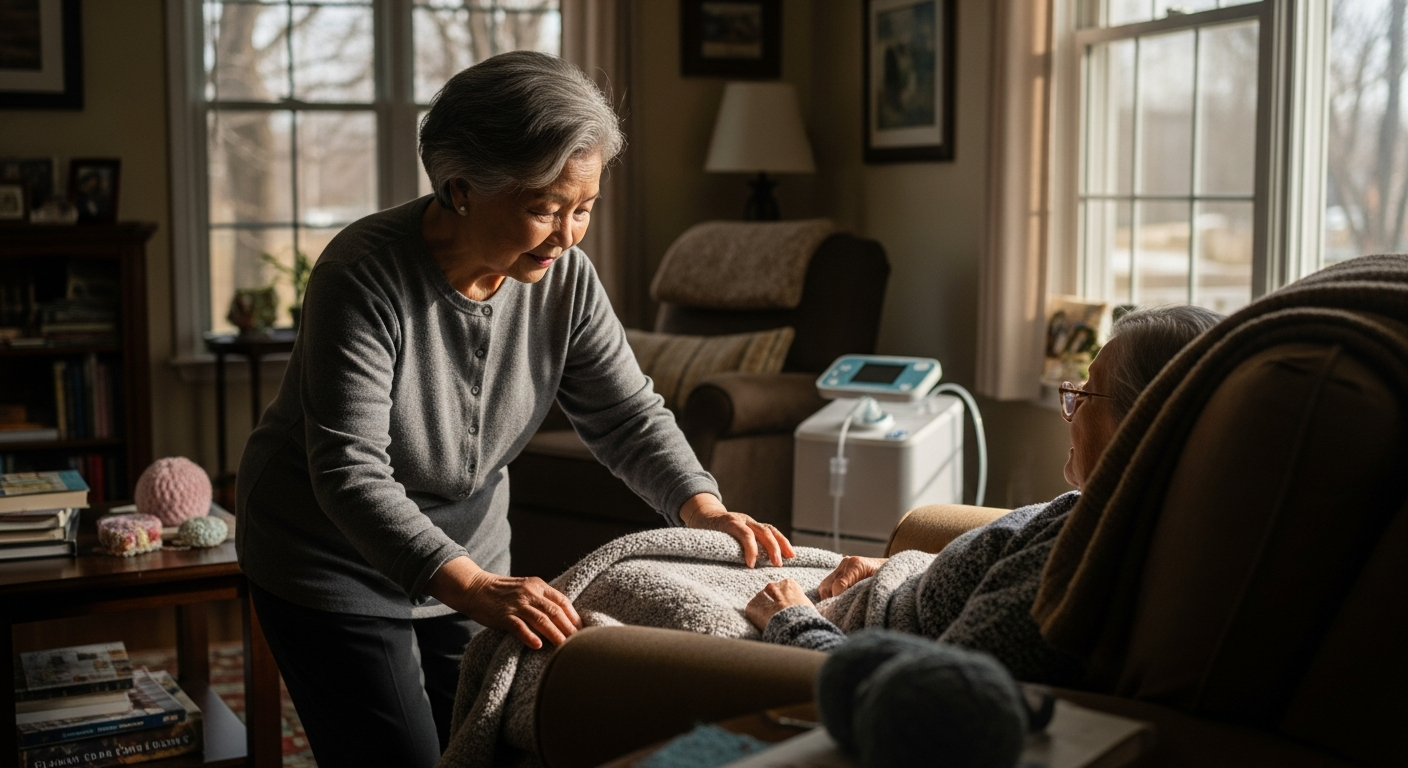
Home Modifications for COPD and Oxygen Safety
Advanced COPD with home oxygen requires specific home adaptations that prevent oxygen hazards and reduce respiratory strain.
Critical home modifications for COPD oxygen therapy:
| Modification | Estimated Cost | Safety Benefit |
|---|---|---|
| Master bedroom relocation to main floor (avoids stair climbing) | $5,000–$20,000 | Reduces respiratory strain from stair climbing |
| Bedroom oxygen outlet installation and portable system charging | $400–$1,200 | Enables overnight oxygen transition |
| Kitchen accessibility for low-exertion meal prep | $2,000–$6,000 | Cooking causes COPD exacerbations |
| Bathroom grab bars and seated shower (for showering with oxygen) | $1,500–$4,000 | Prevents falls during low-oxygen periods |
| Doorway widening for oxygen equipment movement | $1,500–$4,000 | Safe equipment transport |
| Improved ventilation/air filtration system | $1,500–$5,000 | Reduces airborne irritants triggering exacerbations |
| Safe oxygen storage area (cool, ventilated) | $500–$2,000 | Oxygen tanks require specific storage |
| Lighting upgrades (motion sensor for nighttime bathroom) | $300–$800 | Low-oxygen seniors at high fall risk at night |
Total COPD-specific home modifications: $12,700–$42,800
The Medication and Respiratory Therapy Cost Burden
Advanced COPD requires multiple inhalers, medications, and sometimes home respiratory therapy.
Advanced COPD medication and therapy costs (monthly):
- Multiple inhalers (rescue + maintenance): $150–$300/month (partially covered, gaps exist)
- COPD exacerbation medications (prednisone, antibiotics when flares occur): $200–$500/flare
- Nebulizer treatments (if prescribed instead of inhalers): $50–$100/month
- Pulmonary rehabilitation program (8–12 week programs): $400–$1,200/program
- Home respiratory therapy assessment and follow-up: $300–$600
- Portable oxygen saturation monitoring (if prescribed): $50–$100/month
Additional annual COPD medication costs beyond base coverage: $2,000–$5,000+
Emergency Preparedness: Backup Systems and Redundancy
Seniors with advanced COPD on supplemental oxygen face immediate life threat if oxygen supply fails. Emergency preparedness requires backup systems that cost significantly more than standard equipment.
Emergency oxygen backup investment:
| System | Cost | Critical Need |
|---|---|---|
| Battery backup for stationary concentrator (24+ hours) | $2,000–$4,000 | Power outage survival |
| Backup portable oxygen concentrator (independent of home system) | $2,000–$5,000 | Equipment failure redundancy |
| Emergency oxygen tank stockpile (30-day supply) | $1,000–$2,000 | Supply chain disruption |
| Portable generator (can power concentrator) | $1,500–$3,500 | Power failure independence |
| Manual resuscitation equipment (Ambu bag, backup masks) | $200–$500 | In-home emergency response |
Total emergency preparedness investment: $6,700–$15,000

When COPD Triggers Career Disruption for Adult Children
Advanced parental COPD often forces adult children to reduce work hours. COPD exacerbations (acute flares requiring hospitalization) can strike suddenly, requiring emergency care coordination.
Financial impact of COPD-related career interruption:
According to FSRAO, adult children managing COPD parents reduce work hours by an average of 8–15 hours weekly, resulting in income loss of $400–$1,200/month or $4,800–$14,400 annually.
A reverse mortgage can offset this income loss without forcing the adult child to abandon their parent's care—or their own career.
Preventive Medication Management and Hospitalization Avoidance
The most cost-effective COPD management is preventing exacerbations. Preventive medications, pulmonary rehabilitation, and proper equipment maintenance can reduce hospitalization by 30–40%.
Prevention costs that reduce hospitalizations:
- Annual pulmonary rehabilitation programs: $1,000–$2,000
- Preventive antibiotics (for chronic bronchitis variant): $200–$400/year
- Air quality management (air purifiers, humidity control): $400–$800/year
- Nutritional support (COPD patients need high protein): $100–$200/month
Cost avoidance from preventing one hospitalization: $5,000–$15,000 per avoided admission
Strategic reverse mortgage use for prevention actually saves money long-term by preventing expensive emergency care.
Reverse Mortgage Timing for COPD Care
The ideal time to access reverse mortgage for COPD is shortly after diagnosis, before:
- Equipment costs accumulate from multiple emergency purchases
- Home modifications become urgent (forcing expensive rush installation)
- Adult child's career suffers irreparable damage from missed work
- Crisis hospitalization forces reactive (expensive) decisions
According to CHIP and HomeEquity Bank, seniors who plan reverse mortgage use for COPD equipment immediately after diagnosis have 30–40% lower total healthcare-related expenses than those who wait for crisis.
Key Takeaways
- Home oxygen therapy requires $5,000–$12,250 in first-year equipment, plus $4,020–$10,440 annually in uncovered supplies
- COPD-specific home modifications range from $12,700–$42,800 depending on severity and home layout
- Emergency preparedness (backup oxygen, generators, redundant systems) requires additional $6,700–$15,000 investment
- Adult children managing COPD parents lose $4,800–$14,400 annually in reduced work income
- Preventive COPD management (rehabilitation, proper equipment) can reduce hospitalizations by 30–40%, saving $5,000–$15,000 per avoided admission
- Proactive reverse mortgage timing at diagnosis point optimizes costs and prevents crisis-driven expenses
Frequently Asked Questions
Does Ontario Health cover all home oxygen equipment, or just the concentrator?
Ontario Health covers a stationary concentrator and portable tanks for essential medical visits. Backup equipment, portable concentrators, advanced delivery systems, humidifiers, and supplies are not covered. Most families pay $4,000–$10,000 annually in uncovered oxygen expenses.
What if my aging parent refuses to use supplemental oxygen even though they need it?
Oxygen refusal is common initially (loss of independence, vanity, discomfort). Many families find that proactive investment in comfortable equipment (lightweight portable concentrators, low-profile nasal cannulas) improves acceptance. Reverse mortgage can fund trial equipment without forcing immediate permanent purchase.
Can I rent oxygen equipment instead of buying it?
Yes. Monthly oxygen rental ranges from $400–$800 depending on equipment. Over 3–5 years, rental costs typically exceed purchase costs. However, renting allows you to trial equipment before committing to purchase—worthwhile if your parent is newly diagnosed.
What happens if my aging parent has a COPD exacerbation and can't use supplemental oxygen properly?
COPD exacerbations are medical emergencies requiring hospitalization. During exacerbation, supplemental oxygen must be managed in hospital settings. Reverse mortgage funds can cover hospital accommodation for family members, gap insurance for uninsured treatments, or home modifications needed post-hospitalization.
Are there government programs that help with COPD equipment costs in Ontario?
Limited programs exist: Ontario Health covers base oxygen for eligible severe cases; some charities assist with respiratory equipment; accessibility tax credits may apply to home modifications. However, gaps remain significant. Rick Sekhon Reverse Mortgages helps clients maximize available programs while bridging uncovered costs.
If my aging parent moves to long-term care, do I still need emergency backup oxygen equipment?
No. Long-term care facilities provide and manage oxygen systems. However, if your parent requires respite care, in-home palliative care, or temporary home discharge, backup systems may still be needed. Discuss with care team and physician about transition timing.
Ready to Learn More?
Find out exactly how much you could unlock from your home — free and no obligation.
Related Articles
Reverse Mortgage for DEI Consulting Practice: Launching Diversity, Equity, and Inclusion Consulting in Retirement
Start a diversity and inclusion consulting practice. Help corporations and nonprofits build equitable cultures; reverse mortgage funds training, business setup, and market entry.
Read →Reverse Mortgage for Residential Sustainability Auditing Practice: Certifying Aging in Place
Launch a professional home energy and sustainability auditing business. Help Ontario homeowners certify efficiency; reverse mortgage funds training, tools, and market entry.
Read →Reverse Mortgage for Archival and Digital Preservation Consulting: Preserving Institutional History and Heritage
Launch archival consulting practice preserving records for institutions. Help libraries, archives, nonprofits; reverse mortgage funds training, tools, and market entry.
Read →