
Reverse Mortgage for Bathroom Safety Modifications: Grab Bars, Slip-Resistant Flooring, and Accessible Fixtures
Fund bathroom safety modifications for aging parents with reverse mortgage. Grab bars, slip-resistant flooring, accessible fixtures prevent falls.
The bathroom is the most dangerous room in your home after 65. Falls in the bathroom cause more injuries and hospitalizations in Canadian seniors than any other location in the house. But specialized grab bars, slip-resistant flooring, and accessible fixtures can reduce your risk by up to 80%—and a reverse mortgage can fund these critical safety upgrades without draining your retirement savings.
Why Bathroom Modifications Are Your First Priority
Bathroom accidents account for nearly 40% of all fall-related injuries in seniors. The combination of wet surfaces, small spaces, standard heights, and slippery fixtures creates a perfect storm of risk. A bathroom fall at 70+ often means a stay in long-term care—or permanent loss of independence.
A bathroom safety upgrade isn't a luxury; it's a foundation for aging in place successfully.
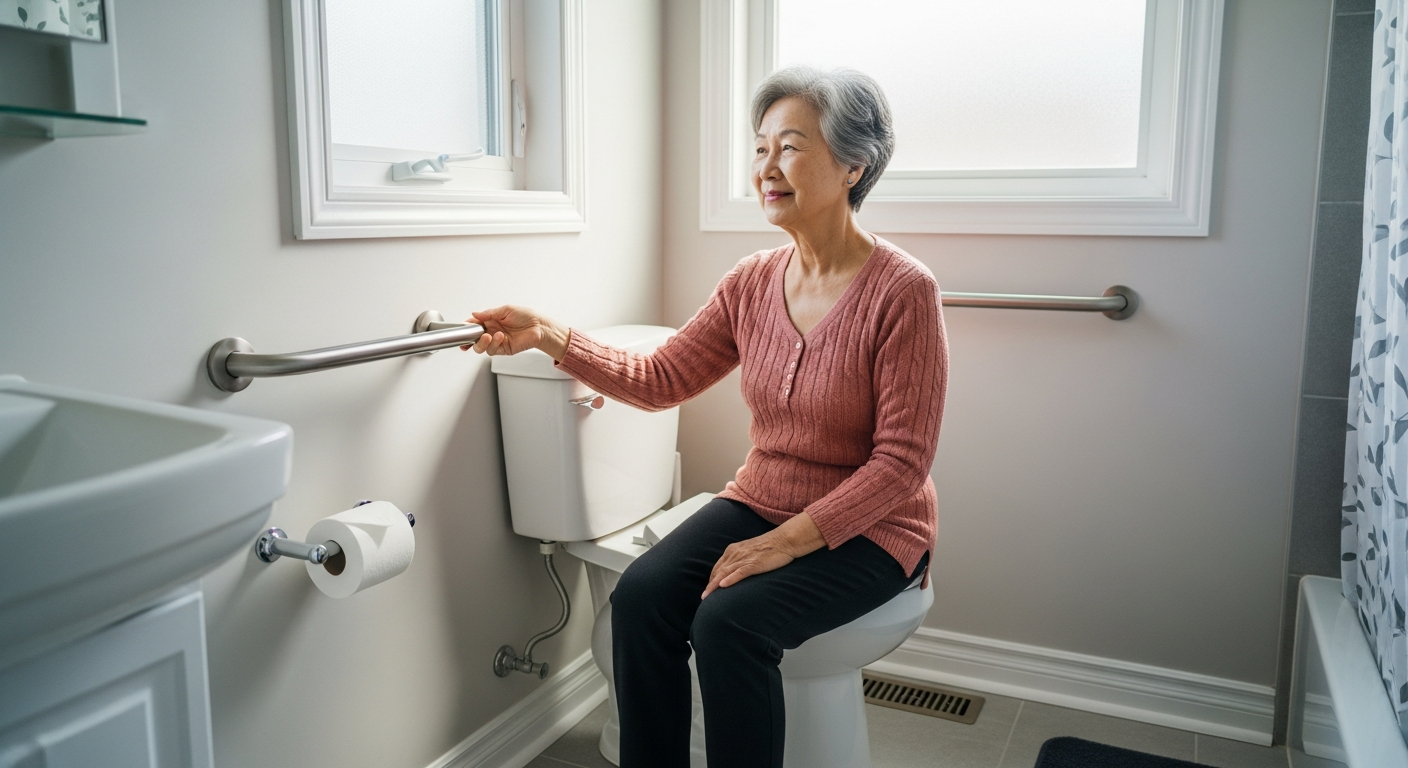
The good news: targeted modifications can reduce fall risk dramatically. According to CMHC research on home safety, grab bars alone reduce falls by 26% in bathrooms. When combined with slip-resistant flooring, accessible showers, and raised toilet seats, the reduction climbs to over 50%.
"Falls are the leading cause of injury-related hospital admissions among seniors in Canada, with bathrooms being the single highest-risk location." — CMHC Housing Research
Many seniors—and their adult children—don't realize that a reverse mortgage can fund these modifications without waiting for a health crisis to force the issue. By acting now, you're investing in your independence.
Understanding Bathroom Safety Modifications: What Gets Upgraded
Bathroom safety modifications fall into four main categories. Understanding what each does will help you prioritize.
| Modification Type | Cost Range (Ontario) | Fall Risk Reduction | Primary Benefit |
|---|---|---|---|
| Grab bars (stainless steel, wall-mounted) | $300–$800 per area | 26% | Stability getting in/out of tub, toilet |
| Slip-resistant flooring replacement | $2,500–$6,000 | 35% | Prevents slips on wet surfaces |
| Walk-in tub or step-in tub conversion | $4,000–$12,000 | 40% | Eliminates barrier stepping over tub edge |
| Raised toilet seat + grab bars | $400–$1,200 | 20% | Reduces knee stress, easier standing |
| Accessible shower with built-in seating | $3,500–$10,000 | 45% | Safe, seated showering without steps |
| Handheld showerhead installation | $200–$600 | 15% | Better reach, control in shower |
| Non-slip bathtub surface treatment | $150–$400 | 18% | Cost-effective slipping reduction |
| Heated floor systems (bathroom) | $3,000–$8,000 | 12% | Reduces moisture, improves traction |
Planning Your Bathroom Upgrade: The Strategic Approach
Most seniors don't need all bathroom modifications at once. Instead, a strategic phase works best.
Phase 1: Immediate Fall-Risk Reduction ($800–$2,000) Start with grab bars near the toilet and shower/tub, plus a non-slip bathtub treatment. These address the highest-risk areas. Working with a reverse mortgage broker can help you structure funding for Phase 1 modifications immediately through a lump-sum draw that you control.
Phase 2: Flooring and Surfaces ($2,500–$6,000) Replace standard bathroom flooring with slip-resistant tile, luxury vinyl, or cork. This prevents falls on wet surfaces and works year-round, even during Ontario winters when condensation increases.
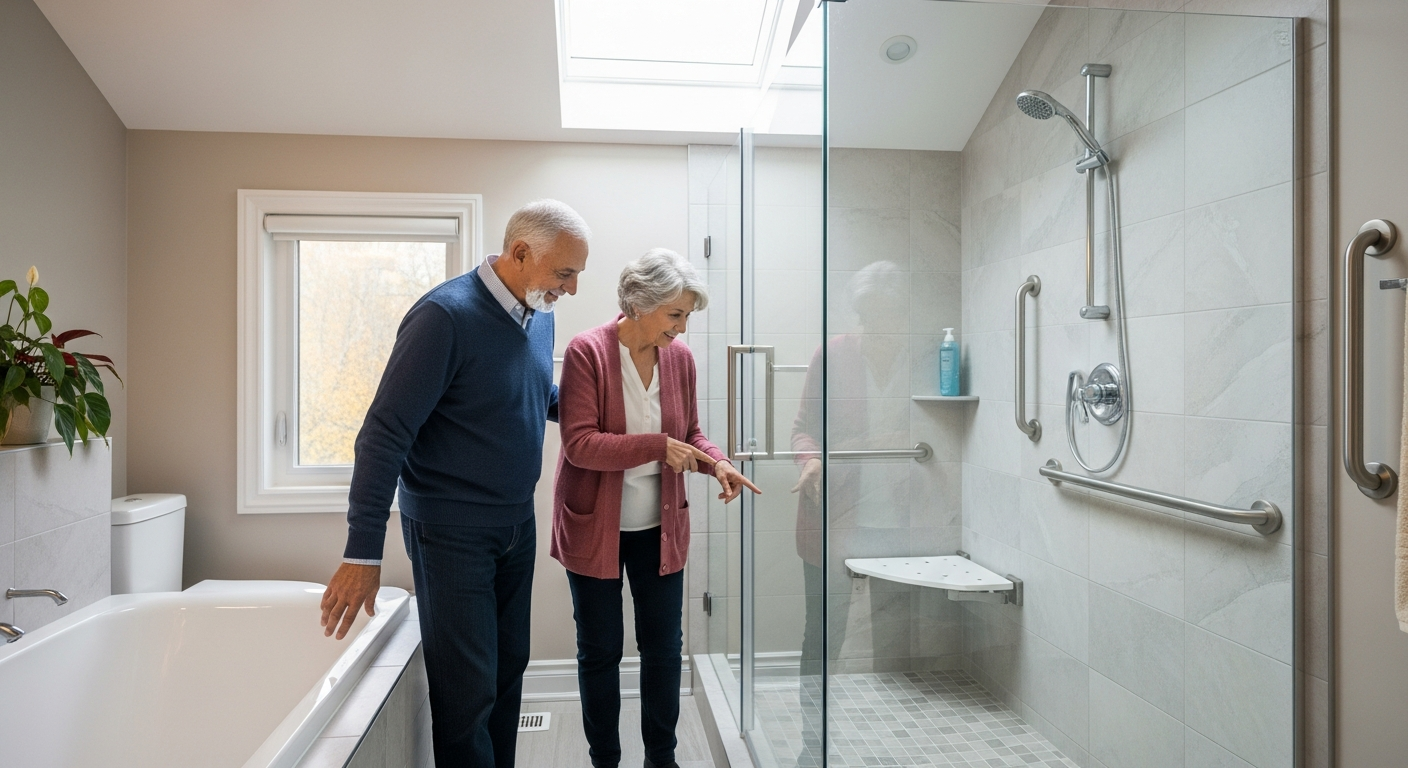
Phase 3: Major Fixtures ($4,000–$12,000) Convert to a walk-in tub, accessible shower, or raised toilet system. These are your long-term aging-in-place investments.
How Reverse Mortgage Funding Works for Bathroom Modifications
A reverse mortgage provides the equity needed for bathroom upgrades without selling your home or taking on traditional debt that impacts retirement cash flow.
Example Scenario: Margaret, 68, lives in a Toronto home valued at $650,000 with an existing mortgage of $150,000. She qualifies for a reverse mortgage of approximately $180,000 (based on 55% of home value, less the existing mortgage). She draws $8,000 for a complete Phase 1 and Phase 2 bathroom upgrade—grab bars, slip-resistant flooring, heated floor in the bathroom. No monthly payments. No impact on OAS/GIS. Her adult daughter helps oversee the renovation.
Lenders like CHIP and Equitable Bank offer flexible draws on reverse mortgages, so you don't take all the money at once. Margaret draws what she needs, when she needs it.
Comparison: Reverse Mortgage vs. Other Funding Methods
| Funding Method | Upfront Costs | Monthly Payments | Impact on Benefits | Best For |
|---|---|---|---|---|
| Reverse Mortgage | Application + appraisal ($1,200–$2,000) | $0 monthly | No impact on OAS/GIS | Seniors with significant home equity |
| Home Equity Line of Credit (HELOC) | $500–$1,500 | Variable (3–5% interest) | No direct impact | Working seniors with regular income |
| Personal Loan | Minimal | High monthly payments (8–10% interest) | No direct impact | Retirees with strong credit/income |
| Out of Pocket/Savings | $0 | $0 | No impact | Those with liquid savings available |
| Government Grants (select cases) | Application review (free) | $0 | No impact | Limited eligibility in Ontario regions |
Real Barriers: Why Seniors Delay Bathroom Upgrades
Many seniors know they need bathroom modifications but delay for three common reasons:
1. Denial and Habit — "I've never fallen before; I don't need grab bars." This is the most dangerous barrier. Most seniors who fall claim they "never thought it would happen." Falls occur quickly and unpredictably.
2. Cost Perception — "It's too expensive; I can't afford it." Without understanding reverse mortgage options, seniors assume they must pay out of pocket. A $6,000 bathroom upgrade feels unaffordable on a fixed pension. But a reverse mortgage spreads this cost over equity they already own.
3. Contractor Uncertainty — "I don't know which contractor to trust or what modifications actually work." This is where working with specialists adds value. They can recommend trusted contractors who specialize in aging-in-place modifications.
The Cost-Benefit Reality of Bathroom Safety
Consider the cost of falling instead of preventing it:
- Emergency room visit for a fall: $2,000–$5,000
- Hospitalization for hip fracture (average 5 days): $15,000–$30,000
- Rehabilitation or long-term care stay (6 months): $40,000–$80,000
- Loss of independence and quality of life: Priceless
A $6,000 bathroom safety upgrade prevents falls that would cost $50,000+ in healthcare and care.
"Bathroom modifications are among the most cost-effective investments in fall prevention, with every dollar spent preventing $8–10 in healthcare costs." — Statistics Canada Health Report 2025
The ROI on bathroom safety is among the highest investments a senior can make.
Selecting the Right Contractor: What to Look For
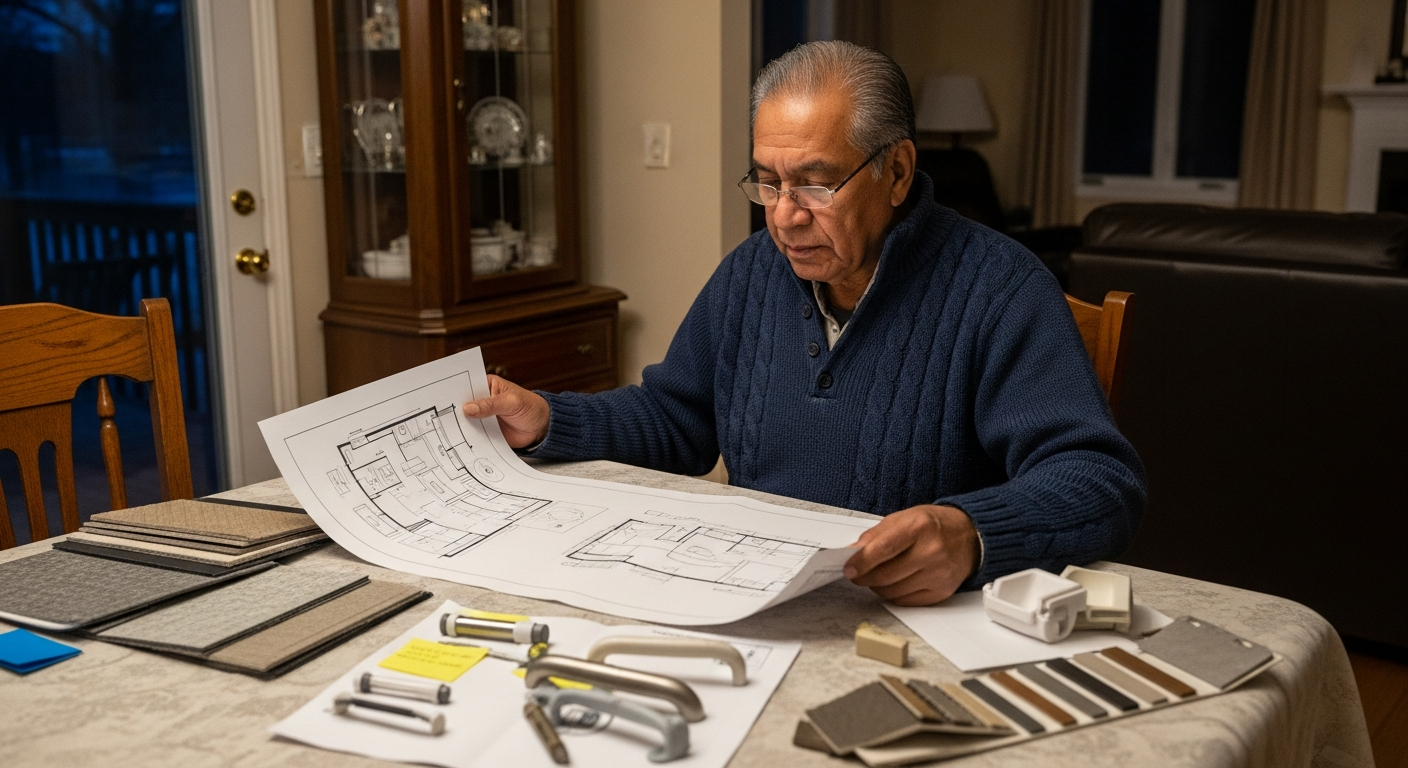
Not all contractors understand aging-in-place design. Look for:
- Certification or training in accessibility standards (ADA, AODA in Ontario)
- References from seniors or geriatric care organizations
- Understanding of load requirements for grab bars (must support 250+ lbs)
- Knowledge of local Ontario building codes for bathroom modifications
- Warranty on installation (5+ years typical for grab bar installation)
Many seniors make the mistake of hiring a general contractor unfamiliar with aging-in-place specifics. A specialist costs 10–15% more but ensures modifications are safe and effective.
The Advantage of Planning Ahead: Reverse Mortgage Timing
The best time to fund bathroom modifications is before you need them. Here's why:
- You have more options. Lenders like CHIP, Equitable Bank, and Bloom Financial assess your ability to manage the loan based on current home conditions.
- You can phase modifications strategically, rather than rushing into expensive solutions after a fall.
- You avoid the stress of finding contractors in crisis mode after an injury.
- Your adult children can help plan when there's no emergency pressure.
Key Takeaways
- Bathroom falls are the leading cause of injury-related hospitalizations in Canadian seniors, but grab bars and slip-resistant flooring reduce fall risk by 26–50%.
- Bathroom modifications typically cost $800–$12,000 depending on scope, from grab bars to walk-in tubs, making reverse mortgage funding a practical solution.
- A reverse mortgage eliminates the choice between safety and cash flow—you fund modifications without monthly payments or impact on OAS/GIS.
- Phased upgrades work better than all-at-once renovation. Start with Phase 1 (grab bars, non-slip treatment) for $800–$2,000, then progress to flooring and major fixtures as budget allows.
- Professional assessment by contractors trained in aging-in-place design ensures modifications meet load standards and local building codes, reducing future liability.
Frequently Asked Questions
Will grab bars damage my walls, making it harder to sell my home later?
No. Professional grab bars installed on studs with stainless steel hardware actually add value to aging-in-place homes. If you ever move, the buyer will appreciate the safety upgrades. Installers can also use removable hardware that doesn't permanently alter walls.
Can I get a government grant to cover some bathroom modification costs?
Some Ontario seniors qualify for provincial grants through programs like the Accessibility Improvement Grant (varies by region and income). Check with your local municipality or the Ontario Health and Long-Term Care office. Even with a grant, a reverse mortgage bridges any gap between grant amounts and actual costs.
How much do grab bars cost to install, and is installation expensive?
Quality stainless steel grab bars cost $150–$400 each. Professional installation adds $200–$400 per grab bar. Most seniors need 3–4 bars (toilet, shower entry, tub, over vanity), totaling $1,200–$2,000 for a complete system. A reverse mortgage makes this affordable without impacting monthly cash flow.
What's the difference between slip-resistant flooring and regular tile?
Regular tile is smooth and becomes slippery when wet. Slip-resistant flooring (textured tile, luxury vinyl, or cork) has a micro-textured surface that maintains grip even when wet. The anti-slip coefficient must meet Ontario building code standards (typically 0.60+). A contractor trained in accessible design knows which products meet these standards.
Can I install a walk-in tub myself, or do I need a professional?
Walk-in tubs require professional installation because they involve plumbing, electrical (for heated water), and structural support. DIY installation voids warranties and creates safety risks. Budget $4,000–$12,000 for professional installation through a licensed contractor. A reverse mortgage makes this feasible as a planned expense.
Should I do bathroom modifications now or wait until I actually need them?
Do them now. Waiting until after a fall is slower, more expensive, and stressful. Proactive modifications prevent the fall in the first place. A reverse mortgage lets you act on your timeline, not a crisis timeline.
Ready to fund your bathroom safety upgrades? Start with a reverse mortgage assessment. Consult with specialists like those at Rick Sekhon Reverse Mortgages who understand aging-in-place design and reverse mortgage options. Your independence depends on it.
Ready to Learn More?
Find out exactly how much you could unlock from your home — free and no obligation.
Related Articles
Reverse Mortgage for DEI Consulting Practice: Launching Diversity, Equity, and Inclusion Consulting in Retirement
Start a diversity and inclusion consulting practice. Help corporations and nonprofits build equitable cultures; reverse mortgage funds training, business setup, and market entry.
Read →Reverse Mortgage for Residential Sustainability Auditing Practice: Certifying Aging in Place
Launch a professional home energy and sustainability auditing business. Help Ontario homeowners certify efficiency; reverse mortgage funds training, tools, and market entry.
Read →Reverse Mortgage for Archival and Digital Preservation Consulting: Preserving Institutional History and Heritage
Launch archival consulting practice preserving records for institutions. Help libraries, archives, nonprofits; reverse mortgage funds training, tools, and market entry.
Read →