
Reverse Mortgage for Managing Aging Parent's Accessibility Equipment Maintenance and Replacement Cycles
Plan for the ongoing costs of wheelchairs, lifts, and accessibility devices that wear out and need replacing every 3-7 years. Budget for replacement cycles, not one-time installations.
You funded your aging parent's wheelchair, shower lift, and accessible bathroom renovations. But what happens when the equipment breaks? When the batteries fail? When the wheelchair needs a new wheelchair? Most families plan for the installation of accessibility equipment but not the replacement cycles. A reverse mortgage creates an equipment reserve that covers decades of maintenance and replacement without emergency panic.
The Hidden Reality: Accessibility Equipment Has a Lifespan
Many families assume home accessibility is a one-time cost: renovate the bathroom, install the ramp, buy the equipment—done. But accessibility equipment deteriorates, breaks, and needs replacement every 3–10 years depending on type and use.
And unlike a kitchen renovation that lasts 20 years, medical equipment has short replacement cycles.
Accessibility Equipment Lifespans and Replacement Costs
| Equipment | Expected Lifespan | Replacement Cost | Notes |
|---|---|---|---|
| Mobility Aids | |||
| Manual wheelchair | 5–7 years | $1,500–3,500 | Frames weaken; wheels wear |
| Motorized wheelchair | 5–8 years | $3,000–8,000 | Motors fail; batteries degrade |
| Scooter (mobility) | 5–7 years | $2,000–6,000 | Motor wear; battery replacement $500–1,500 |
| Walker (standard) | 3–5 years | $150–400 | Frame corrosion; worn rubber |
| Lift Equipment | |||
| Ceiling-mounted lift | 10 years | $3,000–7,000 | Motor/pulley replacement; structural issues |
| Portable patient lift | 5–8 years | $2,000–4,000 | Hydraulics fail; steel fatigues |
| Toilet safety frame | 3–5 years | $200–600 | Welds crack; rubber deteriorates |
| Shower/bath grab bars | 5–10 years | $300–800 | Corrosion; loose fasteners |
| Accessibility Modifications | |||
| Stair lift | 10–15 years | $2,000–6,000 | Motor issues; safety system replacement |
| Ramp surface | 5–10 years | $1,500–4,000 | Weather damage; slip surface wear |
| Accessible door hardware | 5–8 years | $300–600 | Electronic locks; hinges |
| Medical Monitoring Devices | |||
| Pressure relief mattress | 3–5 years | $1,000–2,500 | Pump failure; foam degradation |
| Medical alert system | 3–5 years | $200–500 | Battery; connectivity issues |
| Oxygen concentrator | 5–10 years | $1,500–4,000 | Filter replacement; compressor wear |
The pattern: Every 3–5 years, your parent needs $2,000–5,000 in equipment replacement. Over 15 years (ages 75–90), that's $30,000–75,000 in ongoing replacement costs—on top of the original $20,000–40,000 installation.
Most families don't budget for this. When equipment breaks, they face emergency decisions: replace out of savings, go without (safety risk), or sell the home because they can't afford ongoing accessibility.
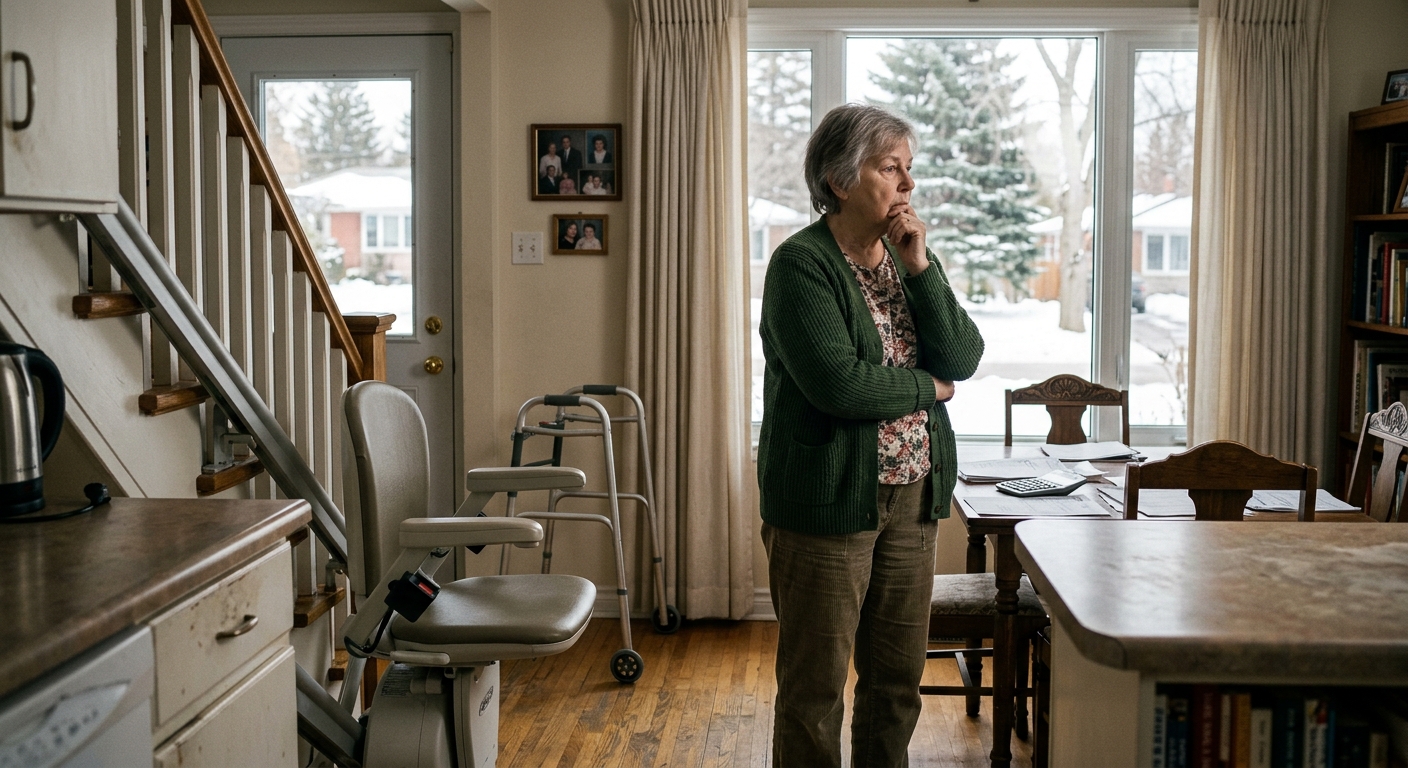
Why Equipment Wears Out Faster Than Most People Expect
Reason 1: Constant Use
Unlike a kitchen appliance used occasionally, accessibility equipment is used daily, sometimes multiple times per hour. A wheelchair isn't a luxury vehicle driven on weekends; it's used dozens of times daily. That's equivalent to 20+ years of normal use compressed into 5–7 years.
Reason 2: Medical/Biological Factors
Your parent's body is changing. Weight fluctuations affect wheelchair settings and positioning. Increasing moisture (incontinence, sweating) corrodes metal components. Stronger medications thin skin, requiring different pressure-relief approaches.
Equipment that fits perfectly at age 75 may not work at age 80 because your parent's body changed, not just because the equipment aged.
Reason 3: Climate and Environmental Stress
Ontario's climate is harsh on equipment:
- Winter: Salt spray, extreme cold, temperature cycling cracks seals and welds
- Summer: Heat degrades plastics, batteries, and electronic systems
- Moisture: Humidity, bathroom use, and incontinence create corrosion
Equipment used in harsh environments wears 2–3x faster than manufacturer specifications (which assume temperate indoor use).
How Reverse Mortgage Solves the Replacement Cycle Problem
Instead of waiting for equipment to fail and scrambling for emergency cash, a reverse mortgage lets you establish an equipment replacement reserve funded upfront.
Strategy 1: Calculate Lifetime Equipment Costs and Access Via Lump Sum
- Identify all equipment your parent uses or will need
- Research replacement cycles and costs (use the table above)
- Calculate 15-year total: $30,000–75,000 depending on mobility level
- Access reverse mortgage lump sum covering this total
- Invest conservatively (GIC, high-interest savings) earning 4–5% annually
Example:
- Parent age 75; expected lifespan in current home: 15 years (to age 90)
- Current equipment: Motorized wheelchair ($5,000), shower lift ($4,000), accessible bathroom ($15,000 total)
- Projected replacements over 15 years: $50,000
- Access $55,000 lump sum via reverse mortgage
- Place in high-interest savings earning 4% = $2,200/year in interest alone
- Use principal + interest to fund replacements as they occur
- If parent passes before using all funds, remainder supports estate or charitable legacy
Strategy 2: Line of Credit (Flexible Drawdown)
Instead of lump sum, access a reverse mortgage line of credit ($100,000–200,000) and draw as equipment needs replacement.
Best for:
- Flexibility if equipment needs change
- Uncertainty about whether parent will need certain equipment
- Parents who want access to funds for other purposes too
Strategy 3: Hybrid (Lump Sum + Warranty/Insurance)
Some families combine reverse mortgage funding with equipment warranties:
- Access RM lump sum for unexpected replacements beyond warranty
- Purchase extended warranties (3–5 year) on high-cost items (motorized wheelchairs, lifts)
- Self-insure lesser items with RM reserves
| Approach | Upfront Cost | Ongoing Cost | Best For |
|---|---|---|---|
| No planning | Equipment costs absorbed as emergencies | High (panic purchases) | Not sustainable |
| Self-insure with RM | $50,000–75,000 RM access | Low (planned, discounted purchases) | Most families |
| Warranties + RM backup | Lower RM access ($30,000–40,000) + warranty premiums | Medium | High-cost items |
| Equipment leasing instead of buying | Lower upfront RM access | Higher ongoing costs ($200–400/month) | Frequent replacements expected |
Sourcing Replacement Equipment: Smart Shopping
Once you have reverse mortgage reserves, smart sourcing stretches funds further:
New Equipment
- CHIP or Equitable Bank funding: Standard retail purchase
- Cost: Full retail ($2,000–8,000 per major item)
- Warranty: Full manufacturer warranty
Refurbished Equipment
- Source: Equipment rental companies, hospitals upgrading, manufacturers' refurbished programs
- Cost: 40–60% of new
- Warranty: 1–2 years (vs. 2–5 for new)
- Risk: Unknown maintenance history
Used Equipment (Peer-to-Peer)
- Source: Craigslist, Facebook Marketplace, disability communities
- Cost: 30–50% of new
- Warranty: None (as-is)
- Risk: Unknown maintenance; may need immediate repairs
Recommended strategy: Buy new high-cost items (motorized wheelchairs, ceiling lifts) where reliability matters. Buy refurbished or used for lower-cost items (shower frames, walkers, smaller mobility aids).
According to disability research, equipment purchased through official refurbished channels (manufacturer or certified rental companies) is as reliable as new equipment, at 50% of the cost.
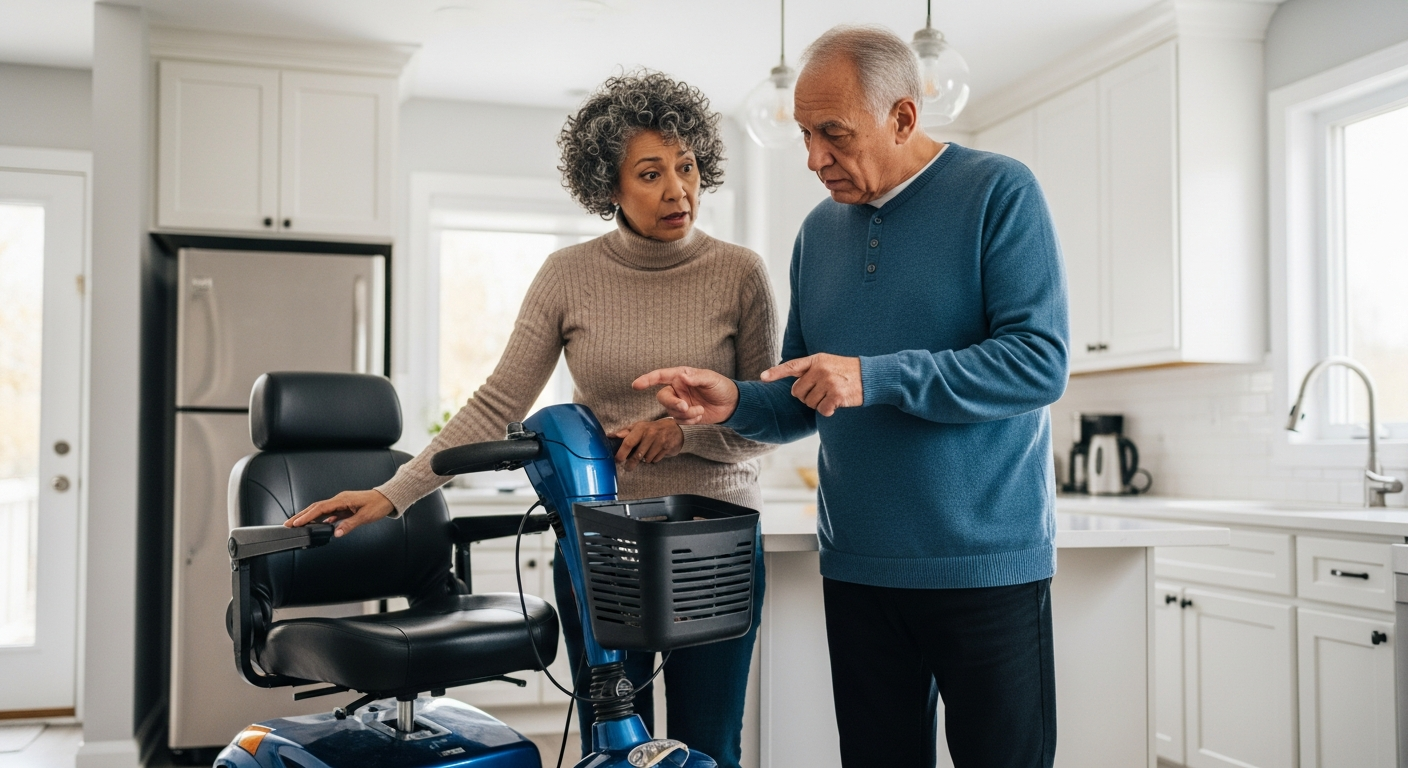
Maintenance Costs You Can't Predict
Beyond replacement, ongoing maintenance costs accumulate:
| Maintenance Item | Typical Cost | Frequency |
|---|---|---|
| Wheelchair tire replacement | $200–400 | Every 1–2 years |
| Battery replacement (motorized) | $500–1,500 | Every 2–3 years |
| Pressure-relief mattress fluid replacement | $100–300 | Every 1–2 years |
| Stair lift annual servicing | $150–300 | Annually |
| Emergency repair visits | $150–500 | As needed |
| Filters and consumables (oxygen, etc.) | $50–200/month | Monthly/quarterly |
Annual maintenance: $1,000–4,000 depending on equipment mix. Over 15 years: $15,000–60,000 in maintenance alone.
A reverse mortgage reserve covers both replacement AND maintenance without straining monthly budgets.
Integration With Aging in Place Planning
Smart accessibility equipment funding works alongside other aging-in-place strategies:
Without RM planning:
- Year 1: Install accessible bathroom ($15,000)
- Year 2: Emergency wheelchair replacement ($4,000)—depletes savings
- Year 4: Stair lift fails—can't afford replacement
- Year 6: Parent forced to downsize or move to institutional care
With RM equipment planning:
- Year 1: Install accessible bathroom ($15,000) + access $50,000 RM for future replacements
- Year 2–15: Equipment breaks → replacement funded from RM reserves
- Year 15: Parent has aged in place successfully for 15+ years; equipment replaced 3–4 times; home modifications adapted as needed
- Remaining RM equity: Supports final years of care or becomes estate asset
According to aging-in-place research, families who fund accessibility equipment replacements proactively stay in their homes 3–5 years longer than those making reactive purchases.
The Owner's Maintenance Mindset
Beyond costs, establish a maintenance culture:
| Practice | Benefit |
|---|---|
| Preventive servicing schedule | Catch failures before they happen |
| Inventory current equipment | Know what needs replacing and when |
| Track equipment purchases | Understand your replacement cycle |
| Regular inspections | Spot wear before crisis |
| Seasonal maintenance | Prepare equipment for climate changes |
A $50 inspection catches a $3,000 emergency repair 80% of the time.

Tax and Insurance Implications
Good news for reverse mortgage equipment reserves:
- RM proceeds: Non-taxable; don't trigger OAS clawback
- Equipment purchases: Some items may qualify for Disability Tax Credit (DTC) if your parent has a registered disability
- Insurance: Most home insurance covers built-in modifications (ramps, grab bars) but not movable equipment. Movable equipment (wheelchairs, lifts) is covered under health insurance or disability coverage if your parent has it
- GST/HST: Most medical equipment is exempt from GST/HST if prescribed by a healthcare provider
Consult your parent's accountant or Rick Sekhon to structure the RM reserve in the most tax-efficient way.
Building the Business Case for Your Aging Parent
If your parent is hesitant about reverse mortgage for equipment reserves:
Frame it as:
- "This reserves money so your equipment never breaks and forces a move"
- "This ensures you stay in your home, not moved to institutional care when equipment fails"
- "This funds unexpected health changes (your body changes; equipment needs change too)"
- "This is insurance for your independence—like home insurance protects your house"
Most aging parents accept this logic when they understand the alternative is forced relocation.
Key Takeaways
- Accessibility equipment replaces every 3–10 years, not once; families often only plan for installation, not replacement cycles.
- 15-year replacement costs: $30,000–75,000 in additional equipment beyond original installation.
- Reverse mortgage creates an equipment reserve accessible for predictable replacement cycles and maintenance.
- Lump sum or line of credit options let you choose the right structure for your parent's situation.
- Smart sourcing (refurbished, gently used) stretches RM reserves 2–3x further.
- Proactive planning prevents forced relocation: Families with equipment reserves stay in homes 3–5 years longer.
- Ontario aging-in-place research shows equipment maintenance is as important as initial accessibility installation.
Frequently Asked Questions
What if my parent doesn't want a reverse mortgage just for equipment reserves?
Consider combining equipment reserves with other life goals: legacy gifting, home renovations, travel in retirement. The reverse mortgage serves multiple purposes; equipment reserves are just one. This makes the RM decision easier.
Can disability benefits or insurance cover equipment replacement?
Partially, but not completely. Many disability supports (ODSP, DTC) have caps on equipment coverage. Insurance often requires prescriptions from doctors. A reverse mortgage reserve covers the gaps and provides flexibility when coverage limits are hit.
Should I buy warranties instead of setting aside reserves?
Warranties cover failures, but they're expensive ($200–500/year per item) and often have limitations. A 4% return on a RM reserve ($2,000/year on a $50,000 reserve) is better value than paying warranty premiums. Use reserves + selective warranties on high-cost items.
What if my parent passes before using all the equipment reserve?
Remaining RM balance becomes part of the estate. It's paid from home sale proceeds, and any excess goes to heirs. The reverse mortgage doesn't create a loss; unused reserves just reduce the equity your parent leaves behind (which is minimal compared to the home's total value).
Can I buy equipment through my parent's workplace benefits plan instead?
If your parent still works or has retiree benefits, yes—benefits might cover some equipment. Use benefits first, then supplement with RM reserves for items not covered or for future replacement when benefits no longer apply.
How do I know what equipment my parent will need in future years?
Work with an occupational therapist ($150–300/session) to assess not just current needs, but projected needs based on your parent's health trajectory. This informs how much RM to access. Consult Rick Sekhon on structuring a flexible line of credit if future needs are uncertain.
Ready to plan for your aging parent's equipment replacement cycles without emergency panic? Contact Rick Sekhon Reverse Mortgages to discuss establishing an equipment reserve that funds decades of accessibility maintenance and replacement. We'll help you stay ahead of the replacement cycle.
Ready to Learn More?
Find out exactly how much you could unlock from your home — free and no obligation.
Related Articles
Reverse Mortgage After Your Caregiver Retires: Restructuring Care and Rebuilding Independence
Your longtime caregiver is retiring. A reverse mortgage funds the transition to new care arrangements and helps you rebuild independence after years of dependence.
Read →Reverse Mortgage for Rural Ontario Caregiving Deserts: When Attendants Cost 3x More
Rural aging in place costs dramatically more when care attendants are scarce. A reverse mortgage funds premium wages to attract caregivers to remote areas and stay affordable.
Read →Reverse Mortgage for Emergency Home Accessibility: Sudden Wheelchair Use Requires Complete Retrofit
When your adult child becomes wheelchair dependent, home modifications are urgent. Fund complete retrofit—ramps, widened doors, accessible bathroom—with zero-payment reverse mortgage.
Read →