
Adult Child's Professional License Debt: Reverse Mortgage for Licensing Bailout
Support adult child through professional licensing debt (law school, medical school, CPA exams, engineering certification). Use reverse mortgage to help without cosigning.
Your adult child just graduated from professional school with $80,000-$200,000+ in student loans—law school, medicine, engineering, or CPA certification. They want to start practicing, but 15-20 years of loan repayment will strain their early career and family planning. A reverse mortgage on your home allows you to bail out a portion (or all) of this debt WITHOUT cosigning their student loans—protecting your own credit and offering genuine financial relief.
This article is for educational purposes only and does not constitute financial advice.
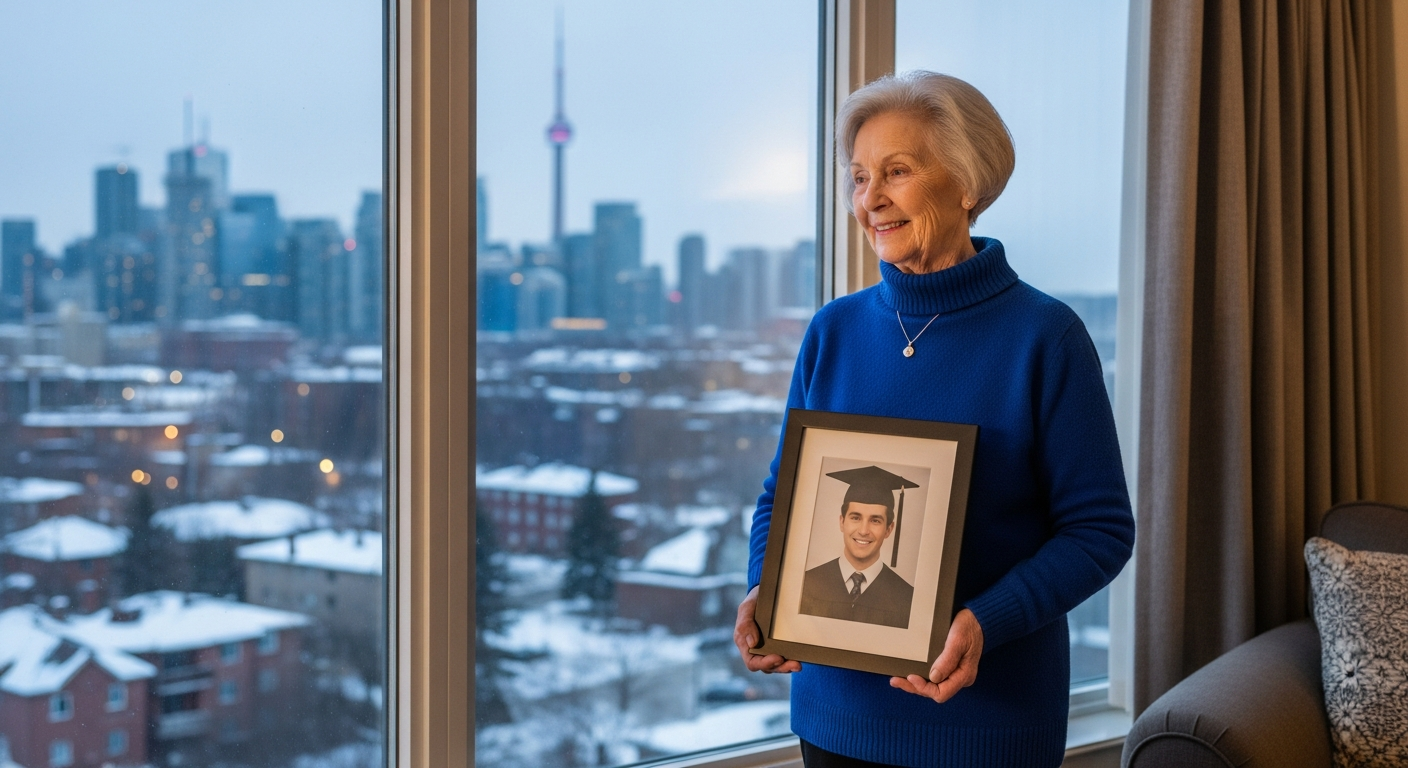
The Professional School Debt Crisis
Canada's professional education costs:
| Profession | Typical Debt | Years to Repay (Standard) | Annual Interest Cost |
|---|---|---|---|
| Law School (JD) | $80,000-$150,000 | 15-20 years | $4,000-$9,000/year |
| Medical School (MD) | $100,000-$200,000+ | 20-25 years | $6,000-$15,000/year |
| Engineering (P.Eng) | $40,000-$100,000 | 10-15 years | $2,500-$7,000/year |
| CPA (Chartered Accountant) | $60,000-$120,000 | 15-20 years | $3,500-$8,000/year |
| Dentistry/Pharmacy | $100,000-$250,000 | 20-30 years | $6,000-$18,000/year |
The trap: Your adult child graduates with a great job offer ($75,000-$90,000 starting salary), but:
- Student loan payments: $600-$1,200/month
- After taxes: Net $4,500-$5,500/month
- Rent: $1,200-$1,500/month
- Car payment: $300-$500/month
- Other living: $1,500/month
- Result: Barely breaking even; can't save for home down payment, marriage, children for 10+ years
Your perspective (as parent): "I want to help, but I can't cosign—I need to protect my credit. But my child is drowning, and the debt will derail their life plans."
Why a Reverse Mortgage is Better Than Cosigning
| Approach | Pros | Cons | Your Risk |
|---|---|---|---|
| Cosign their loan | Easier approval for child | You're liable if they default; hurts your credit | HIGH |
| Gift money (downpayment on debt) | No conditions; clean | Reduces your retirement savings | MEDIUM |
| Reverse mortgage loan to child | You remain in control; only pay interest on drawn funds | Interest cost; doesn't eliminate loan | LOW |
| Reverse mortgage gift/bailout | Full relief; you control the timing | Interest cost; less money for you later | LOW-MEDIUM |
The reverse mortgage advantage: You maintain complete financial independence. You're not liable if your adult child defaults (because it's not their loan—you own the home). You can draw funds strategically without depleting retirement savings upfront.
Strategy 1: Partial Debt Bailout
Example: Sarah, age 35, just completed law school
- Debt: $120,000 student loans
- Starting salary: $80,000/year
- Goal: Practice law 30 years; retirement at age 65
Without help:
- Loan repayment: $800/month (10-year aggressive repayment)
- Monthly net: ~$4,200 (after taxes)
- Living costs: ~$3,000
- Savings: $1,200/month (okay, but tight for housing down payment)
- Home down payment saved by age 40: ~$70,000 (10 years × $12,000 - investment returns)
- Mortgage approved for $300,000; total home purchase $370,000 (tight for Toronto market)
With reverse mortgage bail out:
Sarah's parent (age 70, home value $600,000):
- Gets reverse mortgage: $336,000 available (56%)
- Gifts Sarah: $60,000 (covers half the debt)
- Sarah's remaining debt: $60,000
Sarah's new situation:
- Loan repayment: $400/month (fewer loans)
- Monthly net: ~$4,200
- Living costs: $3,000
- Savings: $800/month PLUS she's not cash-strapped
- By age 40, saves $150,000+ (more comfortable, able to invest)
- Home down payment: $200,000+; can purchase $500,000+ home (market-competitive)
Parent's costs:
- Interest @ 7% on $60,000: ~$4,200/year or ~$42,000 over 10 years
- Opportunity cost: That money could have grown in portfolio
- Estate impact: Home will be sold; RM balance paid; reduced inheritance slightly
- BUT: Home appreciates ~4%/year, so equity grows despite the RM balance
Strategy 2: Structured Loan (Not a Gift)
Some parents prefer to LOAN the bailout amount rather than gift it.
Example: Michael, age 68, helping adult daughter Emma pay off CPA debt
- Emma's debt: $90,000
- Michael's reverse mortgage: $300,000 available
- Michael loans Emma: $45,000 at 3% interest (family rate, lower than RM cost but higher than zero)
- Emma repays: $500/month to Michael for 10 years
Benefits:
- Maintains financial discipline (Emma has skin in the game)
- Creates documented loan (CRA clarity; no gift tax issues)
- Emma builds credit by repaying
- Michael receives income ($45,000 over 10 years), which is reinvested/used for living costs
Risks:
- If Emma faces job loss or hardship, family conflict may emerge ("I can't pay you back")
- Repayment obligations consume Emma's cash flow anyway
- More formal than a gift; feels transactional in family context
CRA considerations:
- Loan interest (3%) is not deductible to Emma (not business-related)
- Interest received (to Michael) is taxable income (~$1,350 in year 1, declining)
- Keep records; document the loan formally
Real-World Example: Dr. James's Medical School Bailout
James, age 38, just completed MD training (residency)
- Medical school + residency debt: $180,000
- Starting as family physician in Ontario: $100,000/year
- Plans: Marriage within 2 years, home down payment goal $150,000
Parents' situation:
- Combined age: 145 (mother 72, father 74)
- Home value: $700,000 (paid off)
- Retirement income: $65,000/year (two CPPs + two OAS)
- Living comfortably; want to help James but not at expense of their retirement
The reverse mortgage solution:
-
Get reverse mortgage: Combined age ~145 (using lower age, 72)
- Available: $392,000 (56% LTV)
- Request: $100,000 line of credit
-
Gift to James: $80,000 (covers ~44% of debt)
- James's remaining debt: $100,000
- James's monthly repayment: ~$550/month (much easier than $1,000)
-
Benefit to James:
- Reduced debt stress in early career
- Can afford marriage costs (wedding, honeymoon, house renovations)
- Down payment for $350,000 home achievable within 3 years
- Life trajectory: Improved dramatically
-
Cost to parents:
- Interest on $80,000: ~$5,600/year @ 7%
- Over 15-year retirement: ~$84,000 in interest
- Home value at retirement end (age 90/92): ~$1.35M (4% annual appreciation, conservative)
- Reverse mortgage balance: ~$200,000-$250,000
- Net estate: $1.1M-$1.15M
- Children inherit strongly; James's bailout is partially offset by his success
Outcome: James was released from debt stress at a critical life moment. His parents spent $5,600-$7,000 annually in interest costs over 15 years, well within their budget. Home appreciated beyond the RM balance. Estate remains substantial.
Critical Tax & Legal Considerations
Gift vs. Loan: CRA's View
If you GIFT the money:
- No income tax to either party
- CRA recognizes it as a gift (no repayment expected)
- No interest deduction for you
- Document it as a gift in writing (prevents misunderstandings)
If you LOAN the money:
- Interest received is taxable to you (report as income)
- Interest paid is NOT deductible to your adult child (not business-related)
- Document formally: promissory note, interest rate, repayment schedule
- CRA scrutinizes informal family loans; clear documentation helps
According to the Canada Revenue Agency, informal family loans are recognized as genuine debt if there is documented intent to repay, reasonable repayment terms, and consistent payment history. Without documentation, CRA may deem it a gift.
Student Loan Forgiveness Programs
Before bailing out, confirm your adult child can't access forgiveness:
- Repayment Assistance Plans (RAP): Canada & provincial programs reduce payments based on income
- Public Service Loan Forgiveness: Forgives remaining balance after 15 years of payments while working in public service (teaching, nursing, social work, etc.)
- Provincial forgiveness (Quebec, BC): Some provinces offer debt forgiveness for graduates in high-need areas
If forgiveness is available, a bailout might be premature. Let your adult child use RAP first; if they're still struggling after 3-5 years, bail them out then.
Key Takeaways
✓ Professional school debt ($80,000-$250,000+) can derail early career planning—homes, marriage, children become unaffordable during peak earning years.
✓ Reverse mortgage bailout avoids cosigning, protecting your credit while providing genuine relief to your adult child.
✓ Partial bailout (50% of debt) is often optimal—reduces burden meaningfully without depleting your retirement.
✓ Document the arrangement (gift vs. loan) to avoid CRA scrutiny and family misunderstandings about repayment intent.
✓ The interest cost to you (~$5,000-$7,000/year) is reasonable when offset by your adult child's improved life trajectory and your home's appreciation.
Frequently Asked Questions
How much should I bail out—50%, 100%, or partial?
That's personal. Some guidelines: (1) Don't exceed 20% of your home's equity. (2) Don't deplete your retirement reserves. (3) Balance helping your child with your own security. Many parents bail out 30-50% of debt, letting the child manage the rest.
What if my adult child defaults on the loan to me?
That's between you. If you structured it as a gift, no default is possible (it's not a debt). If a loan, you have a promissory note, but enforcing it against your child is difficult and emotionally messy. Most families treat defaults as implicit forgiveness ("I couldn't afford it; we moved on"). Avoid this by only lending amounts you're comfortable gifting.
Does bailing out debt encourage bad financial habits?
Potentially, if your child learns they can spend recklessly and parents will rescue them. Frame it as one-time support: "I'm helping with school debt because education is an investment. But future debts (credit cards, car loans) are yours to manage."
Will my adult child's inheritance be reduced by the reverse mortgage amount?
Yes, somewhat. If your home sells for $950,000 and the RM balance is $200,000, the net proceeds are $750,000 (after paying the mortgage). But in most cases, home appreciation exceeds RM interest accrual, so the net estate remains substantial.
What if I change my mind after bailing them out?
Too late—the money is gone. The loan to your child is made; the gift is given. This is why clear thinking BEFORE the bailout is crucial. Discuss with a spouse, accountant, and financial advisor first.
Next Steps
If you're considering a professional school debt bailout:
- Have a clear conversation with your adult child about what you can and can't do
- Consult an accountant about tax implications (gift vs. loan)
- Verify they've explored all forgiveness/assistance programs first (RAP, public service forgiveness, provincial programs)
- Contact Rick Sekhon Reverse Mortgages to discuss a reverse mortgage line of credit for strategic draws
- Draft a promissory note (if loaning, not gifting) to clarify expectations
Ready to Learn More?
Find out exactly how much you could unlock from your home — free and no obligation.
Related Articles
Reverse Mortgage for Adult Child's Postgraduate Education: Master's & Certifications
Help your adult child earn a master's degree or professional certification with a reverse mortgage. Fund education without cosigning debt—Ontario strategy for parents of adult learners.
Read →Reverse Mortgage for Adult Children with Student Debt: Co-Signing and Financial Rescue
Discover how a reverse mortgage can help you co-sign or eliminate your adult child's student debt in Ontario without risking your retirement.
Read →Using a Reverse Mortgage to Help an Adult Child Through a Medical Emergency
How Canadian parents use a reverse mortgage to fund an adult child's medical emergency — cancer treatment, accident recovery, and costs not covered by OHIP.
Read →