
Supporting Your Adult Child's Medical Residency: Funding Years of Reduced Income
Fund your adult child's medical residency with a reverse mortgage. Bridge the income gap during years of reduced resident physician pay in Ontario.
Your adult child has been accepted to a medical residency program — but resident physicians earn a fraction of what attending doctors make. How do you help them survive financially during 5 years of training while they're supporting themselves? A reverse mortgage can bridge the income gap, allowing you to help your adult child focus on their demanding medical training instead of financial stress.
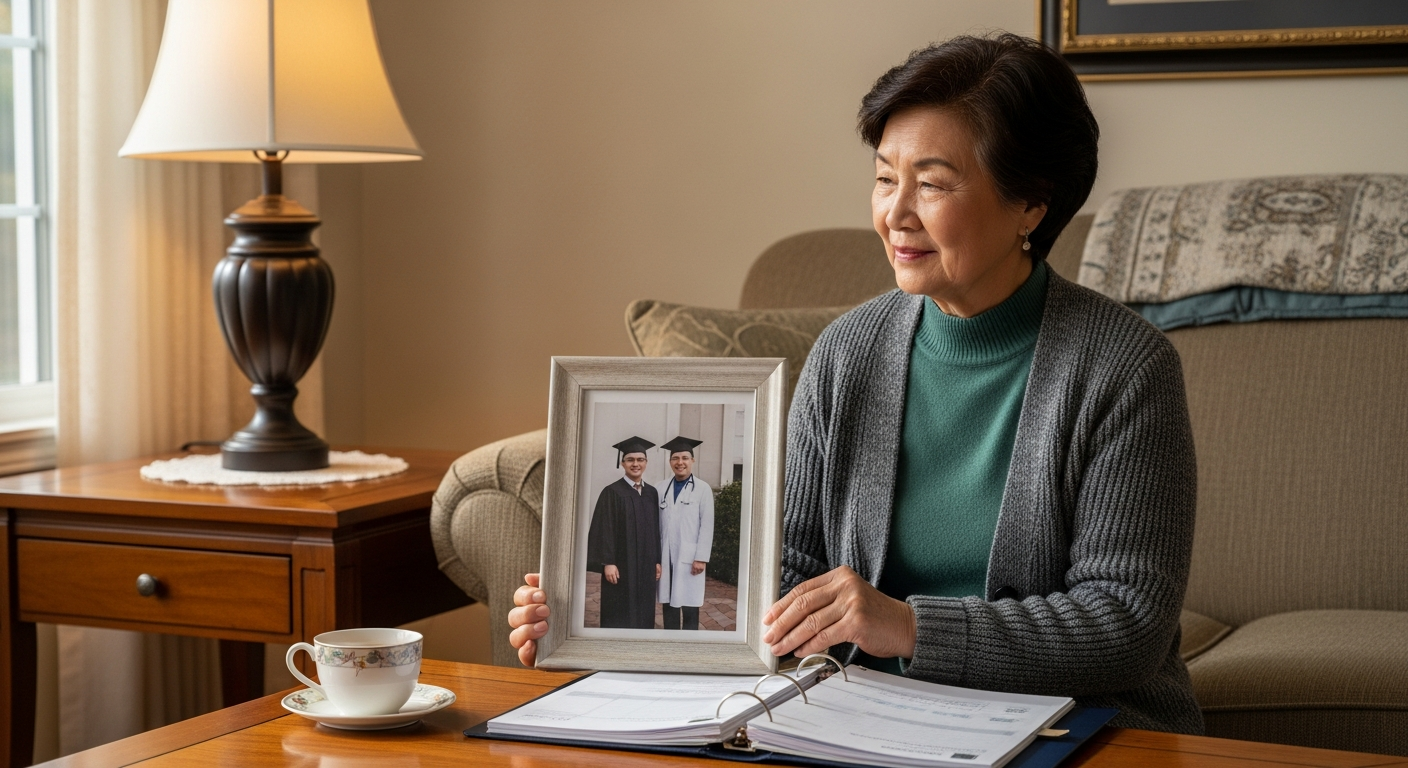
Understanding Medical Residency Income Gaps in Canada
Medical residencies in Canada pay significantly less than established physician income, creating financial hardship for residents and their families. A typical medical resident in Ontario earns between $40,000 and $60,000 annually—far below the $200,000+ that attending physicians eventually earn. This 5-7 year training period can strain both the resident and their family, especially if they have dependents or student loans to repay.
According to the Royal College of Physicians and Surgeons of Canada, approximately 40% of medical residents receive financial support from family members during their training years. Your adult child may be managing student debt, starting a family, or living in an expensive city like Toronto—all while earning resident-level income.
A reverse mortgage allows you to access your home's equity to bridge this critical income gap, helping your adult child focus on becoming an excellent physician rather than juggling financial stress.
The Medical Residency Financial Challenge
Medical training in Canada follows a structured path: undergraduate (4 years), medical school (4 years), and residency training (5-7 years depending on specialty). By the time your child reaches residency, they may have accumulated $200,000 to $300,000 in student debt while earning a modest resident salary.
Income Reality for Ontario Residents
| Medical Specialty | Year 1 Resident Salary | Year 5 Senior Resident Salary | Typical Debt Upon Graduation |
|---|---|---|---|
| Family Medicine | $42,000 | $58,000 | $180,000-$220,000 |
| Internal Medicine | $44,000 | $61,000 | $200,000-$250,000 |
| Surgical Specialty | $45,000 | $65,000 | $220,000-$300,000 |
| Pediatrics | $41,000 | $57,000 | $180,000-$200,000 |
The resident years are grueling—80-hour work weeks are common in surgical specialties. Your child has little time for part-time work or side income. Many residents live paycheck-to-paycheck, delaying major life decisions like home purchase, marriage, or starting a family.
According to the Association of Faculties of Medicine of Canada, financial stress during residency ranks among the top causes of mental health challenges for trainees, with over 35% reporting significant financial anxiety.
How a Reverse Mortgage Bridges the Residency Gap
A reverse mortgage converts your home equity into cash without requiring you to sell or downsize. Instead of your adult child struggling to manage on resident income, you can provide structured monthly support, help with rent, or assist with outstanding student loans.
Your Options for Structuring Support
| Support Type | Monthly Residency Years | Total Support Provided | When Funds Depleted |
|---|---|---|---|
| Lump sum at residency start | $500/month × 60 months | $30,000 | Year 1 (upfront) |
| Monthly draw throughout residency | $500/month | $30,000-$42,000 | Year 5-7 |
| Student loan paydown + housing | $800/month | $48,000-$56,000 | Years 4-5 |
| Comprehensive support (loan + housing + living) | $1,200/month | $72,000-$84,000 | Years 5-7 |
The flexibility of a reverse mortgage—especially line of credit options from lenders like CHIP and Equitable Bank—means you draw only what your child needs, when they need it. If their financial situation improves, you draw less. If they face unexpected challenges, funds are available.
The Broader Picture: Supporting Multiple Life Stages
Your adult child's residency often coincides with other major life events. They may be:
- Getting married during residency (wedding costs)
- Starting a family (parental leave income gap, childcare costs)
- Moving to a new city for their residency position
- Facing delayed career advancement (postponed attending position)
A reverse mortgage provides flexibility to address these overlapping challenges.
Protecting Your Retirement While Helping
The key to using a reverse mortgage for adult child support is ensuring it doesn't jeopardize your own retirement security. Here's how to structure it responsibly:
Critical Planning Decisions
- Set a maximum draw limit — Decide in advance how much you can safely draw without affecting your long-term retirement income. Most financial advisors suggest keeping draws to 25-30% of your total home equity.
- Establish a sunset date — Agree with your child that support ends when they complete residency. By that time, they'll be earning attending physician income and can support themselves.
- Consider your age and health — At 60+, you may have 20-30 more years to live. Ensure the reverse mortgage principal won't exceed your expected home equity growth or your ability to repay.
- Tax implications — Consult a tax accountant. Reverse mortgage proceeds are not income to you, but if you're gifting funds to your adult child, there may be tax considerations for them.
According to the Financial Consumer Agency of Canada (FCAC), when using a reverse mortgage to support family members, it's essential to have a written understanding of repayment expectations and timelines to prevent family conflict later.
Case Study: How a Reverse Mortgage Worked
Maria is 62 and owns her Toronto home valued at $850,000 with no mortgage. Her son, David, has been accepted to a 5-year orthopedic surgery residency at McMaster University, earning $45,000/year. David's annual expenses (rent, food, childcare for his 2-year-old) are $65,000, creating a $20,000 annual shortfall.
Maria arranges a reverse mortgage line of credit for $150,000 with Home Trust, accessing $250/month for 60 months ($15,000 total). This helps David cover his shortfall and reduces his reliance on credit cards.
After 5 years, when David becomes an attending surgeon earning $250,000/year, he repays his mother $15,000 from his signing bonus. Maria's reverse mortgage balance stands at approximately $18,000 in accrued interest. Over 5 years, her home has appreciated 8%, more than offsetting the interest costs. The reverse mortgage allowed Maria to be a meaningful supporter without derailing her retirement.
Key Takeaways
- Medical residencies create 5-7 year income gaps that strain residents and their families — your support can be transformative
- Reverse mortgage line of credit options provide flexible access to funds as your child's needs evolve
- Monthly draws mean you're not giving a lump sum all at once; you draw strategically over the residency period
- No-negative-equity guarantee protects you and your estate — your home equity can never go negative
- Professional medical students typically repay family support once they reach attending status, creating a natural loan repayment plan
- Home equity continues to grow even as you draw — in most markets, home appreciation offsets reverse mortgage interest costs
Eligibility and Next Steps
To qualify for a reverse mortgage in Ontario:
- You must be at least 55 years old
- You must own your home outright or have minimal mortgage debt
- Your home must be appraised by an independent professional
- You'll need independent legal advice (required by law in Ontario)
Lenders like CHIP, Equitable Bank, and Bloom Financial offer reverse mortgages specifically designed for scenarios like yours. Contact Rick Sekhon Reverse Mortgages for a no-obligation consultation to explore whether a reverse mortgage makes sense for your situation.
Frequently Asked Questions
Can I set conditions on the money I give my adult child through a reverse mortgage?
Yes. Many parents create a simple written agreement stating that funds are a gift (or loan) for residency support, with the expectation of repayment once the child completes training and earns attending-level income. This protects both you and your child by clarifying expectations.
What if my adult child's residency is cut short or they change specialties?
Flexibility is key. A reverse mortgage line of credit means you can pause draws or reduce amounts. If your child leaves medicine entirely, you simply stop accessing the line. The reverse mortgage exists to serve your needs, not the other way around.
Does helping my adult child through residency affect my government benefits like OAS or GIS?
No. Reverse mortgage proceeds are loan advances, not income, so they don't affect OAS or GIS eligibility. However, consult a tax accountant to confirm your specific situation, as any interest or investment income generated from those funds could have tax implications.
How much can I borrow for my adult child's residency support?
Typically, 55+ homeowners can borrow 40-50% of their home's value, depending on age and home value. With an $850,000 home, you might access $340,000-$425,000. You don't need to borrow it all at once — a line of credit lets you draw what you need.
Should I use a reverse mortgage or regular HELOC for this?
A HELOC requires monthly interest payments, which may strain your retirement budget. A reverse mortgage requires no monthly payments — interest accrues and is repaid when you sell, move, or pass away. For multi-year support, a reverse mortgage is often more flexible.
What happens when my adult child becomes an attending and wants to repay me?
Many adult children repay family support once they reach attending status. Your reverse mortgage can be repaid in full or in part without penalty from most lenders. Consult your lender's prepayment policy, as some charge penalties while others (like CHIP) do not.
Get Support Today
Supporting your adult child through medical residency is a profound act of love. A reverse mortgage can make it financially sustainable without derailing your own retirement.
Ready to Learn More?
Find out exactly how much you could unlock from your home — free and no obligation.
Related Articles
Using a Reverse Mortgage to Help an Adult Child Through a Medical Emergency
How Canadian parents use a reverse mortgage to fund an adult child's medical emergency — cancer treatment, accident recovery, and costs not covered by OHIP.
Read →Reverse Mortgage for DEI Consulting Practice: Launching Diversity, Equity, and Inclusion Consulting in Retirement
Start a diversity and inclusion consulting practice. Help corporations and nonprofits build equitable cultures; reverse mortgage funds training, business setup, and market entry.
Read →Reverse Mortgage for Residential Sustainability Auditing Practice: Certifying Aging in Place
Launch a professional home energy and sustainability auditing business. Help Ontario homeowners certify efficiency; reverse mortgage funds training, tools, and market entry.
Read →